Performance Turbo Options for Ford 6.0 Powerstroke: Boost Your Power
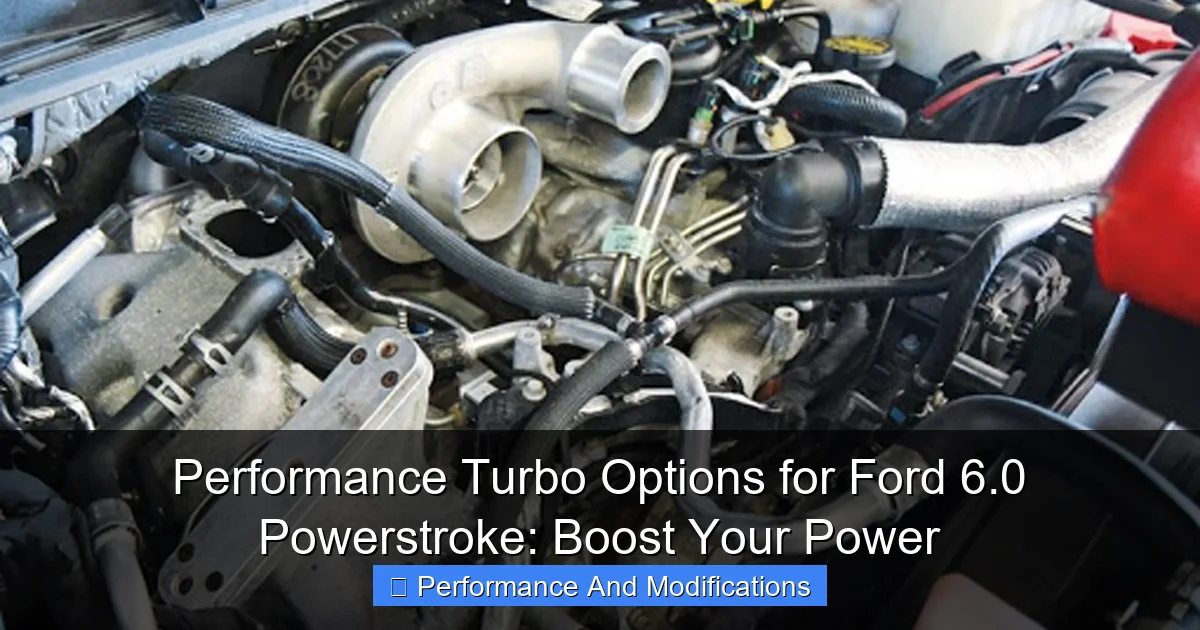
Featured image for this comprehensive guide about Performance turbo options for Ford 6.0 Powerstroke
Image source: motortrend.com
The Ford 6.0 Powerstroke. Just hearing those words often sparks a lively debate among diesel enthusiasts. Known for its incredible power potential but also for certain factory shortcomings, the 6.0L engine holds a unique place in the hearts of truck owners. For many, unlocking that true potential means one thing: upgrading the turbocharger. If you own a 2003-2007 F-Series Super Duty or Excursion equipped with this robust diesel, you know the feeling – the desire for more power, better towing, and a more responsive driving experience.
While the stock variable geometry turbo (VGT) on the 6.0 Powerstroke is capable, it often leaves much to be desired for those seeking aggressive performance or enhanced reliability under strenuous conditions. Common issues like sticking VGT vanes or even catastrophic failure can prompt owners to look for alternatives. The good news? The aftermarket is brimming with exceptional performance turbo options for Ford 6.0 Powerstroke engines, designed to transform your truck into an absolute beast.
This comprehensive guide will dive deep into the world of 6.0 Powerstroke performance turbo upgrades. We’ll explore various technologies, popular choices, crucial supporting modifications, and essential considerations to help you make an informed decision. Get ready to learn how to boost your Powerstroke’s power, improve efficiency, and enhance its longevity, turning your 6.0L into the powerful, reliable workhorse or high-performance machine you’ve always envisioned.
Quick Answers to Common Questions
Why consider performance turbo options for my 6.0 Powerstroke?
Upgrading your 6.0 Powerstroke’s turbo can dramatically improve horsepower, torque, and throttle response, making your truck feel much more powerful and capable for towing or performance driving. It’s a key upgrade for unlocking your engine’s true potential.
What are the main types of performance turbo options available for the 6.0 Powerstroke?
For the 6.0 Powerstroke, you’ll commonly find upgraded stock-style turbos, ball-bearing turbos, and larger single turbos or even compound turbo setups, each offering different performance characteristics. These range from mild street upgrades to extreme competition setups.
Will a new performance turbo for my 6.0 Powerstroke require other modifications?
Yes, a new performance turbo often requires supporting modifications like custom tuning, upgraded fuel injectors, and possibly a stronger transmission to handle the increased power safely and reliably. Don’t forget proper monitoring gauges!
What kind of power gains can I expect from upgrading my 6.0 Powerstroke’s turbo?
Depending on the specific performance turbo option and supporting modifications, you could see gains ranging from 50 to well over 200 horsepower compared to a stock setup. It truly transforms the driving experience of your 6.0.
Are performance turbo options for the Ford 6.0 Powerstroke reliable for daily driving?
Many performance turbo options are designed for excellent daily driving reliability, provided they are properly installed, tuned, and maintained with appropriate supporting mods. Choosing a reputable brand and installer is key for longevity.
📋 Table of Contents
- Unleashing the Beast: Why Upgrade Your Ford 6.0 Powerstroke Turbo?
- Exploring the Top Performance Turbo Options for Ford 6.0 Powerstroke
- VGT vs. Non-VGT: Deciphering Turbo Technologies for Your 6.0L
- Beyond the Turbo: Essential Supporting Modifications for Peak Performance
- Installation, Tuning, and Maintenance: Crucial Steps for a Successful Upgrade
- Making the Right Choice: Factors to Consider for Your 6.0 Powerstroke Performance Turbo
- Conclusion: Ignite Your Powerstroke’s Potential
Unleashing the Beast: Why Upgrade Your Ford 6.0 Powerstroke Turbo?
The stock Garrett GT3782VA turbo on the 6.0L Powerstroke was revolutionary for its time, utilizing variable geometry technology to provide quick spooling and decent power across a wide RPM range. However, it wasn’t without its flaws. Over time, soot buildup can cause the VGT vanes to stick, leading to poor performance, excessive smoke, and eventually, turbo failure. Beyond reliability concerns, many owners simply crave more.
Learn more about Performance turbo options for Ford 6.0 Powerstroke – Performance Turbo Options for Ford 6.0 Powerstroke: Boost Your Power
Image source: c.pxhere.com
Upgrading your 6.0 Powerstroke turbo upgrade offers a multitude of benefits that extend far beyond simply having a “bigger turbo.” Here’s why so many choose to make this significant investment:
| Turbo Type / Example | Key Features | Estimated Power Potential (HP) | Ideal Application |
|---|---|---|---|
| **KC Stage 1 / Powermax (VGT Upgrade)** | Improved stock VGT, quicker spool, retains exhaust brake. | 400 – 475 HP | Daily Driver, Light Towing, Enhanced Stock Feel |
| **Stealth 64 / KC Stage 2 (Performance VGT)** | Larger VGT, enhanced flow and response, retains exhaust brake. | 450 – 550 HP | Aggressive Street, Moderate Towing, All-around Performance |
| **S300-based (Fixed Geometry)** | Durable, excellent top-end power, no exhaust brake, can be laggy. | 500 – 700+ HP | High-HP Builds, Drag Racing, Extreme Towing (with proper setup) |
| **Compound Turbo Kit** | Two turbos (sequential), massive powerband, complex, high cost. | 600 – 900+ HP | Ultimate Performance, Heavy Towing (zero compromise), Competition |
| **BorgWarner S400-based (Large Fixed Geometry)** | Max flow, dedicated competition, very laggy for street, high EGT control. | 700 – 1000+ HP | Competition Only, Extreme Race Builds |
- Increased Horsepower and Torque: This is arguably the primary driver for most upgrades. Aftermarket turbos are designed to move more air efficiently, allowing your engine to burn more fuel and produce significantly more power. Gains of 50-150+ horsepower are not uncommon, depending on the turbo and supporting mods.
- Improved Towing Performance: More power and torque translate directly to better towing capabilities. You’ll experience less downshifting, quicker acceleration with a load, and often lower exhaust gas temperatures (EGTs), which is crucial for engine longevity when towing heavy.
- Enhanced Drivability and Responsiveness: A properly matched performance turbo can reduce turbo lag, making your truck feel more agile and responsive, especially off the line or when passing.
- Better Fuel Efficiency (Potentially): While counter-intuitive, a more efficient turbo that allows the engine to operate more effectively can, in some scenarios, lead to marginal improvements in fuel economy, particularly during highway cruising, as the engine doesn’t have to work as hard. However, it’s important to note that increased power often tempts drivers to use it, negating efficiency gains.
- Increased Reliability and Longevity: Many aftermarket turbos address the design flaws of the stock unit, offering more durable components, better bearing designs, and resistance to soot buildup, leading to a more reliable long-term solution. Some non-VGT options completely eliminate the problematic VGT mechanism.
- Lower EGTs: More efficient airflow helps to cool the combustion process, leading to lower EGTs. High EGTs are detrimental to engine components, particularly pistons and exhaust valves. Reduced EGTs contribute directly to engine health, especially under heavy load or aggressive driving.
Ultimately, a Ford 6.0 Powerstroke turbo upgrade is about transforming your truck’s character, unlocking its hidden potential, and tailoring its performance to your specific needs, whether that’s reliable towing, daily driving with extra grunt, or competitive drag racing.
Exploring the Top Performance Turbo Options for Ford 6.0 Powerstroke
When it comes to upgrading your 6.0 Powerstroke turbo, the market offers a diverse range of solutions, each with its own characteristics, benefits, and ideal applications. Understanding these options is key to choosing the best turbo for 6.0 Powerstroke for your specific goals.
Learn more about Performance turbo options for Ford 6.0 Powerstroke – Performance Turbo Options for Ford 6.0 Powerstroke: Boost Your Power
Image source: picpedia.org
1. Upgraded VGT Turbos (Drop-in Replacements)
These turbos retain the factory variable geometry design but feature larger compressor and/or turbine wheels, along with improved internal components for better airflow and durability. They are often considered “drop-in” as they typically utilize the stock mounting points and plumbing, simplifying installation.
- Garrett PowerMax (Stage 1 & Stage 2): The Garrett PowerMax series is a very popular choice for a reason. As the original equipment manufacturer, Garrett offers turbos specifically designed for the 6.0L that maintain excellent street manners.
- PowerMax Stage 1: Features a larger compressor wheel (63.5mm), offering quicker spool than stock and significant power gains (typically 40-70 HP) with stock injectors.
- PowerMax Stage 2: Utilizes a larger 66mm compressor wheel and an upgraded turbine section. It provides even more airflow and supports larger injector upgrades, capable of 100+ HP gains. Spool is slightly slower than Stage 1 but still excellent.
Benefits: Excellent drivability, retains VGT benefits (quick spool, exhaust braking), relatively easy installation, proven reliability. Ideal for: Daily drivers, light to moderate towing, performance seekers with mild-to-moderate injector upgrades.
- KC Turbos (Jetfire Series, VGT): KC Turbos has earned a stellar reputation for their innovative and high-performing VGT turbo options. They focus on addressing common VGT issues while maximizing performance.
- KC Stage 1.5, 2, 2.5, 3: KC offers a range of VGT options with increasingly larger compressor and turbine wheels (e.g., KC 63/68, KC 63/73, KC 68/73, KC 70/73). They focus on billet compressor wheels and advanced turbine designs to optimize airflow, lower EGTs, and provide crisp throttle response. Many feature a “balanced” design for both spool and top-end.
Benefits: Exceptional spool characteristics, impressive power gains (often exceeding Garrett PowerMax with similar sizing), excellent EGT control, high durability due to improved internal components. Ideal for: Daily drivers, heavy towing, aggressive street performance, and those running larger injectors who want to retain VGT benefits.
2. Non-VGT Turbos (Fixed Geometry/Wastegated)
These turbos eliminate the variable geometry mechanism in favor of a simpler, fixed geometry design, often with an external wastegate for boost control. They require more extensive installation (often including an installation kit with new up-pipes, pedestals, and plumbing) but offer superior reliability and extreme performance potential.
- BorgWarner S300 Series (S363, S364.5, S366, etc.): The BorgWarner S300 series is a staple in the high-performance diesel world. These turbos are robust, efficient, and capable of supporting very high horsepower numbers.
- S363/68, S364.5/71, S366/73: These numbers refer to the compressor and turbine wheel sizes. They require a T4 flange turbo kit. Spool is generally slower than VGT options, but top-end power and EGT control are phenomenal.
Benefits: Unmatched reliability (no VGT issues), massive power potential, excellent EGT control, robust construction. Ideal for: Dedicated race trucks, competition towing, high-horsepower builds (550 HP+), and those prioritizing ultimate reliability over instant spool.
- BorgWarner S400 Series (S467.7, S472, S475, etc.): Even larger than the S300 series, S400 turbos are for serious high-horsepower applications. They require even more extensive fabrication and supporting modifications.
Benefits: Extreme power potential, ultimate EGT control for very high horsepower. Ideal for: Extreme competition, dedicated drag or sled pull trucks, builds pushing 800+ HP.
- Pusher Intakes Compound Turbo Kits: For the ultimate in power and efficiency across a wide RPM range, compound (or twin) turbo kits are the answer. These systems use two turbos – a smaller one for quick spool and a larger one for top-end power – working in series.
Benefits: Unbelievable power gains (often 700+ HP), excellent EGT control, broad powerband with minimal lag. Ideal for: Extreme performance, competition, very heavy towing, where budget and complexity are not limiting factors.
Choosing the best turbo for 6.0 Powerstroke depends entirely on your application, budget, and power goals. Consult with reputable diesel performance shops or experienced tuners to ensure your choice aligns with your complete build plan.
VGT vs. Non-VGT: Deciphering Turbo Technologies for Your 6.0L
The distinction between Variable Geometry Turbos (VGT) and Non-Variable Geometry (fixed geometry/wastegated) turbos is a fundamental aspect of understanding **performance turbo options for Ford 6.0 Powerstroke** engines. Each technology offers distinct advantages and disadvantages that significantly impact drivability, performance, and reliability.
Variable Geometry Turbos (VGT)
The original 6.0L Powerstroke came equipped with a Garrett GT3782VA VGT turbo. This design utilizes a ring of vanes positioned around the turbine wheel. These vanes can pivot to alter the exhaust gas flow path and velocity entering the turbine. This allows the turbo to act like a much smaller turbo at low RPMs (for quick spool) and like a much larger turbo at high RPMs (for maximum airflow and top-end power).
Advantages of VGT Turbos:
- Rapid Spool Time: The primary benefit is extremely quick boost response, minimizing turbo lag and improving throttle feel. This is great for daily driving and light-to-moderate towing.
- Integrated Exhaust Braking: By closing the VGT vanes, the turbo can create significant back pressure, effectively acting as an exhaust brake. This is a huge advantage for towing, especially downhill.
- Broad Powerband: VGT turbos excel at providing strong power and torque across a wide RPM range due to their ability to adapt to different engine demands.
- Simpler Installation (Drop-in): Many aftermarket VGT upgrades are designed as “drop-in” replacements, utilizing existing plumbing and mounting, which can simplify installation and reduce overall cost.
Disadvantages of VGT Turbos:
- Soot Buildup & Sticking Vanes: This is the Achilles’ heel of the stock 6.0L VGT. Carbon and soot can accumulate on the vane mechanism, causing them to stick or bind, leading to erratic boost, reduced performance, and eventually failure.
- Higher EGTs (Potentially): While the VGT helps spool, its design can sometimes lead to slightly higher EGTs compared to an efficiently sized non-VGT turbo at peak power, especially with aggressive tuning.
- Complexity: The moving parts and electronic control of VGT systems add layers of complexity, which can be points of failure.
Non-Variable Geometry Turbos (Fixed Geometry/Wastegated)
Non-VGT turbos, often referred to as fixed geometry or wastegated turbos, have a simpler design. The turbine housing and exhaust gas entry are fixed. To control maximum boost pressure, these turbos typically rely on an external wastegate that diverts excess exhaust gas around the turbine wheel once the desired boost level is reached.
Advantages of Non-VGT Turbos:
- Superior Reliability: With no moving vanes to stick or bind, non-VGT turbos are inherently more robust and less prone to failures related to soot buildup. This is a significant draw for many 6.0L owners.
- Lower EGTs at High Power: An appropriately sized non-VGT turbo can often provide better EGT control at high horsepower levels due to more efficient exhaust gas flow and less back pressure.
- Higher Power Potential: For extreme horsepower builds, non-VGT turbos (like the BorgWarner S300/S400 series) are generally preferred due to their ability to move massive amounts of air efficiently.
- Cost-Effective for Extreme Builds: While the initial kit might be more expensive, the long-term reliability and performance potential can make them more cost-effective for dedicated high-performance trucks.
Disadvantages of Non-VGT Turbos:
- Increased Turbo Lag: Without the variable geometry, these turbos typically take longer to spool up. This can make the truck feel less responsive at lower RPMs compared to a VGT.
- No Exhaust Braking: The lack of VGT vanes means no integrated exhaust braking. Owners will need to rely on the truck’s conventional braking system, or invest in an aftermarket exhaust brake.
- More Complex Installation: Converting from VGT to non-VGT typically requires a comprehensive installation kit, including new turbo pedestals, up-pipes, intake piping, and potentially oil drain lines. This adds to installation time and cost.
- Specific Tuning Requirements: Non-VGT turbos require dedicated custom tuning to operate correctly and efficiently, which can be more involved than tuning for a VGT.
Which is right for you? If daily drivability, quick spool, and exhaust braking are paramount, an upgraded VGT like a Garrett PowerMax or KC VGT option is likely your best turbo for 6.0 Powerstroke. If ultimate reliability, maximum horsepower potential, and lower EGTs under extreme conditions are your goals, and you’re willing to sacrifice some low-end responsiveness and exhaust braking, a non-VGT setup (like an S300 series) might be the better choice for your 6.0 Powerstroke turbo upgrade.
Beyond the Turbo: Essential Supporting Modifications for Peak Performance
Installing a powerful **6.0 Powerstroke performance turbo** is only one piece of the puzzle. To truly maximize your investment and ensure the longevity of your engine, a suite of supporting modifications is not just recommended, but often critical. Neglecting these areas can lead to poor performance, reliability issues, and even catastrophic engine failure.
1. Custom Tuning
This is arguably the most crucial supporting modification. A new turbocharger significantly alters the engine’s air requirements. Custom tuning (also known as custom programming or recalibration) optimizes the fuel injection timing, fuel quantity, boost pressure, and other parameters to work in harmony with your new turbo. Without proper tuning, your engine won’t run efficiently, may produce excessive smoke, run dangerously hot, or fail prematurely. Expect to spend $500-$1500 for quality custom tunes from a reputable tuner.
2. Fuel System Upgrades
More air demands more fuel. While stock injectors can often handle mild turbo upgrades, anything beyond a basic Stage 1 PowerMax or KC 1.5/2 might necessitate fuel system enhancements.
- Larger Injectors: Performance injectors (e.g., 155cc, 175cc, 190cc, 205cc+) are designed to deliver more fuel per injection event. Matching your injectors to your turbo and tuning is essential for optimal power and EGT control.
- Upgraded Fuel Pump (FASS/AirDog): The stock “blue spring” fuel pressure regulator upgrade is a must for any modified 6.0L to maintain adequate fuel pressure. For larger injectors and turbos, an aftermarket lift pump like a FASS or AirDog system ensures a consistent, clean, and ample supply of fuel to the high-pressure oil pump (HPOP) and injectors. These systems also often include advanced filtration, which is beneficial for injector longevity.
3. Head Studs and Gaskets
The infamous 6.0 Powerstroke head gasket issues are well-documented. Increased cylinder pressures from a larger turbo and aggressive tuning put immense stress on the cylinder heads. ARP head studs are a non-negotiable upgrade for any modified 6.0L, offering significantly higher clamping force than factory head bolts. This prevents cylinder head lifting and subsequent head gasket failure, a repair that can cost thousands.
4. Intercooler Upgrade
The intercooler cools the compressed air from the turbo before it enters the engine. Denser, cooler air means more power and lower EGTs. While the factory intercooler is adequate for stock power levels, a larger, more efficient aftermarket intercooler can significantly reduce intake air temperatures (IATs), especially during heavy towing or sustained high-power runs. This directly contributes to power gains and engine reliability.
5. Exhaust System
A free-flowing exhaust system is vital for allowing the turbo to breathe properly. Upgrading to a 4-inch or 5-inch turbo-back exhaust system reduces back pressure, allowing the turbo to spool faster and improving overall efficiency. This also aids in reducing EGTs. Many owners opt for a full delete exhaust for maximum flow, where legal.
6. Cold Air Intake (CAI)
While often oversold for massive power gains, a high-quality cold air intake ensures your new turbo has an unrestricted supply of clean, cool air. This improves filter efficiency and can contribute to slightly better turbo response. Choose a reputable brand with good filtration properties.
7. Transmission Upgrades (for high HP builds)
The 5R110 TorqShift transmission is robust, but it has its limits. If you’re pushing past 500-550 horsepower, especially with heavy towing or frequent hard driving, a built transmission with upgraded clutch packs, a stronger torque converter, and improved valve body can be a wise investment to handle the increased torque reliably.
Investing in these supporting modifications ensures that your new 6.0 Powerstroke turbo upgrade performs as intended, providing reliable, high-performance power for years to come. Don’t cut corners here; your engine’s health depends on it.
Installation, Tuning, and Maintenance: Crucial Steps for a Successful Upgrade
Successfully upgrading your **Ford 6.0 Powerstroke turbo** involves more than just selecting the right part. Proper installation, meticulous tuning, and diligent maintenance are paramount to achieving optimal performance and ensuring the longevity of your investment. Cutting corners in any of these areas can negate the benefits of your upgrade and potentially lead to costly repairs.
1. Professional Installation: A Non-Negotiable Step
While some mechanically inclined DIYers might consider a turbo swap, it’s highly recommended to have a professional diesel mechanic with experience in 6.0L Powerstrokes perform the installation. Here’s why:
- Complexity: The 6.0L Powerstroke engine bay is notoriously cramped. Turbo removal and installation require specialized tools and knowledge of specific procedures, especially for non-VGT conversions which involve significant component replacement.
- Preventing Leaks and Issues: Proper torque specifications, correct gasket and O-ring placement, and thorough inspection of related components (up-pipes, exhaust manifolds, oil and coolant lines) are critical to prevent boost leaks, oil leaks, and coolant leaks.
- Addressing Pre-Existing Problems: A good mechanic will inspect your engine for other potential issues (e.g., oil cooler condition, standpipes/dummy plugs, EGR system) while the engine is apart, potentially saving you headaches down the road.
- Warranty Considerations: Many aftermarket turbo manufacturers and reputable shops will only honor warranties if the installation was performed by a certified technician.
Expect installation costs to range from $800 to $2000+, depending on the shop’s labor rates and the complexity of the turbo kit.
2. The Art and Science of Custom Tuning
Once your new **6.0 Powerstroke performance turbo** is installed, it needs to be properly “told” how to operate with your engine. This is where custom tuning comes in. This is not a “one-size-fits-all” process:
- Matching the Turbo: Your custom tunes must be specifically written for your chosen turbo, injectors, and any other performance modifications (e.g., lift pump, intercooler). Generic tunes designed for stock turbos will not work safely or efficiently.
- Optimizing Performance: A skilled tuner will optimize fuel delivery, injection timing, boost control, and transmission shift strategies to maximize power, minimize EGTs, and ensure smooth drivability. This often involves several revisions based on data logging.
- EGT Management: One of the primary goals of good tuning is to keep exhaust gas temperatures (EGTs) in check, especially under load. High EGTs are the enemy of engine longevity.
- Drivability: Beyond raw power, good tuning ensures your truck is still pleasant to drive daily, with smooth idle, responsive throttle, and predictable shifts.
Always purchase custom tunes from a reputable tuner with extensive experience with the 6.0L Powerstroke and your specific turbo setup. Often, this means buying a custom tuning package that includes an SCT or EZ-LYNK device and multiple tunes for different driving conditions (e.g., daily driver, tow, street performance, extreme).
3. Vigilant Maintenance: Protecting Your Investment
A high-performance 6.0 Powerstroke requires more attention than a stock truck. Regular and diligent maintenance is crucial for protecting your engine and your new **Ford 6.0 Powerstroke turbo**.
- Oil Changes: Use high-quality, full synthetic diesel-specific oil (e.g., 5W-40) and adhere to a strict oil change interval, often 5,000 miles or less, especially with aggressive driving or heavy towing. The 6.0L’s HEUI (Hydraulic Electronic Unit Injector) system uses engine oil to actuate the injectors, making oil quality paramount.
- Fuel Filter Replacement: The 6.0L has two fuel filters (primary frame-mounted, secondary engine-mounted). Replace both regularly (every 10,000-15,000 miles, or more often with aftermarket lift pumps). Clean fuel is essential for injector and high-pressure oil pump longevity.
- Coolant System Maintenance: The 6.0L cooling system is critical. Use only Ford-specified gold (Ford Gold Coolant) or appropriate extended-life coolants. Consider upgrading to a high-quality aftermarket coolant filter to protect the oil cooler and EGR cooler. Flush the system every 30,000-50,000 miles.
- Monitoring Gauges: Install aftermarket gauges to monitor crucial parameters like EGTs, boost pressure, fuel pressure, and transmission temperature. These provide real-time feedback and can warn you of potential issues before they become catastrophic.
- Air Filter Inspection: Regularly inspect and clean/replace your cold air intake filter to ensure the turbo has unrestricted, clean airflow.
- Turbo Inspection: Periodically check for shaft play in the turbo, look for oil leaks around seals, and inspect connections for tightness.
By following these guidelines, you can ensure your **upgrade 6.0 Powerstroke turbo** performs reliably, efficiently, and safely for many years and miles.
Making the Right Choice: Factors to Consider for Your 6.0 Powerstroke Performance Turbo
Choosing the **best turbo for 6.0 Powerstroke** isn’t a decision to be taken lightly. It involves a careful assessment of your personal needs, driving style, budget, and long-term goals for your truck. Here’s a breakdown of the key factors to consider to ensure you make an informed decision for your **6.0 Powerstroke turbo upgrade**.
| Turbo Type/Brand Example | Typical HP Gains (approx.) | Spool Characteristics | Ideal Application | EGT Control | Est. Price Range (Turbo Only) |
|---|---|---|---|---|---|
| Stock Replacement VGT (Improved) | +0-30 HP | Similar to stock, often better | Mild daily driving, stock-like feel | Good | $800 – $1,500 |
| Garrett PowerMax Stage 1 (VGT) | +40-70 HP | Quicker than stock, excellent low-end | Daily driving, light towing, mild performance | Very good | $1,300 – $1,800 |
| Garrett PowerMax Stage 2 (VGT) | +70-100+ HP | Slightly slower than Stage 1, strong mid-range | Aggressive daily, moderate towing, street performance | Very good | $1,500 – $2,000 |
| KC Turbos (Jetfire VGT – e.g., Stage 2/2.5) | +80-120+ HP | Excellent spool, broad powerband | Aggressive daily, heavy towing, street/strip | Excellent | $1,600 – $2,200 |
| BorgWarner S300 Series (Non-VGT Kit – e.g., S366) | +100-200+ HP | Noticeable lag, strong top-end | High-performance, competition, heavy towing (with proper gearing) | Superior | $2,500 – $4,500 (Full Kit) |
| Compound Turbos (Non-VGT) | +200-400+ HP | Minimal lag, massive powerband | Extreme performance, heavy competition, ultimate towing | Exceptional | $4,000 – $8,000+ (Full Kit) |
1. Your Primary Use Case and Power Goals
Are you building a dedicated race truck, a reliable heavy hauler, or just want a little more pep for daily commuting? Your goals will dictate the ideal turbo:
- Daily Driver: Focus on quick spool and good street manners. Upgraded VGT options (Garrett PowerMax, KC Turbos) are usually ideal.
- Heavy Towing: You need a turbo that can maintain boost under load, keep EGTs low, and provide consistent power. Many VGT options excel here, but some non-VGT setups with proper gearing can also be excellent. EGT control is paramount for towing longevity.
- Street Performance/Drag Racing: Higher horsepower is the goal. A more aggressive VGT or an S300 non-VGT will be better suited.
- Extreme Competition/Sled Pulling: You’ll likely be looking at larger S300/S400 non-VGT turbos or compound setups for maximum airflow and power.
2. Budget Constraints
Turbo upgrades vary significantly in cost. Remember to factor in not just the turbo itself, but also:
- Installation Costs: Professional installation is highly recommended.
- Supporting Modifications: As discussed, head studs, custom tuning, fuel system upgrades, etc., can add thousands to the overall cost. Neglecting these can lead to catastrophic failure.
- Long-Term Maintenance: Consider the cost of specialized filters, higher-quality fluids, and potential future repairs.
A budget for a comprehensive **6.0 Powerstroke turbo upgrade** can range from $3,000-$5,000 for a mild VGT setup with essential supporting mods, to $8,000-$15,000+ for a full-blown non-VGT or compound system with all the necessary upgrades.
3. Drivability Expectations (Turbo Lag vs. Top-End Power)
Are you willing to tolerate a bit more turbo lag for massive top-end power, or do you prioritize instant throttle response? VGT turbos generally offer quicker spool, while larger non-VGT turbos will have more noticeable lag but produce more power higher in the RPM range. Understanding this trade-off is crucial for your driving satisfaction.
4. Emissions Regulations
Depending on your location, emissions regulations can heavily influence your choices. Many performance turbos are not CARB-compliant, and removing emissions-related components (like the EGR cooler or DPF on later models, though not applicable to the 6.0L DPF) is illegal in many areas for street use. Always check local laws.
5. Consulting with Experts
Before pulling the trigger, talk to reputable diesel performance shops, experienced tuners, and fellow 6.0L owners. Their real-world experience and technical knowledge can provide invaluable insights and help you avoid common pitfalls. A good tuner, in particular, can guide you on the optimal turbo and injector combination for your specific goals.
By carefully weighing these factors, you’ll be well-equipped to select the **performance turbo options for Ford 6.0 Powerstroke** that best fit your needs, maximizing both your truck’s potential and your enjoyment behind the wheel.
Conclusion: Ignite Your Powerstroke’s Potential
The Ford 6.0 Powerstroke, despite its reputation, is an engine with immense potential, just waiting to be unlocked. Upgrading your turbocharger is arguably the most impactful modification you can make to significantly boost its performance, improve drivability, and enhance its long-term reliability. From the swift, responsive power of an upgraded VGT to the unyielding, high-horsepower capabilities of a non-VGT setup, the world of **performance turbo options for Ford 6.0 Powerstroke** offers something for every enthusiast and every application.
Remember, a turbo upgrade is a system-wide modification. To truly achieve the transformational results you desire and ensure the longevity of your engine, you must commit to the necessary supporting modifications—especially custom tuning, head studs, and adequate fuel delivery. Proper installation and diligent maintenance are also non-negotiable pillars of a successful upgrade. By carefully considering your goals, budget, and driving style, and by consulting with trusted experts, you can navigate the choices and select the **best turbo for 6.0 Powerstroke** that aligns perfectly with your vision.
So, if you’re ready to leave behind the limitations of the stock setup and unleash the true beast within your 6.0L, start planning your **6.0 Powerstroke turbo upgrade** today. The roar of increased horsepower, the surge of enhanced torque, and the confidence of a more reliable engine await. Transform your Ford 6.0 Powerstroke into the formidable machine it was always meant to be – powerful, responsive, and ready for any challenge you throw its way.
🎥 Related Video: 💪 MUST HAVE TOWING TURBO 💪 – KC Jetfire Stage 1 Turbo for your 04-07 Ford Powerstroke 6.0L #diesel
📺 Thoroughbred Diesel
The KC Jetfire Stage 1 61mm turbo works great on stock injectors, it is specifically designed for guys looking to push stock …
Frequently Asked Questions
Why should I consider a performance turbo upgrade for my Ford 6.0 Powerstroke?
Upgrading to a performance turbo can significantly enhance your 6.0 Powerstroke’s power output, throttle response, and overall efficiency. It helps overcome the limitations of the stock turbo, providing better airflow for more aggressive tuning and improved high-RPM performance, making it a popular choice for enthusiasts.
What are the main types of performance turbo options available for the Ford 6.0 Powerstroke?
Common performance turbo options for the 6.0 Powerstroke include upgraded Variable Geometry Turbos (VGTs), which offer quicker spool and more top-end power than stock, and fixed-geometry turbos for maximum airflow, often seen in larger single or compound setups. Each type caters to different power goals and driving styles, from daily driving to competitive use.
What supporting modifications are essential when installing a performance turbo on a 6.0 Powerstroke?
To fully capitalize on a performance turbo, essential supporting modifications typically include head studs, custom engine tuning, and often upgraded fuel injectors and a robust fuel system. These ensure the engine can handle the increased boost and fuel delivery efficiently and reliably, preventing potential damage.
How much horsepower and torque can I expect from a performance turbo upgrade on my Ford 6.0 Powerstroke?
Power gains vary significantly based on the specific performance turbo model, your tuning, and other supporting modifications. Owners commonly see gains ranging from 50-150 horsepower and 100-300 lb-ft of torque over a stock setup, transforming the driving experience and capability of the 6.0 Powerstroke.
Do performance turbo upgrades for the Ford 6.0 Powerstroke affect engine reliability?
When installed with proper supporting modifications and tuning, a well-chosen performance turbo can actually improve the 6.0 Powerstroke’s reliability by reducing exhaust gas temperatures (EGTs) and stress on other components. However, aggressive setups without necessary upgrades can lead to increased wear and potential engine issues, so careful planning is crucial.
How will a performance turbo upgrade impact my Ford 6.0 Powerstroke’s towing capabilities?
A performance turbo can significantly improve towing by providing quicker spool-up, sustained power under load, and often lower exhaust gas temperatures (EGTs) compared to the stock unit. This results in less strain on the engine and a more confident, powerful towing experience, especially on inclines or when hauling heavy loads.