How to Use an Oil Pressure Tester on 6.0 Powerstroke: Proper Testing Methods
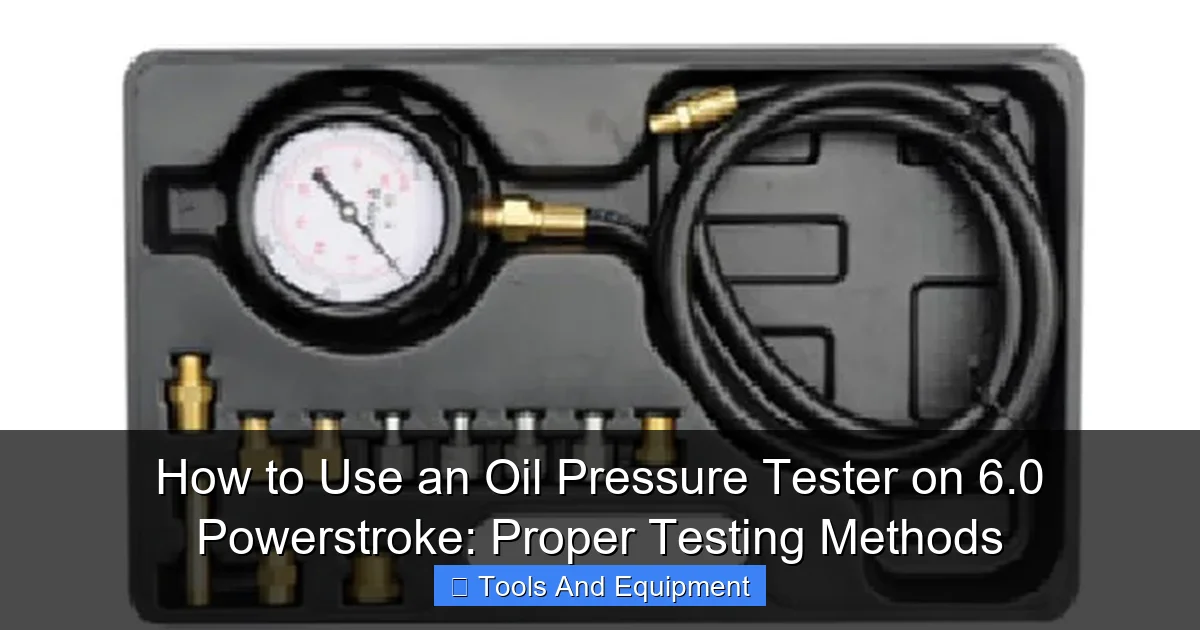
Featured image for this comprehensive guide about How to use an oil pressure tester on 6.0 Powerstroke
Image source: lakesutamasakti.co.id
The 6.0 Powerstroke engine is a legendary workhorse, renowned for its power and torque. However, it’s also known for its intricate and sometimes temperamental oil system. If you own one of these magnificent beasts, you know that keeping its heart – the lubrication and high-pressure oil systems – in top shape is paramount. One of the most critical diagnostic steps you can take to ensure the longevity and performance of your 6.0 Powerstroke is to regularly test its oil pressure.
Low or fluctuating oil pressure can be a symptom of various underlying issues, ranging from a simple clogged oil filter to more severe problems like a failing oil pump, worn bearings, or critical high-pressure oil (HPO) system component failures. Ignoring these signs can lead to catastrophic engine damage and costly repairs. But don’t despair! With the right tools and a clear understanding of the process, performing an oil pressure test on your 6.0 Powerstroke is a manageable DIY task that can save you a significant amount of money and heartache.
This comprehensive guide will walk you through everything you need to know about using an oil pressure tester on a 6.0 Powerstroke. We’ll delve into the unique aspects of its oil system, explain why proper testing is crucial, list the essential tools, provide a detailed step-by-step procedure, help you interpret the results, and offer actionable troubleshooting tips. By the end of this article, you’ll be equipped with the knowledge and confidence to diagnose potential oil pressure issues and keep your 6.0 Powerstroke running strong.
Quick Answers to Common Questions
Why check oil pressure on a 6.0 Powerstroke?
Checking your 6.0 Powerstroke’s oil pressure is crucial because low pressure can indicate serious engine issues like a failing oil pump or worn bearings, potentially saving you from costly repairs down the line. It’s a key diagnostic step for maintaining engine health.
What specific tool do I need for this job?
You’ll definitely need an oil pressure tester kit, preferably one with a gauge that reads up to at least 100-150 PSI and includes the correct NPT fittings to connect to your 6.0 Powerstroke engine. Make sure you have the right adapter for the test port!
Where do I connect the oil pressure tester on my 6.0?
On a 6.0 Powerstroke, you’ll typically connect your oil pressure tester to the oil rail test port, usually found on the top of the engine near the oil filter housing or under the degas bottle, after removing the existing sensor or plug. This port is designed for accurate pressure readings.
What kind of oil pressure readings should I expect from a healthy 6.0 Powerstroke?
For a warm 6.0 Powerstroke, you’re generally looking for around 15-20 PSI at idle and 45-75 PSI or higher at 2000 RPM. Always consult your service manual for precise specifications, but these are good general targets when using an oil pressure tester.
Is there anything special I need to know before I start using an oil pressure tester?
Absolutely! Ensure your engine oil is at the correct level and ideally warmed up to operating temperature for the most accurate readings. Also, make sure your oil pressure tester’s fittings are clean and properly sealed to prevent any leaks during the test.
📋 Table of Contents
- Understanding the 6.0 Powerstroke Oil System: A Two-Stage Marvel
- Why Oil Pressure Testing is Crucial for Your 6.0 Powerstroke
- Gathering Your Tools: What You’ll Need for the Job
- Step-by-Step Guide: How to Perform an Oil Pressure Test on Your 6.0 Powerstroke
- Interpreting Your Readings: What Do the Numbers Mean?
- Troubleshooting Common 6.0 Powerstroke Oil Pressure Issues
- Conclusion: Empowering Your 6.0 Powerstroke Maintenance
Understanding the 6.0 Powerstroke Oil System: A Two-Stage Marvel
Before you dive into testing, it’s vital to understand how the 6.0 Powerstroke’s oil system works. Unlike many conventional engines, the 6.0 Powerstroke utilizes a unique two-stage oil system:
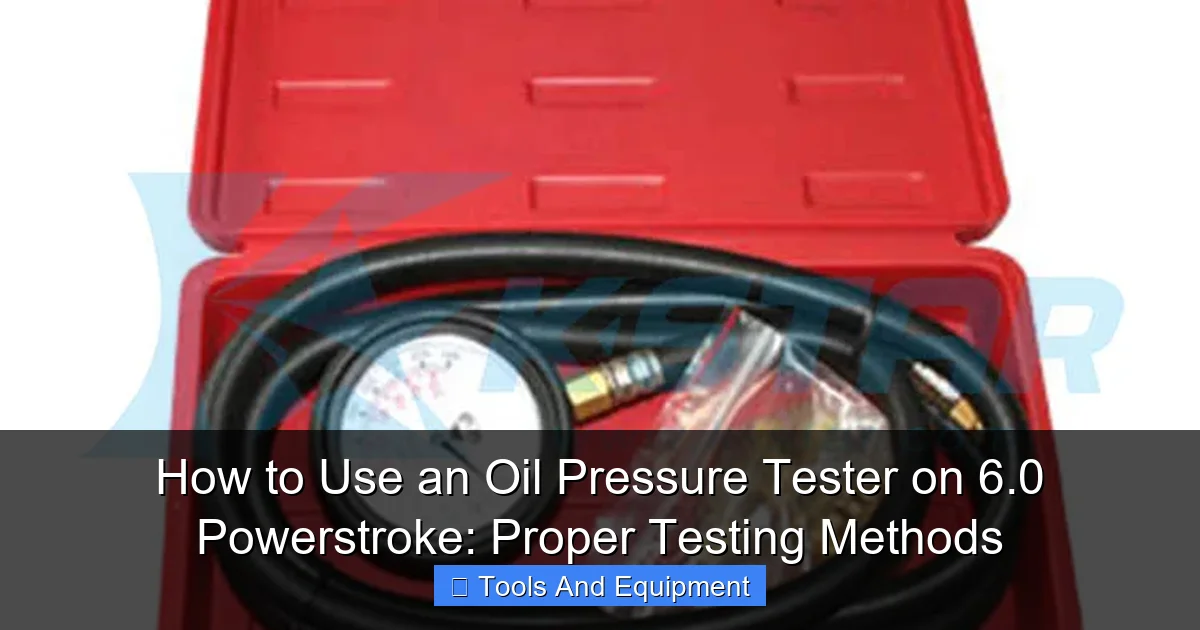
Learn more about How to use an oil pressure tester on 6.0 Powerstroke – How to Use an Oil Pressure Tester on 6.0 Powerstroke: Proper Testing Methods
Image source: k-star.com
- Low-Pressure Oil (LPO) System: This is your conventional lubrication system. An oil pump (driven by the crankshaft) draws oil from the oil pan, sends it through the oil filter, and then circulates it throughout the engine to lubricate moving parts like crankshaft bearings, camshafts, and turbocharger. This system maintains a relatively low pressure, typically around 20-75 PSI, depending on RPM and oil temperature. This is the pressure most standard mechanical oil pressure testers measure directly.
- High-Pressure Oil (HPO) System: This is where the 6.0 Powerstroke gets unique. A separate High-Pressure Oil Pump (HPOP), located at the rear of the engine valley, takes oil supplied by the low-pressure system and pressurizes it to extreme levels – often exceeding 3,000 PSI, sometimes up to 4,000 PSI, or even 4,800 PSI in some scenarios. This highly pressurized oil is then sent to the fuel injectors via standpipes, dummy plugs, and oil rails, acting as the hydraulic medium that fires the injectors. The Injector Control Pressure (ICP) sensor monitors this pressure, and the Injector Pressure Regulator (IPR) valve controls it.
While an external mechanical oil pressure tester primarily measures the low-pressure side, problems in the high-pressure system can sometimes manifest indirectly as low LPO readings or, more commonly, as starting issues, rough running, or lack of power due to insufficient ICP. Understanding this interplay is key to thorough 6.0 Powerstroke oil pressure testing.
| Test Location / Condition | Expected Pressure (PSI) | Significance / Indication of Deviation | Relevant Tooling/Adapter |
|---|---|---|---|
| Engine Idle (Warm) | 20-30 PSI | Below 15 PSI can indicate LPOP wear, excessive bearing clearances, or oil leaks. | Standard Oil Pressure Gauge Kit with M12x1.5 adapter. |
| Engine @ 2000 RPM (Warm) | 45-75 PSI | Below 40 PSI suggests significant LPO system issue, potential engine damage, or a failing LPOP. | Standard Oil Pressure Gauge Kit with M12x1.5 adapter. |
| Minimum Cranking Pressure | >10 PSI (rising quickly) | No pressure while cranking indicates a severe LPOP failure, completely dry system, or catastrophic leak. | Oil Pressure Gauge kit; engine disabled for safe cranking. |
| Oil Cooler Housing Test Port | Matches LPO system pressure | Ideal for verifying overall LPOP health before the oil cooler; comparison with other points can reveal restriction. | M12x1.5 to 1/8″ NPT adapter fitting, standard pressure gauge. |
| High-Pressure Oil (HPO) System (Reference) | Varies (e.g., 500-700 PSI idle, 3000-4000 PSI WOT) | Crucial for injector operation. Low ICP/IPR issues indicate HPOP failure, HPO system leaks, or sensor fault. | Diagnostic Scan Tool (e.g., FORScan, IDS) for ICP/IPR; specialized HPOP pressure tester (separate tool). |
Why Oil Pressure Testing is Crucial for Your 6.0 Powerstroke
The 6.0 Powerstroke has several notorious failure points that directly impact or are impacted by oil pressure. Regular oil pressure testing can help you catch these issues before they become catastrophic:
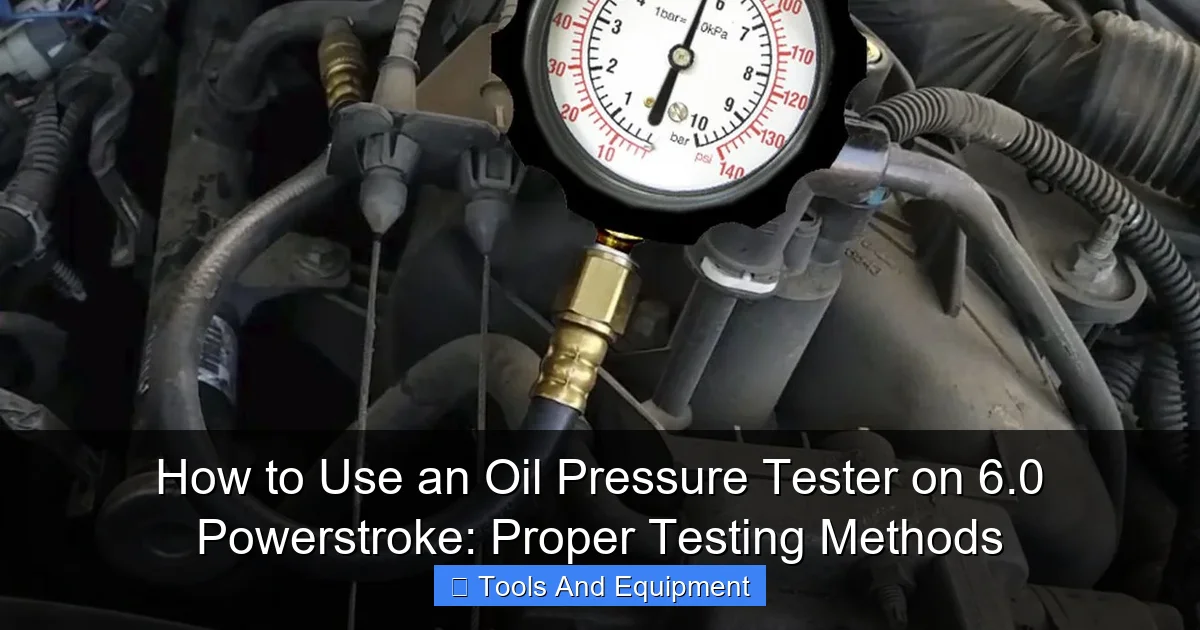
Learn more about How to use an oil pressure tester on 6.0 Powerstroke – How to Use an Oil Pressure Tester on 6.0 Powerstroke: Proper Testing Methods
Image source: cdn11.bigcommerce.com
- Diagnosing HPOP Failure: A failing High-Pressure Oil Pump (HPOP) is a common culprit for no-start or rough-running conditions. While an HPOP directly affects high-pressure oil, its failure can sometimes indirectly lead to overall system distress.
- Identifying IPR Valve Issues: The Injector Pressure Regulator (IPR) valve controls the high oil pressure. A faulty IPR can cause anything from hard starting to erratic engine performance.
- Pinpointing Standpipe and Dummy Plug Leaks: These components are critical for sealing the high-pressure oil system. Leaks here, especially in the updated versions, are incredibly common and lead to a loss of ICP, preventing injector firing.
- Detecting Oil Cooler Clogs: The 6.0 Powerstroke’s oil cooler can clog internally with coolant debris, leading to increased oil temperatures and sometimes affecting the efficiency of the oil pumps. While not a direct pressure issue, it impacts the oil’s properties.
- Assessing Wear and Tear: Over time, engine bearings can wear, increasing clearances and causing a drop in oil pressure. A mechanical gauge can reveal this general engine wear.
- Verifying Oil Pump Health: Whether it’s the main low-pressure oil pump or the HPOP, a drop in pressure can indicate internal wear or failure of these critical components.
- Preventative Maintenance: Regularly checking your 6.0 Powerstroke oil pressure provides a baseline. Any significant deviation from this baseline can alert you to a developing problem, allowing for proactive maintenance rather than reactive, expensive repairs. Data shows that addressing minor oil system issues early can prevent up to 70% of major engine failures in diesel engines.
In short, testing oil pressure on your 6.0 Powerstroke is a non-negotiable step for comprehensive engine diagnostics and preventative care.
Gathering Your Tools: What You’ll Need for the Job
To successfully perform an oil pressure test on your 6.0 Powerstroke, you’ll need a few specialized tools in addition to basic hand tools. Quality tools make the job easier and more accurate.
Essential Tools:
- Mechanical Oil Pressure Gauge/Tester Kit: This is the star of the show. You’ll need a gauge that can read up to at least 100 PSI, preferably 150 PSI, for accurate low oil pressure readings. Ensure it comes with a variety of adapters, specifically one that fits the 6.0 Powerstroke’s oil pressure sensor port.
- Ratchet and Sockets: A 3/8-inch or 1/2-inch drive ratchet set with various sockets (especially a deep well 1-1/16 inch or 27mm for the oil filter cap, and appropriate sizes for the oil pressure sensor).
- Wrench Set: For hose connections and other fasteners.
- Oil Filter Wrench (optional but recommended): If you plan to replace the filter during the process.
- Torque Wrench: Essential for correctly tightening the oil pressure sensor and filter cap to prevent leaks and damage.
- Clean Rags/Shop Towels: For cleaning up oil spills.
- Drain Pan: To catch any spilled oil.
- Safety Glasses and Gloves: Always prioritize safety when working on your vehicle.
- OBD-II Scanner with Live Data Capabilities (Optional but Recommended): While not for measuring mechanical pressure, an advanced scanner can read the ICP (Injector Control Pressure) and IPR (Injector Pressure Regulator) duty cycle, providing crucial insight into the high-pressure oil system, which complements your mechanical low-pressure test. This is essential for comprehensive 6.0 Powerstroke diagnostics.
Having these tools ready will ensure a smooth and efficient oil pressure testing process.
Step-by-Step Guide: How to Perform an Oil Pressure Test on Your 6.0 Powerstroke
Performing an oil pressure test on your 6.0 Powerstroke involves a few key steps. Follow these instructions carefully for accurate results.
Step 1: Prepare the Vehicle and Gather Tools
- Park on a Level Surface: Ensure the truck is on stable, level ground.
- Engine Temperature: For the most accurate readings, the engine should be at operating temperature. Drive the truck for 15-20 minutes, then shut it off. This ensures the oil is warm and has the correct viscosity.
- Safety First: Put on your safety glasses and gloves.
- Locate the Oil Pressure Sensor: On the 6.0 Powerstroke, the factory oil pressure sensor is located near the oil filter housing, usually on the driver’s side of the engine valley, close to the front. It’s a small, cylindrical sensor with an electrical connector.
Step 2: Disconnect and Remove the Factory Oil Pressure Sensor
- Disconnect Electrical Connector: Carefully disconnect the electrical connector from the oil pressure sensor. There’s usually a small tab you need to press or slide.
- Unscrew the Sensor: Using an appropriately sized wrench or socket (often a 1-1/16 inch or 27mm deep socket), carefully unscrew the factory oil pressure sensor. Have a rag ready to catch any drips of oil.
- Inspect the Sensor and Port: Quickly inspect the sensor for any obvious damage or excessive sludge. Also, check the port for any debris.
Step 3: Connect the Mechanical Oil Pressure Tester
- Select the Correct Adapter: Your oil pressure tester kit should come with various adapters. Find the one that threads perfectly into the port where you removed the factory sensor. Ensure the threads match to prevent damage.
- Attach Adapter to Hose: Thread the chosen adapter onto the end of your pressure tester’s hose. Make sure this connection is snug but don’t overtighten.
- Install Tester Hose: Carefully thread the adapter with the hose attached into the oil pressure sensor port on the engine. Hand-tighten first to ensure proper threading, then use a wrench to snug it down. Do not overtighten, as this port is often in an aluminum housing and can be easily stripped or cracked. The goal is a leak-free seal.
- Position the Gauge: Route the pressure gauge itself to a location where you can easily read it from the driver’s seat or with assistance.
Step 4: Perform the Oil Pressure Test
- Crank the Engine (Initial Check): Before starting, you can crank the engine without letting it fire (unplug the FICM or fuse for the fuel pump) for a few seconds. This can build some initial pressure and show if there’s any immediate pressure. You might not get a reading this way if the engine needs to run.
- Start the Engine: Start the engine and let it idle. Observe the pressure reading on your mechanical gauge.
- Record Idle Pressure: Note the pressure reading at idle.
- Increase RPMs: Slowly and steadily increase the engine RPMs to about 2,000-2,500 RPM. Observe how the oil pressure changes.
- Record Higher RPM Pressure: Note the pressure reading at the elevated RPMs.
- Check for Fluctuations: Pay attention to any significant fluctuations, drops, or erratic movements of the needle throughout the RPM range.
- Test with Load (Optional): If you have a trusted assistant and a safe environment, you can take the truck for a very short, light drive to see if pressure changes under load, though static testing is usually sufficient for initial diagnosis.
- Shut Off Engine: Once you’ve collected all your readings, shut off the engine.
Step 5: Disconnect Tester and Reinstall Factory Sensor
- Depressurize: Wait a few minutes for any residual oil pressure to dissipate.
- Remove Tester: Carefully unscrew the adapter and hose from the engine port. Be prepared for a small amount of oil to drain out.
- Reinstall Factory Sensor: Thread the factory oil pressure sensor back into its port. Hand-tighten first, then use your torque wrench to tighten it to the manufacturer’s specification (usually around 11-13 ft-lbs, but always check your service manual). Overtightening can crack the housing, and undertightening will lead to leaks.
- Reconnect Electrical Connector: Reattach the electrical connector to the factory sensor.
- Clean Up: Wipe away any spilled oil and ensure all tools are put away.
You have now successfully completed an oil pressure test on your 6.0 Powerstroke!
Interpreting Your Readings: What Do the Numbers Mean?
Once you have your readings, the next crucial step is understanding what they mean for the health of your engine. For the low-pressure system (what your mechanical gauge measures):
- Normal Idle Pressure (Warm Engine): Typically, you should see anywhere from 20-30 PSI at a warm idle. Some engines might show slightly lower (15-20 PSI) when very hot and idling for extended periods, but anything consistently below 15 PSI at warm idle is a concern.
- Normal Pressure at Higher RPMs (Warm Engine): As you increase RPMs to 2,000-2,500, the pressure should rise and stabilize, usually in the range of 40-75 PSI. Some engines can even reach 80 PSI under certain conditions. The key is that it rises proportionally with RPM and holds steady.
- Cold Start Pressure: On a cold start, especially in colder weather, the oil pressure will be significantly higher due to the thicker oil, often exceeding 75-80 PSI initially. This is normal, and it should gradually drop as the engine warms up.
What Abnormal Readings Indicate:
- Consistently Low Pressure (Idle and RPMs): This is a major red flag. It could indicate a failing low-pressure oil pump, excessive bearing wear (crankshaft or camshaft), a crack in the oil pump pickup tube, or an internal oil leak. This requires immediate investigation.
- Good Idle Pressure, Low at RPMs: This might point to a weak oil pump that can’t maintain pressure under load, or a restriction in the oil galleries.
- Low Idle Pressure, Good at RPMs: This could indicate excessive clearance in the main or rod bearings, or a bypass valve issue.
- Fluctuating or Erratic Pressure: This can suggest a clogged oil screen, a failing pressure relief valve in the oil pump, or air getting into the oil system (though less common in LPO).
- Excessively High Pressure (Rare for LPO): While rare, consistently very high pressure might indicate a stuck-closed pressure relief valve in the oil pump or a severe restriction.
Remember, your mechanical gauge is testing the low-pressure system. While it can’t directly read ICP, low LPO can starve the HPOP, leading to low ICP issues. If your truck has starting or running problems that point to high-pressure oil system issues, you’ll need an OBD-II scanner capable of reading live data for ICP and IPR duty cycle to get the full picture.
Expected 6.0 Powerstroke Oil Pressure Specifications
These values are general guidelines for a warm engine with 15W-40 oil. Always consult your specific service manual for precise figures.
| Condition | Expected Low-Pressure Oil (LPO) PSI | Common Issues with Low Readings |
|---|---|---|
| Warm Idle (650-750 RPM) | 20-30 PSI (Minimum 15 PSI) | Worn bearings, weak LPO pump, internal oil leak |
| 2,000-2,500 RPM (Warm) | 40-75 PSI | Weak LPO pump, major internal oil leak, partially clogged pickup screen |
| Cold Start (Initial Peak) | 75-100+ PSI | Normal for cold, thick oil; drops as engine warms |
Troubleshooting Common 6.0 Powerstroke Oil Pressure Issues
Understanding what your oil pressure tester 6.0 Powerstroke readings mean is just the beginning. The next step is troubleshooting. Here’s a breakdown of common issues and what to look for based on your test results:
Scenario 1: Consistently Low Oil Pressure (Idle & High RPM)
-
Primary Suspects:
- Low-Pressure Oil Pump Failure: The most straightforward cause. The gerotor gears inside the pump can wear, reducing its efficiency.
- Worn Engine Bearings: Main, rod, or camshaft bearings with excessive clearance will allow oil to “leak” out, dropping pressure. This often comes with knocking sounds.
- Clogged Oil Pickup Tube/Screen: A restricted pickup tube or a detached screen in the oil pan will starve the pump.
- Internal Oil Leaks: Less common in the LPO system, but a significant internal crack or gasket failure could cause a pressure drop.
-
Next Steps:
- Verify oil level and condition.
- Consider an oil sample analysis for bearing material.
- Drop the oil pan to inspect the pickup tube and screen.
- Further diagnostic testing of the LPO pump.
Scenario 2: Good Idle Pressure, Low Pressure at Higher RPMs
-
Primary Suspects:
- Weak Low-Pressure Oil Pump: The pump might be able to maintain idle pressure but can’t keep up with demand as RPMs increase.
- Oil Filter Issues: A restricted or incorrect oil filter could cause pressure drops at higher flow rates. Always use OEM or high-quality aftermarket filters.
- Pressure Relief Valve Malfunction: The relief valve in the oil pump might be sticking open, bleeding off pressure prematurely.
-
Next Steps:
- Replace the oil filter with a known good quality one.
- Investigate the LPO pump and its internal pressure relief valve.
Scenario 3: Fluctuating or Erratic Oil Pressure
-
Primary Suspects:
- Intermittent Clog in Oil Pickup: Debris might temporarily block the pickup screen.
- Air in Oil System: Could indicate aeration of the oil, possibly from low oil levels or a failing component causing cavitation.
- Failing Pressure Relief Valve: The valve could be sticking open and closed sporadically.
- Issue with Oil Cooler Bypass Valve: A malfunctioning bypass can cause flow issues.
-
Next Steps:
- Check oil level again.
- Consider an oil and filter change.
- Inspect the oil pan for debris and the pickup tube.
Scenario 4: High Pressure Oil (HPO) System Related Issues (No Start/Hard Start/Rough Idle with OK LPO Readings)
If your mechanical oil pressure tester shows good LPO readings, but you’re still experiencing typical 6.0 Powerstroke no-start or rough running symptoms, the problem likely lies in the high-pressure oil system. You cannot directly measure HPO with a standard mechanical gauge, but you can use an OBD-II scanner to monitor ICP and IPR duty cycle.
-
Primary Suspects:
- Failing HPOP (High-Pressure Oil Pump): Cannot generate enough pressure to fire injectors.
- Leaking Standpipes/Dummy Plugs: Common failure points that bleed off HPO pressure.
- Failing IPR (Injector Pressure Regulator) Valve: Cannot properly control or maintain HPO.
- Leaking Oil Rail Plugs/O-rings: Allowing HPO to escape.
- Leaking Injector O-rings: A common issue, especially with older injectors, allowing HPO to blow by.
- STC Fitting Failure: The “Snap-To-Connect” fitting for the HPOP discharge tube is a very common failure point.
- Clogged IPR Screen: Debris can clog the screen on the IPR valve, hindering its operation.
-
Next Steps (Requires OBD-II Scanner with Live Data):
- Monitor ICP (Injector Control Pressure) during cranking/running. Look for a minimum of 500 PSI to fire the injectors, but ideally higher.
- Monitor IPR (Injector Pressure Regulator) duty cycle. A high duty cycle (e.g., above 70-85%) during cranking without achieving sufficient ICP usually indicates a high-pressure oil leak or a failing HPOP.
- Perform an “air test” on the HPO system (requires specialized tools) to pinpoint the source of a leak.
Remember that the 6.0 Powerstroke’s oil system is complex. A combination of a mechanical oil pressure test for the low-pressure side and an advanced OBD-II scan for the high-pressure side provides the most comprehensive diagnostic picture. Always approach diagnostics systematically to avoid unnecessary parts replacement.
Conclusion: Empowering Your 6.0 Powerstroke Maintenance
Mastering the art of oil pressure testing on your 6.0 Powerstroke is an invaluable skill for any owner. This detailed process, from understanding the unique two-stage oil system to meticulously performing the test and accurately interpreting the results, empowers you to take control of your engine’s health. You’ve learned that consistent and accurate oil pressure is the lifeblood of your 6.0, directly impacting everything from lubrication to injector operation.
By investing in a quality oil pressure tester and following our step-by-step guide, you can confidently diagnose a myriad of potential issues, from worn internal components to critical high-pressure oil leaks, long before they escalate into devastating and expensive repairs. Regular 6.0 Powerstroke oil pressure testing isn’t just about fixing problems; it’s about preventative maintenance, peace of mind, and extending the lifespan of your powerful diesel engine.
Don’t wait for a dashboard warning light or a noticeable drop in performance. Arm yourself with the knowledge and tools discussed here, and make oil pressure testing a regular part of your 6.0 Powerstroke’s maintenance routine. Your engine will thank you for it, delivering reliable power for countless miles to come.
🎥 Related Video: 6.0L Powerstroke: Oil rail air leak test. The easy way!!!
📺 Pro Diesel Repair
Here we show you how to do a leak test using shop air to test if you have any leaks from either or both oil rails on your 6.0L …
Frequently Asked Questions
Why test oil pressure on a 6.0 Powerstroke?
Testing oil pressure is crucial for diagnosing engine health and identifying potential issues like a failing oil pump, worn bearings, or internal oil leaks. For the 6.0 Powerstroke, proper oil pressure is vital for both engine lubrication and the operation of the High-Pressure Oil Pump (HPOP) which injects fuel. Early detection of pressure problems can prevent catastrophic engine damage.
What type of oil pressure tester do I need for a 6.0 Powerstroke?
You’ll need a mechanical oil pressure gauge kit capable of reading pressures up to at least 100 PSI, though some kits go to 300 PSI which is fine. Ensure the kit includes various NPT (National Pipe Thread) adapters, as you’ll likely need a 1/8″ NPT fitting to connect to the test port on your 6.0 Powerstroke. A reliable mechanical gauge is often preferred for accuracy.
Where do I connect the oil pressure tester on a 6.0 Powerstroke engine?
The primary test port for general engine oil pressure on a 6.0 Powerstroke is typically located on the top of the engine, near the oil filter housing. You will usually find a pipe plug that needs to be removed to thread in your oil pressure tester’s adapter. Always refer to your vehicle’s service manual for the exact location if you’re unsure.
How do I properly perform an oil pressure test on my 6.0 Powerstroke?
First, ensure the engine is at operating temperature, as oil viscosity changes with heat. Connect your oil pressure tester to the designated port, then start the engine and observe the readings at idle and at various RPMs, such as 2000 RPM. A cranking test (without starting) can also provide valuable information about the initial pressure buildup.
What are the normal oil pressure readings for a 6.0 Powerstroke?
A healthy 6.0 Powerstroke should typically show around 10-15 PSI at hot idle (600-700 RPM) and climb to 40-75 PSI at 2000 RPM or higher, especially when the engine is warm. When cold, pressures can be significantly higher due to thicker oil. Always compare your readings to the manufacturer’s specifications for your specific year model.
What do low or high oil pressure readings indicate on a 6.0 Powerstroke?
Persistently low oil pressure can suggest issues like a failing oil pump, worn engine bearings, or internal oil leaks. Conversely, unusually high oil pressure might point to a clogged oil passage or a malfunctioning oil pressure relief valve. Both conditions warrant immediate investigation to prevent severe engine damage.