Ford 6.0 Powerstroke Engine Weight: Key Specifications for Your Build
Featured image for this comprehensive guide about Ford 6.0 Powerstroke engine weight
Welcome, fellow gearheads and diesel enthusiasts, to a deep dive into one of the most talked-about engines in Ford’s storied history: the 6.0 Powerstroke. Whether you’re a seasoned mechanic, a DIY enthusiast planning an engine swap, or simply curious about the engineering marvels under the hood of your F-Series Super Duty, understanding every facet of this engine is crucial. Today, our focus zeroes in on a seemingly simple yet profoundly important specification: the Ford 6.0 Powerstroke engine weight.
Why does engine weight matter, you ask? Beyond just knowing if your engine hoist can handle the load, the weight of an engine like the 6.0 Powerstroke has far-reaching implications. It impacts everything from vehicle handling dynamics and suspension requirements to shipping costs and even fuel efficiency. For those undertaking an engine build, a swap, or even just heavy maintenance, an accurate understanding of the 6.0 Powerstroke engine weight is not just helpful—it’s essential for safety, planning, and performance.
In this comprehensive guide, we’re not just going to tell you the number; we’re going to unpack why that number is significant. We’ll delve into the factors contributing to its heft, compare it to its Powerstroke siblings, and provide actionable insights for anyone working with or around this iconic diesel engine. So, buckle up, because we’re about to put the Ford 6.0 Powerstroke engine weight under the microscope, offering key specifications that could make all the difference for your next project.
Quick Answers to Common Questions
What is the typical Ford 6.0 Powerstroke engine weight?
A bare long block for a Ford 6.0 Powerstroke engine usually weighs between 860-900 pounds, while a fully dressed engine can easily tip the scales at around 1,100 pounds. This significant Ford 6.0 Powerstroke engine weight is a crucial specification for any project.
Is the Ford 6.0 Powerstroke engine weight considered heavy compared to other diesels?
Yes, for its class and displacement, the Ford 6.0 Powerstroke engine weight is quite substantial. It’s often heavier than some competing diesel engines from its era, making proper support and handling essential.
Why is knowing the Ford 6.0 Powerstroke engine weight important for my build?
Understanding the Ford 6.0 Powerstroke engine weight is critical for selecting the right engine hoist, calculating your vehicle’s load capacity, and ensuring your suspension system can handle the added mass. It directly impacts safety and performance.
Does the Ford 6.0 Powerstroke engine weight measurement include accessories like the turbo?
When you hear about a “fully dressed” Ford 6.0 Powerstroke engine weight, it typically includes all bolt-on accessories such as the turbocharger, alternator, and fuel system components, which significantly contribute to its overall mass.
Will the Ford 6.0 Powerstroke engine weight affect shipping costs?
Absolutely! The considerable Ford 6.0 Powerstroke engine weight means you’ll definitely incur higher shipping costs compared to lighter engines, so it’s a vital factor to budget for when acquiring one.
📋 Table of Contents
- The Core Question: What is the 6.0 Powerstroke Engine Weight?
- Why Does Engine Weight Matter: More Than You Think
- Breaking Down the Weight: Components and Their Contribution
- Comparative Analysis: 6.0 vs. Other Powerstrokes
- Implications of Weight: Performance, Handling, and Fuel Economy
- Practical Considerations: Shipping, Installation, and Vehicle Modification
- Conclusion: Mastering the Mass of the 6.0 Powerstroke
The Core Question: What is the 6.0 Powerstroke Engine Weight?
Let’s get straight to the heart of the matter. When we talk about the Ford 6.0 Powerstroke engine weight, we’re generally referring to its “dry” weight – meaning without fluids like oil, coolant, or fuel. However, this figure can vary significantly depending on what components are included. Is it a long block? A complete engine with all accessories? These distinctions are vital.
6.0 Powerstroke Long Block Weight
The long block typically includes the engine block, crankshaft, connecting rods, pistons, cylinder heads, camshaft, and valvetrain components. It’s essentially the core of the engine, ready for external components like the turbocharger, intake manifold, injectors, and accessories. The approximate Ford 6.0 Powerstroke engine weight for a long block is generally in the range of:
| Engine Model | Configuration / Description | Approx. Dry Weight (lbs) | Approx. Dry Weight (kg) |
|---|---|---|---|
| Ford 6.0L Powerstroke | Long Block (no accessories) | 860 | 390 |
| Ford 6.0L Powerstroke | Complete Engine (with accessories) | 980 | 445 |
| Ford 7.3L Powerstroke | Complete Engine (for comparison) | 960 | 435 |
| Ford 6.4L Powerstroke | Complete Engine (for comparison) | 1120 | 508 |
- Dry Long Block Weight: 850 – 900 lbs (385 – 408 kg)
This is the figure most commonly cited when discussing the engine’s fundamental mass. It gives you a good baseline for what the core engine structure weighs.
6.0 Powerstroke Complete Engine Weight (with Accessories)
When you add all the necessary accessories that make the engine a functioning unit, the weight naturally increases. This includes components like:
- Turbocharger assembly
- Intake and exhaust manifolds
- Fuel injectors and high-pressure oil pump (HPOP)
- Alternator, power steering pump, and AC compressor
- Flywheel or flexplate
- Engine wiring harness
- Various sensors and brackets
Considering all these components, the Ford 6.0 Powerstroke engine weight for a complete, dressed engine (dry) can range from:
- Complete Dry Engine Weight: 950 – 1050 lbs (430 – 476 kg)
Some sources might even push this slightly higher, nearing 1100 lbs (500 kg), depending on the exact configuration and specific components included in the “complete” definition. Always clarify what’s included when you’re looking at a specific weight figure, especially if purchasing or shipping an engine.
Why Does Engine Weight Matter: More Than You Think
Understanding the Ford 6.0 Powerstroke engine weight isn’t just an academic exercise. It has tangible, real-world implications for anyone involved with these trucks or engines. Let’s break down why this specification is so critical.
Logistics and Shipping Costs
This is often the most immediate concern. If you’re buying a replacement engine, selling one, or moving it from one shop to another, the 6.0 Powerstroke engine weight directly translates into shipping expenses. Freight companies charge by weight and dimensions. A heavier engine means higher shipping costs, which can significantly impact the overall budget of an engine swap or repair.
- Forklift/Engine Hoist Requirements: You’ll need robust equipment capable of safely lifting over 1000 lbs.
- Pallet Strength: Standard pallets might not be sufficient; a heavy-duty or custom pallet is often required.
- Transportation Vehicle Capacity: Ensure the truck or trailer used for transport can handle the engine’s weight safely.
Vehicle Handling and Suspension
The engine is the heaviest single component in most vehicles, and its weight distribution plays a massive role in how the vehicle handles. For a heavy engine like the 6.0 Powerstroke:
- Front Axle Load: The vast majority of this weight sits directly over the front axle. This influences tire wear, braking performance, and steering feel.
- Suspension Components: Factory springs, shocks, and perhaps even control arms are designed to handle this specific weight. Any significant alteration (e.g., engine swap into a lighter chassis) requires careful re-engineering of the suspension.
- Ride Quality: A heavy front end can lead to a stiffer ride, especially on uneven terrain, but also provides a sense of stability on the highway.
Performance and Fuel Economy
While the 6.0 Powerstroke is known for its immense torque, mass is still mass. A heavier engine means the vehicle itself is heavier, which impacts:
- Acceleration: More mass requires more energy to accelerate.
- Braking Distance: Heavier vehicles generally need longer distances to stop.
- Fuel Economy: Every pound costs fuel. While diesel trucks aren’t typically optimized for MPG, a lighter engine would theoretically improve it. The sheer Ford 6.0 Powerstroke engine weight is a contributor to the overall vehicle’s fuel consumption.
Safety and Structural Integrity
When performing maintenance or modifications, knowing the exact 6.0 Powerstroke weight is critical for safety. Using undersized lifting equipment can lead to catastrophic failure, risking injury or severe damage to the engine and vehicle. Furthermore, if you’re considering an engine swap into a non-OEM chassis, the structural integrity of the frame and engine mounts must be meticulously assessed to safely support such a heavy powerplant.
Breaking Down the Weight: Components and Their Contribution
To truly appreciate the Ford 6.0 Powerstroke engine weight, it’s helpful to understand what makes it so heavy. Diesel engines, in general, are robustly built to withstand immense compression ratios and operating pressures. The 6.0 Powerstroke is no exception, featuring heavy-duty components designed for durability.
Engine Block and Heads
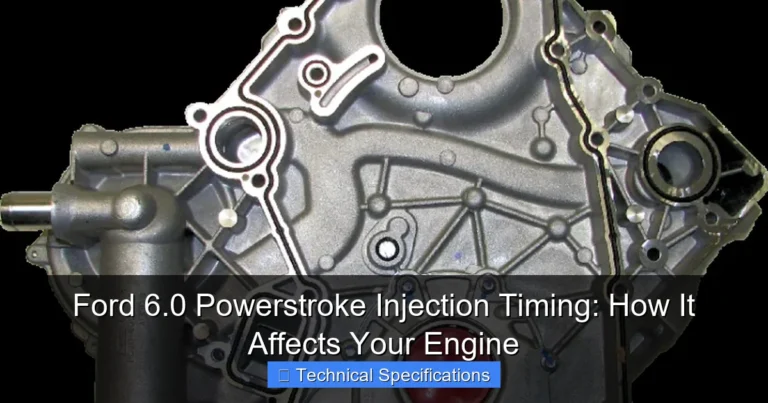
The foundation of the 6.0 Powerstroke is its cast-iron block. Cast iron is incredibly strong and durable, perfect for containing the high pressures of a diesel combustion cycle, but it’s also very dense and heavy. Similarly, the cylinder heads, while aluminum, are substantial to handle the stresses. The sheer volume and thickness of these components contribute significantly to the overall 6.0 Powerstroke engine weight.
- Cast Iron Block: The single heaviest component.
- Aluminum Cylinder Heads: Substantial in size, adding considerable weight despite being aluminum.
Crankshaft and Rotating Assembly
The crankshaft, connecting rods, and pistons are all designed for immense strength. The crankshaft, in particular, is a robust, forged steel component built to handle the engine’s significant torque output. Its dense material and large dimensions add substantial mass to the rotating assembly, further contributing to the total Ford 6.0 Powerstroke engine weight.
- Forged Steel Crankshaft: Exceptionally heavy and strong.
- Heavy-Duty Connecting Rods and Pistons: Designed for high-pressure operation.
Turbocharger and Exhaust System
The Variable Geometry Turbocharger (VGT) on the 6.0 Powerstroke is a complex and heavy unit. Coupled with the cast iron exhaust manifolds, which are also quite substantial, these components add a considerable amount of weight to the top and sides of the engine. The turbo alone can weigh upwards of 40-50 lbs (18-23 kg), and the manifolds add even more.
- VGT Turbocharger: A heavy, complex assembly.
- Cast Iron Exhaust Manifolds: Robust and dense.
Accessory Components and Fluid Capacities
Beyond the core engine, a multitude of accessories adds to the final “dressed” weight:
- High-Pressure Oil Pump (HPOP): A robust, gear-driven pump vital for the HEUI injection system.
- Fuel Injection System: Injectors, fuel lines, and associated components.
- Cooling System Components: Water pump, thermostat housing, oil cooler assembly.
- Alternator, Power Steering Pump, A/C Compressor: These ancillary components, along with their brackets, add significant weight.
- Flywheel/Flexplate: A heavy component connecting the engine to the transmission.
And let’s not forget fluids. While we typically discuss “dry weight,” once filled, the engine’s operational weight increases significantly:
- Engine Oil: Approximately 15 quarts (14.2 liters) adds roughly 30-35 lbs (13.6-15.9 kg).
- Coolant: The engine’s cooling passages hold a portion of the system’s overall coolant capacity, further increasing its operational weight.
Comparative Analysis: 6.0 vs. Other Powerstrokes
To put the Ford 6.0 Powerstroke engine weight into perspective, it’s helpful to compare it to its siblings in the Powerstroke family. Each generation brought changes in design, materials, and technology, which naturally impacted their overall mass.
7.3 Powerstroke (1994-2003)
The legendary 7.3L Powerstroke, known for its extreme durability, is often considered one of the heaviest. It features a massive cast-iron block and heads, contributing to its substantial mass.
- 7.3L Powerstroke Engine Weight (complete dry): Approximately 920 – 980 lbs (417 – 445 kg)
Comparing this to the 6.0 Powerstroke engine weight, you’ll notice they are quite similar, with the 6.0 often being slightly heavier in its complete dressed form due to its more complex turbocharger system and other modern components, despite having a smaller displacement.
6.4 Powerstroke (2008-2010)
The 6.4L Powerstroke followed the 6.0L, maintaining a similar V8 architecture but with twin sequential turbochargers and other advancements. It also utilized a heavy-duty cast-iron block.
- 6.4L Powerstroke Engine Weight (complete dry): Approximately 1050 – 1100 lbs (476 – 499 kg)
The 6.4L is generally considered the heaviest Powerstroke engine, surpassing the Ford 6.0 Powerstroke engine weight due to its larger displacement and more complex dual-turbo setup, and additional emissions equipment.
6.7 Powerstroke (2011-Present)
The current generation 6.7L Powerstroke marked a significant design shift, moving to a compacted graphite iron (CGI) block and positioning the turbocharger in the engine’s valley (“Scorpion” design).
- 6.7L Powerstroke Engine Weight (complete dry): Approximately 950 – 980 lbs (430 – 445 kg)
Interestingly, despite being larger in displacement, the 6.7L Powerstroke often weighs less than both the 6.0L and 6.4L, primarily due to the use of compacted graphite iron (which is stronger and lighter than traditional cast iron) and more integrated design elements. This makes the 6.0 Powerstroke engine weight a mid-range contender in the Powerstroke lineage.
Powerstroke Engine Weight Comparison Table
| Engine | Displacement | Approx. Complete Dry Weight (lbs) | Approx. Complete Dry Weight (kg) |
|---|---|---|---|
| 7.3L Powerstroke | 7.3L | 920 – 980 | 417 – 445 |
| 6.0L Powerstroke | 6.0L | 950 – 1050 | 430 – 476 |
| 6.4L Powerstroke | 6.4L | 1050 – 1100 | 476 – 499 |
| 6.7L Powerstroke | 6.7L | 950 – 980 | 430 – 445 |
As you can see, the Ford 6.0 Powerstroke engine weight places it firmly in the heavy-duty category, slightly heavier than its larger 7.3L predecessor in complete form, and lighter than the behemoth 6.4L, while often being comparable to the more modern 6.7L due to material advancements in the newer generation.
Implications of Weight: Performance, Handling, and Fuel Economy
We’ve touched on this briefly, but let’s expand on the real-world impact of the Ford 6.0 Powerstroke engine weight on the vehicle’s dynamics and overall user experience. This isn’t just about raw numbers; it’s about how the truck feels and performs on the road, at the job site, or on the trail.
Handling and Ride Quality
The substantial 6.0 Powerstroke engine weight contributes significantly to the front-heavy nature of Super Duty trucks. This can be a double-edged sword:
- Stability: The heavy front end can contribute to a feeling of planted stability, especially at highway speeds or when towing heavy loads, helping to resist crosswinds and bumps.
- Agility: Conversely, this weight can reduce the truck’s agility, making it feel less nimble in tight corners or quick maneuvers. Steering response can feel a bit more sluggish compared to lighter vehicles.
- Braking: More mass means more kinetic energy to dissipate. While Super Duty trucks have robust braking systems, the overall vehicle weight, heavily influenced by the 6.0 Powerstroke weight, contributes to longer braking distances, especially when fully loaded.
Suspension and Tire Wear
The engineers at Ford designed the Super Duty’s front suspension specifically to handle the immense Ford 6.0 Powerstroke engine weight. However, over time, components like coil springs, leaf springs (on older models), shocks, and ball joints will wear due to the constant stress. Regular inspection and maintenance of these components are paramount. Furthermore, the heavy front end puts more pressure on the front tires, potentially leading to faster or uneven wear if alignment isn’t maintained or if low-quality tires are used.
Fuel Economy and Towing Capacity
While modern diesel engines are incredibly efficient for their size and power, the basic physics of mass still apply. A heavier vehicle requires more energy to move, accelerate, and maintain speed. The 6.0 Powerstroke weight is a key factor in the overall curb weight of the truck, directly impacting its real-world fuel economy. However, this weight also contributes to the truck’s immense towing and hauling capabilities. The mass provides a stable platform, helping the truck maintain control and stability when pulling heavy trailers, making it ideal for its intended purpose as a workhorse.
Practical Considerations: Shipping, Installation, and Vehicle Modification
Now that we understand the numbers and their implications, let’s look at some actionable advice when dealing with the Ford 6.0 Powerstroke engine weight in a practical context.
Shipping and Packaging Best Practices
If you’re shipping a 6.0 Powerstroke engine, proper preparation is non-negotiable:
- Drain All Fluids: This reduces weight and prevents messy, hazardous leaks during transit. Remove oil, coolant, and any remaining fuel from lines.
- Secure and Protect: Mount the engine securely to a heavy-duty pallet using strong bolts. Use plywood or a custom crate to protect fragile components like the turbo, sensors, and wiring harness from impact. Cover openings to prevent dust and moisture ingress.
- Accurate Weight and Dimensions: Provide the freight company with precise weight (including pallet/crate) and dimensions. Misleading information can lead to surcharges or refusal of shipment. Expect the total shipping weight to be closer to 1100-1200 lbs (500-545 kg) with packaging.
- Insurance: Always insure your shipment for its full value.
Installation and Lifting Tips
Working with an engine this heavy requires the right tools and precautions:
- Heavy-Duty Engine Hoist: Ensure your engine hoist is rated for at least 1500 lbs (680 kg) to safely handle the 6.0 Powerstroke engine weight with a good margin of safety.
- Proper Lifting Points: Always use the designated lifting points on the engine or strong, secure engine mounts. Avoid lifting by the intake manifold, turbo, or other fragile components. A quality engine lifting plate that bolts to the intake manifold bolt holes is often the safest method.
- Balancer: An engine balancer can greatly assist in positioning the engine correctly into the engine bay, allowing for fine adjustments of the engine’s angle.
- Team Lift: Never attempt to lift or maneuver such a heavy engine alone. Have at least one other person spotting and assisting.
- Clear Workspace: Ensure the area around the vehicle is clear of obstructions to allow for safe movement of the engine.
Vehicle Modification Considerations
If you’re considering an engine swap or significant modifications that alter the vehicle’s weight distribution, keep the Ford 6.0 Powerstroke engine weight in mind:
- Suspension Upgrades: If swapping into a non-Super Duty chassis or significantly modifying the existing truck (e.g., heavy aftermarket bumpers, winches), you may need upgraded front springs, shocks, or even custom suspension components to handle the added load.
- Frame Reinforcement: For custom builds, the chassis might require reinforcement to safely support the engine’s weight and torque.
- Braking System: Consider upgrading brakes if the overall vehicle weight significantly increases or if performance driving is intended.
- Center of Gravity: Be mindful of how the engine’s weight affects the vehicle’s center of gravity, which impacts stability and rollover risk, especially for off-road applications.
Understanding these practical considerations helps ensure safety, efficiency, and the long-term integrity of your vehicle and engine.
Conclusion: Mastering the Mass of the 6.0 Powerstroke
From its robust cast-iron block to its intricate turbocharger system, the Ford 6.0 Powerstroke engine weight is a testament to its heavy-duty design and the demanding applications it was built for. Clocking in at approximately 950 to 1050 lbs (430-476 kg) for a complete, dry engine, it sits as a formidable mass within the Super Duty chassis, a true workhorse among diesel powerplants.
We’ve explored not just the raw numbers but also the profound implications of this weight – from the practicalities of shipping and installation to its impact on vehicle handling, suspension, and even fuel economy. Understanding these facets is crucial for anyone engaging with this powerful and sometimes challenging engine. Whether you’re planning a major overhaul, contemplating a performance build, or simply striving for a deeper appreciation of your truck’s capabilities, knowing the precise 6.0 Powerstroke engine weight empowers you to make informed decisions.
The 6.0 Powerstroke remains a beloved and highly capable engine for many, and with proper knowledge and care, its longevity and performance can be maximized. So, arm yourself with these key specifications, employ the right tools, and approach your next project with the confidence that comes from truly understanding the heart of your Ford diesel. Happy wrenching!
🎥 Related Video: Runaway Diesel Engine Stopped with a Leap of Faith 🚛🔥
📺 Trucking Talent
When a runaway diesel engine strikes, it’s do-or-die for the driver. In this heart-stopping moment, a trucker faces a critical decision …
Frequently Asked Questions
What is the dry weight of a Ford 6.0 Powerstroke engine?
The dry weight of a complete Ford 6.0 Powerstroke engine, without any fluids, typically ranges between 900 to 920 pounds (approximately 408-417 kg). This measurement usually includes most of the major bolt-on accessories.
How much does a Ford 6.0 Powerstroke engine weigh with fluids (wet weight)?
When filled with all necessary operational fluids like engine oil and coolant, the “wet” weight of a Ford 6.0 Powerstroke engine increases significantly. You can expect it to weigh closer to 1,000-1,050 pounds (454-476 kg), depending on specific accessory configurations and fluid levels.
Does the Ford 6.0 Powerstroke engine weight include the turbocharger and other accessories?
Yes, the commonly stated dry weight for a Ford 6.0 Powerstroke engine generally refers to a “fully dressed” engine. This means it includes key accessories like the turbocharger, alternator, power steering pump, and intake manifold, making it ready for installation.
Why is knowing the Ford 6.0 Powerstroke engine weight important for vehicle modifications?
Understanding the Ford 6.0 Powerstroke engine weight is crucial for several reasons, especially during engine swaps or heavy modifications. It helps in selecting the correct engine hoist, ensuring your vehicle’s frame and suspension components can safely handle the load, and properly calculating weight distribution for optimal handling and safety.
How does the 6.0 Powerstroke engine’s weight compare to other diesel engines?
The 6.0 Powerstroke is generally lighter than its predecessor, the 7.3L Powerstroke, which often exceeds 1,000 pounds dry. While heavy compared to most gasoline engines, its weight is typical for a robust heavy-duty V8 diesel engine of its era, often comparable to or slightly lighter than some modern counterparts depending on their design.
What is the typical shipping weight for a Ford 6.0 Powerstroke engine?
When preparing a Ford 6.0 Powerstroke engine for shipping, you’ll need to factor in the engine’s dry weight plus the weight of the pallet, crating, and any protective materials. A typical shipping weight for a crated 6.0 Powerstroke often falls within the range of 1,100 to 1,200 pounds (500-544 kg), ensuring safe transport.