High-Pressure Oil Pump Test Tools for 6.0 Powerstroke: Ensure Proper Functioning
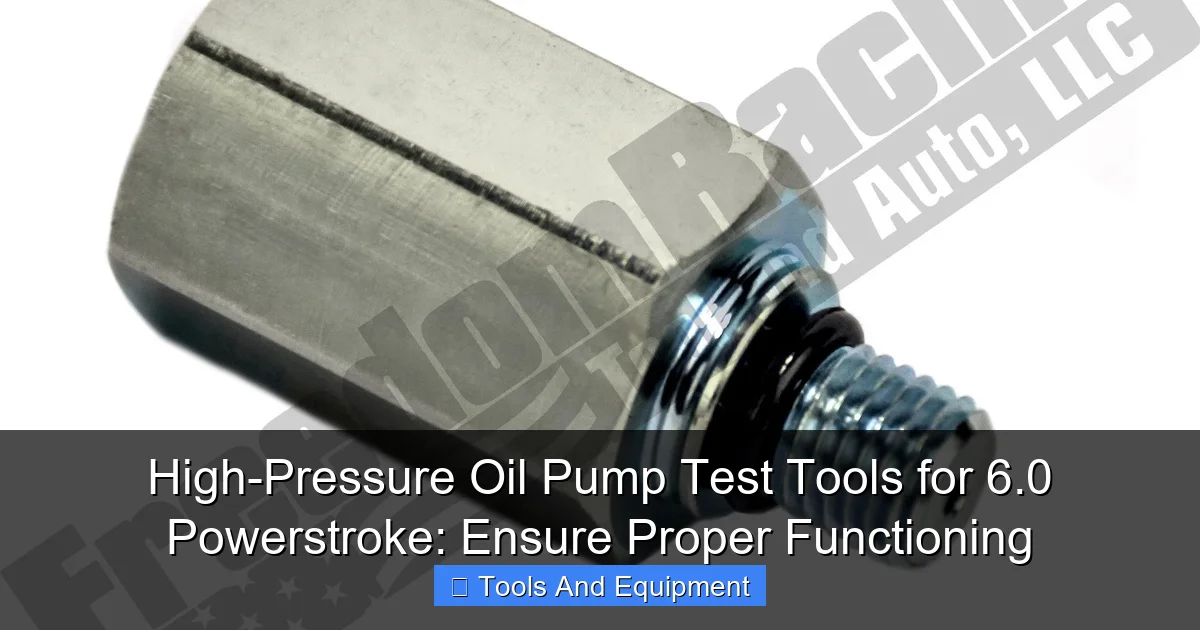
Featured image for this comprehensive guide about High-pressure oil pump test tools for 6.0 Powerstroke
Image source: freedomracing.com
High-Pressure Oil Pump Test Tools for 6.0 Powerstroke: Ensure Proper Functioning
The 6.0 Powerstroke engine, while capable, is well-known for certain vulnerabilities, and its High-Pressure Oil Pump (HPOP) system sits prominently on that list. For owners and technicians alike, diagnosing issues with this critical component can feel like a daunting task, often leading to frustration, lost time, and potentially expensive misdiagnoses. A failing HPOP can manifest as everything from a no-start condition to a significant loss of power, leaving you stranded or severely impacting your truck’s performance.
Before you jump to conclusions or begin replacing expensive parts, accurate diagnosis is paramount. This is where specialized High-pressure oil pump test tools for 6.0 Powerstroke become invaluable. These aren’t just fancy gadgets; they are precision instruments designed to pinpoint exactly where your high-pressure oil system is failing. Whether you’re a seasoned DIY mechanic or a professional looking to streamline your diagnostic process, understanding and utilizing the right tools will save you time, money, and a lot of headaches. This comprehensive guide will walk you through the essential tools, testing procedures, and interpretation of results to get your 6.0 Powerstroke running reliably again.
By the end of this post, you’ll have a clear understanding of what tools you need, how to use them, and what to look for when diagnosing the heart of your 6.0 Powerstroke’s injection system. Let’s dive in and demystify the process of ensuring your truck’s HPOP system is functioning flawlessly.
Quick Answers to Common Questions
Why even bother with high-pressure oil pump test tools for 6.0 Powerstroke?
You need high-pressure oil pump test tools for 6.0 Powerstroke to accurately diagnose performance issues like hard starts, misfires, or no-start conditions. These tools help pinpoint if your pump is delivering adequate pressure, preventing guesswork and unnecessary parts replacement.
What are the essential high-pressure oil pump test tools for 6.0 Powerstroke I’ll need?
The most crucial high-pressure oil pump test tools for 6.0 Powerstroke typically include a high-pressure gauge (rated for 3000-4000 PSI) and an air test kit to check for leaks in the HPOP system. A good scan tool to monitor ICP and IPR duty cycle is also incredibly helpful.
Can I test my 6.0 Powerstroke’s HPOP myself, or do I need a mechanic?
With the right high-pressure oil pump test tools for 6.0 Powerstroke and a basic understanding of your truck’s system, many DIYers can perform initial diagnostic tests. However, complex troubleshooting or repairs might be best left to an experienced professional.
What common symptoms suggest I need to use high-pressure oil pump test tools for 6.0 Powerstroke?
Look out for extended crank times, a complete no-start, rough idle, or a noticeable loss of power, especially under load. These symptoms strongly indicate it’s time to grab your high-pressure oil pump test tools for 6.0 Powerstroke and investigate the pump’s performance.
Will using high-pressure oil pump test tools for 6.0 Powerstroke actually save me money?
Absolutely! By accurately diagnosing a failing HPOP or a related leak, high-pressure oil pump test tools for 6.0 Powerstroke prevent you from replacing expensive parts unnecessarily. Proper testing ensures you fix the right problem the first time, saving both time and money.
📋 Table of Contents
- Why HPOP Testing is Crucial for Your 6.0 Powerstroke
- Essential High-Pressure Oil Pump Test Tools for the 6.0 Powerstroke
- Step-by-Step Guide: How to Test Your 6.0 Powerstroke HPOP System
- Interpreting Your HPOP Test Results: What Do the Numbers Mean?
- Beyond the HPOP: Related 6.0 Powerstroke Oil System Checks
- Table: Key 6.0 Powerstroke High-Pressure Oil System Specifications
- Choosing and Maintaining Your HPOP Test Tools
- Conclusion: Empowering Your 6.0 Powerstroke Diagnosis
Why HPOP Testing is Crucial for Your 6.0 Powerstroke
To truly appreciate the importance of dedicated HPOP test tools, we first need to understand the role the High-Pressure Oil Pump plays in your 6.0 Powerstroke engine. Unlike conventional diesel engines, the 6.0 Powerstroke utilizes a Hydraulic Electronic Unit Injector (HEUI) system. In this ingenious design, the engine’s oil system isn’t just for lubrication; it’s the primary force responsible for firing your fuel injectors. The HPOP takes engine oil (low-pressure oil, LPO) and pressurizes it to extreme levels – often exceeding 3,000 PSI – which then actuates the fuel injectors.
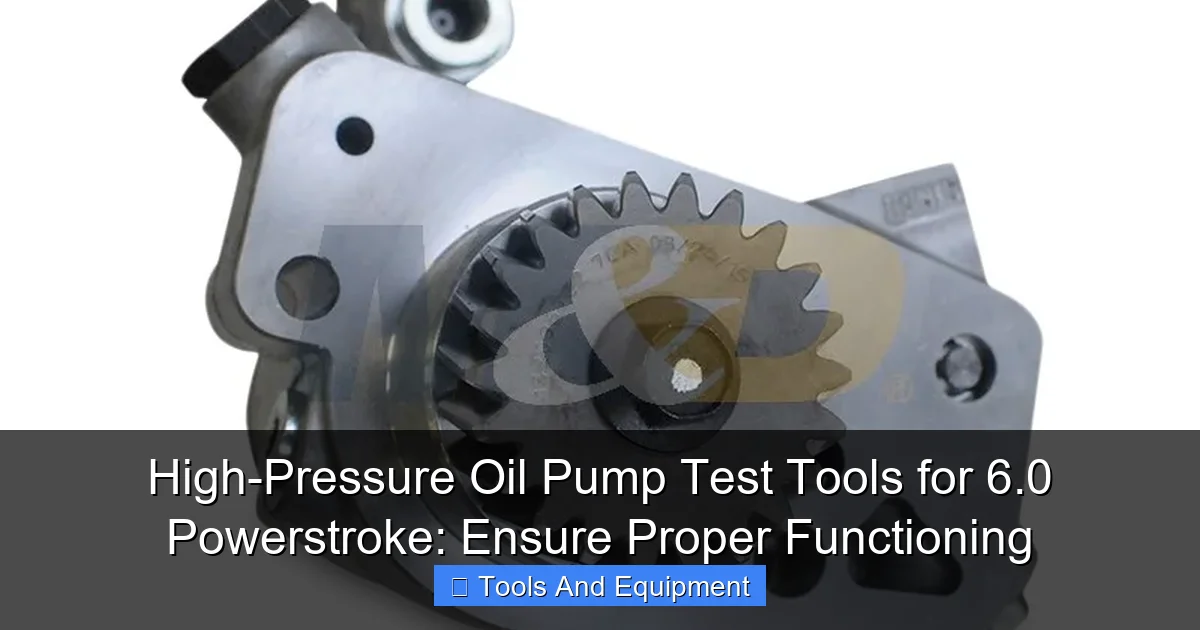
Learn more about High-pressure oil pump test tools for 6.0 Powerstroke – High-Pressure Oil Pump Test Tools for 6.0 Powerstroke: Ensure Proper Functioning
Image source: mdd-img.s3.us-east-2.amazonaws.com
When the HPOP or any part of its high-pressure oil system fails, the injectors simply cannot fire correctly, if at all. This can lead to a cascade of problems:
| Tool Name | Primary Function | Key Diagnostic Information / Typical Readings | Estimated Cost Range |
|---|---|---|---|
| HPOP Air Test Adapter Kit | Blocks high-pressure oil rail and allows shop air (100-120 PSI) into the HPOP system to locate leaks. | Identifies internal oil rail leaks (e.g., dummy plugs, standpipes, branch tubes, injector O-rings) by listening for air escaping. | $60 – $150 |
| High-Pressure Oil System Gauge Kit (0-5000 PSI) | Directly measures actual HPOP output pressure, typically at the ICP sensor port. | Verifies HPOP health: Cranking should be 500+ PSI; Idle 500-750 PSI; WOT 3000-4000 PSI. | $100 – $300 |
| IPR Valve Disconnect Tool / Socket | Facilitates safe removal and installation of the Injection Pressure Regulator (IPR) valve. | Essential for testing or replacing the IPR valve, which directly controls HPOP pressure output. | $30 – $80 |
| ICP Sensor Test Harness / Breakout Cable | Allows for voltage measurement of the ICP sensor signal while the engine is running. | Confirms ICP sensor integrity: KOEO ~0.8V; Idle ~1.0-1.2V; WOT up to 4.5V. | $40 – $100 |
| Diagnostic Scan Tool (e.g., Forscan, AE, IDS) | Monitors live data for ICP (Injection Control Pressure) and IPR (Injection Pressure Regulator) duty cycle. | Provides digital readings: Desired/Actual ICP; IPR Duty Cycle (e.g., 20-30% idle, 60-85% WOT under load). | $20 (software license) – $1500+ (professional) |
- No-Start Condition: The most common and frustrating symptom. If the HPOP cannot build enough pressure (typically at least 500 PSI) during cranking, the engine won’t start.
- Extended Cranking: The engine struggles to start, often taking many seconds or even minutes to fire up. This indicates a slow pressure build-up.
- Rough Idle/Stalling: Inconsistent pressure delivery can cause the engine to run poorly at idle, or even stall.
- Loss of Power/Acceleration: Under load, a weak HPOP can’t maintain the necessary pressure for optimal injector function, leading to a noticeable drop in performance.
- Decreased Fuel Economy: Inefficient injector operation due to insufficient oil pressure can lead to more fuel being consumed for less power.
Given that the high-pressure oil system is complex and interconnected – involving the HPOP, IPR valve, ICP sensor, standpipes, dummy plugs, STC fitting, and injector O-rings – accurately pinpointing the failure point without the right tools is like searching for a needle in a haystack. Guessing leads to replacing expensive parts unnecessarily, a costly endeavor that often fails to solve the root problem. Investing in proper 6.0 Powerstroke HPOP diagnostic tools pays for itself by enabling precise troubleshooting, saving you money, and restoring your truck’s reliability faster.
Essential High-Pressure Oil Pump Test Tools for the 6.0 Powerstroke
Diagnosing your 6.0 Powerstroke’s high-pressure oil system requires a multi-faceted approach, employing a range of specialized tools. While some are electronic and interface with the vehicle’s computer, others are mechanical and designed for direct physical testing. Here’s a breakdown of the essential high-pressure oil pump test tools for 6.0 Powerstroke owners and technicians:
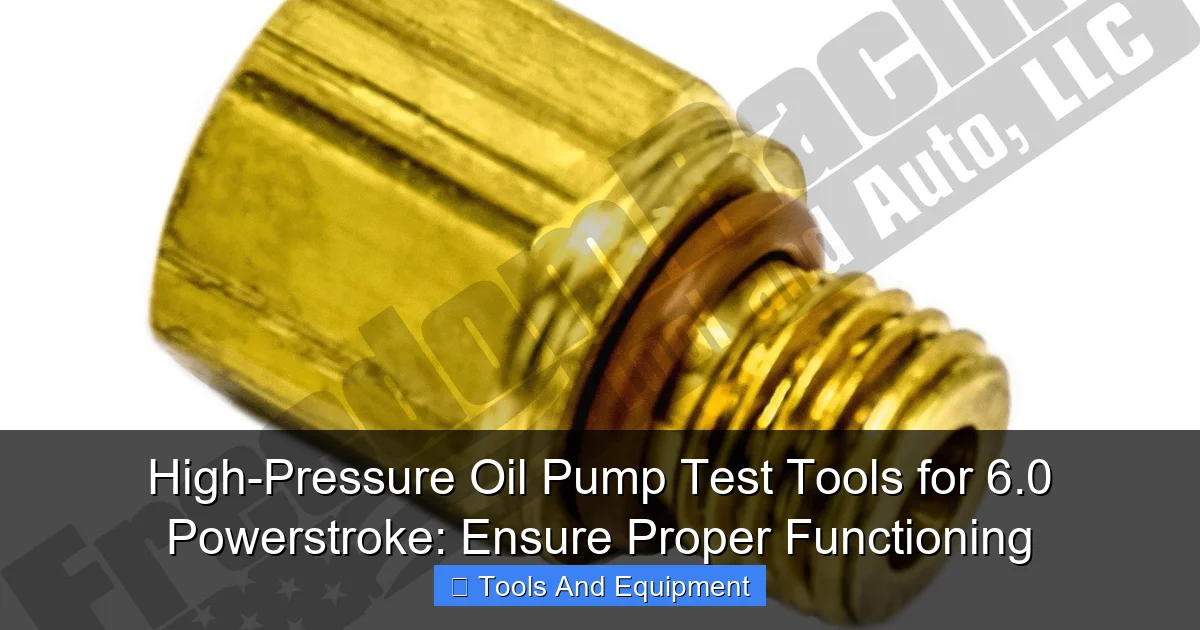
Learn more about High-pressure oil pump test tools for 6.0 Powerstroke – High-Pressure Oil Pump Test Tools for 6.0 Powerstroke: Ensure Proper Functioning
Image source: freedomracing.com
Scan Tools / Diagnostic Software
Modern vehicles are heavily reliant on their onboard computers, and the 6.0 Powerstroke is no exception. A good scan tool is your first line of defense.
- Ford IDS (Integrated Diagnostic Software): The official Ford dealer tool, offering the most comprehensive diagnostics, programming, and bidirectional controls. It’s expensive but provides unparalleled depth.
- FORScan: An incredibly powerful and affordable software package that runs on a laptop with an OBD-II adapter. It provides near-dealer-level access to PIDs (Parameter Identifiers), DTCs (Diagnostic Trouble Codes), and some module functions specific to Ford vehicles. Essential for any 6.0 Powerstroke DIYer.
- High-End Aftermarket Scan Tools: Brands like Snap-on, Autel, and Launch offer professional-grade scan tools with extensive Powerstroke capabilities, including live data monitoring and bidirectional controls.
Key PIDs to Monitor: When using a scan tool, focus on: ICP_ACT (Injector Control Pressure Actual), ICP_DES (Injector Control Pressure Desired), IPR_PCT (Injector Pressure Regulator Duty Cycle), and FICM_V (Fuel Injection Control Module Voltage).
High-Pressure Oil System Leakage Testers (Dummy Injector Kit)
This mechanical test is crucial for finding leaks within the high-pressure oil circuit itself. The primary tool here is a dummy injector kit or dedicated air test adapters.
- Dummy Injector Kit: These are specially designed plugs that replace one or more injectors or other components (like the IPR valve) to seal off the high-pressure oil rail. They often come with a quick-connect fitting for an air hose.
- Compressed Air Source: A shop air compressor capable of delivering at least 100-150 PSI.
- Regulator and Gauge: To precisely control and monitor the air pressure being introduced into the system.
- Stethoscope/Chassis Ear: To listen for air leaks within the engine valley. This is how you pinpoint the exact location of the leak (standpipes, dummy plugs, STC fitting, injector O-rings).
IPR Valve & ICP Sensor Testers
The Injector Pressure Regulator (IPR) valve and Injector Control Pressure (ICP) sensor are critical components in regulating and monitoring the high-pressure oil system. Testing them often involves electrical checks and direct pressure measurement.
- Multimeter: For checking resistance, continuity, and voltage at the IPR and ICP sensor connectors. A good quality digital multimeter is a must-have.
- IPR Valve Test Socket/Tool: Allows you to easily remove and reinstall the IPR valve, often located in a tight spot under the turbo.
- ICP Sensor Test Adapter: Some kits include an adapter that allows you to connect a mechanical pressure gauge directly to the ICP sensor port for verification.
- Breakout Harnesses: For safely back-probing or inserting into connectors to test circuits without damaging wiring.
HPOP Pressure Tester (External/Mechanical)
While the ICP sensor provides an electronic reading, a dedicated mechanical pressure gauge offers a definitive, undeniable reading of actual oil pressure.
- High-Pressure Gauge with Adapters: A specialized gauge capable of reading up to 5,000 PSI or more, equipped with the correct fittings to connect to the ICP sensor port or another suitable test port on the high-pressure oil rail. This tool verifies the ICP sensor’s accuracy and provides a direct measurement of the HPOP’s output.
FICM Tester
While not directly an HPOP test tool, the Fuel Injection Control Module (FICM) is intricately linked to the overall operation of the HEUI system. A weak FICM can mimic HPOP symptoms, making its testing crucial.
- Multimeter (again): To check FICM voltage at various pins while cranking and running.
- Dedicated FICM Tester: Some specialized tools can test the FICM’s output voltage under load, providing a more comprehensive diagnosis than a simple multimeter.
By assembling this arsenal of tools, you equip yourself to thoroughly diagnose any high-pressure oil system issue on your 6.0 Powerstroke, moving beyond guesswork to precise, data-driven repairs.
Step-by-Step Guide: How to Test Your 6.0 Powerstroke HPOP System
Knowing the tools is one thing; knowing how to use them effectively is another. Here’s a systematic approach to testing your 6.0 Powerstroke HPOP system, combining electronic and mechanical diagnostics:
1. Initial Scan Tool Diagnostics
This is always your starting point. Connect your scan tool (FORScan, IDS, etc.) to the OBD-II port.
- Check for Diagnostic Trouble Codes (DTCs): Look for codes related to the ICP sensor (P2285, P2286), IPR valve (P2290, P2291), or FICM (P0611, P062B). Address these first.
- Monitor Live Data (PIDs) while Cranking:
- ICP_DES (Desired ICP): Should build to at least 500 PSI (or ~3450 kPa) during cranking.
- ICP_ACT (Actual ICP): Should closely match ICP_DES. If ICP_ACT is significantly lower (e.g., below 300 PSI when desired is 500 PSI), you have a pressure problem.
- IPR_PCT (IPR Duty Cycle): During cranking, if the HPOP system is struggling to build pressure due to a leak or weak pump, the IPR duty cycle will often go to 85% or higher. A healthy system might show 25-45% during cranking.
- FICM_V (FICM Voltage): Should be a steady 48.0-48.5 volts. Anything below 45V can prevent starting or cause poor performance.
- RPM: Ensure the engine is cranking at a sufficient RPM (at least 150 RPM) as battery voltage and starter health impact the HPOP’s ability to build pressure.
If ICP_ACT is low during cranking and IPR_PCT is high, you have a high-pressure oil issue. This could be a leak, a bad IPR, or a weak HPOP. Proceed to the next step.
2. High-Pressure Oil System Air Test (The “Stethoscope Test”)
This is often the most revealing test for pinpointing internal leaks.
- Charge Batteries: Ensure your batteries are fully charged for optimal cranking later.
- Locate IPR Valve: It’s usually located under the turbocharger on the back of the engine.
- Disconnect IPR Valve Electrical Connector: This is critical.
- Install IPR Air Test Adapter / Dummy Injector: Remove the IPR valve and install your specialized air test fitting or a dummy injector kit that allows you to introduce compressed air directly into the high-pressure oil system. Some kits allow you to block off one side of the system at a time to isolate leaks.
- Apply Compressed Air: Connect your regulated air supply. Slowly increase pressure to 100-150 PSI.
- Listen for Leaks:
- Use a stethoscope or chassis ear and listen carefully inside the engine valley, around the turbo, and down by the injectors.
- Hissing Sounds: A distinct hiss indicates an air leak. Common culprits include:
- Standpipes and Dummy Plugs: Often leak at the O-rings.
- STC Fitting (Snap-To-Connect): A very common failure point for HPOP leaks.
- Injector O-rings: Air escaping into the fuel system or intake.
- HPOP Cover Gasket: Less common but possible.
- Listen also at the oil fill cap, exhaust, and intake.
- Note Location: Pinpoint the exact location of the loudest hiss. This is your leak.
- Remove Air and Adapter: Once diagnosis is complete, relieve air pressure and remove the test tools.
3. Mechanical HPOP Pressure Test
This test provides a definitive, external verification of the HPOP’s output and validates the ICP sensor readings.
- Locate ICP Sensor: On early 6.0L models (2003-early 2004), it’s at the front of the engine on the passenger side. On later models, it’s under the turbo, often requiring turbo removal for access.
- Disconnect and Remove ICP Sensor: Carefully disconnect the electrical connector and remove the sensor.
- Install Mechanical Pressure Gauge: Thread the high-pressure gauge with the appropriate adapter into the ICP sensor port.
- Disconnect IPR Valve: (Some prefer this to force the HPOP to max pressure; ensure it doesn’t cause damage on your setup or consult repair manual).
- Crank the Engine: Crank the engine for 5-10 seconds while observing the mechanical gauge.
- Expected Reading: You should see pressure build rapidly to at least 500 PSI (for starting) and ideally climb to 2000-3000 PSI with extended cranking if there are no leaks.
- If the gauge reads very low or zero, it confirms a severe leak or a failed HPOP.
- Remove Gauge and Reinstall ICP Sensor: Once done, relieve pressure, remove the gauge, and reinstall the ICP sensor.
4. IPR Valve & ICP Sensor Checks
While the scan tool provides data, a physical check can confirm component health.
- IPR Valve Resistance Check: Disconnect the IPR valve and measure its resistance across the two pins. It should typically be around 10.5-11.5 ohms at room temperature. An open circuit or very low resistance indicates a faulty IPR coil.
- IPR Valve Operation: With the IPR disconnected, apply 12V and ground to the IPR valve’s pins briefly (do NOT hold it on). You should hear an audible click as the valve opens and closes.
- ICP Sensor Circuit Test: Check for 5V reference voltage at the ICP sensor connector. Also check for a good ground.
By systematically performing these tests, you gather crucial data points that will lead you directly to the root cause of your 6.0 Powerstroke’s high-pressure oil system issues.
Interpreting Your HPOP Test Results: What Do the Numbers Mean?
Gathering data from your 6.0 Powerstroke HPOP test tools is only half the battle. The true diagnostic power lies in correctly interpreting what those numbers and observations are telling you. Here’s a guide to understanding your results:
Scan Tool PID Analysis
- Low ICP_ACT vs. High ICP_DES (during cranking):
- Indication: The PCM (Powertrain Control Module) is commanding high pressure, but the system isn’t delivering it.
- Possible Causes: This points to a leak in the high-pressure oil system (standpipes, dummy plugs, STC fitting, injector O-rings), a faulty IPR valve that can’t seal, or a weak/failed HPOP.
- Next Step: Proceed to the air test. If the air test reveals no significant leaks, then the IPR valve or HPOP itself is likely the culprit.
- High IPR_PCT (85%+) during Cranking:
- Indication: The PCM is trying to close the IPR valve almost completely to build pressure.
- Possible Causes: Again, this strongly suggests a high-pressure oil leak or a severely weak HPOP that cannot overcome even minimal leaks. The IPR is working overtime to compensate.
- Next Step: Air test is critical.
- Low FICM_V (below 45V):
- Indication: The FICM isn’t receiving or generating enough voltage to properly fire the injectors.
- Possible Causes: Weak batteries, faulty alternator, or a failing FICM.
- Impact on HPOP Diagnosis: A weak FICM can cause a no-start even with a perfectly healthy HPOP system, or it can exacerbate HPOP issues by creating a dual problem. Always ensure FICM voltage is healthy before diving deep into HPOP repairs.
Air Test Interpretation
- Loud Hissing in the Engine Valley:
- Specific Areas to Check:
- Rear of the Engine: Often indicates a leaking STC fitting on the HPOP or leaking branch tube O-rings where they connect to the HPOP.
- Under the Valve Covers: Could be injector O-rings, standpipe O-rings, or dummy plug O-rings.
- Near HPOP Cover: A rare but possible HPOP cover gasket leak.
- Action: Visually inspect the identified area. Often, you’ll see oil residue where the air is escaping. Repair the specific leak.
- Specific Areas to Check:
- No Significant Hissing (or very minimal):
- Indication: The high-pressure oil system is relatively sealed, meaning the low ICP_ACT you saw on the scan tool is likely due to a faulty IPR valve or a weak/failed HPOP itself.
- Action: Proceed to check the IPR valve’s electrical components and then consider replacing the HPOP.
Mechanical Pressure Gauge Readings
- No or Very Low Pressure (e.g., <100 PSI during cranking):
- Indication: Severe high-pressure oil leak or a completely failed HPOP.
- Action: If air test showed a major leak, fix that first. If air test was clean, suspect a failed HPOP.
- Pressure Builds Slowly to ~500 PSI, then drops or struggles:
- Indication: Could be a slow leak that the HPOP struggles to overcome, or a weak HPOP that can’t generate enough volume.
- Action: Compare with air test. If a small leak was found, fix it. If the air test was clean, the HPOP might be failing internally.
- Pressure builds rapidly to >2000 PSI (with IPR disconnected/commanded closed):
- Indication: A healthy HPOP. If you still have a no-start, the issue is likely not the HPOP or its related leaks. Look at IPR valve function (electrical), ICP sensor accuracy, or even the FICM.
By correlating data from all these tests, you can accurately diagnose the problem. For instance, if your scan tool shows low ICP_ACT and high IPR_PCT, your air test finds a hiss at the STC fitting, and your mechanical gauge confirms low pressure, you’ve got a clear path to repair: replace the STC fitting on your 6.0 Powerstroke HPOP.
Beyond the HPOP: Related 6.0 Powerstroke Oil System Checks
While the HPOP is a central figure, its operation is deeply intertwined with other components of the 6.0 Powerstroke oil system. A comprehensive diagnostic approach, facilitated by your HPOP test tools, often requires looking at these related parts.
Standpipes and Dummy Plugs
These components, located under the valve covers, provide the high-pressure oil path to the injectors and cap off the high-pressure oil rails. Their O-rings are notorious for deteriorating over time, leading to significant internal leaks.
- When to Check: If your air test reveals a leak under the valve covers.
- What to Look For: Visually inspect the O-rings for cracking, flattening, or tears when you remove them. Even minor damage can lead to a substantial pressure drop.
- Action: Replace with updated, higher-quality standpipes and dummy plugs. This is a common and often overlooked fix for persistent high-pressure oil leaks.
STC Fitting (Snap-To-Connect)
The original STC fitting connecting the HPOP to the branch tube was a design flaw on early 6.0 Powerstrokes. It’s a prime candidate for catastrophic failure, leading to a sudden and complete loss of high-pressure oil. Newer, one-piece designs are available.
- When to Check: If your air test shows a loud hiss from the very back of the engine valley near the HPOP.
- What to Look For: The original two-piece fitting can separate. The updated one-piece design is much more robust.
- Action: Replace any original two-piece 6.0 Powerstroke STC fitting with the updated one-piece design as a preventative measure or when diagnosing a leak in that area.
Injector O-rings
Each injector has several O-rings (upper and lower) that seal it against the oil rail and the cylinder head. Worn or damaged O-rings can allow high-pressure oil to leak into the combustion chamber or valve cover area.
- When to Check: If the air test indicates a leak from individual injector locations, or if you have fuel in your oil (though this can have other causes).
- What to Look For: Discolored, flattened, or missing O-rings when injectors are removed.
- Action: Always replace injector O-rings when removing injectors for any reason. Use quality OEM or reputable aftermarket O-rings.
Low-Pressure Oil System
While the focus is on “high-pressure,” the HPOP needs a consistent supply of clean, low-pressure engine oil to function. A problem with the low-pressure oil system can mimic HPOP issues.
- Components: Oil filter, oil cooler, oil pump (LPO pump).
- Checks: Ensure proper oil level, use the correct oil viscosity, confirm oil filter is a genuine Ford or high-quality aftermarket (not a cheap “will-fit” filter), and monitor oil pressure from the LPO pump if possible. A restricted oil cooler can reduce LPO flow to the HPOP.
- Action: Regular oil changes with quality oil and filters are essential preventative maintenance. Address any known oil cooler issues.
By considering these interconnected components, you ensure that your diagnosis isn’t just focused on the HPOP itself, but on the entire system it operates within, leading to a more complete and lasting repair for your 6.0 Powerstroke.
Table: Key 6.0 Powerstroke High-Pressure Oil System Specifications
Understanding the target values for various parameters is crucial for accurate diagnosis using your 6.0 Powerstroke HPOP test tools. This table provides essential specifications for a healthy system:
| Parameter | Expected Value / Range | Significance of Deviation |
|---|---|---|
| ICP Minimum Start Pressure | 500 PSI (3447 kPa) minimum during cranking | Below 500 PSI = No-start. Indicates severe leak or weak HPOP. |
| ICP Pressure (Idle, Warm) | 580-750 PSI (4000-5200 kPa) | Low at idle = potential leak or IPR/HPOP issue. High at idle = IPR stuck closed or faulty. |
| ICP Pressure (WOT, Loaded) | 2500-3800 PSI (17237-26200 kPa) | Lower than expected = insufficient pressure delivery under load, impacting power. |
| IPR Cranking Duty Cycle (No-Start) | 25-45% (healthy system) | 85% or higher = PCM attempting to build max pressure, but system is failing (leak or weak HPOP). |
| IPR Duty Cycle (Idle, Warm) | 22-35% | Higher than normal = compensating for a small leak. Lower than normal = IPR stuck open or system over-pressurizing. |
| FICM Main Power Voltage | 48.0-48.5 Volts (stable) | Below 45V = FICM issues, leading to no-start or poor performance, even if HPOP is good. |
| Engine Cranking RPM | Minimum 150 RPM | Below 150 RPM = insufficient engine speed for HPOP to build pressure; check batteries/starter. |
| IPR Valve Coil Resistance | 10.5-11.5 Ohms at room temp | Out of range = faulty IPR valve coil. |
Always consult your factory service manual for the most precise and model-year specific specifications for your particular 6.0 Powerstroke engine, as minor variations can occur.
Choosing and Maintaining Your HPOP Test Tools
Investing in the right high-pressure oil pump test tools for your 6.0 Powerstroke is a smart move, but choosing wisely and maintaining them properly ensures they serve you well for years to come.
Choosing Your Tools: Quality Over Cheap
- Reputation Matters: Opt for tools from reputable brands. For diagnostic software, FORScan is a community favorite for its capability and affordability. For mechanical tools, look for robust construction and accurate gauges.
- Read Reviews: Check user reviews for durability, ease of use, and accuracy.
- Compatibility: Ensure any scan tool or adapter is fully compatible with your specific 6.0 Powerstroke year and model.
- Completeness: Some kits offer a more complete set of adapters for various testing points (e.g., IPR test, ICP port test).
- Budget vs. Need: While professional-grade tools like Ford IDS are comprehensive, FORScan and a good mechanical HPOP test kit offer excellent value and capability for most DIYers and independent shops. Don’t cheap out on precision gauges; inaccurate readings are worse than no readings.
Maintaining Your Tools: Extend Their Lifespan
- Cleanliness: Always clean your tools after use. Oil and grease can degrade plastic parts and obscure readings. Wipe down air test fittings and gauges.
- Proper Storage: Store tools in their original cases or a dedicated toolbox to protect them from damage, dust, and moisture.
- Handle with Care: Precision gauges and electronic equipment are delicate. Avoid dropping them or subjecting them to extreme temperatures.
- Check for Damage: Before each use, quickly inspect hoses, connectors, and O-rings for cracks, fraying, or wear. Replace any damaged components immediately to ensure accurate and safe testing.
- Software Updates: Keep your scan tool software (like FORScan) updated to ensure you have the latest diagnostic capabilities and definitions for DTCs and PIDs.
- Battery Management: For battery-powered diagnostic tools, ensure batteries are charged or replaced as needed.
By making informed choices when purchasing and meticulously caring for your diagnostic arsenal, you ensure that your 6.0 Powerstroke HPOP test tools remain reliable and ready to tackle any high-pressure oil system challenge that comes your way. This proactive approach will save you countless hours and dollars in the long run.
Conclusion: Empowering Your 6.0 Powerstroke Diagnosis
Navigating the complexities of the 6.0 Powerstroke’s High-Pressure Oil Pump system doesn’t have to be a journey filled with frustration and guesswork. By equipping yourself with the right High-pressure oil pump test tools for 6.0 Powerstroke and understanding how to effectively use and interpret them, you gain the power to accurately diagnose and confidently repair your truck.
From the initial electronic scrutiny of a capable scan tool, through the revealing acoustic clues of an air test, to the undeniable precision of a mechanical pressure gauge, each tool plays a vital role in painting a complete picture of your engine’s health. Remember, a thorough diagnosis is the cornerstone of any successful repair, preventing costly missteps and ensuring your hard-earned money is spent on the actual problem, not just symptoms.
Whether you’re battling a stubborn no-start, a lingering loss of power, or simply performing preventative maintenance, the insights provided by these specialized tools are invaluable. Invest in quality, learn the procedures, and empower yourself to keep your 6.0 Powerstroke running strong and reliable for years to come. Don’t let HPOP issues keep you off the road; take control of your truck’s destiny with precise diagnostics.
Frequently Asked Questions
Why are high-pressure oil pump test tools necessary for my 6.0 Powerstroke?
These tools are crucial for accurately diagnosing issues with your 6.0 Powerstroke’s High-Pressure Oil Pump (HPOP) system. They allow you to measure actual oil pressure and identify leaks or failures that can cause drivability problems and no-start conditions.
What symptoms indicate I might need to use high-pressure oil pump test tools on my 6.0 Powerstroke?
You should consider using high-pressure oil pump test tools if your 6.0 Powerstroke exhibits symptoms like extended crank times, hard starting (especially when hot), sudden loss of power, or a complete no-start condition. These issues often point to a failing HPOP or related high-pressure oil system leak.
What types of high-pressure oil pump test tools are available for the 6.0 Powerstroke, and how do they generally work?
Common high-pressure oil pump test tools for the 6.0 Powerstroke include gauges that connect to the high-pressure rail and air test fittings that allow you to pressurize the system with shop air. The gauges provide live pressure readings, while the air test fittings help pinpoint internal or external oil leaks.
How do these high-pressure oil pump test tools help ensure proper functioning of my 6.0 Powerstroke’s HPOP?
High-pressure oil pump test tools for the 6.0 Powerstroke provide critical data by measuring actual oil pressure or allowing for system leak detection. This precision helps confirm if the HPOP is producing sufficient pressure or if there are leaks in the Injector Control Pressure (ICP) system, ensuring proper functioning and preventing misdiagnosis.
Is using high-pressure oil pump test tools on a 6.0 Powerstroke complicated, and what basic steps are involved?
While some mechanical knowledge is beneficial, using high-pressure oil pump test tools on a 6.0 Powerstroke isn’t overly complicated for a DIYer or mechanic. Basic steps often involve connecting a gauge to the ICP sensor port or utilizing an air test kit to pressurize the system and listen for leaks.
What common high-pressure oil pump issues can these test tools help diagnose on a 6.0 Powerstroke?
These high-pressure oil pump test tools are invaluable for diagnosing low ICP pressure, which can be caused by a failing HPOP itself, a leaking STC fitting, faulty standpipes or dummy plugs, or even a bad ICP sensor. They help pinpoint the exact source of high-pressure oil system failures.