Ford 6.0 Powerstroke Horsepower and Torque: Performance Insights
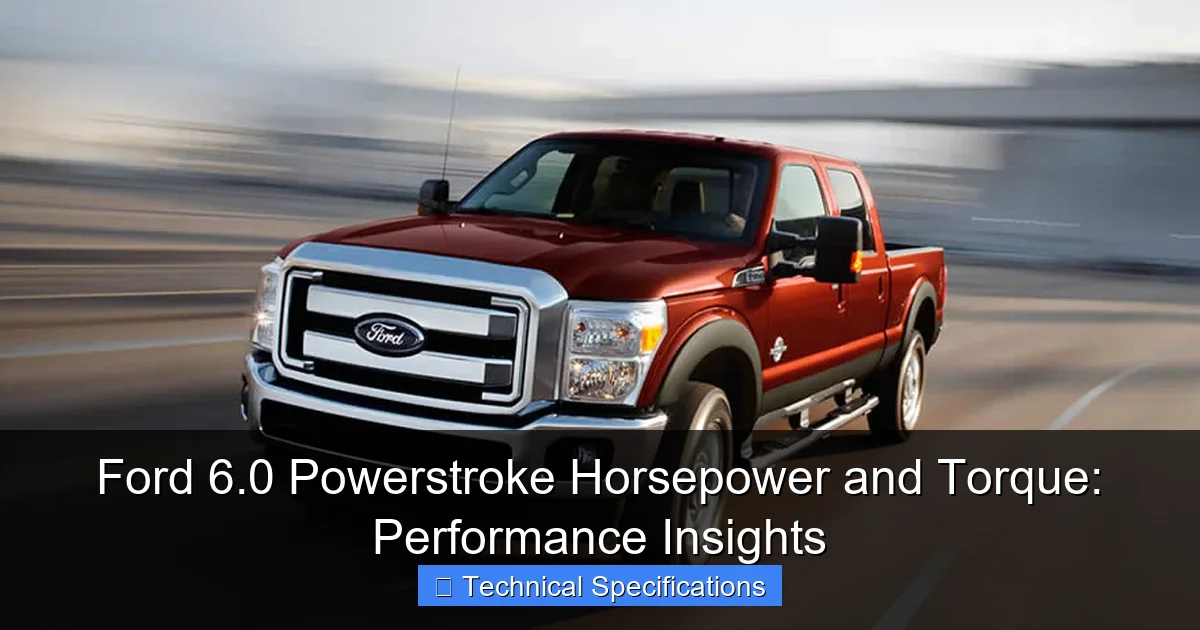
Featured image for this comprehensive guide about Ford 6.0 Powerstroke horsepower and torque
Image source: rasekhoon.net
The Ford 6.0 Powerstroke diesel engine, manufactured by International Navistar, holds a rather complex place in automotive history. Produced from 2003 to 2007 for Ford Super Duty trucks and E-Series vans, it succeeded the venerable 7.3L Powerstroke. Upon its release, the 6.0 Powerstroke horsepower and torque figures were a significant upgrade, promising more power and refined performance. However, its reputation was quickly overshadowed by a series of reliability challenges, often leading to it being dubbed a “problem child.”
Despite its initial hurdles, the 6.0 Powerstroke has, over time, garnered a dedicated following. With a deeper understanding of its design and the application of key modifications, this engine can be transformed into a reliable and potent workhorse. Many enthusiasts and truck owners now appreciate the impressive power potential it offers, especially when properly addressed and maintained. This blog post aims to delve deep into the core performance metrics of the Ford 6.0 Powerstroke horsepower and torque, exploring its factory specifications, common upgrades, and the factors that influence its real-world performance.
Whether you’re a proud owner looking to optimize your truck’s capabilities, a prospective buyer weighing its pros and cons, or simply a diesel enthusiast, understanding the raw power and potential of the 6.0 Powerstroke is crucial. We’ll uncover what makes this engine tick, how it compares to its predecessors and successors in terms of raw power, and what you can do to unlock its true capabilities while ensuring its longevity. Get ready to dive into the world of 6.0 Powerstroke performance!
Quick Answers to Common Questions
What are the stock Ford 6.0 Powerstroke horsepower and torque numbers?
From the factory, the 2003-2004 Ford 6.0 Powerstroke typically produced 325 horsepower and 560 lb-ft of torque, with 2005-2007 models seeing a slight bump to 570 lb-ft. These were robust figures for its era, offering plenty of power for daily driving and towing.
Can you easily increase the Ford 6.0 Powerstroke horsepower and torque?
Absolutely! The 6.0 Powerstroke engine responds very well to aftermarket modifications, and many owners significantly boost their Ford 6.0 Powerstroke horsepower and torque with performance tunes, improved air intakes, and exhaust systems. These common upgrades can unlock substantial hidden potential.
Is the stock Ford 6.0 Powerstroke horsepower and torque sufficient for heavy towing?
For most heavy towing applications, the factory Ford 6.0 Powerstroke horsepower and torque are more than capable, thanks to its impressive low-end torque. It was engineered to pull serious loads with confidence, making it a reliable workhorse for many.
What’s a simple way to get more Ford 6.0 Powerstroke horsepower and torque?
One of the quickest and most effective ways to boost your Ford 6.0 Powerstroke horsepower and torque is through a performance tuner or chip. These devices optimize engine parameters, safely increasing power output without major mechanical changes.
What kind of gains can I expect when upgrading my Ford 6.0 Powerstroke horsepower and torque?
With a quality performance tune alone, you can often see gains of 50-100 horsepower and 100-200 lb-ft of torque, dramatically improving your Ford 6.0 Powerstroke horsepower and torque. Always ensure supporting modifications and proper monitoring when pursuing higher power levels.
📋 Table of Contents
- The Heart of the Beast: Understanding the Stock 6.0 Powerstroke Horsepower and Torque
- Beyond Stock: Common Performance Upgrades and Their Impact
- Factors Affecting Your 6.0 Powerstroke’s Horsepower and Torque
- Dyno Day: What Real-World Numbers Reveal
- Maximizing Your 6.0 Powerstroke’s Potential: Tips for Owners
- Conclusion
The Heart of the Beast: Understanding the Stock 6.0 Powerstroke Horsepower and Torque
When the 6.0 Powerstroke first rolled off the assembly line, it represented a significant leap in power output for Ford’s heavy-duty trucks. Ford and International Navistar aimed for higher power density and better emissions control, driven by increasingly stringent regulations. The new engine featured a host of technological advancements designed to deliver superior 6.0 Powerstroke horsepower and torque compared to the outgoing 7.3L.
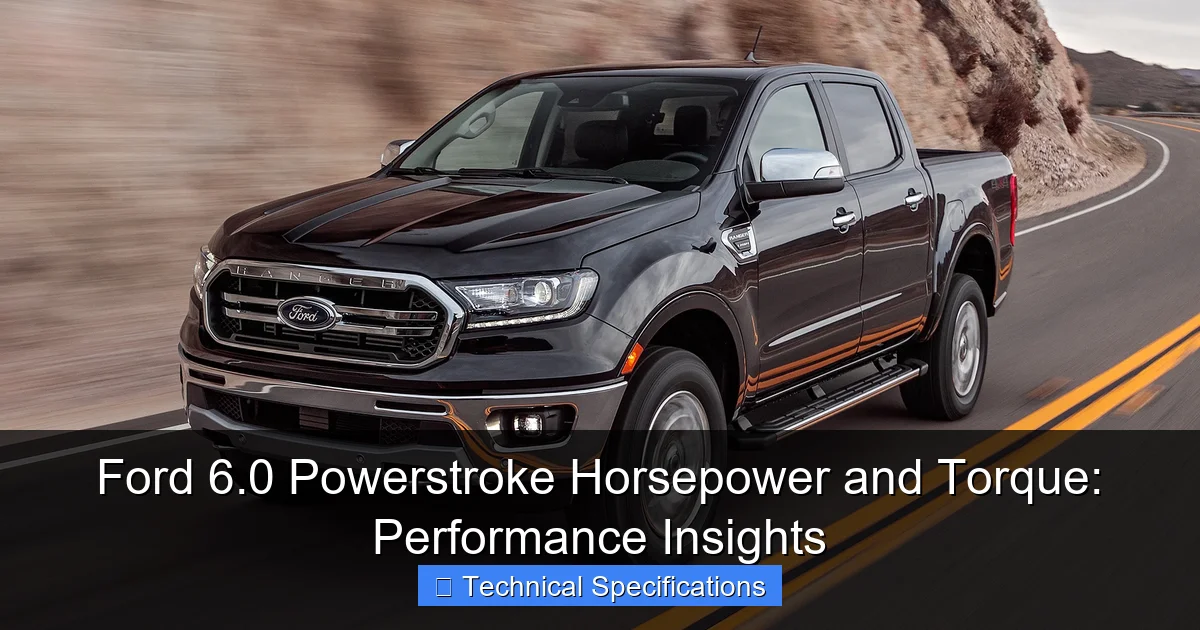
Learn more about Ford 6.0 Powerstroke horsepower and torque – Ford 6.0 Powerstroke Horsepower and Torque: Performance Insights
Image source: motortrend.com
Factory Specifications: A Closer Look
The 6.0 Powerstroke saw a few revisions throughout its production run, primarily in terms of calibration, but its core power output remained relatively consistent. Here’s a breakdown of the factory 6.0 Powerstroke specs:
| Model Year | Horsepower (hp) | Torque (lb-ft) |
|---|---|---|
| 2003 | 325 | 560 |
| 2004 | 325 | 570 |
| 2005 | 325 | 570 |
| 2006 | 325 | 570 |
| 2007 | 325 | 570 |
- Engine Type: V8, 32-valve, OHV, turbocharged diesel
- Displacement: 6.0L (365 cu in)
- Compression Ratio: 18.0:1
- Fuel System: High-Pressure Oil Pump (HPOP) actuated, Hydraulically Actuated Electronically Controlled Unit Injector (HEUI)
- Turbocharger: Garrett GT3782VA Variable Geometry Turbocharger (VGT)
Regarding raw power, the Ford 6.0 Powerstroke horsepower and torque numbers were quite impressive for their time:
| Model Year | Horsepower (HP) | Torque (lb-ft) |
|---|---|---|
| 2003 (Early) | 325 HP @ 3300 RPM | 560 lb-ft @ 2000 RPM |
| 2003 (Late) – 2007 | 325 HP @ 3300 RPM | 570 lb-ft @ 2000 RPM |
These numbers placed the 6.0L Powerstroke ahead of competitors in its class during its introduction, offering substantial grunt for towing and hauling. The slight increase in torque for later models was primarily due to calibration refinements, squeezing a bit more out of the same hardware.
The Engineering Behind the Numbers
Several key engineering decisions contributed to the impressive stock 6.0 Powerstroke HP and torque. The VGT turbocharger, for instance, allowed for quick spool-up and sustained boost across a wide RPM range, improving throttle response and low-end torque. The HEUI injection system, while complex, provided precise fuel delivery for optimal combustion efficiency and power production.
The 32-valve cylinder heads, coupled with the robust cast-iron block, provided a solid foundation for power generation. However, it’s also worth noting that some of the engine’s notorious reliability issues stemmed from these very systems, particularly the EGR cooler, oil cooler, and head gaskets, which could indirectly affect sustained power delivery if compromised.
Beyond Stock: Common Performance Upgrades and Their Impact
While the factory Ford 6.0 Powerstroke horsepower and torque figures are respectable, the engine is renowned for its immense potential for modification. Many owners choose to “bulletproof” their 6.0Ls, addressing known reliability issues, and then proceed with performance upgrades to unleash significantly more power. Here’s a look at common modifications and how they enhance 6.0 Powerstroke performance.

Learn more about Ford 6.0 Powerstroke horsepower and torque – Ford 6.0 Powerstroke Horsepower and Torque: Performance Insights
Image source: upload.wikimedia.org
Custom Tuning: Unlocking Hidden Potential
Arguably the single most impactful upgrade for boosting 6.0 Powerstroke HP and torque is a custom engine tune. The factory calibration is a compromise, designed for broad applicability, emissions compliance, and engine longevity. Aftermarket tuners can optimize various parameters:
- Fuel Injection Timing and Quantity: Delivering more fuel at the optimal moment.
- Boost Pressure: Increasing the amount of air forced into the engine.
- EGR Control: Adjusting or even disabling the Exhaust Gas Recirculation system (for off-road use only, or in conjunction with EGR delete kits where legal).
- Transmission Shift Points and Line Pressure: Ensuring the transmission can handle the increased power smoothly.
A good custom tune can easily add 80-150 HP and 150-250 lb-ft of torque, significantly transforming the driving experience. Reputable tuning companies offer various tunes, from mild “tow” tunes to aggressive “race” tunes, each designed for specific purposes.
Intake and Exhaust Systems: Breathing Room
Just like any internal combustion engine, a diesel needs to breathe efficiently. Upgrading the intake and exhaust systems allows the 6.0 Powerstroke to move air in and out more freely, directly impacting 6.0 Powerstroke horsepower and torque.
- Cold Air Intakes (CAI): Replace the restrictive factory airbox with a less restrictive design and a larger filter, often drawing cooler air from outside the engine bay. This can net a modest increase in HP and improved throttle response.
- Aftermarket Exhaust Systems: A 4-inch or 5-inch turbo-back exhaust system reduces back pressure, allowing the turbo to spool faster and the engine to expel exhaust gases more efficiently. This often results in a noticeable improvement in power and a deeper exhaust note.
Injector Upgrades: More Fuel, More Power
The stock HEUI injectors are capable, but for significant power gains beyond 450-500 HP, larger injectors are often necessary. Aftermarket injectors with increased flow rates allow for much greater fuel delivery, directly translating to higher 6.0 Powerstroke power output. However, upgrading injectors also necessitates a stronger high-pressure oil pump (HPOP) and a robust fuel system to ensure adequate fuel supply.
Turbocharger Enhancements: Boosting Performance
The factory VGT turbocharger is excellent for stock applications but can become a limiting factor for aggressive tuning and larger injectors. Upgrading to a larger, more efficient turbocharger or a modified VGT can significantly increase airflow, allowing for even higher 6.0 Powerstroke horsepower and torque. This might involve:
- Larger A/R Housings: To reduce back pressure.
- Larger Compressor Wheels: For increased airflow.
- Compounds Turbo Setups: Two turbos working in series for extreme power levels.
Turbo upgrades often require supporting modifications like strengthened internal engine components and careful tuning to manage the increased boost and heat.
Factors Affecting Your 6.0 Powerstroke’s Horsepower and Torque
Beyond modifications, several critical factors can influence the actual Ford 6.0 Powerstroke horsepower and torque your truck produces. Neglecting these can lead to diminished performance, reduced efficiency, and even costly damage.
Maintenance Matters: Keeping Power Optimal
A well-maintained 6.0 Powerstroke is a powerful 6.0 Powerstroke. Regular maintenance is paramount for ensuring optimal 6.0 Powerstroke performance:
- Oil Changes: The HEUI system relies on engine oil to actuate the injectors. Dirty or improper oil can lead to stiction, reduced injection pressure, and loss of power. Use the recommended 15W-40 CJ-4 or FA-4 oil and change it every 5,000-7,500 miles.
- Fuel Filter Replacement: The 6.0 Powerstroke has two fuel filters. Clogged filters restrict fuel flow, causing fuel pressure drops and directly impacting power. Replace them every 15,000 miles.
- Air Filter: A clean air filter is essential for unrestricted airflow. A dirty filter chokes the engine, reducing horsepower and fuel economy.
- Coolant System Health: A compromised cooling system (e.g., clogged oil cooler, failing water pump) leads to high engine temperatures, which can cause the engine to de-rate its power output to prevent damage.
Common Issues that Sap Performance
The 6.0 Powerstroke’s notorious “Achilles’ heels” can directly lead to a noticeable drop in 6.0 Powerstroke HP and torque:
- EGR Cooler Failure: A leaking EGR cooler can lead to coolant loss, head gasket issues, and ultimately, reduced engine efficiency and power.
- Oil Cooler Clogging: A clogged oil cooler restricts oil flow, leading to high oil temperatures, poor injector performance, and potential turbocharger issues. This can also indirectly cause EGR cooler failures.
- FICM (Fuel Injection Control Module) Issues: The FICM supplies the high voltage needed to fire the injectors. A failing FICM (often due to low voltage) results in misfires, rough idle, and significant power loss.
- Turbocharger VGT Actuator/Unison Ring Issues: The VGT system relies on precise movement. Carbon buildup or a failing actuator can prevent the turbo from spooling correctly, severely impacting power delivery.
- HPOP (High-Pressure Oil Pump) Failure: The HPOP supplies the high-pressure oil for the HEUI system. A weak or failing HPOP leads to insufficient injection pressure and a dramatic loss of power, especially under load.
Fuel Quality and Air Density
These less-talked-about factors also play a role:
- Fuel Quality: Poor quality diesel or contaminated fuel can lead to injector issues and reduced combustion efficiency, thereby affecting power output.
- Air Density (Altitude and Temperature): Diesel engines perform better with dense, cool air. At higher altitudes, the air is less dense, naturally reducing available oxygen and thus 6.0 Powerstroke horsepower and torque. Similarly, extremely hot ambient temperatures can slightly reduce power.
Dyno Day: What Real-World Numbers Reveal
While manufacturer specs and advertised gains from aftermarket parts provide useful estimates, a dynamometer (dyno) is the ultimate tool for measuring true real-world Ford 6.0 Powerstroke horsepower and torque. Dyno results can vary based on the type of dyno, correction factors, and environmental conditions, but they offer the most accurate representation of an engine’s output.
Understanding Dyno Charts
A typical dyno chart will show plots of horsepower and torque against RPM. You’ll observe where peak power is achieved, the shape of the torque curve, and how smoothly the power is delivered across the RPM range. A strong, flat torque curve is ideal for a diesel truck, providing consistent pulling power.
Typical Dyno Results (Stock vs. Mild vs. Aggressive Tunes)
Here’s a general idea of what you might see on a dyno, measuring power at the wheels (which is always less than crankshaft power due to drivetrain losses, typically 15-20% for a heavy-duty truck):
- Stock 6.0 Powerstroke:
- Wheel HP: 250-280 HP
- Wheel Torque: 450-500 lb-ft
- These numbers will be lower than the factory crankshaft ratings due to drivetrain loss.
- Mildly Tuned (e.g., “Tow” Tune) with CAI/Exhaust:
- Wheel HP: 300-350 HP
- Wheel Torque: 550-650 lb-ft
- A significant improvement for everyday driving and towing.
- Aggressively Tuned (e.g., “Street” or “Race” Tune) with CAI/Exhaust, Larger Injectors, and Turbo Upgrade:
- Wheel HP: 400-500+ HP
- Wheel Torque: 700-900+ lb-ft
- At these levels, “bulletproofing” the engine (head studs, upgraded oil cooler, etc.) is highly recommended to maintain reliability. Some extreme builds can push well over 600 HP and 1000 lb-ft.
The Importance of a Reliable Dyno Shop
When seeking dyno results, choose a reputable shop with experience in diesel tuning. They can provide accurate numbers, troubleshoot issues, and even offer custom tuning services to optimize your specific setup. Be wary of inflated figures; focus on consistent, repeatable results.
Maximizing Your 6.0 Powerstroke’s Potential: Tips for Owners
Unlocking and sustaining high levels of Ford 6.0 Powerstroke horsepower and torque requires a thoughtful approach. It’s not just about bolting on parts; it’s about intelligent maintenance, strategic upgrades, and continuous monitoring.
Smart Maintenance Practices
Prevention is always better than cure, especially with a 6.0 Powerstroke:
- Frequent Fluid Changes: Stick to or exceed recommended intervals for engine oil, transmission fluid, and coolant. Use high-quality fluids specified for diesel engines.
- Fuel System Vigilance: Never skimp on fuel filter changes. Consider adding an external fuel air separation system (FASS or AirDog) for superior fuel filtration and consistent fuel pressure to the injectors.
- Coolant System Upgrades: A reliable coolant filtration system can prevent debris from clogging the oil cooler. Consider an upgraded oil cooler with a larger capacity for better heat exchange.
- Monitor Your Gauges: Pay attention to your dashboard gauges, but also consider adding aftermarket gauges (EGT, fuel pressure, oil temperature, coolant temperature) for more precise monitoring of critical parameters, especially if running tunes.
Choosing the Right Upgrades for Your Needs
Before diving into modifications, define your goals:
- Reliability First: If your 6.0 Powerstroke hasn’t been “bulletproofed,” this should be your absolute priority. Address the EGR, oil cooler, and install head studs before pursuing significant power upgrades. This provides a stable foundation for any future enhancements to 6.0 Powerstroke power output.
- Towing Performance: Opt for mild, conservative tunes that provide increased torque at lower RPMs without excessive heat. A good cold air intake and exhaust will complement this.
- Street Performance: More aggressive tunes, larger injectors, and potentially a turbo upgrade can deliver exhilarating street performance. Ensure your transmission can handle the increased power.
- Extreme Power: For competition or extreme applications, be prepared for substantial investment in engine internals, fuel system, and transmission upgrades. This pushes the limits of 6.0 Powerstroke horsepower and torque.
Monitoring Your Engine’s Health
With increased power comes increased responsibility. Regular monitoring can prevent catastrophic failures:
- Digital Monitoring Devices: Devices like the Edge Insight CTS3 or similar OBD-II scanners can display real-time data for dozens of parameters, including EGT, FICM voltage, delta-T (coolant vs. oil temp), and more.
- Listen to Your Truck: Pay attention to any new noises, changes in idle, or performance characteristics. These can be early warning signs of underlying issues.
- Regular Inspections: Periodically check for fluid leaks, loose connections, and any signs of wear and tear.
Conclusion
The Ford 6.0 Powerstroke is an engine of immense potential, capable of delivering impressive horsepower and torque figures that rival many modern diesels. While its early reputation was marred by reliability issues, a thorough understanding of its design, coupled with strategic maintenance and targeted modifications, can transform it into a formidable and dependable power plant.
From its respectable factory 6.0 Powerstroke specs of 325 HP and 570 lb-ft of torque, this engine can easily be tuned to produce over 400 wheel horsepower and significantly more torque, making it a favorite among those who appreciate raw power and the satisfaction of building a robust machine. Remember, unlocking the full Ford 6.0 Powerstroke horsepower and torque requires a holistic approach, starting with addressing its known vulnerabilities and then carefully selecting performance upgrades.
Whether you’re pushing for extreme power or simply seeking a reliable and capable truck, the 6.0 Powerstroke, when properly cared for, remains a strong contender in the heavy-duty diesel segment. Embrace the knowledge, invest in quality parts, and maintain it diligently, and your 6.0 Powerstroke will reward you with years of potent performance and immense satisfaction. The journey of optimizing your 6.0 Powerstroke performance is a rewarding one!
🎥 Related Video: Shift On The Fly 6.0 Powerstroke Tuning 💪🇺🇲 Blessedperformance.com 1-800-577-2698
📺 Blessed Performance LLC
Frequently Asked Questions
What are the stock horsepower and torque figures for the Ford 6.0 Powerstroke?
The Ford 6.0 Powerstroke typically offered factory horsepower ratings of 325 hp. Torque figures were generally around 560 lb-ft for earlier models, increasing to 570 lb-ft in later iterations. These numbers represented a significant upgrade from the preceding 7.3L Powerstroke.
How do the 6.0 Powerstroke’s horsepower and torque compare to other Powerstroke generations?
The 6.0 Powerstroke marked a notable performance increase over its predecessor, the 7.3L, offering significantly more horsepower and torque out of the box. While it was later surpassed by the 6.4L and 6.7L Powerstrokes in raw output, the 6.0 still holds its own as a powerful and capable engine, especially when modified.
Can I increase the horsepower and torque of my Ford 6.0 Powerstroke, and if so, by how much?
Yes, you can significantly increase the horsepower and torque of your Ford 6.0 Powerstroke with various aftermarket modifications. Many owners achieve substantial gains, often adding 100-200+ horsepower and torque with a combination of tuning and hardware upgrades. This makes the 6.0 a popular platform for performance enthusiasts.
What are some popular modifications to boost the 6.0 Powerstroke’s performance?
Popular modifications to boost the 6.0 Powerstroke’s performance include custom engine tuning (e.g., using an SCT tuner), upgraded fuel injectors, and larger or more efficient turbochargers. Additionally, aftermarket exhaust systems and improved air intake systems can contribute to better power and efficiency.
What factors can affect the actual horsepower and torque output of a Ford 6.0 Powerstroke?
Several factors can influence the actual horsepower and torque output of a Ford 6.0 Powerstroke, including the engine’s overall condition and maintenance history. Fuel quality, altitude, and the integrity of key components like the turbocharger and injectors also play a significant role in its measured performance.
Is the Ford 6.0 Powerstroke considered a good engine for towing heavy loads based on its torque?
Absolutely, the Ford 6.0 Powerstroke is widely considered a very capable engine for towing heavy loads, primarily due to its robust torque output available at low RPMs. Its design was focused on delivering the power needed for demanding work and towing applications, making it a favorite for many truck owners.