Ford 6.0 Powerstroke Horsepower and Torque: Performance Insights
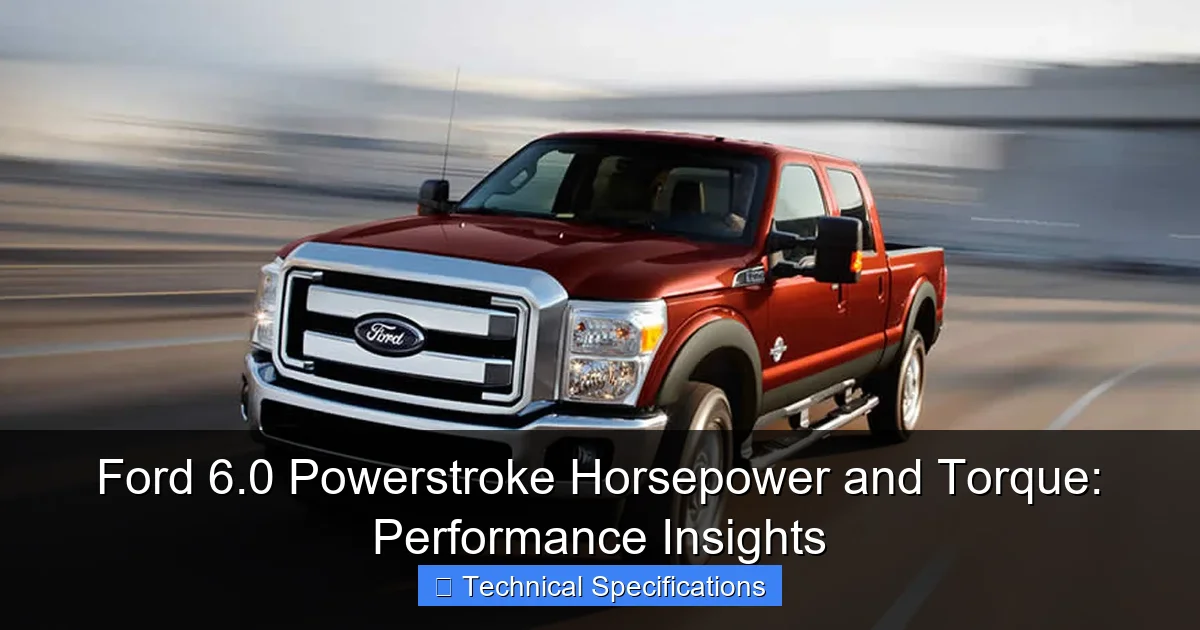
Featured image for this comprehensive guide about Ford 6.0 Powerstroke horsepower and torque
Image source: rasekhoon.net
The roar of a diesel engine, the feeling of immense power underfoot, and the capability to pull mountains – these are hallmarks of Ford’s Powerstroke lineup. Among them, the Ford 6.0 Powerstroke holds a unique, often debated, place in the hearts and minds of truck enthusiasts. Produced from 2003 to 2007, this engine emerged during a period of intense innovation and stricter emissions regulations, promising a leap forward in performance.
Despite its controversial reputation for certain reliability challenges, one undeniable truth about the 6.0 Powerstroke is its impressive stock performance figures. When running as intended, this engine delivered robust horsepower and torque that set it apart in its era. Understanding the raw numbers – the Ford 6.0 Powerstroke horsepower and torque – is crucial for any owner, prospective buyer, or fan looking to truly appreciate its capabilities and potential. Beyond the spec sheet, knowing these figures helps us understand what the truck can achieve, how it performs under load, and what avenues exist for enhancement.
In this comprehensive guide, we’ll dive deep into the heart of the Ford 6.0 Powerstroke. We’ll peel back the layers to reveal its stock performance numbers, explore what these figures mean in real-world scenarios, discuss factors that can impact its output, and even touch upon the popular modifications aimed at unleashing even more power. Whether you’re a seasoned owner or simply curious about this iconic diesel, prepare to gain invaluable insights into the true performance potential of the 6.0 Powerstroke.
Quick Answers to Common Questions
What were the stock horsepower figures for the 6.0 Powerstroke?
From 2003-2007, the Ford 6.0 Powerstroke typically delivered 325 horsepower, making it quite potent for its time. Early 2003 models might have seen slightly less, around 300 hp.
And what about the stock torque? How much twist did the 6.0 Powerstroke offer?
The stock 6.0 Powerstroke torque figures were impressive, generally rated at 560 lb-ft for early models and climbing to 570 lb-ft by 2005. This strong torque delivery is crucial for heavy hauling.
Are the stock 6.0 Powerstroke horsepower and torque numbers enough for serious towing?
Absolutely! The factory Ford 6.0 Powerstroke horsepower and torque were designed with heavy-duty work in mind, providing ample power to tow large trailers and handle demanding tasks right off the lot.
Can you easily increase the 6.0 Powerstroke’s horsepower and torque?
Yes, boosting your 6.0 Powerstroke’s horsepower and torque is a very common modification, often achieved through simple tuning and minor upgrades. Many owners find significant gains with just a few changes.
What’s a simple, popular upgrade to get more Ford 6.0 Powerstroke horsepower and torque?
A popular and effective way to increase your Ford 6.0 Powerstroke horsepower and torque is by adding an aftermarket engine tuner or programmer. This often provides a noticeable boost in performance and responsiveness.
📋 Table of Contents
- The Heart of the Beast: Understanding the 6.0 Powerstroke Engine
- Unpacking the Stock Ford 6.0 Powerstroke Horsepower and Torque
- Beyond the Numbers: What Do These Specs Mean for You?
- Common Issues and Their Impact on 6.0 Powerstroke Performance
- Unleashing More Power: Upgrades for Your 6.0 Powerstroke
- Maximizing Your 6.0’s Potential: Maintenance and Best Practices
- Conclusion: The Enduring Legacy of the 6.0 Powerstroke
The Heart of the Beast: Understanding the 6.0 Powerstroke Engine
Before we dissect the numbers, let’s establish a foundational understanding of the engine itself. The Ford 6.0 Powerstroke is an International VT365 engine, a 32-valve, V8, 6.0-liter (365 cubic inch) turbocharged diesel powerhouse. It succeeded the venerable 7.3L Powerstroke and was tasked with meeting stricter emissions standards while simultaneously delivering more power. This was a tall order, and International Navistar (the manufacturer) and Ford introduced several new technologies to achieve these goals.

Learn more about Ford 6.0 Powerstroke horsepower and torque – Ford 6.0 Powerstroke Horsepower and Torque: Performance Insights
Image source: motortrend.com
Key technologies that defined the 6.0 Powerstroke’s performance included:
| Specification | 2003 Models | 2004-2007 Models | Notes |
|---|---|---|---|
| Horsepower (HP) | 325 @ 3300 RPM | 325 @ 3300 RPM | Peak horsepower remained consistent. |
| Torque (lb-ft) | 560 @ 2000 RPM | 570 @ 2000 RPM | Slight torque increase in later model years. |
| Displacement | 6.0L (365 cu in) | 6.0L (365 cu in) | Shared across all model years. |
| Fuel System | HEUI | HEUI | Hydraulically actuated, electronically controlled unit injectors. |
| Turbocharger | Variable Geometry (VGT) | Variable Geometry (VGT) | Garrett GT3788VA, controlled by engine oil pressure. |
- Variable Geometry Turbocharger (VGT): This advanced turbo design allowed for precise control over exhaust gas flow, optimizing boost pressure across a wide RPM range. This meant less turbo lag and a broader powerband compared to fixed-geometry turbos, contributing significantly to both 6.0 Powerstroke horsepower and its early-spooling torque.
- High-Pressure Oil Pump (HPOP) and Injector Control Pressure (ICP) System: The 6.0 utilized a new version of the Hydraulic Electronic Unit Injection (HEUI) system. The HPOP generated immense oil pressure (up to 3,600 psi) to actuate the fuel injectors. Precise control over this system was vital for accurate fuel delivery, directly influencing engine efficiency and power output.
- Four Valves Per Cylinder: Unlike its 7.3L predecessor’s two valves, the 6.0’s four-valve-per-cylinder design improved airflow into and out of the combustion chamber, leading to more efficient combustion and greater power potential.
- Split-Shot Injection: This feature allowed for multiple, precise fuel injections per combustion cycle, improving fuel economy, reducing emissions, and softening the diesel clatter. It was a sophisticated system that contributed to the engine’s smooth operation and impressive 6.0 Powerstroke performance.
While these innovations were revolutionary, they also introduced complexities that, unfortunately, led to some of the engine’s notorious reliability issues. However, when functioning optimally, these technologies combined to deliver the potent Ford 6.0 Powerstroke horsepower and torque figures that we’re about to explore.
Unpacking the Stock Ford 6.0 Powerstroke Horsepower and Torque
The true measure of any performance engine lies in its peak output figures. The Ford 6.0 Powerstroke horsepower and torque evolved slightly over its short production run, reflecting continuous improvements and tuning refinements by Ford and International. It’s important to note these distinctions, as they can sometimes lead to confusion among owners.

Learn more about Ford 6.0 Powerstroke horsepower and torque – Ford 6.0 Powerstroke Horsepower and Torque: Performance Insights
Image source: ford.com
Here’s a breakdown of the official factory ratings for stock 6.0 Powerstroke HP and torque:
Official Ford 6.0 Powerstroke Performance Specifications
The following table illustrates the manufacturer-rated output for the 6.0 Powerstroke engine across different model years:
| Model Year | Horsepower (HP) | Torque (lb-ft) |
|---|---|---|
| 2003 (Early “Job 1”) | 300 HP @ 3,200 RPM | 520 lb-ft @ 2,000 RPM |
| 2003 (Late “Job 2”) – 2004 | 325 HP @ 3,300 RPM | 560 lb-ft @ 2,000 RPM |
| 2005 – 2007 | 325 HP @ 3,300 RPM | 570 lb-ft @ 2,000 RPM |
As you can see, there was a significant jump from the early 2003 models to the later versions, primarily in 6.0 Powerstroke horsepower and then a final bump in 6.0 Powerstroke torque for the 2005-2007 models. These figures were highly competitive for their time, placing the 6.0 Powerstroke firmly in the upper echelons of heavy-duty truck performance. The consistent peak torque at 2,000 RPM highlights the engine’s design for strong pulling power right in the usable working range.
Understanding the Numbers in Context
While 325 horsepower might not sound extraordinary by today’s standards (where modern diesels easily exceed 400-500 HP), remember the context. In the mid-2000s, this was a formidable output for a production truck. More importantly, the torque numbers – up to 570 lb-ft – are what truly define a diesel’s work ethic. This massive rotational force is what allows a heavy-duty truck to:
- Accelerate heavy loads from a standstill.
- Maintain speed on steep inclines without constant downshifting.
- Provide exceptional towing and hauling capabilities.
The combination of high Ford 6.0 Powerstroke horsepower and torque meant that these trucks were designed to perform demanding tasks with relative ease, making them popular choices for construction, agriculture, and serious recreational towing.
Beyond the Numbers: What Do These Specs Mean for You?
Knowing the raw 6.0 Powerstroke horsepower and torque figures is one thing, but understanding their real-world implications for your driving experience is another. These numbers aren’t just for bragging rights; they dictate how your truck behaves in various situations.
Towing and Hauling Prowess
This is where the 6.0 Powerstroke truly shines. With up to 570 lb-ft of torque available at a relatively low 2,000 RPM, the engine provides excellent pulling power. This translates directly to:
- Effortless Acceleration with a Trailer: Whether it’s a large RV, a horse trailer, or a heavy equipment hauler, the substantial torque allows the truck to get up to speed smoothly and confidently.
- Maintaining Speed on Grades: That sustained torque output means less strain on the engine and transmission when climbing hills, reducing the need for constant downshifting and helping maintain momentum.
- High Towing Capacity: Properly equipped F-250 and F-350 trucks with the 6.0 Powerstroke could achieve conventional towing capacities of up to around 12,500-15,000 lbs, and fifth-wheel/gooseneck capacities often exceeding 15,000 lbs (depending on specific configuration and year). These numbers were competitive and robust for the era, demonstrating the engine’s inherent strength.
For those who frequently utilize their truck for its intended purpose, the original Ford 6.0 Powerstroke horsepower and torque specs were more than adequate to handle demanding jobs.
Daily Driving and Fuel Economy
While primarily a workhorse, the 6.0 Powerstroke also had a respectable daily driving character. The VGT turbocharger provided quick throttle response, making the truck feel relatively agile for its size. The 325 horsepower provided ample passing power on the highway, making long trips comfortable.
Fuel economy, as with any heavy-duty diesel, varied significantly based on driving style, load, and terrain. Owners typically reported averages in the low to mid-teens (MPG) when unloaded, dropping into single digits or low teens when towing heavy. The efficient combustion and advanced injection system helped manage fuel consumption, but the sheer power and weight of the truck meant it was never going to be a fuel sipper.
Common Issues and Their Impact on 6.0 Powerstroke Performance
It’s impossible to discuss the Ford 6.0 Powerstroke’s horsepower and torque without acknowledging the elephant in the room: its well-documented reliability issues. While the factory numbers reflect the engine’s potential, various design flaws could, and often did, compromise its actual output and longevity. These issues weren’t just inconvenient; they directly impacted the engine’s ability to produce and sustain its rated power.
Key areas where issues could degrade 6.0 Powerstroke performance include:
- EGR Cooler Failure: A common culprit, a failed EGR cooler could lead to coolant consumption and, eventually, cylinder pressure forcing coolant into the exhaust, or even hydro-locking the engine. This significantly reduces efficiency and can cause severe engine damage.
- Oil Cooler Clogging: The factory oil cooler design was prone to clogging with casting sand and sediment, leading to elevated engine oil temperatures and, critically, higher coolant temperatures. This stressed the entire cooling system and reduced the efficiency of the HPOP, directly impacting fuel injection and thus horsepower and torque.
- Head Gasket Failure: Often a secondary effect of overheating due to oil cooler and EGR issues, or excessive boost, head gasket failures lead to loss of compression and coolant leaks, severely diminishing engine power and creating blow-by.
- Fuel Injection Control Module (FICM) Issues: The FICM is crucial for providing the high voltage needed to actuate the injectors. A weak or failing FICM results in misfires, reduced fuel atomization, and a noticeable drop in 6.0 Powerstroke horsepower and rough running.
- Injector Failures: While generally robust, the HEUI injectors could fail due to poor fuel quality, contaminated oil, or HPOP issues, leading to rough idle, misfires, and reduced power.
These problems, when present, mean that an “un-bulletproofed” 6.0 Powerstroke might not consistently deliver its rated horsepower and torque. For many owners, addressing these weak points through various “bulletproofing” modifications is not about increasing power, but rather about ensuring the engine reliably produces its original, intended 6.0 Powerstroke power and lasts for hundreds of thousands of miles.
Unleashing More Power: Upgrades for Your 6.0 Powerstroke
For those who love the platform and wish to push beyond the stock Ford 6.0 Powerstroke horsepower and torque figures, a vibrant aftermarket exists. With proper modifications and supporting upgrades, the 6.0 Powerstroke can be transformed into a truly monstrous engine, capable of producing significantly more power than its original ratings. However, caution and comprehensive understanding are paramount, as pushing too much power without adequate support can quickly lead to catastrophic failure.
Popular Performance Boosters
Common upgrades to increase 6.0 Powerstroke HP and torque include:
- Custom Tuning/Programmers: This is often the first and most effective step. Aftermarket tuners can remap the engine’s computer (PCM) to optimize fuel delivery, injection timing, and turbo boost pressure. Gains of 50-150+ HP and 100-250+ lb-ft of torque are common with a good tune, making it one of the best ways to enhance 6.0 Powerstroke performance.
- Exhaust Systems: Upgrading to a larger, less restrictive exhaust (e.g., a 4-inch or 5-inch turbo-back system) reduces exhaust gas temperatures (EGTs) and improves turbo spool, contributing to modest gains in horsepower and torque and a more aggressive exhaust note.
- Cold Air Intakes (CAI): A CAI allows the engine to breathe easier by providing a less restrictive path for cooler, denser air. While not providing massive gains on their own, they complement tuning and other modifications by improving engine efficiency.
- Larger Injectors: For significant power increases (often paired with custom tuning), upgrading to larger, more capable fuel injectors allows for more fuel to be delivered into the cylinders, directly increasing potential 6.0 Powerstroke horsepower. This is a more advanced modification.
- Upgraded Turbochargers: The stock VGT turbo is excellent, but for extreme power, aftermarket turbos (either modified VGTs or fixed-geometry setups) can provide higher boost levels and more airflow, leading to substantial gains in 6.0 Powerstroke power.
- Fuel System Upgrades: To support larger injectors and higher power levels, upgraded fuel pumps (e.g., FASS or AirDog systems) ensure adequate fuel supply and filtration, which is critical for consistent performance and injector longevity.
When considering performance upgrades, always prioritize reliability. Many high-power builds involve “bulletproofing” measures as a prerequisite to prevent engine damage. It’s a delicate balance of increasing Ford 6.0 Powerstroke horsepower and torque while maintaining the engine’s integrity.
Maximizing Your 6.0’s Potential: Maintenance and Best Practices
Regardless of whether you keep your 6.0 Powerstroke stock or embark on a quest for more power, diligent maintenance is the ultimate key to maximizing its potential and longevity. A well-maintained engine is an engine that reliably delivers its peak horsepower and torque, day in and day out.
Here are actionable tips and best practices for owners:
- Frequent Oil Changes: The HEUI injection system relies on engine oil, so clean oil is paramount. Use high-quality synthetic or semi-synthetic 15W-40 oil (or specified equivalent) and adhere to a 5,000-7,500-mile oil change interval, or even sooner for severe duty.
- Fuel Filter Replacement: The 6.0 Powerstroke has two fuel filters. Replace them diligently every 10,000-15,000 miles to protect the injectors from contaminants. Poor fuel filtration can directly degrade 6.0 Powerstroke performance and lead to costly injector failure.
- Coolant System Maintenance: Flush and refill the cooling system with a high-quality, silicate-free Extended Life Coolant (ELC) every 3-5 years or 100,000 miles. Consider adding a coolant filter. This is critical for preventing oil cooler clogging and EGR cooler issues.
- Monitor Gauges Closely: Pay attention to your engine oil temperature (EOT), engine coolant temperature (ECT), and exhaust gas temperature (EGT) if you have an aftermarket gauge. A significant spread between EOT and ECT (typically more than 15-20 degrees F at cruising speed) indicates a clogged oil cooler, which needs immediate attention to prevent further damage and maintain 6.0 Powerstroke power.
- Allow for Warm-Up and Cool-Down: Let the engine warm up gently before hard acceleration and allow the turbo to cool down for a minute or two after heavy towing or hard driving before shutting off the engine. This extends turbo life.
- Use Reputable Diesel Fuel: Quality fuel is essential. Consider using a diesel fuel additive, especially one that lubricates the fuel system and boosts cetane, to enhance combustion and protect injectors.
By adhering to these maintenance practices, you’re not just preventing breakdowns; you’re ensuring that your Ford 6.0 Powerstroke horsepower and torque remains consistently at its optimal level, ready to tackle any task you throw at it.
Conclusion: The Enduring Legacy of the 6.0 Powerstroke
The Ford 6.0 Powerstroke horsepower and torque figures, while sometimes overshadowed by its early reliability struggles, tell a story of a truly powerful and capable engine for its time. With up to 325 HP and 570 lb-ft of torque in its stock configuration, it was a leader in heavy-duty truck performance, designed to conquer demanding towing and hauling tasks with authority.
Despite its reputation, a well-maintained and, for many, “bulletproofed” 6.0 Powerstroke remains a formidable force on the road today. Understanding its inherent performance capabilities, recognizing the factors that can diminish them, and knowing the avenues for safe and effective enhancement allows owners to fully appreciate and maximize their investment. Whether you cherish its stock potential or seek to unleash a modified beast, the 6.0 Powerstroke’s power and legacy continue to resonate deeply within the diesel community.
By focusing on proper maintenance and making informed decisions about upgrades, you can ensure your Ford 6.0 Powerstroke delivers reliable and impressive horsepower and torque for many miles to come, cementing its place as an iconic, albeit controversial, chapter in Ford’s rich diesel history.
🎥 Related Video: Shift On The Fly 6.0 Powerstroke Tuning 💪🇺🇲 Blessedperformance.com 1-800-577-2698
📺 Blessed Performance LLC
Frequently Asked Questions
What are the stock horsepower and torque figures for the Ford 6.0 Powerstroke?
The Ford 6.0 Powerstroke engine typically produced between 325 horsepower and 560-570 lb-ft of torque in its stock configuration. These figures varied slightly depending on the specific model year and application.
How do the 6.0 Powerstroke’s horsepower and torque compare across its production years?
Initially, early 6.0 Powerstroke engines (2003-2004) were rated around 325 horsepower and 560 lb-ft of torque. Later models (2005-2007) maintained the 325 horsepower but saw a slight bump in torque to 570 lb-ft, though some sources list it consistently across years. The differences were often subtle and related to calibration rather than major hardware changes.
What factory improvements were made to the 6.0 Powerstroke’s performance during its run?
While the headline horsepower remained consistent, Ford made various revisions to the 6.0 Powerstroke during its production to address reliability and drivability, which indirectly impacted perceived performance. These included updates to the EGR system, oil cooler, fuel injectors, and turbocharger, along with revised PCM calibrations for smoother power delivery.
Can the Ford 6.0 Powerstroke’s horsepower and torque be increased with aftermarket modifications?
Yes, the Ford 6.0 Powerstroke engine responds very well to aftermarket modifications for increased horsepower and torque. With proper tuning and supporting modifications, significant gains are achievable from its factory ratings.
What are some common modifications to boost 6.0 Powerstroke horsepower and torque?
Popular modifications include aftermarket tuning (ECU re-flashes or performance chips), upgraded air intake systems, larger exhaust systems, and improved fuel system components like upgraded injectors or fuel pumps. For more substantial gains, turbocharger upgrades and intercooler improvements are common.
Are there any reliability concerns when increasing the 6.0 Powerstroke’s horsepower and torque?
Yes, increasing the 6.0 Powerstroke’s horsepower and torque can expose some inherent weaknesses in the engine if not done properly. “Bulletproofing” modifications, such as upgraded head studs and an improved oil cooler, are often recommended to enhance reliability when pursuing significant power increases.