Ford 6.0 Diesel Fuel System Pressure Specifications

Featured image for this comprehensive guide about Ford 6.0 diesel fuel system pressure
Image source: ford.com
The Ford 6.0L Power Stroke diesel engine, a mechanical marvel for many and a source of frustration for some, holds a unique place in the hearts of truck enthusiasts. Known for its impressive power output and torque, this engine demands meticulous attention to its vital systems for optimal performance and longevity. Among these critical systems, the fuel delivery mechanism stands out as paramount. Understanding and maintaining the correct Ford 6.0 diesel fuel system pressure is not merely a recommendation; it’s an absolute necessity for the health and efficiency of your Power Stroke.
Far too often, owners chase symptoms that seem to point to complex engine failures, only to discover that the root cause lies in inadequate or inconsistent 6.0 fuel pressure. From mysterious misfires and hard starting to a noticeable lack of power and even catastrophic injector damage, low fuel pressure can manifest in a myriad of frustrating ways. This comprehensive guide will demystify the intricacies of the 6.0 Powerstroke fuel pressure system, providing you with the knowledge to diagnose, maintain, and even upgrade your setup for peak performance.
Join us as we dive deep into the specific components, ideal specifications, common problems, and actionable solutions to ensure your Power Stroke operates within its optimal fuel pressure parameters. By the end of this post, you’ll be equipped with the insights to keep your 6.0L running strong and reliably for years to come, avoiding costly repairs by understanding one of its most critical operating conditions: its fuel system pressure.
Quick Answers to Common Questions
What’s the ideal operating Ford 6.0 diesel fuel system pressure?
You’re looking for around 45-70 PSI (pounds per square inch) at idle, though many enthusiasts prefer to keep it closer to the 60-70 PSI range for optimal performance and injector longevity.
Why is proper Ford 6.0 diesel fuel system pressure so important?
Adequate fuel pressure is crucial because it helps cool and lubricate your injectors. Low pressure can lead to premature injector failure, poor performance, and even engine damage over time.
How can I check my Ford 6.0 diesel fuel system pressure?
The most reliable way is to install a dedicated fuel pressure gauge, often tapping into the secondary fuel filter housing. This gives you a live readout of what’s happening.
What are common symptoms of low Ford 6.0 diesel fuel system pressure?
You might experience sluggish acceleration, reduced power, rough idling, or even hard starting, especially when the engine is warm. These are all signs your injectors aren’t getting the fuel they need.
What generally causes low Ford 6.0 diesel fuel system pressure?
Common culprits include a failing fuel pump (the notorious HFCM pump), a clogged fuel filter, or a faulty fuel pressure regulator. Addressing these issues promptly can save you a lot of headache.
📋 Table of Contents
- Understanding the 6.0L Power Stroke Fuel System Architecture
- Key Components Affecting 6.0 Fuel Pressure and Their Roles
- Ford 6.0 Fuel Pressure Specs: What’s Normal and What’s Not?
- Common 6.0 Fuel Pressure Problems and Troubleshooting
- Maintaining Optimal Ford 6.0 Diesel Fuel System Pressure: Preventative Measures and Upgrades
- Conclusion: Drive Confidently with Proper 6.0 Powerstroke Fuel Pressure
Understanding the 6.0L Power Stroke Fuel System Architecture
The 6.0L Power Stroke engine employs a sophisticated fuel system designed to deliver precise amounts of fuel at the correct pressure for optimal combustion. Unlike older diesel engines, the 6.0L uses a Split-Shot injection system, which relies on a High-Pressure Oil Pump (HPOP) to actuate the fuel injectors – a system known as Hydraulically Actuated Electronically Controlled Unit Injectors (HEUI). While the HPOP controls the *firing* of the injectors using oil pressure, the *supply* of fuel to those injectors is managed by a separate, crucial low-pressure fuel system. Neglecting this part of the system is a common pitfall.

Learn more about Ford 6.0 diesel fuel system pressure – Ford 6.0 Diesel Fuel System Pressure Specifications
Image source: ford.com
The journey of fuel in your 6.0 Power Stroke begins in the fuel tank, where it’s drawn by the primary fuel pump, often referred to as the “lift pump.” This pump is responsible for moving fuel through a series of filters – typically one frame-mounted and one engine-mounted – before it reaches the fuel rails and subsequently the injectors. Along this path, a fuel pressure regulator plays a vital role in maintaining the specified Ford 6.0 diesel fuel system pressure. The efficiency of each component in this chain directly impacts the fuel delivered to your injectors, making consistent and clean fuel flow absolutely critical for engine health. Understanding this architecture is the first step to truly grasping the importance of maintaining correct 6.0 fuel pressure.
| Measurement Point | Specified Pressure (PSI) | Condition / Notes |
|---|---|---|
| Target Operating Pressure | 45-55 PSI | Maintained by Fuel Pressure Regulator (FPR) when engine is running. |
| Minimum Acceptable Pressure | >40 PSI | Sustained pressure below this can lead to injector damage and poor performance. |
| Typical Pressure at Idle | 45-50 PSI | Engine warm, no load. Should be steady. |
| Typical Pressure at WOT | 40-50 PSI | Under heavy load. Slight drop is normal, but should not fall below minimum. |
| New Fuel Filter Influence | +5-10 PSI (approx) | After fresh filter replacement, pressure may be slightly higher due to reduced restriction. |
Key Components Affecting 6.0 Fuel Pressure and Their Roles
Several critical components work in concert to ensure your 6.0L Power Stroke receives fuel at the correct pressure. A malfunction in any one of these can lead to significant drops in 6.0 Powerstroke fuel pressure, causing a cascade of performance issues.
Learn more about Ford 6.0 diesel fuel system pressure – Ford 6.0 Diesel Fuel System Pressure Specifications
Image source: chochotte.org
The Fuel Pump (Lift Pump)
The electric fuel pump, or lift pump, is the heart of your low-pressure fuel system. Located on the frame rail (or sometimes in-tank on later models), its primary job is to draw fuel from the tank and deliver it to the engine-mounted fuel filter housing, and then to the fuel rails. This pump must provide a consistent volume and pressure of fuel to keep the system happy. Over time, these pumps can weaken, delivering insufficient fuel pump pressure 6.0, especially under load. A failing pump is a very common cause of low 6.0 fuel pressure and related driveability complaints.
Fuel Filters: Upper and Lower
The 6.0L Power Stroke utilizes two fuel filters: a frame-mounted filter (typically a spin-on canister) and an engine-mounted filter (a cartridge filter located in the primary fuel filter housing on top of the engine). These filters are your engine’s first line of defense against contaminants. Clogged filters are one of the most frequent culprits behind low Ford 6.0 diesel fuel system pressure. As debris accumulates, fuel flow is restricted, leading to a noticeable drop in pressure to the injectors. Regular fuel filter change 6.0 procedures are non-negotiable for maintaining optimal fuel pressure and injector longevity.
The Fuel Pressure Regulator (FPR)
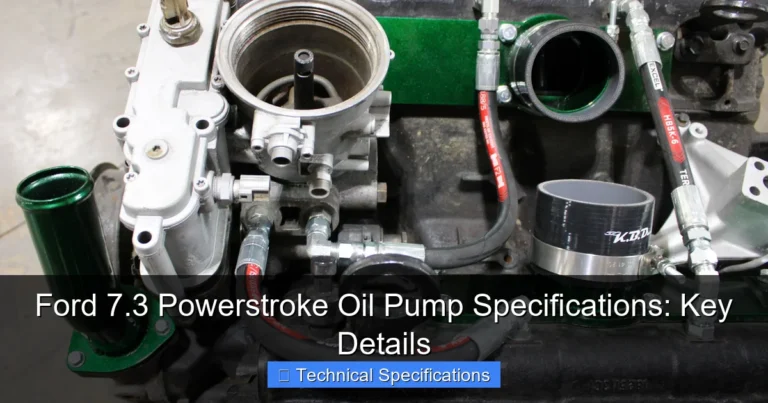
Integrated within the secondary fuel filter housing on top of the engine, the fuel pressure regulator (FPR) is designed to maintain a consistent fuel pressure within the fuel rails. It does this by bleeding off excess fuel pressure back to the tank via a return line. A faulty FPR can either stick open, causing excessively low pressure, or stick closed, leading to abnormally high pressure (though less common). The spring inside the regulator can also weaken over time, reducing its effectiveness. This is where upgrades like the “blue spring mod” come into play, which we’ll discuss later.
Ford 6.0 Fuel Pressure Specs: What’s Normal and What’s Not?
Knowing the ideal operating parameters for your 6.0L Power Stroke’s fuel system is fundamental to proper diagnosis and maintenance. Operating outside these specifications can quickly lead to severe problems and costly repairs.
Ideal Operating Fuel Pump Pressure 6.0
For a healthy 6.0 Power Stroke engine, the target Ford 6.0 diesel fuel system pressure, measured at the secondary fuel filter housing, should consistently be between **45-70 PSI** (Pounds per Square Inch). This range is crucial whether the engine is at idle or under wide-open throttle (WOT) conditions. The system is designed to maintain this pressure consistently across all operating loads. It’s important to differentiate this from the high-pressure oil system (ICP/IPR), which operates at much higher pressures (500-4000 PSI) and is responsible for firing the injectors, not supplying them with fuel.
The absolute minimum acceptable 6.0 fuel pressure is generally considered to be **40 PSI**. Any sustained readings below this threshold indicate a problem that needs immediate attention. Operating even slightly below 45 PSI for extended periods can accelerate injector wear, leading to expensive failures down the line. The injectors rely on this pressure to cool and lubricate their internal components, and insufficient pressure compromises this protection.
Consequences of Low 6.0 Fuel Pressure
When your 6.0 Powerstroke fuel pressure dips below the critical 45 PSI mark, the consequences can be severe and far-reaching:
- Injector Damage: This is arguably the most critical concern. Insufficient pressure causes the injectors to not only be poorly lubricated but also to “stiction” (stick) or coke up more easily, leading to premature failure.
- Reduced Performance: You’ll experience a noticeable lack of power, sluggish acceleration, and potential misfires or rough idling. The engine simply isn’t getting enough fuel to combust efficiently.
- Hard Starting / No Start: Especially during cold starts, low fuel pressure can make it very difficult, if not impossible, for the engine to fire up reliably.
- Increased Exhaust Gas Temperatures (EGTs): Incomplete combustion due to insufficient fuel can lead to higher EGTs, potentially damaging the turbocharger and other exhaust components.
- Poor Fuel Economy: The engine’s computer will try to compensate for low pressure, often leading to less efficient fuel usage.
Consequences of High 6.0 Fuel Pressure
While less common, excessively high 6.0 fuel pressure can also be problematic. If the pressure significantly exceeds 70-75 PSI, it could potentially put undue stress on fuel lines, seals, and even lead to less efficient combustion, though injector damage is less likely than with low pressure. This usually points to a stuck-closed fuel pressure regulator or a malfunctioning return line.
Here’s a quick reference table for Ford 6.0 fuel pressure specs:
| Condition | Expected Fuel Pressure (PSI) | Notes |
|---|---|---|
| Key On / Engine Off (Priming) | 45-70 PSI (briefly) | Fuel pump primes for a few seconds. |
| Engine Idle | 45-70 PSI | Should be stable. |
| Under Load / Wide Open Throttle | 45-70 PSI | Should remain consistent, no significant drops. |
| Minimum Acceptable Pressure | 40 PSI | Below this, severe issues will occur; immediate action needed. |
Common 6.0 Fuel Pressure Problems and Troubleshooting
Troubleshooting 6.0 fuel pressure issues requires a systematic approach. Many symptoms can mimic other problems, so isolating the fuel system as the source is key.
Low Pressure Symptoms
Keep an eye out for these indicators of insufficient Ford 6.0 diesel fuel system pressure:
- Engine cranks but won’t start, or starts only after extended cranking.
- Rough idle, especially when cold.
- Loss of power or sluggish acceleration.
- White or grey smoke from the exhaust, particularly on startup.
- Engine hesitation or surging under load.
- Poor fuel economy.
- Check Engine Light (CEL) illuminated with P0087 (Fuel Rail/System Pressure – Too Low) or similar codes.
Root Causes of Low Pressure
Identifying the root cause is crucial. Here are the most common culprits:
- Clogged Fuel Filters: As mentioned, this is often the simplest and cheapest fix. A neglected fuel filter change 6.0 schedule is a prime cause. The primary (frame-mounted) filter typically needs replacement every 10,000-15,000 miles, and the secondary (engine-mounted) filter at the same interval.
- Failing Fuel Pump (Lift Pump): The pump can simply wear out, lose its ability to maintain consistent fuel pump pressure 6.0, or suffer from electrical issues.
- Faulty Fuel Pressure Regulator: A weakened spring or debris causing the regulator to stick open will allow too much fuel to return to the tank, dropping rail pressure.
- Air in Fuel System: Leaks in fuel lines, loose connections, or improperly sealed fuel filter housings can allow air in fuel system. Air is compressible, and its presence severely compromises fuel pressure and flow, leading to misfires and poor performance. Inspect O-rings and connections carefully.
- Weak FICM Voltage: While not directly a fuel pressure issue, the Fuel Injector Control Module (FICM) provides the high voltage (48V) needed to fire the injectors. If the FICM voltage is low (below 45V), injectors won’t fire properly, mimicking a fuel supply issue. Always check FICM voltage with a scan tool or multimeter when diagnosing performance problems.
- Leaking Standpipes/Dummy Plugs (Oil System): It’s important to distinguish between fuel pressure and oil pressure problems. While standpipes and dummy plugs are part of the high-pressure oil system (HPOP), leaks in these components can cause low oil pressure to the injectors, leading to misfires and hard starting that can be mistaken for fuel system issues. Ensure you’re specifically monitoring *fuel* pressure when diagnosing.
Troubleshooting Steps
- Check Fuel Filters First: Start with the easiest and most common problem. Replace both the primary and secondary fuel filters. Ensure they are installed correctly with new O-rings.
- Install a Fuel Pressure Gauge: This is a non-negotiable diagnostic tool for any 6.0 owner. Permanently installing a gauge (or temporarily using one at the secondary filter housing test port) allows you to monitor real-time 6.0 fuel pressure.
- Monitor Fuel Pump Operation: Listen for the fuel pump to run for a few seconds when the key is turned to the “on” position (but engine off). If it’s weak or silent, investigate the pump and its electrical connections.
- Perform a “Dead Head” Pressure Test: If suspecting the FPR or pump, you can cap the fuel return line (temporarily and carefully!) and measure pressure. This tests the pump’s maximum output. (Caution: This is an advanced test and can cause damage if done incorrectly.)
- Check for Leaks: Visually inspect all fuel lines, fittings, and the fuel filter housing for any signs of fuel leaks or air intrusion.
- Check FICM Voltage: As a secondary diagnostic, especially if injector issues are suspected, always verify that your FICM voltage is consistently at 48V.
Maintaining Optimal Ford 6.0 Diesel Fuel System Pressure: Preventative Measures and Upgrades
Proactive maintenance and strategic upgrades can significantly enhance your 6.0L Power Stroke’s fuel system reliability and longevity, helping you avoid critical 6.0 fuel pressure issues before they start.
Regular Maintenance is Key
- Timely Fuel Filter Change 6.0: This cannot be stressed enough. Stick to the recommended replacement intervals (typically 10,000-15,000 miles or annually, whichever comes first) for both primary and secondary filters. Use high-quality OEM or equivalent filters.
- Use Quality Fuel: Always fill up at reputable stations to minimize contaminants and water in your fuel, which can quickly clog filters and damage fuel system components.
- Check for Leaks Periodically: A quick visual inspection of fuel lines and connections during oil changes or other maintenance can catch potential issues before they become major problems allowing air in fuel system.
Performance Upgrades for Enhanced Reliability
Beyond basic maintenance, several upgrades can significantly improve your Ford 6.0 diesel fuel system pressure and overall durability:
- The Blue Spring Mod: This is one of the most popular and cost-effective upgrades for the 6.0L fuel system. The “Blue Spring Mod” involves replacing the original spring inside the fuel pressure regulator with a stiffer, higher-rate spring. This typically increases the regulated fuel pressure by 5-10 PSI, bringing it closer to the ideal 60-70 PSI range and providing a more stable pressure under all operating conditions. It’s a relatively easy and inexpensive DIY project that offers significant benefits for injector longevity.
- Aftermarket Fuel Pumps: For those seeking maximum reliability or running performance tunes, upgrading to a higher-flow aftermarket fuel pump (like those from AirDog, FASS, or similar) can provide a more robust and consistent fuel pump pressure 6.0. These systems often include improved filtration and air/water separation, further protecting your injectors.
- Regulated Return Fuel System: A more extensive upgrade, a regulated return system ensures that all injectors receive consistent fuel pressure and flow. It typically moves the fuel pressure regulator to the end of the fuel rails, ensuring that fuel flows through all injectors before being regulated, which is particularly beneficial for modified engines.
- Fuel Pressure Gauge Installation: While also a diagnostic tool, a permanently installed fuel pressure gauge (preferably an electronic one with in-cab display) is a powerful monitoring tool. It allows you to constantly observe your 6.0 fuel pressure, providing immediate feedback on system health and allowing you to catch drops in pressure before they cause significant damage.
Conclusion: Drive Confidently with Proper 6.0 Powerstroke Fuel Pressure
The 6.0L Power Stroke engine, despite its reputation, is a formidable powerplant capable of immense reliability and performance when properly maintained. At the core of that maintenance philosophy lies a deep understanding and diligent attention to its fuel system, particularly the critical aspect of Ford 6.0 diesel fuel system pressure. Ignoring the signs of inadequate fuel pressure is akin to playing Russian roulette with your expensive injectors and the overall health of your engine.
By understanding the key components, adhering to the specified Ford 6.0 fuel pressure specs, and proactively addressing potential issues, you can safeguard your engine against common and costly failures. Regular fuel filter change 6.0, monitoring with a reliable fuel pressure gauge, and considering beneficial upgrades like the Blue Spring Mod are not just good practices; they are essential investments in the longevity and performance of your truck.
Empower yourself with this knowledge, take an active role in maintaining your 6.0 Powerstroke fuel pressure, and enjoy the confidence that comes with a robust, reliable, and well-maintained diesel engine. Your 6.0L Power Stroke will reward you with countless miles of powerful, trouble-free driving.
🎥 Related Video: Fuel Pressure Check on a Ford F250 6.0 Diesel
📺 Paul’s Performance
Frequently Asked Questions
What is the recommended Ford 6.0 diesel fuel system pressure?
The target operating fuel pressure for a Ford 6.0 Powerstroke diesel is typically between 45-70 PSI (pounds per square inch) at idle, though some sources specify 50-60 PSI. It’s crucial for the fuel system to maintain this pressure to ensure proper injector operation and optimal engine performance.
What are the symptoms of low Ford 6.0 diesel fuel system pressure?
Low fuel pressure in a 6.0 Powerstroke can manifest as various drivability issues. Common symptoms include hard starting (especially when warm), lack of power under acceleration, a rough or erratic idle, and potential misfires or bucking during operation. It can also lead to premature injector wear due to insufficient lubrication and cooling.
How do I test the fuel system pressure on my Ford 6.0 diesel?
Testing your Ford 6.0 diesel fuel system pressure requires a specialized fuel pressure gauge. You can connect this gauge to the Schrader valve located on the fuel filter housing, which provides a convenient access point. It’s best to test pressure both at key-on-engine-off (KOEO) and while the engine is running (KOER), including under a load if possible.
What causes low Ford 6.0 diesel fuel system pressure?
Several issues can lead to low fuel system pressure in a Ford 6.0 diesel. The most common culprits include clogged or dirty fuel filters, a failing fuel pump, or a faulty fuel pressure regulator. Additionally, issues with the Fuel Pump Driver Module (FPDM) or air leaks in the fuel lines can also contribute to pressure drops.
What is the minimum acceptable fuel pressure for a 6.0 Powerstroke?
While the ideal operating range for Ford 6.0 diesel fuel system pressure is 45-70 PSI, a generally accepted minimum is around 45 PSI, especially under load. If your fuel pressure consistently drops below 45 PSI, particularly during acceleration or heavy towing, it indicates a significant problem that needs immediate attention to prevent injector damage.
Can excessively high Ford 6.0 diesel fuel system pressure cause problems?
While less common than low pressure, excessively high Ford 6.0 diesel fuel system pressure can also indicate an issue. This might point to a faulty fuel pressure regulator that isn’t allowing adequate fuel return, or a restriction in the fuel return line. Although injectors are generally robust, sustained excessively high pressure could potentially strain system components over time.