Diagnostic Scan Tools for Ford Diesel Engines: Find the Root of the Problem
Featured image for this comprehensive guide about Diagnostic scan tools for Ford diesel engines
Image source: s3.amazonaws.com
The roar of a Ford Power Stroke diesel engine is more than just noise; it’s the sound of raw power, incredible torque, and unwavering reliability that countless owners depend on daily. From hauling heavy loads to conquering rugged terrain, Ford diesel trucks are built to perform. However, even the most robust machines occasionally encounter issues. When that check engine light illuminates, or performance suddenly drops, isolating the problem in a modern, complex diesel engine can feel like searching for a needle in a haystack – especially without the right equipment.
Gone are the days when a simple wrench and a keen ear were enough to diagnose most engine troubles. Today’s Ford diesel engines, particularly the sophisticated Power Stroke series (7.3L, 6.0L, 6.4L, 6.7L, and newer), are intricate marvels of engineering, controlled by an array of sensors, actuators, and multiple computer modules. Diagnosing an issue accurately requires more than just guesswork; it demands specialized technology. This is precisely where diagnostic scan tools for Ford diesel engines become not just useful, but absolutely essential.
This comprehensive guide will delve deep into the world of Ford diesel diagnostic tools, exploring why they are indispensable, what features to look for, the top options available, and how to leverage them for effective troubleshooting. Whether you’re a seasoned professional technician, a dedicated DIY enthusiast, or a fleet manager, understanding and utilizing these tools is paramount to keeping your Ford diesel running strong, efficient, and reliable. Let’s uncover how to find the root of the problem and get your Power Stroke back on track.
Quick Answers to Common Questions
Why do I need diagnostic scan tools for Ford diesel engines?
Your Ford diesel is a complex machine, and when a warning light comes on or it’s acting up, you need to know exactly what’s wrong. A good set of **diagnostic scan tools for Ford diesel engines** helps pinpoint issues quickly, saving you time and money by guiding you to the root of the problem.
What kind of information can these tools provide me?
These powerful tools do more than just read trouble codes (DTCs); they show live sensor data like fuel pressure, turbo boost, and exhaust gas temperatures, and can even run specific component tests. They give you a comprehensive, real-time look into your engine’s health and performance.
Are generic OBD2 scanners good enough, or do I need specialized diagnostic scan tools for Ford diesel engines?
While a basic OBD2 scanner can read generic engine codes, specialized **diagnostic scan tools for Ford diesel engines** go much further. They access Ford-specific codes, parameters, and advanced functions that generic tools simply can’t, offering a significantly deeper and more accurate diagnosis.
Can a DIY mechanic effectively use diagnostic scan tools for Ford diesel engines?
Absolutely! Many user-friendly **diagnostic scan tools for Ford diesel engines** are perfect for DIYers, empowering you to understand basic issues, perform routine maintenance checks, and even clear simple fault codes. While professional tools offer more depth, there are plenty of options for home use.
What’s the biggest benefit of investing in diagnostic scan tools for Ford diesel engines?
The biggest benefit is accuracy and prevention. Instead of guessing, you get precise information about your engine’s condition, allowing you to address problems before they escalate and ultimately keeping your Ford diesel running smoothly and reliably for much longer.
📋 Table of Contents
- Why Specialized Diagnostic Tools Are Crucial for Ford Diesels
- Essential Features to Look for in a Ford Diesel Scan Tool
- Top Diagnostic Scan Tools for Ford Power Stroke Engines
- Common Ford Diesel Engine Problems Diagnosed by Scan Tools
- Tips for Effective Ford Diesel Diagnostics
- Future of Ford Diesel Diagnostics
- Conclusion
Why Specialized Diagnostic Tools Are Crucial for Ford Diesels
Modern Ford diesel engines are engineering marvels, but their complexity means that traditional diagnostic methods often fall short. Generic OBD-II scanners can only tell you so much. To truly understand what’s happening under the hood of a Power Stroke, you need tools that speak the engine’s native language.
Learn more about Diagnostic scan tools for Ford diesel engines – Diagnostic Scan Tools for Ford Diesel Engines: Find the Root of the Problem
Image source: cdn.shopify.com
Beyond Generic OBD-II Scanners
While a basic OBD-II scanner can read generic trouble codes (P0xxx) and display some basic live data, it’s severely limited when it comes to Ford diesel specifics. These generic tools typically cannot:
| Tool/Software Name | Key Features & Capabilities | Typical User & Cost Range | Ford Diesel Engine Compatibility |
|---|---|---|---|
| Basic OBD-II Code Reader | Reads/Clears Generic DTCs (P-codes), basic live data, readiness monitors. Very limited diesel-specific functions. | DIYer, Basic Troubleshooting | $30 – $150 | All OBD-II compliant Ford diesel models (1996+), generic codes only. |
| FORScan (with ELM327 adapter) | Reads/Clears Generic & Enhanced Ford DTCs, extensive live data, service functions (DPF regen, injector tests), module configuration. | DIYer, Enthusiasts | Software: Free-$10 + Adapter: $20-$80 | Excellent for Power Stroke (7.3L, 6.0L, 6.4L, 6.7L) and EcoBlue engines. |
| Autel MaxiCOM MK808S / Launch X431 | Comprehensive diagnostics, bi-directional controls (e.g., injector kill), service resets, special functions, enhanced Ford-specific data. | Advanced DIYer, Independent Shops | $400 – $1,500 | Broad coverage for Ford Power Stroke 6.0L, 6.4L, 6.7L, 7.3L (with adapter), and EcoBlue. |
| Snap-on Zeus+ / Autel MaxiSYS Elite | Full-system diagnostics, advanced bi-directional controls, module coding/programming, ECU flashing, guided diagnostics, oscilloscope integration. | Professional Technicians, Specialized Diesel Shops | $4,000 – $15,000 | Extensive coverage across all Ford diesel platforms, including the latest models. |
| Ford IDS (Integrated Diagnostic Software) / FDRS | Dealer-level diagnostics, full bi-directional control, module programming/reprogramming, PATS key programming, access to OEM service info. | Ford Dealerships, Authorized Service Centers | Software License: ~$800-2,000/year + VCM/VCI hardware: $1,000-$3,000 | 100% OEM-level coverage for all Ford diesel engines and vehicles. |
- Access manufacturer-specific codes (P1xxx, P2xxx, Uxxx, Bxxx, Cxxx) that are critical for diagnosing Ford-specific issues.
- Monitor dozens of proprietary PIDs (Parameter Identifiers) unique to Power Stroke engines, such as FICM voltage, EBP sensor readings, IPR duty cycle, and injector balance rates.
- Perform bi-directional controls, which allow you to command specific components (like actuating an EGR valve, running an injector buzz test, or cycling the VGT solenoid).
- Execute special functions like DPF regeneration, fuel injector programming, or module resets.
- Access transmission, ABS, airbag, body control, or other vehicle modules.
Without the ability to perform these functions, you’re essentially flying blind, potentially leading to misdiagnoses, wasted time, and unnecessary parts replacement. This is why specialized diagnostic scan tools for Ford diesel engines are a must-have.
The Intricacies of Power Stroke Engines
Each generation of Ford Power Stroke engines (7.3L, 6.0L, 6.4L, 6.7L, and newer) comes with its own set of design characteristics and common failure points. For instance:
- The 6.0L is notorious for High Pressure Oil Pump (HPOP), Injector Pressure Regulator (IPR), and EGR cooler issues, all of which require specific data PIDs and tests to diagnose effectively.
- The 6.4L has complex DPF (Diesel Particulate Filter) and twin-turbo systems that need precise monitoring.
- The 6.7L Scorpion engine integrates advanced turbocharging, fuel injection, and emissions controls that demand deep-level diagnostics.
A capable Ford diesel diagnostic software or hardware tool allows you to dive into these specific systems, view relevant sensor data in real-time, and run specific tests to pinpoint failures accurately. This level of detail is crucial for efficient and cost-effective repairs.
Essential Features to Look for in a Ford Diesel Scan Tool
When investing in diagnostic scan tools for Ford diesel engines, knowing what features are non-negotiable will help you choose the right device for your needs. Here’s a breakdown of the most important capabilities:
Learn more about Diagnostic scan tools for Ford diesel engines – Diagnostic Scan Tools for Ford Diesel Engines: Find the Root of the Problem
Image source: d2j6dbq0eux0bg.cloudfront.net
- OEM-Level Diagnostic Capabilities: The tool should be able to read all manufacturer-specific trouble codes (enhanced P-codes, U-codes, B-codes, C-codes) from ALL modules (Engine, Transmission, ABS, Airbag, BCM, etc.). This is the baseline for comprehensive diagnostics on any Ford diesel.
- Bi-Directional Controls: This is a game-changer. It allows the user to send commands to vehicle systems and components. Examples include performing an injector buzz test, commanding EGR valve movement, cycling the VGT solenoid, resetting fuel adaptations, or bleeding ABS brakes. This helps verify component functionality without disassembly.
- Live Data Streaming and Graphing: The ability to view real-time sensor data (e.g., oil pressure, fuel pressure, boost pressure, temperatures, injector pulse width, FICM voltage) and graph multiple PIDs simultaneously is critical for identifying intermittent issues or understanding how different systems interact under various operating conditions.
- Module Programming & Coding: For advanced users, the ability to flash updated software to modules, replace and program new modules, or perform component coding (like injector calibration) is vital, especially after repairs or parts replacement.
- Special Functions: This includes tasks like Diesel Particulate Filter (DPF) regeneration, battery resets, steering angle sensor calibration, and other OEM-specific maintenance procedures.
- Data Logging: The capacity to record live data over an extended period, which can then be reviewed off-vehicle, is invaluable for diagnosing intermittent problems that don’t always present themselves during a short test drive.
- Regular Updates: Automotive technology evolves rapidly. Ensure the tool you choose offers frequent software updates to support newer Ford models and address new diagnostic routines.
- User-Friendly Interface: While powerful, the tool should also be intuitive to navigate, with clear menus and understandable data displays.
Prioritizing these features will ensure your Ford Power Stroke diagnostic tool is robust enough to handle a wide range of issues, from simple code reads to complex system troubleshooting.
Top Diagnostic Scan Tools for Ford Power Stroke Engines
The market offers a variety of diagnostic scan tools for Ford diesel engines, catering to different budgets and technical needs. Here are some of the most highly regarded options, from professional-grade to enthusiast-friendly.
OEM-Level: Ford Integrated Diagnostic System (IDS) / FDRS
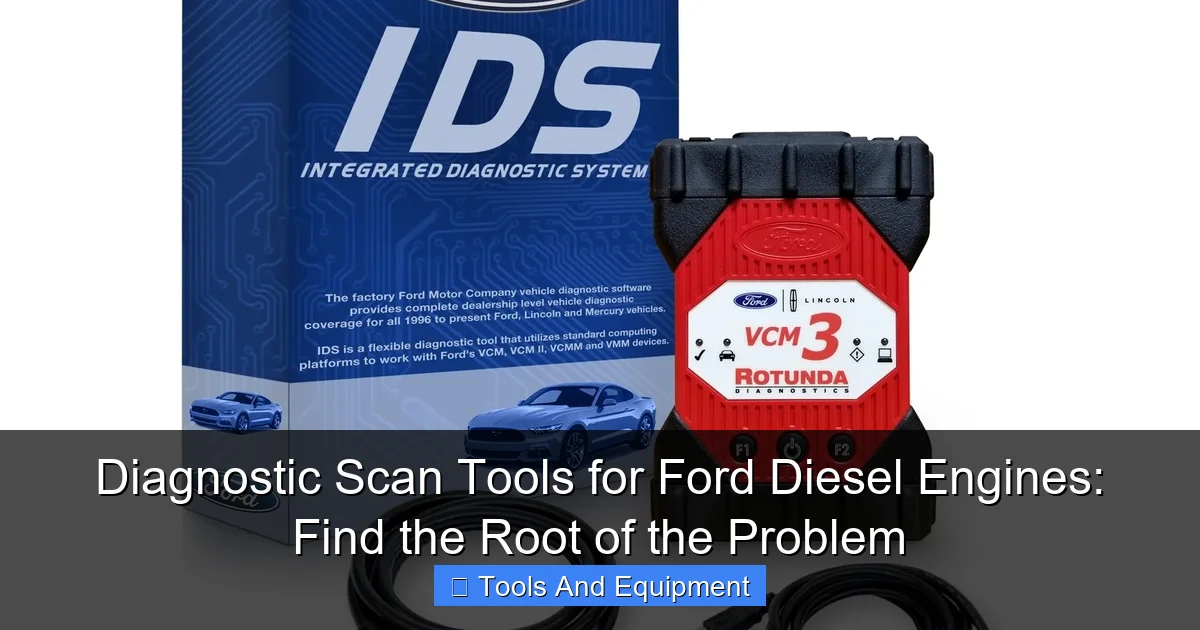
Ford Integrated Diagnostic System (IDS), and its successor Ford Diagnostic and Repair System (FDRS), are the pinnacle of Ford diagnostics. These are the factory tools used by Ford dealerships globally. They offer:
- Complete OEM Functionality: Access to all modules, read/clear all codes, full bi-directional controls, module programming (FDRS uses an online connection for software downloads), special functions, guided diagnostics, wiring diagrams, and TSBs.
- Unmatched Accuracy: Guaranteed to be fully compatible and up-to-date with all Ford diesel models.
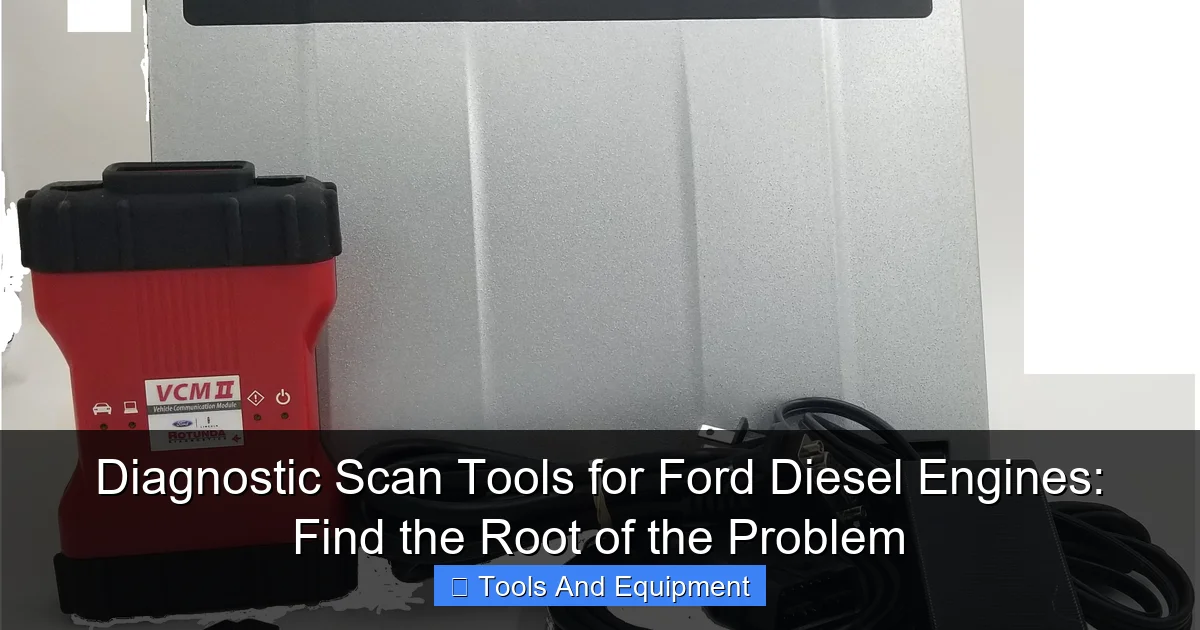
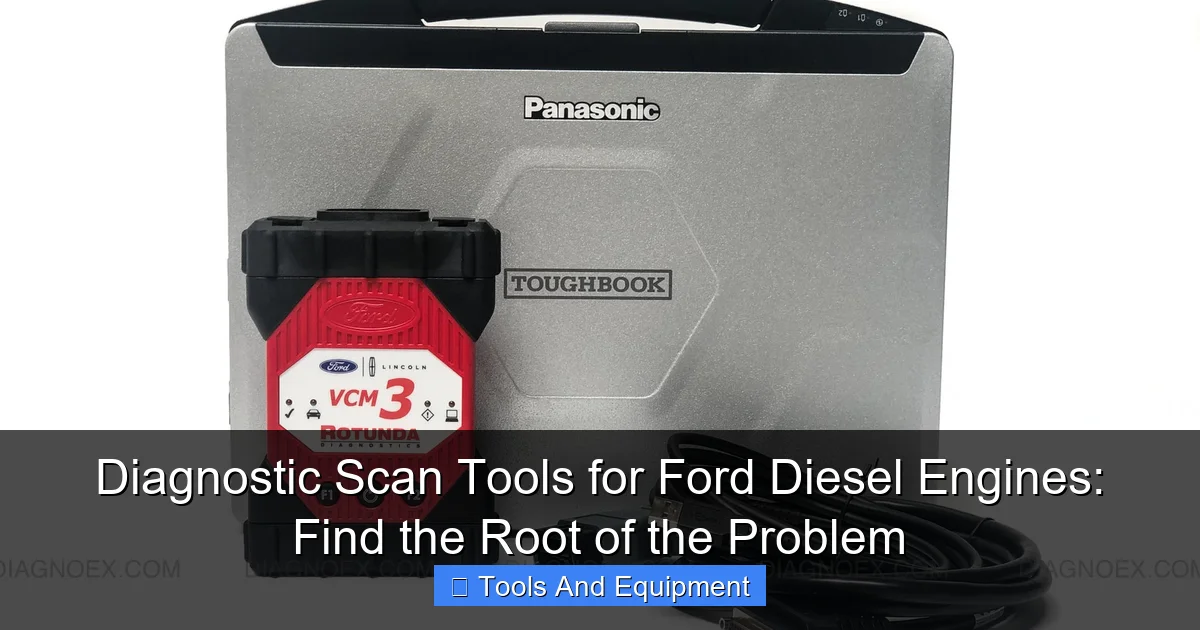
- Hardware Requirement: Requires a Vehicle Communication Module (VCM), like the VCM II or VCMM, connected to a dedicated laptop.
Pros: The most comprehensive and accurate diagnostic solution. Essential for complex module programming and factory-level repairs.
Cons: High initial cost for hardware and software subscription (annual fee for IDS/FDRS license). Steep learning curve for some. Primarily for dealerships and high-volume independent shops.
Professional & Advanced Aftermarket Solutions
For independent shops and serious professionals, several aftermarket tools offer near OEM-level capabilities at a more accessible price point.
- AutoEnginuity (AE) ScanTool with Ford Expansion:
- Highly regarded for Power Stroke diagnostics. It offers deep dive capabilities for Ford, including extensive PID lists, bi-directional controls, injector buzz tests, FICM monitoring, and more.
- Requires a PC or laptop. Software is purchased with specific manufacturer expansions.
- Pros: Excellent depth for Ford diesel. Cost-effective compared to IDS. User-friendly interface.
- Cons: PC-based only. Still requires a significant investment for hardware and software.
- Snap-on Verdict/Modis/Solus Series:
- Snap-on tools are ubiquitous in professional garages. They provide extensive coverage for Ford diesel engines, including reading all codes, live data, bi-directional controls, and some special functions.
- These are integrated handheld scan tools with their own operating systems.
- Pros: Robust, integrated, widely supported, extensive coverage across many vehicle makes.
- Cons: Very expensive. Updates are often costly annual subscriptions.
- Autel MaxiSys Series (e.g., MS908S Pro, MS919, Ultra):
- Autel has rapidly become a leader in aftermarket diagnostics. Their MaxiSys line offers incredibly broad vehicle coverage, including extensive Ford diesel capabilities. They excel in live data graphing, bi-directional controls, and special functions.
- Android-based tablets with wireless VCI (Vehicle Communication Interface).
- Pros: Excellent value for money given their extensive features and multi-brand coverage. Good for complex diagnostics and module coding.
- Cons: Can be expensive for top-tier models. Annual update fees.
- Launch X431 Series (e.g., V+, Pro3S+):
- Similar to Autel, Launch offers a powerful line of diagnostic tablets with comprehensive coverage. They are strong in reading codes, live data, adaptations, and bi-directional tests for Ford diesel vehicles.
- Android-based tablets with wireless VCI.
- Pros: Good balance of features, coverage, and price. Often seen as a strong competitor to Autel.
- Cons: Interface can be less polished than some competitors. Annual update fees.
Enthusiast & DIY-Friendly Options
For Ford diesel owners who want to perform their own diagnostics without breaking the bank, several excellent options exist.
- ForScan (Software-based):
- ForScan is an incredibly popular and powerful software tool for Ford, Lincoln, and Mercury vehicles, including Power Stroke diesels. It allows users to read/clear codes, view extensive PIDs, perform bi-directional controls (e.g., injector buzz test, KOEO/KOER self-tests), and even modify vehicle parameters (e.g., tire size correction, enabling features).
- Requires a Windows laptop and a compatible OBD-II adapter (like an OBDLink EX or OBDLink MX+ for Bluetooth).
- Pros: Extremely affordable (software is free, adapter is a one-time purchase). Near OEM-level diagnostics for Ford. Constantly updated by a dedicated community.
- Cons: PC-based only. Can have a learning curve for some advanced functions. Requires a reliable OBD-II adapter.
- OBDLink MX+/EX with Third-Party Apps:
- While the OBDLink hardware itself is an interface, pairing it with apps like ForScan (as mentioned above) or other capable OBD-II apps can provide significant diagnostic power for Ford diesels. The MX+ offers Bluetooth connectivity for mobile devices, while the EX is a USB-only adapter optimized for ForScan.
- Pros: Very versatile adapters. Excellent compatibility and reliability.
- Cons: Functionality is limited by the chosen software/app.
Choosing the right Power Stroke scan tool depends on your budget, technical expertise, and how deeply you need to delve into your engine’s systems. For most DIYers, ForScan offers an incredible bang for the buck, while professionals will likely lean towards Autel, Launch, or Snap-on, or even a full IDS/FDRS setup.
Common Ford Diesel Engine Problems Diagnosed by Scan Tools
One of the greatest benefits of having the right diagnostic scan tools for Ford diesel engines is the ability to quickly and accurately diagnose common, and often complex, Power Stroke issues. Here’s how these tools empower you to identify problems:
- Injector Issues (6.0L, 6.4L, 6.7L):
- How a Scan Tool Helps: Monitor Fuel Injection Control Module (FICM) voltage on 6.0L/6.4L to check for low voltage (which causes hard starting, rough idle, misfires). Perform an injector buzz test to listen for proper solenoid actuation. View injector contribution/balance rates to identify weak or failed injectors. Check Injector Pressure Regulator (IPR) duty cycle and Injector Control Pressure (ICP) sensor readings to diagnose high-pressure oil system problems.
- Common Codes: P0261-P0269 (Injector Circuit/Cylinder Balance Faults), P0611 (FICM Performance).
- EGR System Faults (All Power Strokes since 2003):
- How a Scan Tool Helps: Monitor EGR valve position, command the EGR valve open/closed to test its functionality, and check Differential Pressure Feedback (DPFE) sensor readings. Look for excessive exhaust gas temperatures or coolant leaks that indicate cooler failure.
- Common Codes: P0401-P0409 (EGR Flow/Performance Faults), P04D1 (EGR valve stuck open/closed).
- Turbocharger Problems (VGT issues, boost leaks):
- How a Scan Tool Helps: Monitor Variable Geometry Turbo (VGT) vane position, desired vs. actual boost pressure, MAP (Manifold Absolute Pressure) sensor readings, and EBP (Exhaust Back Pressure) sensor readings. Command the VGT solenoid to cycle. This helps identify sticky VGT vanes, failed solenoids, or boost leaks.
- Common Codes: P0299 (Underboost), P0234 (Overboost), P132B (Turbo Boost Control Performance).
- Sensor Failures (ICP, IPR, MAP, EBP, CKP, CMP, etc.):
- How a Scan Tool Helps: View live data from each sensor. A sensor reading that is stuck, out of range, or erratic can quickly point to a faulty sensor. Comparing readings from different sensors (e.g., MAP vs. BARO) can help confirm accuracy.
- Common Codes: P2287 (ICP Sensor Intermittent), P1211 (ICP Sensor above/below desired), P0111 (IAT sensor).
- DPF / Regeneration Issues (6.4L, 6.7L):
- How a Scan Tool Helps: Monitor DPF soot load, exhaust gas temperatures (EGTs), and initiate a forced DPF regeneration cycle. Check DEF (Diesel Exhaust Fluid) levels, pump pressure, and injector functionality on 6.7L engines.
- Common Codes: P24A0 (DPF Soot Accumulation), P207F (DEF Quality), P20E8 (DEF Pressure Low).
- Fuel System Diagnostics (Pressure, return rates):
- How a Scan Tool Helps: Monitor fuel rail pressure, fuel pump command, and actual pressure. Perform fuel pressure drop tests. Some advanced tools can even monitor fuel return rates to pinpoint faulty injectors or return line issues.
- Common Codes: P0087 (Fuel Rail Pressure Too Low), P0088 (Fuel Rail Pressure Too High).
- Transmission Faults (TCM codes, sensor data):
- How a Scan Tool Helps: Access the Transmission Control Module (TCM) to read codes, view solenoid states, monitor transmission fluid temperature, turbine speed, and output shaft speed. This helps diagnose shifting problems, solenoid failures, or sensor issues within the transmission.
- Common Codes: P07xx series (Transmission System Faults).
By providing direct access to these critical data streams and control functions, Ford diesel diagnostic software and hardware tools transform guesswork into precise, data-driven problem-solving.
Tips for Effective Ford Diesel Diagnostics
Owning a powerful Power Stroke scan tool is only half the battle. Knowing how to use it effectively and interpret the data is crucial. Here are some actionable tips to maximize your diagnostic success:
The Diagnostic Process: Beyond Reading Codes
Never assume a code tells the whole story. A trouble code (DTC) often indicates a symptom, not the root cause. For example, a “low boost” code might not mean a bad turbo; it could be a leaky intercooler pipe, a stuck VGT solenoid, or even an exhaust leak.
- Start with a Visual Inspection: Before plugging in the scanner, check for obvious issues: loose connections, vacuum leaks, damaged wiring, fluid leaks, or broken components. A visual inspection can save hours of diagnostic time.
- Check TSBs (Technical Service Bulletins) and Recalls: Ford often releases TSBs for known issues and recommended fixes. Checking these for your vehicle’s year/make/model and symptom can provide a shortcut to a solution.
- Gather Vehicle History: Ask the owner (or yourself) about recent repairs, symptoms leading up to the fault, and any modifications.
- Read ALL Codes: Not just powertrain (P-codes), but also body (B), chassis (C), and network (U) codes from all modules. Sometimes, an ABS code can indirectly cause an engine light, or a communication fault can mimic a component failure.
- Clear Codes and Retest: Sometimes codes are “historical” or intermittent. Clear them, test drive the vehicle, and see which ones return.
Interpreting Live Data & Sensor Readings
This is where the real power of diagnostic scan tools for Ford diesel engines shines. Learning to interpret live data is a skill developed over time.
- Compare Desired vs. Actual: Many PIDs will have a “desired” and “actual” value (e.g., desired boost vs. actual boost, desired ICP vs. actual ICP). Large discrepancies are strong indicators of a problem in that system.
- Look for Plausibility: Are the sensor readings within a logical range? Is manifold pressure equal to barometric pressure with the engine off? Is coolant temperature reading -40°F when it’s 70°F outside?
- Graph Multiple PIDs: Graphing related sensors (e.g., RPM, MAP, VGT duty cycle) simultaneously helps you visualize their interaction and identify patterns or anomalies that static numbers might miss.
- “Known Good” Data: If you have access to data from a known good, identical vehicle, comparing problematic data to “known good” data is an invaluable diagnostic technique.
Bi-Directional Controls in Action
Leverage bi-directional controls to actively test components.
- Injector Buzz Test: For 6.0L/6.4L, this test cycles the solenoids on each injector. Listening for consistent “buzzes” helps identify electrical issues within the injector circuits.
- Actuator Commands: Commanding the EGR valve to open/close or the VGT solenoid to cycle can help you determine if the component itself is functional or if the issue lies in its control circuit or mechanical linkage.
- Reset Adaptations: After replacing certain components (e.g., fuel injectors), resetting adaptations (learned values) is often necessary to ensure the new component functions correctly with the engine control module.
Staying Updated
Modern vehicles receive software updates for performance enhancements, bug fixes, and emission compliance. Ensure your Ford diesel diagnostic software is always up-to-date. This ensures compatibility with the latest vehicle models and access to the most current diagnostic routines.
By adopting a systematic approach and continuously learning how to interpret the wealth of information provided by your diagnostic tools, you’ll become highly proficient at keeping Ford diesel engines running optimally.
Future of Ford Diesel Diagnostics
Just as Ford diesel engines continue to evolve, so too do the methods and technologies used to diagnose them. The future of diagnostic scan tools for Ford diesel engines promises even greater sophistication, integration, and predictive capabilities.
Over-the-Air (OTA) Updates & Remote Diagnostics
Vehicles are becoming increasingly connected. Ford has already implemented OTA updates for various systems, meaning software improvements and even bug fixes can be pushed directly to your truck without a visit to the dealership. This technology will extend to diagnostics, allowing:
- Remote Fault Monitoring: Vehicles can self-diagnose and send alerts to owners or fleet managers, sometimes even before a dash light appears.
- Predictive Maintenance: AI algorithms can analyze vehicle data in real-time, identifying patterns that indicate impending failures, allowing for proactive maintenance before a catastrophic breakdown occurs.
- Remote Troubleshooting: Technicians could potentially access vehicle data and run diagnostic routines remotely, providing preliminary assessments or even solutions without the vehicle physically being in the shop.
AI and Predictive Maintenance
The vast amounts of data collected by modern vehicles, when coupled with artificial intelligence and machine learning, will revolutionize diagnostics. AI could:
- Analyze Complex Data Patterns: Identify subtle correlations between seemingly unrelated sensor readings that a human might miss, pinpointing issues with greater accuracy.
- Recommend Specific Fixes: Based on observed symptoms and vehicle history, AI could suggest the most probable root causes and even specific repair procedures, drawing from a vast database of known issues.
- Optimize Fleet Management: For fleets, AI-driven diagnostics could prioritize maintenance, predict when vehicles need service, and optimize uptime.
Cybersecurity in Vehicle Diagnostics
As vehicles become more connected and reliant on software, cybersecurity becomes paramount. Diagnostic scan tools for Ford diesel engines will need to incorporate advanced security features to:
- Prevent Unauthorized Access: Ensure that only authenticated tools and personnel can access and modify critical vehicle systems.
- Protect Data Integrity: Safeguard vehicle data from manipulation or corruption.
- Secure Software Updates: Verify the authenticity and integrity of all software updates to prevent malicious code injection.
The ongoing advancements in vehicle technology, connectivity, and data analytics will undoubtedly make diagnostic processes for Ford diesel engines more efficient, accurate, and predictive, ultimately enhancing vehicle reliability and longevity for owners and operators.
Conclusion
In the complex world of modern Ford diesel engines, especially the high-performance Power Stroke series, having the right diagnostic scan tools for Ford diesel engines isn’t just a convenience – it’s an absolute necessity. These sophisticated tools bridge the gap between engine trouble and effective solutions, transforming guesswork into data-driven diagnoses. From decoding cryptic trouble codes to performing critical bi-directional tests and monitoring intricate live data streams, the power of a capable scan tool empowers both professional technicians and dedicated DIY enthusiasts to truly understand and maintain these robust machines.
We’ve explored why generic OBD-II scanners simply won’t cut it, delved into the essential features that define a top-tier diagnostic tool, and outlined the leading options available, from factory-level IDS to professional aftermarket solutions like Autel and Launch, and the incredibly popular and affordable ForScan. Understanding how these tools help diagnose common Power Stroke issues – from injector problems and EGR faults to turbo inconsistencies and DPF regeneration challenges – highlights their indispensable value.
Ultimately, investing in the right Ford Power Stroke diagnostic tool and, crucially, learning to use it effectively, is an investment in the longevity and reliability of your truck. It means fewer trips to the shop, more accurate repairs, and the peace of mind that comes from proactively addressing issues before they become major breakdowns. Embrace the technology, empower yourself with knowledge, and keep your Ford diesel running strong for many miles and years to come.
🎥 Related Video: How to Scan Engine Codes using an Autel Scan Tool
📺 Rusty Dusty’s Automotive Repair
Retrieving Diagnostic Trouble Codes using the Autel MaxiSyS MS906 Scan Tool You can purchase this scan tool here: …
Frequently Asked Questions
What is a diagnostic scan tool for Ford diesel engines?
A diagnostic scan tool for Ford diesel engines is a specialized electronic device used to communicate with a vehicle’s onboard computer systems. It allows technicians and owners to read fault codes (DTCs), monitor live sensor data, and perform various diagnostic tests specific to Ford’s Power Stroke and other diesel platforms.
Why do I need a specialized diagnostic scan tool for my Ford Power Stroke diesel?
Generic OBD2 scanners often provide limited access to the deep diagnostic information required for complex Ford Power Stroke diesel engines. Specialized diagnostic scan tools can access proprietary Ford modules, read enhanced codes, and offer bi-directional controls essential for accurately diagnosing and repairing diesel-specific issues like DPF, injector, and turbo problems.
What kind of issues can I diagnose with a Ford diesel scan tool?
A Ford diesel scan tool can help diagnose a wide range of problems, including check engine lights, engine misfires, fuel system issues, turbocharger malfunctions, and emissions system faults like DPF regeneration problems. It allows for precise identification of component failures or performance anomalies affecting your diesel engine.
What features are essential when choosing a diagnostic scan tool for Ford diesel engines?
When choosing a diagnostic scan tool for Ford diesel engines, look for features such as comprehensive code reading and clearing, live data streaming (including diesel-specific PIDs), bi-directional controls for component testing, and support for various Ford Power Stroke generations. Compatibility with software updates and a user-friendly interface are also key benefits.
Are there different diagnostic scan tools for different Ford diesel engine generations (e.g., 7.3L, 6.0L, 6.4L, 6.7L Power Stroke)?
Yes, while some advanced diagnostic scan tools offer broad coverage across multiple Ford diesel engine generations, others might specialize or require specific adapters for older models like the 7.3L Power Stroke. It’s crucial to verify the tool’s compatibility with your specific vehicle year and engine type to ensure full functionality and accurate diagnostics.
Can a professional-grade diagnostic scan tool for Ford diesel engines perform advanced functions like injector coding or DPF regeneration?
Absolutely, professional-grade diagnostic scan tools for Ford diesel engines are capable of performing advanced functions beyond simple code reading. These include crucial procedures like injector coding, DPF (Diesel Particulate Filter) forced regeneration, parameter resets, and module reprogramming, which are often necessary for complete diesel system maintenance and repair.