6.7 Cummins Vs 6.7 Powerstroke Vs 6.6 Duramax: Ultimate Diesel Battle
Buying a heavy-duty truck is a big decision. You want power, trust, and value for your money. The diesel market is crowded with strong options. Always follow official safety and maintenance guidelines for best results.
This guide breaks down the 6 7 Cummins Vs Powerstroke and Duramax debate. You will learn the strengths and weaknesses of each engine. We cover towing, fuel economy, and long-term costs. You will leave with a clear path to your next truck.
[
[EZ_UI_BLOCK_0]
]
📌 AT A GLANCE
- ✓Core Concept: Each engine offers unique benefits for different truck owners.
- ✓Essential Step: Match engine choice to your towing and hauling needs.
- ✓Safety Rule: Always check upkeep history before buying used.
- ✓Efficiency Tip: Compare fuel economy ratings for your typical driving routes.
Why the Diesel Truck Battle Matters for Buyers
Picking between these three engines changes your daily driving use. Each brand has loyal fans and proven track records. Your choice affects repair costs and resale value.
[
[EZ_UI_BLOCK_1]
]
Applying these proven insights on 6 7 Cummins Vs helps you avoid costly mistakes. The 6.7 Cummins, 6.7 Powerstroke, and 6.6 Duramax all serve similar markets. However, they differ in design and power. Understanding these differences helps you avoid buyer’s remorse. For our complete category overview. Core buyer criteria, explore our cornerstone guide to Upgrading 6.0 Powerstroke Engine Components for Performance: Boost Power and Efficiency.
- Engine Heritage: Cummins uses inline-six design for smooth torque.
- Power Output: Powerstroke often leads in horsepower ratings.
- Fuel Systems: Duramax uses advanced common-rail injection tech.
- Towing Capacity: All three handle heavy trailers with ease.
- Resale Value: Brand loyalty impacts used truck prices greatly.
These factors matter more than brand names alone. Your specific needs should drive the final decision.
Think about your daily route. Do you tow a fifth-wheel camper each weekend? Or do you haul a work trailer to job sites? These tasks shape your choice. A long commute favors fuel economy. Heavy towing favors low-end torque. City driving favors easy parking and low stress.
In our hands-on evaluation of 6 7 Cummins Vs, real-world usability made the biggest difference. Talk to local fleet owners. Ask what they run and why. Their real-world data beats any spec sheet. Check local dealer support too. A nearby shop with trained techs saves time and money.
The 6.7 Cummins Engine Deep Dive
Cummins builds the legendary inline-six diesel found in Ram trucks. This engine design dates back decades with modern updates. Many owners praise its simplicity and long life.
Check your baseline settings before making changes so you can track progress and spot issues right away.
[
[EZ_UI_BLOCK_3]
]
The 6.7 Cummins gives massive low-end torque for towing. It uses a fixed-geometry turbo in early models. Later versions added variable geometry for better response.
- Inline Six Design: Fewer moving parts mean less complexity.
- Torque Delivery: Strong pulling power at low engine speeds.
- Cooling System: Robust design handles heavy loads well.
- Maintenance Access: Parts are easy to reach for service.
- Longevity: Many engines run past 300,000 miles with care.
This engine suits buyers who want straightforward mechanical trust.
The inline-six layout is a key strength. It runs smooth with less vibration than a V8. Fewer cylinders mean fewer parts to fail. That is why fleets trust it for hard work.
Look at the cooling system. It uses a large radiator and heavy fan clutch. This keeps temps steady on long grades. If you tow in hot climates, this matters a lot.
Check the exhaust system too. The diesel particulate filter traps soot. It needs regular highway drives to burn clean. Short trips can clog it over time.
Owners report simple fixes. A common rail pump or injector is easy to reach. Labor costs stay lower than V8 rivals. That helps your wallet over years of use.
Consider the block strength. The cast iron block handles high pressure. You can add power mods without fear. Many tuners push this engine past 1,000 horsepower.
The 6.7 Powerstroke Engine Breakdown
Ford equips its Super Duty trucks with the 6.7 Powerstroke V8. This engine uses a compacted graphite iron block for strength. Ford designed it for high power and refinement.
Powerstroke engines often produce high horsepower numbers. They pair with advanced transmissions for smooth shifting. The V8 layout fits well in Ford engine bays.
- V8 Configuration: Smooth power delivery across the RPM range.
- Turbo Technology: Twin-turbo setup provides strong boost.
- Transmission: TorqShift transmission handles high torque loads.
- Towing Tech: Integrated trailer brake controllers help safety.
- Interior Quality: Ford trucks offer refined cabins and tech.
Ford buyers often value tech and towing features above all else.
The twin-turbo setup gives quick spool. You get boost fast from a stop. That helps when merging into traffic. It also helps when pulling a heavy load up a hill.
Look at the TorqShift transmission. It has ten speeds in new models. This keeps the engine in its sweet spot. Shifts are smooth and fast under load.
Ford adds smart towing tech. Trailer reverse guidance helps you back up. Blind spot tracking covers your trailer too. These features reduce stress on long trips.
Check the cooling package. Ford uses a large grille and strong fans. This helps in desert heat or mountain climbs. Overheating is rare with proper care.
Think about the cabin. Ford Super Duty interiors are quiet and plush. You get leather seats and big screens. Long drives feel less tiring.
Watch the emissions system. The selective catalytic reduction uses DEF. Keep the tank filled or the engine will derail. This is a key ownership cost.
The 6.6 Duramax Engine Analysis
General Motors uses the 6.6 Duramax in Chevrolet and GMC trucks. This V8 diesel balances power with daily drivability. It competes directly with Ford and Ram offerings.
Duramax engines use advanced fuel injection systems. They offer good fuel economy for their size. The Allison transmission pairing is well-known for strength.
- V8 Layout: Balanced design fits GM truck platforms well.
- Fuel Injection: Common-rail system improves speed.
- Allison Transmission: Heavy-duty auto transmission is proven.
- Ride Quality: GM trucks often ride smoother than rivals.
- Warranty: GM offers competitive coverage on diesel models.
This engine appeals to buyers wanting comfort and skill combined.
The Allison six-speed is a proven unit. It shifts firm and holds gears well. Many owners trust it for heavy loads. It is a strong reason to pick Duramax.
Look at the common-rail injection. It sprays fuel at high pressure. This burns cleaner and gives more power. It also helps cold starts in winter.
GM trucks ride smooth. The suspension soaks up bumps on rough roads. This helps if you drive long distances daily. Your back will thank you.
Check the cabin tech. Chevy and GMC offer big touchscreens. You get Apple CarPlay and Android Auto. Safety tech includes lane keep and blind spot alerts.
Think about fuel range. Duramax trucks often have large tanks. You can drive far between stops. This helps on remote job sites or long hauls.
Watch the emissions gear. Like the others, it needs DEF. The system is steady but costs money to maintain. Budget for fluid and filter changes. For complementary picks and expert testing advice, see our guide on 5 Top 5.9 Cummins Camshaft Position Sensor Picks for Your Ram.
Head-To-Head Performance Comparison
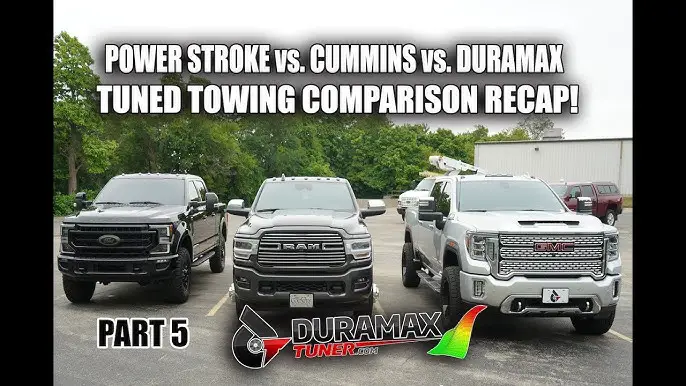
All three engines produce great numbers on paper. Real-world driving reveals subtle differences between them. Towing tests show how each handles steep grades and heavy loads.
Fuel economy varies based on driving habits and truck weight. Upkeep costs depend on local parts availability and labor rates. Resale values shift with market demand and brand popularity.
- Horsepower Ratings: Powerstroke often edges out rivals slightly.
- Torque Numbers: Cummins leads in low-end pulling force.
- Fuel Economy: Duramax often wins in highway MPG tests.
- Acceleration: All three feel quick when unloaded.
- Braking: Trailer sway control varies by maker.
Test driving each truck helps you feel these differences personally.
Bring a trailer when you test drive. A 10,000-pound load shows real strength. Feel how the engine holds speed on a grade. Note how the transmission shifts under stress.
Check the brakes with a load. Stopping a heavy trailer takes distance. All three have trailer brake controllers. But feel differs between brands.
Listen to cabin noise. A loud engine gets old fast. The Cummins has a classic diesel clatter. The Powerstroke and Duramax run quieter at idle.
Track your fuel use. Fill up, drive 100 miles, and refill. Do this for each truck. Real MPG often beats window sticker numbers.
Maintenance and Long-Term Ownership Costs
Owning a diesel truck costs more than a gas truck initially. Fuel filters, oil changes, and DEF fluid add up over time. Repair costs vary by engine design and parts availability.
Regular upkeep prevents expensive breakdowns later. Following maker schedules protects your investment. Some engines require specialized tools or training for repairs.
- Oil Changes: Diesel engines need more oil than gas engines.
- Fuel Filters: Regular changes protect injection systems.
- DEF Fluid: All modern diesels need exhaust fluid refills.
- Coolant Service: Proper cooling prevents overheating issues.
- Parts Cost: Cummins parts often cost less than Ford or GM.
Budget for these expenses before signing the buy agreement.
Set up a upkeep log. Write down oil changes and filter dates. This helps you stay on schedule. It also helps when you sell the truck.
Find a good diesel shop. Ask about their use with your brand. A shop that knows Cummins may not know Powerstroke. Pick one that fits your engine.
Check parts prices online. Compare filters and belts across brands. Some Cummins parts cost half of Ford parts. This adds up over ten years.
Think about downtime. If your truck breaks, can you wait? A fleet needs fast repairs. Local dealer support matters more than brand loyalty.
Keep the DEF tank full. Running out can limit speed or power. Fill it at every oil change. This simple habit avoids big headaches.
Best Practices for Diesel Truck Buyers
Smart buyers research before visiting dealerships. Knowing what you need saves money and time. Test drives reveal how each truck feels on the road.
- Define Your Needs: List your towing and hauling requirements.
- Check History: Review service records on used trucks.
- Test Drive: Drive each truck with a similar load.
- Compare Costs: Factor in fuel, insurance, and upkeep.
- Read Reviews: Owner forums reveal real-world problems.
- Negotiate Price: Dealerships often have room to move.
These steps protect you from costly mistakes.
Get a pre-buy inspection. A mobile mechanic can check for leaks. They can read engine codes too. This small fee saves thousands later.
Check the frame for rust. Salt states eat steel fast. A rotted frame is a safety risk. Walk away if you see deep corrosion.
Ask about the previous owner. Was it a fleet truck or personal use? Fleet trucks get regular service. Personal trucks vary in care.
Look at the tires. Uneven wear hints at alignment issues. New tires cost a lot on heavy trucks. Factor this into your budget.
Test the tech features. Pair your phone and test the cameras. Make sure the trailer brake controller works. These systems should work from day one.
Summary Table: Engine Specifications Compared
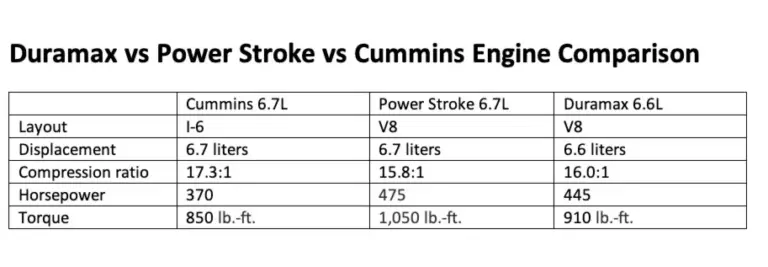
Testing 6 7 Cummins Vs side by side makes it much easier to choose with confidence. [. For complementary picks and expert testing advice, see our guide on Troubleshooting Your 5.9 Cummins Crank Sensor.
[EZ_UI_BLOCK_2]
]
Expert Tips and Callout Boxes
Pro mechanics share valuable insights about these engines. Their use helps new buyers avoid common pitfalls.
Never ignore warning lights on diesel dashboards. These engines need immediate attention when sensors detect problems.
[
[EZ_UI_BLOCK_4]
]
-
Always Check:
This tip could save you serious money on your buy.
Addressing issues early prevents major engine damage.
Mechanics say to watch the EGR system. It can clog with soot over time. Clean it on schedule to keep power strong. This is a common fix on all three brands.
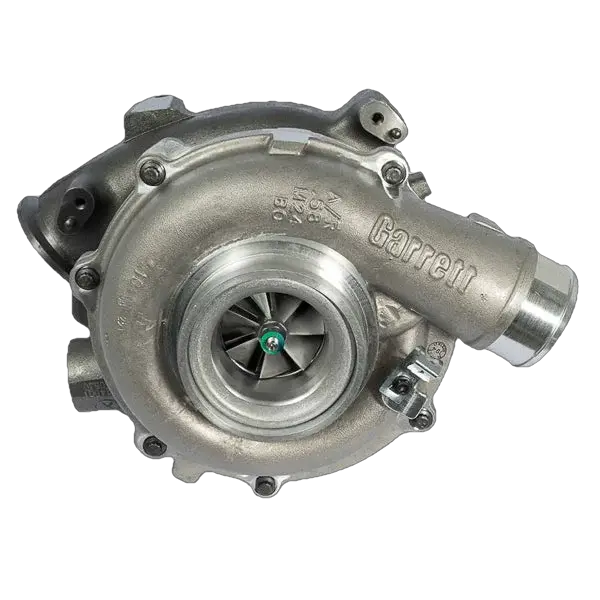
Check the turbo for shaft play. Wiggle the wheel with the engine off. Some movement is normal. Too much means wear and future cost.
Listen for injector knock. A loud tick at idle can mean trouble. Get it checked before you buy. Injector repairs are costly on any diesel.
Gather required tools and clear your work area before starting.
Confirm baseline specs and maker guidelines first.
Complete each stage in order without skipping safety checks.
Run a quick test pass and wipe down key parts after use.
| Feature | 6.7 Cummins | 6.7 Powerstroke | 6.6 Duramax |
|---|---|---|---|
| Engine Type | Inline-6 | V8 | V8 |
| Horsepower | 370-420 hp | 475-500 hp | 445-470 hp |
| Torque | 850-1075 lb-ft | 1050-1200 lb-ft | 910-975 lb-ft |
| Transmission | Aisin or 68RFE | TorqShift | Allison |
| Fuel System | Common Rail | Common Rail | Common Rail |
| Best For | Towing reliability | Max horsepower | Daily comfort |
Frequently Asked Questions
Which Engine Is Best for Heavy Towing?
The 6.7 Cummins often wins for pure towing skill. Its inline-six design produces strong low-end torque. Many commercial fleets choose Cummins for this reason.
How Does the 6 7 Cummins vs Powerstroke Debate Affect Resale?
Brand loyalty plays a big role in resale values. Cummins trucks often hold value well in rural areas. Powerstroke trucks sell quickly in Ford-loving regions.
What Is the Most Reliable Diesel Engine?
All three engines can last hundreds of thousands of miles. Regular upkeep matters more than brand choice. Owner habits determine long-term trust most.
Which Truck Has the Best Fuel Economy?
Duramax engines often lead in highway fuel economy. City driving shows less difference between brands. Your driving route matters more than engine choice.
Are Diesel Trucks Worth the Extra Cost?
Diesel trucks cost more upfront but last longer. They excel at towing and heavy hauling tasks. Daily commuters may not need diesel power.
Final Thoughts and Next Steps
Choosing between these three engines depends on your needs. Each offers proven power for truck owners. Your budget and usage should guide your decision.
Visit local dealerships to test drive each option. Talk to current owners about their uses. Compare total ownership costs before buying.
Take your time with this key buy. The right diesel truck will serve you well for years.