
Mastering Engine Timing: 5 Top Camshaft vs Crankshaft Position Sensor Replacements
Ever wondered what keeps your car’s engine running like a well-oiled machine, perfectly timed and humming along? It’s all thanks to a dynamic duo: the camshaft vs crankshaft position sensor. These tiny but mighty components are crucial for your vehicle’s brain (the ECU) to know exactly what’s happening inside the engine at all times. When one of them decides to take an unplanned vacation, your car can quickly go from smooth operator to a grumpy, stalling mess.
Understanding the difference between the camshaft vs crankshaft position sensor and knowing which one to replace can save you a headache (and a hefty mechanic’s bill!). In this guide, we’ll break down what each sensor does, why they’re so important, and review five top-notch replacement kits to get your ride back in tip-top shape.
Camshaft vs Crankshaft Position Sensor: What’s the Big Deal?
Think of your engine’s internal components, like pistons, valves, and crankshaft, all dancing in a carefully choreographed ballet. For this dance to be perfect, the engine control unit (ECU) needs real-time information about their positions. That’s where these sensors come in.
- Crankshaft Position Sensor (CKP): This sensor is the engine’s main RPM detector. It monitors the rotational speed and position of the crankshaft, which is directly connected to your pistons. It tells the ECU exactly where the pistons are in their stroke. This information is vital for spark timing and fuel injection. Without it, your engine literally wouldn’t know when to fire!
- Camshaft Position Sensor (CMP): The camshaft controls the opening and closing of your engine’s valves. The CMP sensor tracks the position of the camshaft, ensuring the valves open and close at precisely the right moment in relation to the piston’s movement. This is critical for engine efficiency, power output, and emissions control, especially in modern engines with variable valve timing (VVT) systems.
Together, the camshaft and crankshaft position sensor work in harmony. The crankshaft sensor provides the foundational speed and position, while the camshaft sensor fine-tunes the valve timing to match. A malfunction in either can lead to a range of frustrating symptoms, like a check engine light, rough idling, misfires, or even your car refusing to start.
Ready to find the right replacement? Let’s dive into our top picks!
Our Top 5 Picks for Camshaft & Crankshaft Position Sensor Kits
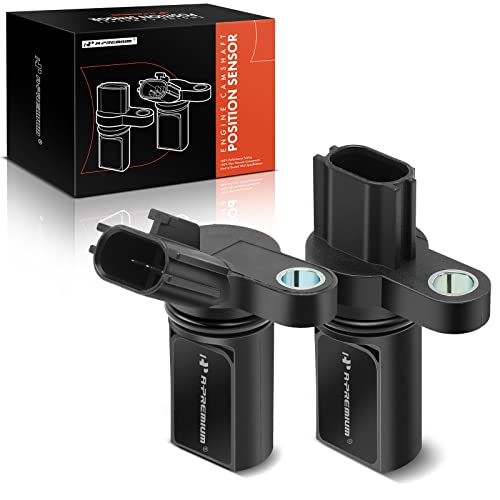
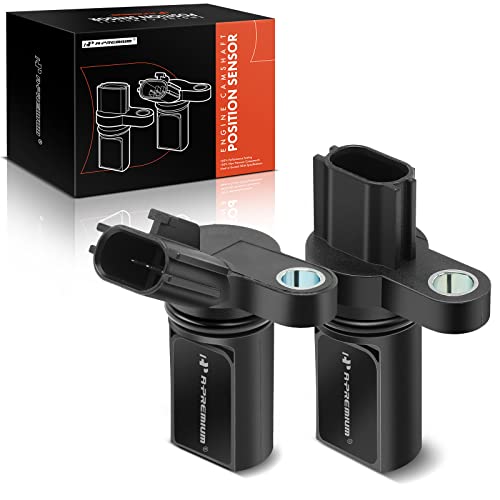
1. A-Premium Camshaft Crankshaft Position Sensor Compatible

This A-Premium kit is a fantastic choice if you’re driving a compatible Infiniti or Nissan V6 3.5L vehicle and need a comprehensive solution. It comes with two camshaft position sensors (often for Bank 1 and Bank 2 on V6 engines) and one crankshaft position sensor, covering all your bases. What truly makes this kit stand out is its meticulous craftsmanship and the confidence provided by a one-year unlimited-mileage guarantee, ensuring you’re getting a reliable aftermarket replacement. It’s designed for a direct fit, making installation smoother for DIY enthusiasts or professional mechanics.
Key Features:
– Compatible with Infiniti FX35, G35, I35, M35 V6 3.5L (2002-2008).
– Compatible with Nissan 350Z, Altima, Maxima, Murano, Quest V6 3.5L (2002-2008).
– Includes 2 camshaft sensors and 1 crankshaft sensor.
– Direct replacement for various OEM part numbers.
– Features 3-pin blade terminals for secure connection.
Pros:
– Comprehensive 3-piece kit for common Nissan/Infiniti VQ35DE engines.
– Excellent vehicle fitment coverage for the listed models.
– Comes with a reassuring one-year unlimited-mileage guarantee.
– Designed for direct, hassle-free installation.
Cons:
– Specific to certain Nissan/Infiniti V6 3.5L models, not universal.
User Impressions:
Users often praise this kit for its accurate fitment and effectiveness in resolving common engine issues related to sensor failure, such as rough idle and starting problems. Many appreciate getting all three necessary sensors in one convenient package, making the replacement process straightforward.
2. Set of 3 Camshaft Crankshaft Position Sensor Compatible

Another excellent 3-piece set, this kit also targets the popular Nissan/Infiniti V6 3.5L engines but expands its compatibility even further to include various Nissan trucks and vans with 4.0L V6 engines. This broad compatibility makes it a go-to option for a wide range of Nissan and Infiniti owners facing sensor issues. Beyond just providing the parts, the product description thoughtfully explains the function of these sensors, which can be incredibly helpful for those new to automotive repairs, emphasizing its direct replacement design for easy plug-and-play installation.
Key Features:
– Wide compatibility for Infiniti G35, FX35, I35, M35 V6 3.5L (2002-2008).
– Extensive compatibility for Nissan 350Z, Altima, Maxima, Murano, Quest V6 3.5L (2002-2009).
– Also fits Nissan Pathfinder, Frontier, Xterra, NV series with 4.0L V6 (2005-2020).
– Includes 2 camshaft sensors (Bank 1 & 2) and 1 crankshaft sensor.
– Direct replacement with corresponding OEM numbers provided.
Pros:
– Very broad vehicle fitment, including trucks and vans.
– Explicitly details the function of each sensor, aiding understanding.
– Designed for direct, simple plug-in installation.
– Backed by an 18-month worry-free warranty.
Cons:
– Still primarily focused on Nissan/Infiniti platforms.
User Impressions:
Customers frequently highlight the perfect fit and the immediate improvement in engine performance after installing these sensors. The extended compatibility is a major plus for owners of the larger Nissan vehicles, and the clear function description is a nice touch for DIYers.
3. higherbro 2pcs Crankshaft + Camshaft Position Sensor Kits

If your garage is home to a Toyota, Lexus, Scion, or Pontiac, this higherbro kit might be exactly what you need. Unlike the previous options, this kit provides a crankshaft sensor and a single camshaft sensor, which is typical for many 4-cylinder engines. It’s particularly noteworthy for its specific fitment across a range of popular models, including the Toyota Camry and RAV4. The clear guidance to “Select Your Vehicle” before purchase is a great touch, ensuring you get the right parts for your specific car and engine. Plus, a one-year quality guarantee offers peace of mind.
Key Features:
– Includes 1 crankshaft position sensor and 1 camshaft position sensor.
– Compatible with 2010-2012 Lexus HS250H.
– Fits 2009-2010 Pontiac Vibe 2.4L.
– Compatible with 2005-2010 Scion Tc.
– Wide compatibility for Toyota Camry 2.4L, Highlander 2.4L, Matrix 2.4L, RAV4 (various years).
– Backed by a one-year quality guarantee.
Pros:
– Excellent solution for common Toyota/Lexus/Scion 2.4L engines.
– Clear guidance for vehicle compatibility check.
– Comes with a 1-year quality guarantee.
– Simplifies sourcing both key sensors in one purchase.
Cons:
– Only includes two sensors, which may not cover all configurations (e.g., if a vehicle uses two cam sensors).
– More limited vehicle fitment compared to the Nissan/Infiniti specific kits.
User Impressions:
Owners of compatible Toyota and Lexus models often report that these sensors resolve check engine lights and restore smooth engine operation. The direct fit and the value of getting both sensors together are frequently mentioned as positives.
4. ApplianPar Engine Camshaft and Crankshaft Position Sensor

For Honda and Acura owners, the ApplianPar kit steps up to the plate. This 3-piece set specifically caters to various models featuring the robust K-series engine, such as the Acura TSX, Honda Accord, and Element. Having all three necessary sensors (likely one crankshaft and two camshafts for these specific engines) in one package streamlines the repair process significantly. It’s a direct replacement for several OEM part numbers, ensuring compatibility and ease of installation, helping to restore your Honda’s legendary reliability.
Key Features:
– Comprehensive 3-piece kit: 2x Camshaft Position Sensor, 1x Crankshaft Position Sensor.
– Replaces common OEM part numbers like 37500-RAA-A01, 37510-RAA-A01.
– Compatible with Acura TSX 2004-2008.
– Fits Honda Accord 2003-2007, Element 2003-2011.
Pros:
– Tailored for popular Honda/Acura K-series engines.
– Includes all three likely required sensors for these applications.
– Direct replacement for specific OEM parts, ensuring proper fit and function.
– Helps address check engine light issues and performance problems.
Cons:
– Compatibility is limited to the specific Honda/Acura models listed.
User Impressions:
Customers with compatible Honda and Acura vehicles find this kit to be a reliable and cost-effective solution. The ease of replacing all three sensors at once is a common positive, often leading to immediate improvements in engine performance and stability.
5. VVT Intake+Exhaust Camshaft Position Actuator

This kit from VVT takes a slightly different approach, offering a comprehensive solution for GM vehicle owners with 2.0L, 2.2L, and 2.4L engines. What makes this kit stand out is that it includes not just a camshaft position sensor and a crankshaft position sensor, but also the VVT (Variable Valve Timing) intake and exhaust camshaft position actuators (solenoids). This is incredibly useful, as VVT solenoid failures are common on these engines and often contribute to similar symptoms as bad sensors. If your check engine light is on and you suspect a wider VVT-related issue, this all-in-one kit could save you time and future repairs.
Key Features:
– Comprehensive kit includes: VVT Intake Actuator, VVT Exhaust Actuator, Camshaft Position Sensor, Crankshaft Position Sensor.
– Extensive compatibility with Chevrolet (Equinox, HHR, Malibu, Cobalt, etc.), GMC Terrain, Buick (LaCrosse, Regal, Verano), Pontiac (G5, G6, Solstice), and Saab/Saturn models with 2.0L, 2.2L, 2.4L engines.
– Replaces multiple OEM part numbers for both sensors and actuators.
– Addresses both sensor and common VVT solenoid issues.
Pros:
– Highly comprehensive kit for GM Ecotec engines, tackling multiple potential issues.
– Includes VVT actuators, which are common failure points alongside sensors.
– Excellent value if you need both sensors and VVT solenoids.
– Wide compatibility across numerous GM vehicles.
Cons:
– Might be overkill if you only need the position sensors and not the VVT actuators.
– Specific to GM Ecotec 4-cylinder engines.
User Impressions:
Many users appreciate the convenience and value of getting all these related components in one package, especially for persistent check engine lights on GM vehicles. They often report successful resolution of engine performance issues, including rough idling and P0010/P0011/P0013/P0014 diagnostic codes related to VVT.
Frequently Asked Questions (FAQ)
Q1: What exactly is the main difference between a camshaft vs crankshaft position sensor?
A1: The crankshaft position sensor (CKP) primarily monitors the rotation speed and exact position of the crankshaft, which is linked to your pistons. It tells the engine when to fire spark plugs and inject fuel. The camshaft position sensor (CMP), on the other hand, tracks the rotation of the camshaft, which controls your engine’s valves. It ensures the valves open and close at the perfect time in relation to the piston’s movement, crucial for modern engine efficiency and power. They work together for precise engine timing.
Q2: What are the common symptoms of a faulty crankshaft position sensor?
A2: A failing crankshaft position sensor can cause various issues, including your car cranking but not starting, intermittent stalling, rough idling, engine misfires, poor acceleration, and illumination of the check engine light (often with codes like P0335). Your RPM gauge might also act erratically.
Q3: What symptoms should I look for if my camshaft position sensor is going bad?
A3: When a camshaft position sensor malfunctions, you might experience difficulty starting your car (especially when warm), rough idling, reduced fuel economy, engine hesitation or stalling, and a noticeable decrease in engine power. The check engine light will almost certainly illuminate, potentially displaying codes like P0340 or P0341.
Q4: Can I drive my car with a bad camshaft or crankshaft position sensor?
A4: While your car might still run with a failing sensor, it’s highly advised not to drive it. A faulty sensor can lead to significant engine performance issues, increased fuel consumption, potential damage to other engine components (like the catalytic converter due to unburnt fuel), and could even cause your engine to stall unexpectedly, posing a safety risk. Get it checked and replaced as soon as possible.
Q5: Is it difficult to replace a camshaft or crankshaft position sensor myself?
A5: The difficulty varies greatly depending on your vehicle’s make and model, as well as the sensor’s location. Some sensors are easily accessible, making it a straightforward DIY job requiring basic hand tools. Others are buried deep within the engine bay, requiring more disassembly and potentially specialized tools. Always consult your vehicle’s service manual or watch online tutorials specific to your car before attempting the repair.
Q6: Should I buy an OEM (Original Equipment Manufacturer) or aftermarket sensor?
A6: OEM sensors are made by the original manufacturer and are guaranteed to fit and function exactly like the factory part. Aftermarket sensors, like those reviewed here, are made by other companies and can be a more budget-friendly option. High-quality aftermarket sensors from reputable brands are often just as good as OEM, offering similar reliability and performance. Reading reviews and checking for guarantees (like those offered by A-Premium) is key when choosing aftermarket.
Q7: How do these sensors affect engine performance and fuel efficiency?
A7: These sensors are vital for the ECU to precisely control engine timing, including fuel injection and spark plug firing. If either sensor provides inaccurate data, the engine’s timing will be off. This can lead to inefficient combustion, resulting in reduced horsepower, sluggish acceleration, rough idle, and significantly lower fuel economy because the engine isn’t burning fuel optimally.