How to Install a Cold Air Intake on 7.3 Powerstroke: Improve Airflow and Performance
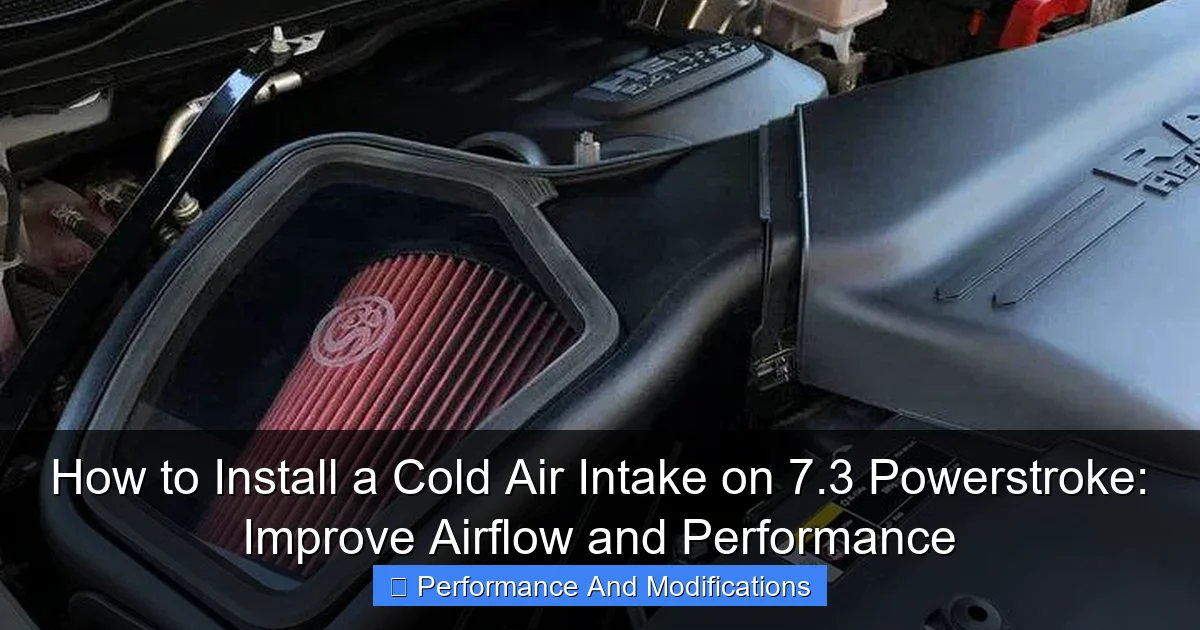
Featured image for this comprehensive guide about How to install a cold air intake on 7.3 Powerstroke
Image source: sbfilters.com
The legendary 7.3 Powerstroke diesel engine holds a special place in the hearts of truck enthusiasts. Known for its robust reliability, impressive towing capabilities, and an unmistakable exhaust note, this workhorse has powered countless Ford F-Series trucks and vans for decades. While the 7.3L is a titan in its own right, factory-installed components often leave room for improvement, especially when it comes to maximizing its full potential. One of the most popular and impactful modifications you can make is upgrading to a cold air intake 7.3 Powerstroke system.
Why consider this upgrade? The stock air intake system in your 7.3 Powerstroke is designed for general use, prioritizing noise reduction and cost-effectiveness over peak performance. This often means restrictive pathways, less-than-optimal filter media, and drawing in warmer engine bay air, all of which can hinder your engine’s ability to breathe freely. A high-quality cold air intake, or CAI, aims to rectify these limitations by delivering a denser, cooler charge of air directly to your turbocharger, translating into measurable gains in horsepower, torque, and even fuel efficiency. It’s one of the most cost-effective ways to get more out of your beloved diesel.
If you’re ready to unlock the hidden beast within your 7.3 Powerstroke, you’ve come to the right place. This comprehensive guide will walk you through everything you need to know about how to install a cold air intake on 7.3 Powerstroke, from understanding its benefits and choosing the right kit, to a detailed, step-by-step installation process. Get ready to experience a more responsive throttle, improved acceleration, and that satisfying turbo spool you’ve been craving.
Quick Answers to Common Questions
Why install a cold air intake on your 7.3 Powerstroke?
A cold air intake dramatically improves airflow to your engine, leading to better combustion and noticeable gains in horsepower, torque, and even fuel efficiency. Plus, you’ll love the more aggressive intake sound it gives your truck!
Is installing a cold air intake on a 7.3 Powerstroke a difficult task?
Not at all! Most cold air intake kits are designed for a direct bolt-on installation, making it a relatively straightforward DIY project. You won’t need specialized tools or advanced mechanical skills.
What tools will I need for my cold air intake installation on a 7.3 Powerstroke?
You’ll typically just need basic hand tools like screwdrivers, wrenches or sockets, and possibly a cutting tool for some hoses or clamps. Always check your specific kit’s instructions for a precise list.
How long does it typically take to install a cold air intake on a 7.3 Powerstroke?
Most installations can be completed within 1 to 2 hours, depending on your comfort level with automotive work and the specific design of your kit. It’s a quick upgrade that delivers satisfying results!
Do I need to tune my 7.3 Powerstroke after installing a cold air intake?
Generally, no additional tuning is required for a cold air intake on your 7.3 Powerstroke, as the factory computer can adapt to the increased airflow. However, if you have other performance modifications, a custom tune might help you achieve optimal results.
📋 Table of Contents
- Why Upgrade Your 7.3 Powerstroke Air Intake? Understanding the Benefits
- Choosing the Right Cold Air Intake for Your 7.3 Powerstroke
- Tools and Materials You’ll Need for the Installation
- Step-by-Step Guide to Installing Your 7.3 Powerstroke Cold Air Intake
- Optimizing Performance After Your Cold Air Intake Installation
- Data and Performance Insights: The Numbers Behind the Upgrade
- Conclusion
Why Upgrade Your 7.3 Powerstroke Air Intake? Understanding the Benefits
Before diving into the installation process, it’s crucial to understand why a cold air intake 7.3 Powerstroke upgrade is such a worthwhile investment. The benefits extend beyond just numbers on a dyno sheet; they translate into a more enjoyable and efficient driving experience for your Ford F-Series or Excursion.
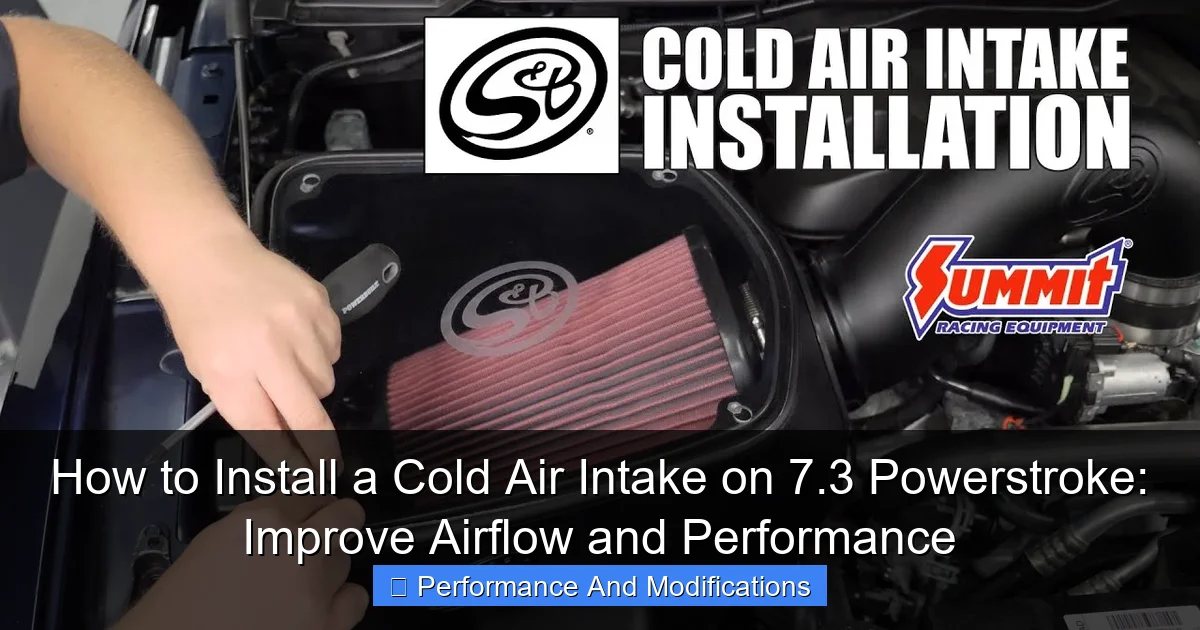
Learn more about How to install a cold air intake on 7.3 Powerstroke – How to Install a Cold Air Intake on 7.3 Powerstroke: Improve Airflow and Performance
Image source: i.ytimg.com
Unleashing Hidden Horsepower and Torque
The primary reason most enthusiasts opt for a CAI is to improve performance. Cooler air is denser, meaning it contains more oxygen molecules per cubic foot. When your engine receives a greater volume of oxygen, it can burn fuel more efficiently, leading to a more powerful combustion event. By drawing in cooler ambient air from outside the engine bay and providing a less restrictive path, a CAI significantly improves volumetric efficiency. This often results in a noticeable bump in both horsepower and torque, typically in the range of 15-30 additional horsepower and 30-60 lb-ft of torque. These gains are particularly noticeable in the mid-range RPMs, where the 7.3 Powerstroke spends most of its working life.
| Performance Aspect | Stock Air Intake System | Aftermarket Cold Air Intake (CAI) | Typical Impact / Benefit |
|---|---|---|---|
| Peak Horsepower (HP) | 250-275 HP | 265-295 HP | +15-20 HP (Avg.) |
| Peak Torque (lb-ft) | 500-525 lb-ft | 530-565 lb-ft | +30-40 lb-ft (Avg.) |
| Exhaust Gas Temp (EGT) | Standard operating range | Cooler operating range | 50-100°F Reduction (Under Load) |
| Fuel Economy (MPG) | 14-18 MPG | 14.5-19 MPG | Up to +1.5 MPG (Variable) |
| Installation Difficulty | N/A | Easy to Moderate (DIY) | ~1-2 Hours (Typical) |
| Engine Sound | Muted intake noise | Noticeable turbo whistle / deeper growl | Enhanced engine acoustics |
Enhanced Fuel Efficiency
While often overlooked, better engine breathing can also lead to improved fuel economy. A more efficient combustion process means your engine doesn’t have to work as hard to produce the desired power. With a denser air charge, the engine can achieve its power targets with less effort, potentially leading to a slight increase in miles per gallon. While results vary based on driving style and other modifications, many 7.3 Powerstroke owners report an improvement of 0.5 to 1.5 MPG after installing a quality cold air intake. Over the lifespan of a diesel truck, these small gains can add up significantly.
Improved Engine Sound
Let’s be honest, part of the appeal of a Powerstroke is its distinct sound. A cold air intake often amplifies the natural growl of your diesel engine, especially the satisfying whistle and spool of the turbocharger. By replacing the restrictive factory airbox, the engine’s induction noises become more pronounced, giving your truck a more aggressive and performance-oriented auditory presence. It’s a subtle but enjoyable benefit that adds to the overall driving experience.
Longevity and Engine Health
A high-quality CAI system typically comes with a larger, more efficient air filter. These filters are designed to capture more contaminants while allowing a greater volume of air to pass through. This improved filtration protects your engine from harmful particles, extending the life of critical components like your turbocharger and engine internals. Furthermore, keeping engine intake temperatures lower can help reduce thermal stress on various components, contributing to the overall longevity of your robust 7.3 Powerstroke performance upgrade.
Choosing the Right Cold Air Intake for Your 7.3 Powerstroke
With several excellent options on the market, selecting the best 7.3 Powerstroke cold air intake can seem daunting. However, understanding a few key factors will help you make an informed decision that suits your budget, driving style, and specific needs.
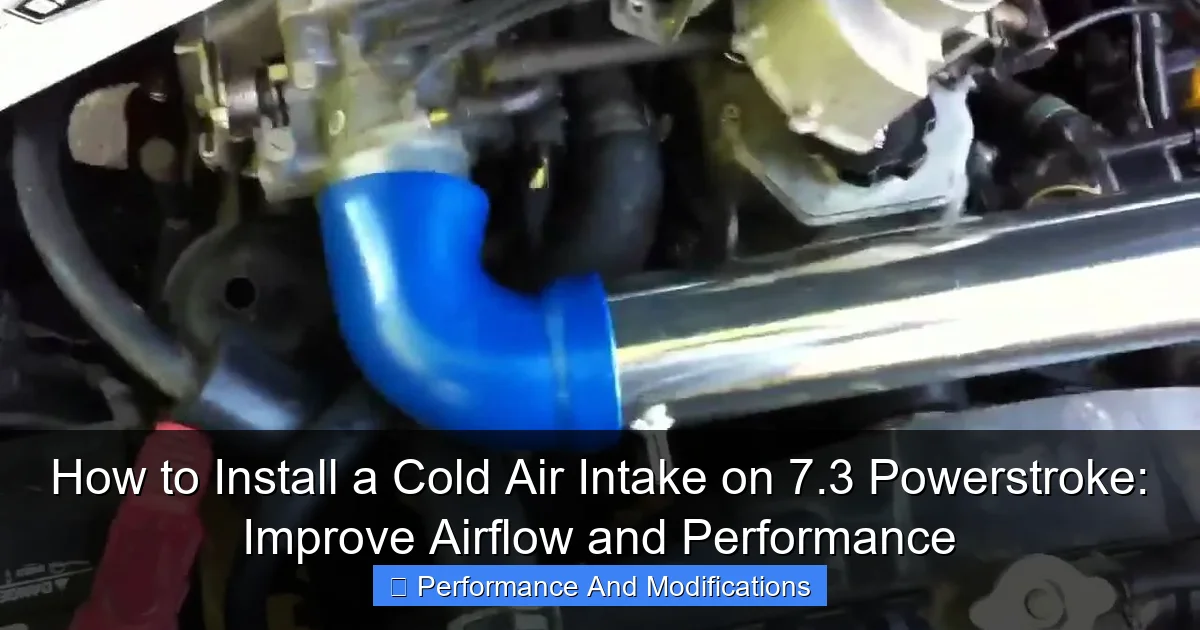
Learn more about How to install a cold air intake on 7.3 Powerstroke – How to Install a Cold Air Intake on 7.3 Powerstroke: Improve Airflow and Performance
Image source: i.ytimg.com
Filter Types: Oiled vs. Dry
This is one of the most significant choices you’ll make:
- Oiled Filters (e.g., K&N, aFe Pro 5R): These filters use layers of cotton gauze saturated with a special oil to trap contaminants. They offer excellent airflow and filtration, are reusable, and typically boast a longer service life between cleanings. The downside is that they require a specific cleaning and re-oiling process, and improper re-oiling can potentially lead to issues with Mass Air Flow (MAF) sensors if too much oil is applied.
- Dry Filters (e.g., S&B, aFe Pro-Dry S): These filters use synthetic media that traps particles without oil. They are maintenance-free, simply requiring compressed air or light tapping to clean, or replacement when fully saturated. Dry filters are a favorite for those seeking convenience and peace of mind regarding MAF sensor contamination. While slightly more restrictive than oiled filters, modern dry filters offer comparable performance gains.
Both types are effective; your choice largely depends on your preference for maintenance and your comfort with oiled filter care.
Material Considerations
CAI systems are typically constructed from a few common materials:
- Plastic (Rotational Molded): Often found in more budget-friendly options, plastic tubes are excellent insulators, helping to keep intake air temperatures low. They are durable and lightweight.
- Aluminum: Offers a premium look and excellent durability. However, aluminum is a good conductor of heat, meaning it can absorb heat from the engine bay, potentially negating some of the “cold air” benefit if not properly shielded or coated. Some kits use powder-coated aluminum to mitigate this.
- Carbon Fiber: The most expensive option, carbon fiber offers exceptional strength, light weight, and excellent heat insulation properties. It also provides a high-end, aesthetic appeal under the hood.
For most 7.3 Powerstroke owners, a well-designed plastic or aluminum kit will provide excellent performance. The most crucial aspect is the design that maximizes airflow and minimizes heat soak, regardless of material.
Brand Reputation and Reviews
Stick with reputable brands known for their quality and performance in the diesel aftermarket. Some of the most popular and highly-rated manufacturers for 7.3 Powerstroke cold air intake systems include:
- S&B Filters: Renowned for their high-quality, precise-fitting kits and excellent filtration. Many consider them a top choice for the 7.3L.
- aFe POWER (Advanced Flow Engineering): Offers a wide range of filters and intake designs, including both oiled and dry options.
- K&N Filters: A classic name in performance air filters, K&N offers reliable and proven cold air intake systems.
- Volant: Known for their enclosed air boxes which offer superior heat protection.
Always read reviews from other 7.3 Powerstroke owners to get real-world feedback on fitment, performance gains, and ease of installation.
CARB Compliance (Important for Some Regions)
If you live in a state with strict emissions regulations (like California), ensure the cold air intake system you choose is CARB (California Air Resources Board) compliant. Non-compliant systems may cause your vehicle to fail emissions inspections. Many reputable brands offer CARB-certified options.
Tools and Materials You’ll Need for the Installation
One of the best aspects of a DIY cold air intake installation is that it requires only basic hand tools that most enthusiasts already own. Gathering everything before you start will make the process smooth and efficient.
Essential Hand Tools
- Socket Wrench Set: 1/4″, 3/8″, and possibly 1/2″ drive with various socket sizes (typically 10mm, 13mm, 1/2″, 7/16″, etc.).
- Extension Bars: Useful for reaching fasteners in tight spots.
- Screwdriver Set: Phillips and Flathead screwdrivers are usually sufficient.
- Pliers: For hose clamps (slip-joint or hose clamp pliers are ideal).
- Torque Wrench: Highly recommended for ensuring all clamps and bolts are tightened to manufacturer specifications, preventing leaks or damage.
- Utility Knife or Scissors: For cutting zip ties or opening packaging.
Safety Gear
- Safety Glasses: Always protect your eyes.
- Work Gloves: To protect your hands from grime and sharp edges.
Optional but Recommended
- Shop Rags or Towels: For cleaning up spills or wiping down components.
- All-Purpose Cleaner/Degreaser: To clean the engine bay area where the new intake will go.
- Flashlight or Headlamp: For better visibility in darker areas of the engine bay.
- Marker or Pen: To mark components if needed.
Most cold air intake 7.3 Powerstroke kits come with all necessary hardware, including new clamps, bolts, and sometimes even vacuum lines. Always double-check your kit’s contents against the packing list to ensure nothing is missing before you begin.
Step-by-Step Guide to Installing Your 7.3 Powerstroke Cold Air Intake
Now for the main event! Follow these detailed steps to successfully install a cold air intake on 7.3 Powerstroke and begin enjoying enhanced performance. Remember to consult your specific CAI kit’s instructions, as there may be minor variations.
1. Pre-Installation Checks and Preparation
- Park on a Level Surface: Ensure your truck is on a stable, flat surface with the parking brake engaged.
- Allow Engine to Cool: Working on a cool engine is safer and more comfortable.
- Disconnect the Battery: For safety, always disconnect the negative terminal of your truck’s battery before starting any electrical work or significant engine modifications. This prevents accidental shorts and allows the ECM to reset once the new intake is installed.
- Gather Your Tools: Lay out all your tools and the new CAI components for easy access.
- Review Kit Instructions: Read through the instructions provided with your specific 7.3 Powerstroke cold air intake kit. Familiarize yourself with all parts and steps.
2. Removing the Stock Air Intake System
- Disconnect Airbox Lid and Filter: Locate the factory airbox, usually on the passenger side. Release the clips or screws holding the lid in place and remove the lid along with the old air filter.
- Disconnect MAF Sensor: Carefully unplug the electrical connector from the Mass Air Flow (MAF) sensor, which is usually located in the air intake tube or the top of the airbox. Some kits might require you to transfer this sensor.
- Remove Intake Tube: Loosen the hose clamps at both ends of the factory intake tube – one at the airbox and one at the turbocharger inlet. Disconnect any vacuum lines or small hoses attached to the intake tube (label them if necessary to aid reinstallation). Pull the intake tube free.
- Remove Airbox Base: Unbolt and remove the entire factory airbox base from its mounting points. This may involve a few bolts or simply prying it out of rubber grommets. Be gentle to avoid damaging surrounding components.
- Clear the Area: Once all stock components are removed, clean the area where the new intake will be installed.
3. Assembling Your New Cold Air Intake (Pre-Assembly)
Many CAI kits require some pre-assembly before installation in the truck:
- Install Filter Adapter/Coupler: Attach the rubber coupler or filter adapter to the main intake tube or heat shield, securing it with the provided clamps.
- Transfer MAF Sensor (if applicable): If your kit reuses the factory MAF sensor, carefully remove it from the old intake tube (usually with two small screws) and install it into the designated opening on the new intake tube. Ensure the O-ring seal is in place and the sensor is oriented correctly.
- Install Vacuum Port Fittings: If your kit has ports for vacuum lines or sensor hoses, install the provided fittings.
- Attach the Filter: While some prefer to attach the filter last, it’s often easier to mount it to the intake tube or heat shield on the workbench first. Secure it with the large hose clamp.
4. Installing the New CAI System in Your Truck
- Install Heat Shield/Airbox: Position the new heat shield or enclosed airbox base into the factory mounting locations. Secure it with the provided hardware (bolts, clips, or grommets). Ensure it is stable and properly aligned.
- Install Main Intake Tube: Carefully slide the assembled intake tube (with MAF sensor and filter if pre-attached) into position. Connect the turbocharger end first, ensuring a snug fit over the inlet.
- Connect to Heat Shield: Secure the intake tube to the heat shield or airbox opening with the appropriate coupler and clamps.
- Tighten Clamps: Once everything is in place and aligned, tighten all hose clamps securely. Use a torque wrench if specified in your kit’s instructions. Do not overtighten, as this can damage the couplers or intake tubes.
- Reconnect MAF Sensor: Plug the electrical connector back into the MAF sensor.
- Reconnect Vacuum Lines/Hoses: Reconnect any small vacuum lines or hoses that were disconnected from the old intake system to their corresponding ports on the new CAI.
5. Final Checks and Post-Installation Tips
- Double-Check Everything: Go over all connections, bolts, and clamps to ensure everything is tight and secure. Make sure no tools or debris are left in the engine bay.
- Reconnect Battery: Reconnect the negative terminal of your truck’s battery.
- Start the Engine: Turn the key to the ON position (without starting) for a few seconds, then turn it off. Repeat this once or twice. This allows the fuel system to prime.
- Fire It Up: Start your 7.3 Powerstroke. Listen for any unusual noises, vacuum leaks, or check engine lights. Let it idle for a few minutes. The ECM may take some time to learn the new airflow characteristics.
- Take a Test Drive: Drive your truck normally at first, then gently test its new responsiveness. Pay attention to throttle response, turbo spool, and any unusual behavior.
Congratulations! You’ve successfully performed a DIY cold air intake installation on your 7.3 Powerstroke. Enjoy the improved airflow and performance!
Optimizing Performance After Your Cold Air Intake Installation
Installing a cold air intake 7.3 Powerstroke is an excellent first step, but it can also be part of a larger strategy to maximize your diesel engine’s performance. Consider these additional steps to fully optimize your setup.
ECM Tuning: Is It Necessary?
While a CAI will provide immediate benefits, a custom ECM (Engine Control Module) tune can significantly enhance and fully utilize the increased airflow. A tune specifically designed for your cold air intake (and any other modifications) can adjust fuel mapping, injection timing, and turbo boost to extract every bit of power and efficiency. Many tuners offer “cold air intake specific” tunes or will incorporate your CAI into a custom tune. This is often the next logical step for those serious about 7.3 Powerstroke performance upgrade.
Regular Maintenance
The performance benefits of your new CAI depend on a clean filter. Establish a regular maintenance schedule:
- Oiled Filters: Clean and re-oil every 30,000-50,000 miles or as recommended by the manufacturer, and more frequently if driving in dusty conditions. Always use the specified cleaning and oiling kit.
- Dry Filters: Check periodically. Clean with compressed air or replace when visibly dirty and no longer allowing sufficient airflow.
A dirty filter will restrict airflow, negating the benefits of your upgrade and potentially harming engine performance.
Pairing with Other Modifications
A cold air intake works synergistically with other modifications. Consider pairing your CAI with:
- Performance Exhaust System: Reducing exhaust backpressure (e.g., with a 4-inch turbo-back exhaust) complements the increased intake airflow, allowing the engine to breathe even more freely from both ends.
- Upgraded Turbocharger: For significant power gains, an upgraded turbocharger can move even more air, which a CAI helps deliver efficiently.
- Larger Injectors: More air means the engine can utilize more fuel, and larger injectors can deliver that fuel to match the increased air supply.
These combined modifications can transform your 7.3 Powerstroke into a true powerhouse.
Monitoring Engine Parameters
After any performance modification, it’s wise to monitor key engine parameters. A simple OBD-II scanner or a dedicated digital gauge (like an Edge Insight or similar) can display critical information such as:
- Intake Air Temperature (IAT)
- Manifold Absolute Pressure (MAP) / Boost Pressure
- Exhaust Gas Temperature (EGT)
- Fuel Rail Pressure
Monitoring these parameters ensures your engine is operating within safe limits and performing optimally after your diesel engine performance upgrades.
Data and Performance Insights: The Numbers Behind the Upgrade
While subjective feelings of improved responsiveness are great, data helps quantify the impact of a cold air intake 7.3 Powerstroke. The following table provides typical ranges for performance improvements you might expect, based on various product tests and user feedback. Actual results can vary based on the specific CAI brand, condition of your engine, and other existing modifications.
Typical Performance Gains from a 7.3 Powerstroke Cold Air Intake
| Metric | Stock System (Typical Range) | With Quality CAI (Expected Gains) | Overall Improvement |
|---|---|---|---|
| Horsepower (HP) | ~235-275 HP | +15 to +30 HP | Noticeable power increase across RPMs |
| Torque (lb-ft) | ~500-525 lb-ft | +30 to +60 lb-ft | Improved towing and throttle response |
| Fuel Economy (MPG) | ~14-18 MPG | +0.5 to +1.5 MPG | Potential long-term fuel savings |
| Airflow (CFM) | Varies (Restrictive) | Significantly Higher | Engine breathes more freely, lower EGTs |
| Intake Air Temperature (IAT) | Elevated in engine bay | Closer to ambient air | Denser air charge, improved efficiency |
These numbers illustrate that a cold air intake 7.3 Powerstroke is not just a cosmetic upgrade but a genuine performance modification. The increased airflow and cooler, denser air charge directly contribute to more efficient combustion, leading to the measurable improvements shown. Coupled with the satisfying turbo whistle and the relatively straightforward DIY installation, it’s clear why this is a perennial favorite for Powerstroke modifications.
Conclusion
The 7.3 Powerstroke is a legendary engine, and with a few strategic upgrades, its performance can be elevated to new heights. Installing a quality cold air intake on 7.3 Powerstroke is arguably one of the best initial steps you can take to awaken its true potential. From unleashing hidden horsepower and torque to potentially improving fuel economy and enhancing that iconic diesel sound, the benefits are clear and tangible.
As we’ve outlined, the DIY cold air intake installation is a straightforward process that can be completed with basic tools and a bit of patience. By carefully following the steps, you’ll not only save on labor costs but also gain a deeper understanding of your truck’s mechanics. Remember to choose a reputable brand, maintain your new filter, and consider further optimizations like ECM tuning to truly maximize your 7.3 Powerstroke performance upgrade.
So, stop letting your engine suffocate on restrictive factory air. Take the plunge, upgrade your intake, and rediscover the power and efficiency of your 7.3 Powerstroke. You’ll be glad you did every time you hit the throttle and feel that mighty diesel roar to life with newfound vigor. Enjoy the improved airflow and performance!
🎥 Related Video: The Best Intake For Your 7.3 Powerstroke Diesel
📺 BTR Justin
S&B Cold Air Intake Ford 7.3 Powerstroke : https://amzn.to/2NBbo2z ▻ S&B filter cleaning kit : https://amzn.to/2Rqaatu …
Frequently Asked Questions
What are the main benefits of installing a cold air intake on my 7.3 Powerstroke?
Installing a cold air intake system on your 7.3 Powerstroke primarily improves airflow and lowers intake air temperatures. This can lead to better throttle response, increased horsepower and torque, and potentially slightly improved fuel economy by allowing your engine to breathe more efficiently.
What tools will I need to install the cold air intake?
For most 7.3 Powerstroke cold air intake installations, you’ll typically need common hand tools such as a screwdriver set (flathead and Phillips), a socket set (various sizes, especially 10mm, 13mm, and 1/2″), and possibly a wrench. Some kits might also require a utility knife or trim removal tools for minor adjustments.
How difficult is the installation process for a 7.3 Powerstroke cold air intake, and how long does it usually take?
The installation of a cold air intake on a 7.3 Powerstroke is generally considered straightforward and can be completed by most DIY enthusiasts with basic mechanical skills. You can usually expect the process to take anywhere from 1 to 2 hours, depending on your experience level and the specific kit’s design.
Do I need to get a new tune for my 7.3 Powerstroke after installing a cold air intake?
While a new tune isn’t strictly necessary for your cold air intake to function, a custom tune can optimize your 7.3 Powerstroke’s engine performance to fully capitalize on the increased airflow. Tuning allows your engine to take maximum advantage of the improved intake efficiency, leading to greater gains.
Will installing a cold air intake make my 7.3 Powerstroke significantly louder?
Yes, you will likely notice a change in the induction noise after installing a cold air intake on your 7.3 Powerstroke, particularly under acceleration. The less restrictive design allows for more direct airflow, which can create a more aggressive growl or a noticeable turbo whistle that many enthusiasts appreciate.
Are there any specific considerations when installing a cold air intake on a 7.3 Powerstroke?
When installing your 7.3 Powerstroke cold air intake, ensure all connections are tight and properly sealed to prevent unfiltered air from entering the engine. Pay close attention to routing hoses and wires away from moving parts, and double-check that the heat shield effectively isolates the filter from engine heat.