How to Diagnose 6.0 Powerstroke Oil Cooler Failure: Fixing Leaks and More
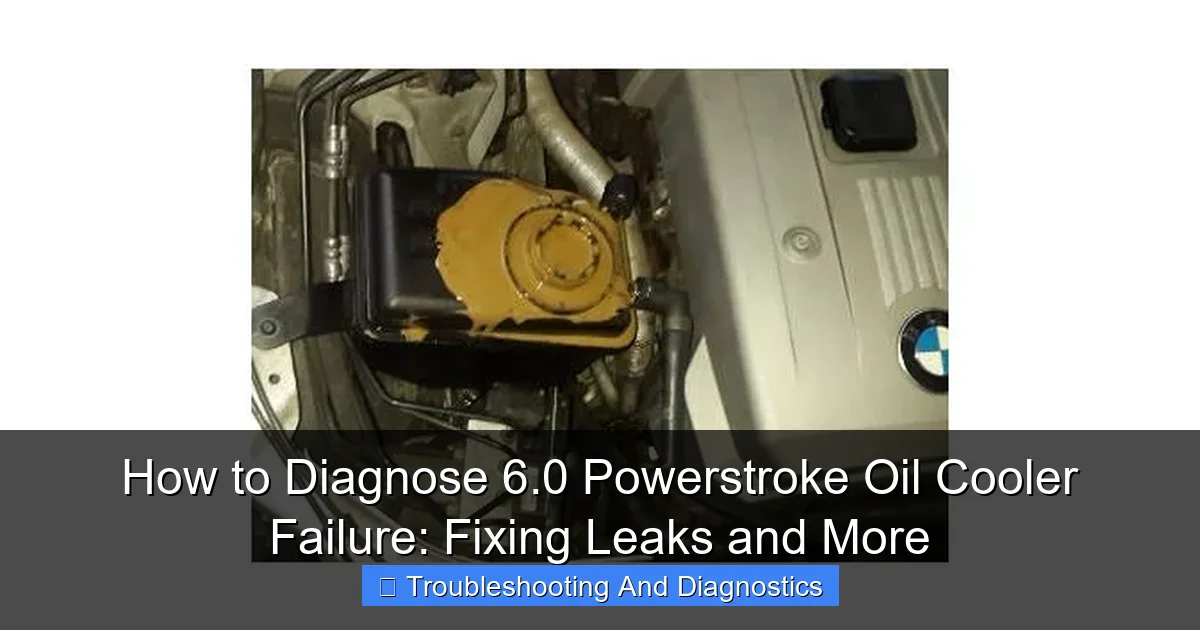
Featured image for this comprehensive guide about How to diagnose 6.0 Powerstroke oil cooler failure
Image source: garage808.co.za
The 6.0 Powerstroke engine, a true workhorse in its prime, has earned a reputation as both incredibly capable and, at times, notoriously finicky. Among its more well-known Achilles’ heels is the 6.0 Powerstroke oil cooler failure. This isn’t just a minor inconvenience; a failing oil cooler can trigger a catastrophic chain reaction, leading to costly repairs, including the dreaded EGR cooler failure, blown head gaskets, and even engine damage. For any 6.0 owner, understanding how to effectively diagnose 6.0 Powerstroke oil cooler failure is not merely a good idea—it’s absolutely essential for the longevity and reliability of your truck.
Whether you’re an experienced mechanic or a passionate DIYer, recognizing the early warning signs and performing accurate diagnostic tests can save you thousands of dollars and countless headaches. Ignoring these symptoms is akin to playing a high-stakes game of Russian roulette with your engine. This comprehensive guide will equip you with the knowledge and actionable steps needed to confidently identify a failing oil cooler, understand its implications, and chart a course toward resolution. Let’s dive deep into the heart of the beast and uncover the secrets to keeping your 6.0 Powerstroke running strong.
Quick Answers to Common Questions
What are the tell-tale signs of a 6.0 Powerstroke oil cooler failure?
Keep an eye out for rising coolant temperatures, a clogged EGR cooler, or even a lack of cab heat. These are common indicators that your 6.0 Powerstroke oil cooler might be failing.
How can I confirm if my 6.0 Powerstroke oil cooler is truly failing?
The best way is to monitor the temperature difference between your Engine Oil Temperature (EOT) and Engine Coolant Temperature (ECT) using a scan tool. If the EOT is consistently more than 15 degrees F higher than the ECT after reaching operating temperature, you likely have a clogged 6.0 Powerstroke oil cooler.
Is it always just a leak when we talk about 6.0 Powerstroke oil cooler failure?
Not at all! While external leaks can occur, the most common 6.0 Powerstroke oil cooler failure involves internal clogging, restricting coolant flow and causing overheating issues.
Can I diagnose a 6.0 Powerstroke oil cooler failure without special tools?
While you can observe some symptoms like general overheating, accurately diagnosing a 6.0 Powerstroke oil cooler failure often requires a scan tool to read EOT and ECT data. This provides the precise numbers needed for a definitive diagnosis.
What’s the biggest risk if I ignore a potential 6.0 Powerstroke oil cooler failure?
Ignoring a failing 6.0 Powerstroke oil cooler can lead to serious and expensive damage, most notably a ruptured EGR cooler or even blown head gaskets due to excessive heat. Don’t put off diagnosing this critical component!
📋 Table of Contents
- Understanding the 6.0 Powerstroke Oil Cooler’s Role and Common Failure Modes
- Early Warning Signs and Symptoms of 6.0 Powerstroke Oil Cooler Failure
- The Critical “Delta T” Test: Your Primary Diagnostic Tool
- Advanced Diagnostic Steps and Secondary Indicators
- What Happens When You Ignore 6.0 Powerstroke Oil Cooler Failure? The Cascade Effect
- Preventative Measures and Best Practices for 6.0 Powerstroke Longevity
- Conclusion
Understanding the 6.0 Powerstroke Oil Cooler’s Role and Common Failure Modes
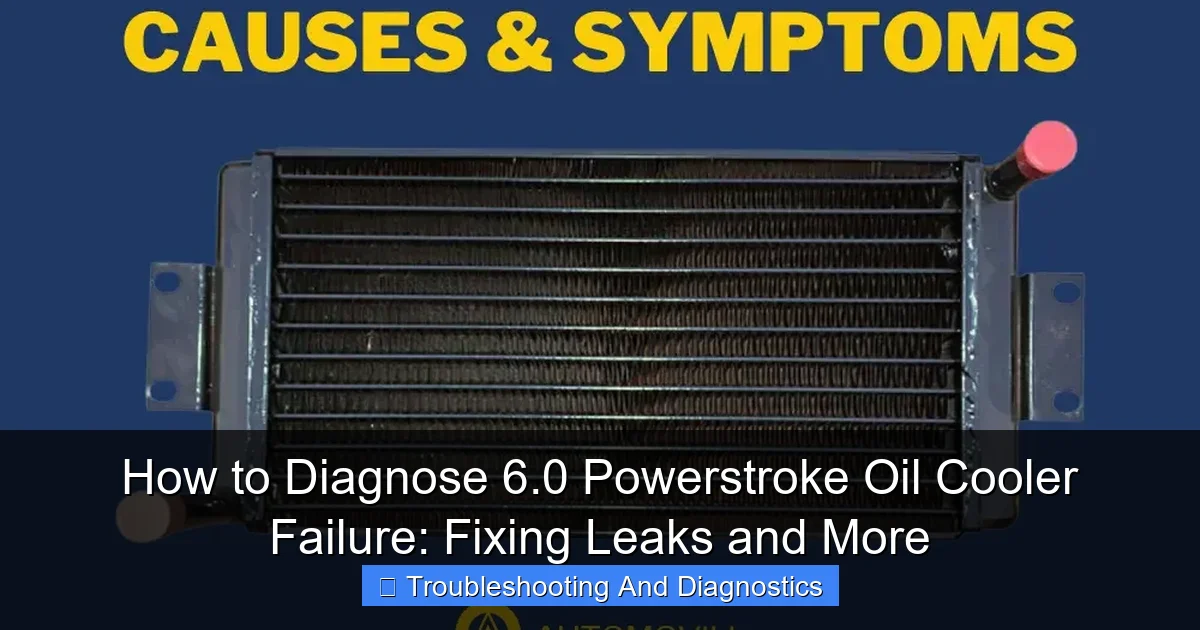
Before we delve into diagnostics, it’s crucial to grasp what the 6.0 Powerstroke oil cooler does and why it’s so susceptible to failure. The oil cooler is a vital component located beneath the intake manifold, serving as a heat exchanger. Its primary function is to regulate the engine oil temperature by using engine coolant to cool the hot oil. This ensures optimal lubrication properties and protects critical engine components from excessive heat.
Learn more about How to diagnose 6.0 Powerstroke oil cooler failure – How to Diagnose 6.0 Powerstroke Oil Cooler Failure: Fixing Leaks and More
Image source: automotivian.com
The design itself is a stack of thin plates, separated by channels for oil and coolant. Over time, and largely due to the nature of the 6.0 Powerstroke’s cooling system, these channels can become restricted or clogged. The primary culprit is often debris from casting sand left over from the manufacturing process, silicate dropout from incorrect coolant types, or scale buildup from neglected cooling system maintenance. When these channels become restricted, coolant flow to the oil cooler is diminished, leading to a cascade of problems.
| Diagnostic Test / Symptom | Expected Result (Indicating Failure) | Significance / Action Recommended |
|---|---|---|
| Engine Oil Temperature (EOT) vs. Engine Coolant Temperature (ECT) Delta | EOT is consistently 15°F or more higher than ECT during highway cruising (e.g., EOT 215°F, ECT 195°F). Under heavy load, this delta can exceed 20-25°F. | **Primary Diagnostic.** Indicates restricted coolant flow through the oil cooler. Requires oil cooler replacement. |
| Repeated EGR Cooler Failures | Multiple instances of EGR cooler failure (e.g., coolant loss, white smoke from exhaust) within a short period, even after replacement. | **Secondary Indicator.** Clogged oil cooler starves the EGR cooler of coolant, leading to overheating and failure. Address oil cooler first. |
| Coolant System Debris / Coolant Filter Condition | Coolant filter clogs rapidly (e.g., within 5,000 miles) with casting sand, rust, or sludge; visible debris in degas bottle. | **Causal Indicator.** Debris indicates coolant system contamination that clogs the oil cooler. Oil cooler likely failed/clogged, and a thorough system flush is needed upon replacement. |
| Engine Oil Pressure (EOP) Fluctuation / Low Oil Pressure Light | Fluctuating or consistently low oil pressure, especially at idle, that is not attributed to the High-Pressure Oil Pump (HPOP). | **Less Common, but Severe.** Can indicate internal deterioration of the oil cooler allowing oil pressure to bleed off. Requires immediate investigation and replacement. |
| Engine Performance Issues / Codes | Reduced power, rough idle, poor fuel economy, or DTCs related to oil temperature (e.g., P0196, P0198 – Oil Temperature Sensor Circuit Malfunction) | **Indirect Symptoms.** Overheated oil can degrade engine performance and impact sensor readings. Confirm EOT/ECT delta first. |
The Two Main Types of 6.0 Powerstroke Oil Cooler Failure
- Internal Clogging/Restriction: This is by far the most common issue. The small coolant passages within the oil cooler become blocked with sediment and debris. This reduces the cooler’s efficiency, causing engine oil temperatures to rise significantly above coolant temperatures. This restriction also starves the EGR cooler of adequate coolant flow, making it the most frequent secondary victim.
- Internal Leakage: Less common but still possible, internal leaks occur when the oil and coolant passages within the cooler crack or corrode, allowing oil and coolant to mix. This can lead to coolant in the oil or, less frequently, oil in the coolant.
Understanding these failure modes helps immensely in knowing what symptoms to look for and which diagnostic tests will be most effective in identifying a 6.0 Powerstroke oil cooler problem.
Early Warning Signs and Symptoms of 6.0 Powerstroke Oil Cooler Failure
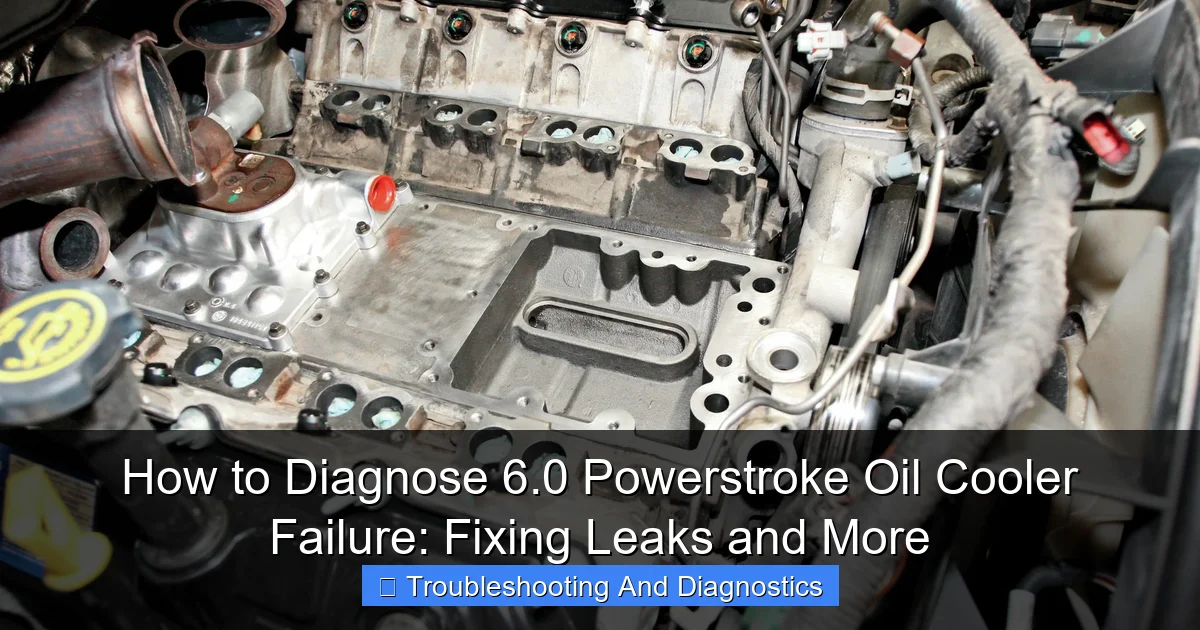
Catching 6.0 Powerstroke oil cooler failure early can literally save your engine. Many of these symptoms are subtle initially, gradually worsening over time. Paying close attention to your truck’s behavior and dashboard indicators is paramount.
Learn more about How to diagnose 6.0 Powerstroke oil cooler failure – How to Diagnose 6.0 Powerstroke Oil Cooler Failure: Fixing Leaks and More
Image source: motortrend.com
Common Symptoms to Watch For:
- Elevated Engine Oil Temperature (EOT) Compared to Engine Coolant Temperature (ECT): This is the absolute strongest indicator and will be detailed in the “Delta T” test section. If your oil is consistently hotter than your coolant (especially at cruising speeds), your oil cooler is likely restricted.
- Frequent Overheating (Especially Under Load): While many things can cause overheating, a restricted oil cooler puts an additional heat load on the cooling system, making overheating more likely.
- EGR Cooler Failure: The 6.0 Powerstroke’s EGR cooler relies on adequate coolant flow from the oil cooler. When the oil cooler restricts flow, the EGR cooler becomes starved, leading to overheating, cracking, and often introducing coolant into the exhaust or combustion chamber. This can manifest as white smoke, coolant loss, or a sweet smell from the exhaust.
- Coolant Loss (without obvious external leaks): If your coolant reservoir needs frequent topping off and you can’t find external leaks, an internal leak in the oil cooler or a failed EGR cooler (due to a restricted oil cooler) could be the cause.
- Oil in Coolant or Coolant in Oil: This indicates an internal breach in the oil cooler (or head gasket issues).
- Oil in Coolant: Your coolant reservoir might have a milky, oily film on top, or the coolant itself might look muddy.
- Coolant in Oil: The engine oil might appear milky or foamy on the dipstick or under the oil fill cap. This is very serious and can lead to bearing damage.
- Lack of Cabin Heat: A severely restricted oil cooler can impede overall coolant circulation, leading to reduced cabin heater performance, especially at idle.
- Degraded Engine Performance: Higher oil temperatures can lead to premature wear on fuel injectors and other components, eventually affecting engine performance. The PCM might also derate power to protect the engine.
- Check Engine Light (CEL) with Specific Codes: While not direct oil cooler codes, you might see codes related to high EOT, EGR system malfunctions (P0401, P0404, P0405), or even misfires if coolant enters the combustion chamber.
Many of these symptoms, especially coolant loss and white smoke, can also point to other issues like head gasket failure. This is why thorough diagnostics are critical to pinpoint the exact root cause of your Powerstroke oil cooler problems.
The Critical “Delta T” Test: Your Primary Diagnostic Tool
The “Delta T” test is the gold standard for diagnosing a restricted 6.0 Powerstroke oil cooler. It’s a simple yet incredibly powerful diagnostic method that measures the temperature difference between your engine oil and engine coolant. A healthy oil cooler maintains these two temperatures within a specific range. When the oil cooler becomes restricted, its efficiency drops, causing the oil temperature to climb much higher than the coolant temperature.
How to Perform the Delta T Test:
- Required Tools: You will need an OBD-II scanner capable of reading live data, specifically the Engine Oil Temperature (EOT) and Engine Coolant Temperature (ECT) PIDs (Parameter Identifiers). Many aftermarket scanners or phone apps with Bluetooth adapters (like Torque Pro, Forscan, or DashCommand) can do this.
- Warm Up the Engine: Drive the truck until it reaches full operating temperature. This means your ECT should be stable, typically around 190-210°F (88-99°C).
- Achieve Stable Conditions: The most accurate readings are obtained under steady-state conditions. Drive on a flat highway at 65-70 mph (105-113 km/h) for at least 20-30 minutes, or until both EOT and ECT have stabilized. Avoid heavy acceleration, deceleration, or idling during the test period.
- Monitor EOT and ECT: Using your scanner, continuously monitor both EOT and ECT.
- Calculate Delta T: Subtract the ECT from the EOT (EOT – ECT = Delta T).
Interpreting Your Delta T Results:
The difference between your EOT and ECT is your “Delta T.” Here’s what the numbers typically indicate:
| Delta T (Degrees Fahrenheit) | Interpretation |
|---|---|
| 0-15°F | Excellent. Your 6.0 Powerstroke oil cooler is performing optimally. Keep up with maintenance. |
| 15-20°F | Marginal. The oil cooler is starting to show signs of restriction. Monitor closely, consider cooling system flush, or plan for replacement in the near future. |
| >20°F | Failed/Severely Restricted. Your 6.0 Powerstroke oil cooler is severely restricted and needs to be replaced. This condition will likely lead to EGR cooler failure and other issues if not addressed. |
A consistent Delta T above 15°F, especially under cruising conditions, is a strong indicator that you have a restricted 6.0 Powerstroke oil cooler. A Delta T exceeding 20°F is a definite sign of failure and demands immediate attention.
Advanced Diagnostic Steps and Secondary Indicators
While the Delta T test is king, other diagnostic steps and observations can help confirm your findings and rule out other potential problems. These are crucial, especially if your Delta T is borderline or if you suspect an internal leak rather than just restriction.
1. Pressure Testing the Cooling System:
If you’re losing coolant without external leaks, a cooling system pressure test can help identify where it’s going.
- Attach a cooling system pressure tester to your degas bottle (coolant reservoir).
- Pump the system up to around 15-20 PSI (check your truck’s specific cap pressure).
- Monitor the pressure gauge for at least 30 minutes, or even overnight. A significant pressure drop indicates a leak.
- While under pressure, visually inspect for external leaks.
- If pressure drops and no external leaks are found, it points to an internal leak (oil cooler, EGR cooler, head gaskets).
2. Checking for Coolant in Oil and Oil in Coolant:
- Oil Dipstick & Fill Cap: Check your engine oil dipstick and inside the oil fill cap for a milky, foamy, or sludgy appearance. This indicates coolant mixing with oil.
- Degas Bottle Inspection: Look into your coolant degas bottle. Is there an oily sheen or residue on top of the coolant? Does the coolant look muddy or discolored? This suggests oil is mixing with coolant.
- Oil Analysis: For the most definitive answer, consider sending an oil sample for analysis. Labs can detect coolant contamination (glycol) in the oil, even in small amounts.
3. Exhaust Gas Recirculation (EGR) Cooler Inspection:
As mentioned, a failed oil cooler often leads to EGR cooler failure. If your Delta T is high, assume your EGR cooler is also at risk or already compromised.
- Visual Inspection (if accessible): Some EGR coolers can be visually inspected for external leaks or cracks, though this usually requires removal.
- Exhaust for White Smoke: If you see excessive white smoke from the exhaust, especially upon startup or when warm, it could be coolant burning in the combustion chambers, often from a failed EGR cooler.
- “Bubbling” in Degas Bottle: With the engine running and warm, look for constant bubbling in the degas bottle. This can indicate exhaust gases entering the cooling system, a sign of a failed EGR cooler or blown head gaskets. A block test (combustion gas leak detector fluid) can confirm this.
4. Monitoring Engine Parameters (Beyond EOT/ECT):
While driving, also keep an eye on:
- Fuel Injection Control Pressure (FICP): Elevated oil temperatures can affect the performance and longevity of the high-pressure oil pump (HPOP) and fuel injectors, which rely on engine oil.
- Exhaust Gas Temperatures (EGTs): High EGTs can be a symptom of a larger problem that a struggling cooling system can exacerbate.
By combining the critical Delta T test with these advanced checks, you can develop a very accurate picture of your 6.0 Powerstroke oil cooler’s health and whether it has caused collateral damage.
What Happens When You Ignore 6.0 Powerstroke Oil Cooler Failure? The Cascade Effect
Ignoring a failing 6.0 Powerstroke oil cooler is a recipe for disaster. The problems don’t stop at just high oil temperatures; they cascade throughout the engine, leading to increasingly severe and expensive failures.
The Destructive Chain Reaction:
- EGR Cooler Failure (The Most Common Consequence): As discussed, a restricted oil cooler starves the EGR cooler of coolant. Without adequate cooling, the EGR cooler overheats, cracks, and often leaks coolant directly into the exhaust system or intake manifold. This leads to coolant loss, white smoke, and can even hydrolock cylinders if enough coolant enters the combustion chamber.
- Head Gasket Failure: Chronic overheating, especially due to a failing cooling system (exacerbated by a restricted oil cooler), puts immense stress on the cylinder heads and head gaskets. This can lead to blown head gaskets, allowing combustion gases into the cooling system or coolant into the cylinders, resulting in massive repair bills.
- Fuel Injector Problems: The 6.0 Powerstroke’s fuel injectors are oil-actuated. They rely on clean, properly cooled engine oil. Elevated oil temperatures accelerate wear on the injectors, leading to premature failure, poor performance, misfires, and eventually, the need for costly injector replacement.
- High Pressure Oil Pump (HPOP) Stress: The HPOP also relies on engine oil for lubrication and proper function. Higher oil temperatures can thin the oil, reducing its lubricating properties and increasing wear on the HPOP, potentially leading to its early demise.
- Turbocharger Damage: The turbocharger is oil-cooled. Excessive oil temperatures can degrade the oil’s ability to cool and lubricate the turbo, leading to premature bearing failure and expensive turbo replacement.
- General Engine Wear: Consistently high engine oil temperatures lead to accelerated wear on all internal engine components, from bearings to piston rings. This shortens the overall lifespan of the engine and can ultimately lead to complete engine failure.
- Contaminated Oil: If the oil cooler suffers an internal leak, coolant mixing with oil severely degrades the oil’s lubricating properties, leading to rapid wear and potential catastrophic engine damage.
The average cost of addressing these secondary failures (EGR cooler, head gaskets, injectors) can easily run into thousands of dollars, far exceeding the cost of a proactive 6.0 Powerstroke oil cooler replacement. This underscores why early diagnosis and timely repair are absolutely non-negotiable for 6.0 Powerstroke owners.
Preventative Measures and Best Practices for 6.0 Powerstroke Longevity
The good news is that you’re not entirely at the mercy of your 6.0 Powerstroke oil cooler’s fate. Proactive maintenance and adopting best practices can significantly extend its life and prevent the cascade of failures we just discussed. Prevention is always better (and cheaper) than repair.
Key Preventative Strategies:
- Regular Cooling System Flushes: This is perhaps the single most important preventative measure. The accumulation of silicate dropout and scale is the primary cause of oil cooler restriction.
- Perform a complete cooling system flush every 30,000 to 50,000 miles, or every 3-5 years.
- Use a high-quality cooling system cleaner designed to remove scale and rust.
- Flush the system thoroughly with distilled water until the water runs clear.
- Use the Correct Coolant: This cannot be stressed enough. The 6.0 Powerstroke requires a specific type of coolant.
- Gold Coolant (Motorcraft Premium Gold) is an excellent choice, but it requires regular SCA (Supplemental Coolant Additive) testing and maintenance to prevent silicate dropout.
- Extended Life Coolants (ELC), like Ford’s Motorcraft Orange or other ELCs that meet Ford specification WSS-M97B44-D, are often preferred as they are silicate-free and require less maintenance. Ensure it’s explicitly stated as compatible with the 6.0 Powerstroke.
- NEVER mix different types of coolants. This can lead to immediate chemical reactions that form sludge and accelerate clogging.
- Install a Coolant Filter: A coolant filter is an inexpensive aftermarket modification that can catch debris, casting sand, and scale before it reaches the oil cooler. This is a highly recommended upgrade for any 6.0 Powerstroke owner. Filters should be changed periodically (e.g., every 15,000 miles).
- Monitor Your Delta T Regularly: Make the Delta T test a routine check, especially if you tow or drive in demanding conditions. Knowing your normal Delta T allows you to spot issues before they become critical. Consider installing a permanent monitor (like an Edge Insight or similar device) to always see your EOT and ECT.
- Maintain Engine Oil Quality: While not directly related to oil cooler clogging, maintaining proper engine oil quality and viscosity helps the oil cooler perform its job and protects components. Use high-quality synthetic or semi-synthetic engine oil that meets Ford’s specifications and change it according to the manufacturer’s recommendations.
- Consider an Oil Cooler Relocation Kit (Aftermarket): For owners seeking the ultimate preventative measure, an aftermarket external oil cooler relocation kit moves the oil cooler out of the block and often uses a larger, more efficient cooler design. This is a more involved and costly modification but can provide superior cooling and easier future service.
- Address Overheating Promptly: Any signs of engine overheating should be investigated immediately. Overheating puts immense stress on the entire cooling system, including the oil cooler.
By diligently following these preventative measures, you significantly reduce the likelihood of experiencing a 6.0 Powerstroke oil cooler failure and protect your engine from the devastating consequences that often follow. Investing in proper maintenance now will undoubtedly save you time, money, and frustration down the road.
Conclusion
The 6.0 Powerstroke oil cooler failure is a well-documented weakness, but it doesn’t have to be a death sentence for your truck. By understanding its critical role, recognizing the early symptoms, and diligently performing diagnostic tests like the “Delta T” test, you can identify a failing oil cooler before it leads to a catastrophic cascade of engine problems. Remember, a Delta T consistently above 15°F is your clear signal that action is needed.
Ignoring the warning signs or delaying repairs is a costly gamble, often resulting in expensive failures of the EGR cooler, head gaskets, and fuel injectors. However, with proactive maintenance, including regular cooling system flushes, using the correct coolant, and considering a coolant filter, you can significantly extend the life of your oil cooler and, by extension, your entire 6.0 Powerstroke engine. Equip yourself with knowledge, stay vigilant, and keep your Powerstroke roaring strong for years to come.
🎥 Related Video: 6.0 Ford powerstroke diesel head gasket and oil cooler diagnostic tips
📺 DieselTechRon
Ford Tech shows the benefit of using a scanGauge X-Gauge to monitor inputs and watch oil and coolant temps to determine if you …
Frequently Asked Questions
What are the most common symptoms of a 6.0 Powerstroke oil cooler failure?
The most common symptoms include elevated Engine Oil Temperature (EOT) compared to Engine Coolant Temperature (ECT), leading to a high EOT/ECT delta. You might also notice engine overheating, white smoke from the exhaust (due to a subsequent EGR cooler failure), or a sludgy buildup in your degas bottle (coolant reservoir).
How can I accurately diagnose a 6.0 Powerstroke oil cooler as the cause of my engine issues?
The most definitive diagnostic method involves monitoring the EOT and ECT using a scan tool while driving. A sustained temperature difference of 15 degrees Fahrenheit or more between EOT and ECT at cruising speeds (60-65 mph) indicates a restricted 6.0 Powerstroke oil cooler. You may also perform a coolant flow test, though the EOT/ECT delta is usually sufficient.
What typically causes a 6.0 Powerstroke oil cooler to fail or become clogged?
The primary cause of 6.0 Powerstroke oil cooler failure is often the accumulation of silicate dropout and scale from inadequate coolant maintenance. Over time, these contaminants restrict the small internal passages of the cooler, reducing its efficiency and preventing proper heat transfer between the engine oil and coolant. This blockage eventually leads to elevated oil temperatures and can starve the EGR cooler of coolant.
Does a failing 6.0 Powerstroke oil cooler impact other engine components?
Absolutely, a failing 6.0 Powerstroke oil cooler is a critical issue that commonly leads to the failure of the EGR cooler, as the lack of proper coolant flow causes the EGR cooler to overheat and crack. It also accelerates engine oil degradation due to consistently high temperatures, which can reduce the lifespan of turbocharger bearings and other internal engine components.
Is replacing a 6.0 Powerstroke oil cooler a DIY job, or should I seek professional help?
While diagnosing a 6.0 Powerstroke oil cooler failure with a scan tool is a straightforward DIY task, the replacement itself is quite involved and labor-intensive. It requires removing the turbocharger, intake manifold, and various other components, which can be challenging for an inexperienced mechanic. Many DIYers successfully tackle it, but due to its complexity and the importance of proper reassembly, professional installation is often recommended.
What preventative maintenance can I do to avoid 6.0 Powerstroke oil cooler failure in the future?
To prevent 6.0 Powerstroke oil cooler failure, consistent and proper coolant system maintenance is paramount. This includes regularly flushing the coolant system, using the correct specification Motorcraft Gold (or compatible extended-life) coolant, and replacing it at recommended intervals. Installing a quality coolant filter can also significantly extend the life of the oil cooler by capturing contaminants before they can clog the system.