How to Boost Torque on 6.0 Powerstroke: Increase Low-End Power
Featured image for this comprehensive guide about How to boost torque on 6.0 Powerstroke
Image source: boost.com
The Ford 6.0 Powerstroke. Just hearing those numbers can evoke a range of emotions among truck enthusiasts and owners – from fond memories of incredible pulling power to the occasional groan over its infamous reliability quirks. But make no mistake, beneath the surface of this often-misunderstood diesel engine lies a beast with immense potential. If you’re a proud 6.0 Powerstroke owner looking to maximize its grunt, especially when towing, hauling, or just enjoying that seat-of-the-pants feeling, then you’ve landed in the right place.
You want to not just improve, but truly boost torque on 6.0 Powerstroke, pushing its low-end power beyond factory specifications. We’re talking about enhancing its ability to get heavy loads moving effortlessly, conquer steep inclines without breaking a sweat, and deliver a more responsive driving experience. While the 6.0 Powerstroke came with a respectable 560 lb-ft of torque from the factory (late models), there’s a whole world of modifications and strategies available to significantly increase 6.0 Powerstroke torque, transforming it into the high-performing workhorse you know it can be.
This comprehensive guide will walk you through the most effective and popular methods to elevate your 6.0 Powerstroke’s torque output. From foundational reliability upgrades that ensure your engine can handle the extra stress, to advanced performance modifications that truly unlock its hidden potential, we’ll cover everything you need to know to get more 6.0 Powerstroke low-end power. Let’s dive in and learn how to make your 6.0 Powerstroke roar with more power than ever before.
Quick Answers to Common Questions
What’s the absolute quickest way to boost torque on my 6.0 Powerstroke?
Hands down, custom tuning or a good performance tuner is your go-to for an immediate boost in torque on your 6.0 Powerstroke. It optimizes fuel and timing for instant power you’ll feel!
Can a new air intake really help boost torque for my 6.0?
Definitely! A high-flow aftermarket air intake allows your 6.0 Powerstroke to suck in more cool, dense air, which directly helps to boost torque by improving combustion efficiency. It’s an easy win!
Does an aftermarket exhaust actually boost torque on a 6.0 Powerstroke?
You bet! Upgrading to a less restrictive exhaust system lets your 6.0 Powerstroke exhale more freely, reducing backpressure and allowing your engine to spool up quicker and boost torque more effectively. Think of it as better breathing!
Beyond the basics, what’s a bigger step to boost torque on my 6.0 Powerstroke?
If you’re looking for substantial gains, upgrading your turbocharger or injectors can significantly boost torque on your 6.0 Powerstroke. These are more involved modifications but deliver serious power.
Is it safe to boost torque on my 6.0 Powerstroke without worrying about reliability?
It’s generally safe for mild gains, but for significant increases in how to boost torque, consider addressing common 6.0 weaknesses like head studs and the oil cooler. A healthy engine handles more power better!
📋 Table of Contents
- The Unshakable Foundation: Essential Reliability & Preventative Maintenance
- The Brain Power: Custom Tuning and Engine Management
- Breathing Easy: Optimizing Air Intake & Exhaust Systems
- Fueling the Fire: Injectors and High-Pressure Oil Pump (HPOP) Upgrades
- Turbocharged Performance: Enhancing Forced Induction
- Drivetrain and Transmission: Harnessing Power Reliably
- Potential Torque Gains from Common 6.0 Powerstroke Modifications
- Conclusion: Unleash Your 6.0 Powerstroke’s True Potential
The Unshakable Foundation: Essential Reliability & Preventative Maintenance
Before you even think about adding more power, it’s absolutely crucial to address the well-known Achilles’ heel of the 6.0 Powerstroke: its reliability issues. Pouring more power into an engine with inherent weaknesses is a recipe for disaster. The first step to successfully boost torque on 6.0 Powerstroke is to ensure it’s structurally sound and reliable. Think of it as building a strong foundation before adding more stories to a building.
Learn more about How to boost torque on 6.0 Powerstroke – How to Boost Torque on 6.0 Powerstroke: Increase Low-End Power
Image source: desiclik.com
EGR Cooler and Oil Cooler Upgrades
- EGR Cooler: The factory EGR (Exhaust Gas Recirculation) cooler is a common failure point, often leading to coolant loss, head gasket issues, and costly repairs. Upgrading to a “bulletproof” style EGR cooler (like those from Bulletproof Diesel or similar robust designs) is almost non-negotiable for serious 6.0 owners. These designs typically use a stronger, more durable tube-and-fin or round-tube design that is less prone to cracking from thermal cycling and exhaust gas erosion. This prevents a major source of potential engine failure when increasing power.
- Oil Cooler: The stock oil cooler can become clogged over time, restricting oil flow and leading to high EOT (Engine Oil Temperature) and EGT (Exhaust Gas Temperature). This not only reduces engine efficiency but also causes stress on critical components like the HPOP (High-Pressure Oil Pump) and injectors. An aftermarket oil cooler that offers better flow and heat exchange, or even a remote oil cooler setup, is a vital upgrade. Ensuring proper oil cooling is fundamental to maintaining engine health, especially when you increase 6.0 Powerstroke torque.
Head Studs: The Ultimate Head Gasket Insurance
Perhaps the most famous (or infamous) reliability upgrade for the 6.0 Powerstroke is the installation of head studs in place of the factory head bolts. The 6.0’s factory head bolts often stretch under increased cylinder pressure, leading to blown head gaskets. This is particularly true if you plan to significantly boost torque on 6.0 Powerstroke. ARP (Automotive Racing Products) head studs are the gold standard here. Studs provide superior clamping force, distributing the load more evenly across the cylinder heads and preventing them from lifting under high boost pressures. While a labor-intensive and costly upgrade, it’s considered by many to be the single most important reliability modification for any modified 6.0.
| Modification Type | Typical Torque Gain (ft-lb) | Estimated Cost Range ($) | Key Benefit / Consideration |
|---|---|---|---|
| Performance Tuning (e.g., SCT, EZ Lynk) | +100 to +250 | $400 – $1,000 | Most cost-effective, adjustable power levels, monitor gauges. |
| Upgraded Fuel Injectors (e.g., 155cc-190cc) | +150 to +300 (with tuning) | $1,200 – $3,000+ | Significant fueling for large power, requires custom tuning. |
| Aftermarket Turbocharger | +100 to +250 (with supporting mods) | $1,500 – $4,000+ | Improved airflow, lower EGTs, better spool characteristics. |
| Performance Exhaust System (4″ Turbo-back) | +20 to +50 (supportive) | $300 – $800 | Reduces backpressure, improves turbo spool, slight efficiency. |
| Cold Air Intake (CAI) | +10 to +30 | $200 – $500 | Improved airflow, better filtration, minor efficiency/power gain. |
Blue Spring Mod: Stabilizing Fuel Pressure
The factory fuel pressure regulator (FPR) in the 6.0 Powerstroke is known for allowing fuel pressure to drop under heavy load, which can starve the injectors, causing poor performance, cavitation, and even damage over time. The “Blue Spring Mod” involves replacing the spring in the factory FPR housing with a stronger, higher-pressure spring. This simple and inexpensive upgrade significantly increases and stabilizes fuel pressure, ensuring your injectors always receive the adequate fuel supply they need, especially when demanding more power. Consistent fuel pressure is vital for achieving consistent and reliable 6.0 Powerstroke low-end power.
STC Fitting Upgrade
The “Snap-To-Connect” (STC) fitting for the HPOP (High-Pressure Oil Pump) can fail, leading to a sudden loss of high-pressure oil and causing the engine to stall. Upgrading this fitting to a stronger, aftermarket one (often a one-piece design) is a smart preventative measure. While not directly a torque-boosting mod, it ensures your engine’s critical high-pressure oil system remains robust, allowing it to support future power enhancements.
The Brain Power: Custom Tuning and Engine Management
Once your 6.0 Powerstroke’s foundation is solid, the most impactful and often first step to truly boost torque on 6.0 Powerstroke is through custom engine tuning. This is where you tell the engine’s computer (PCM) to work harder, smarter, and more efficiently. Tuning software allows you to modify fuel delivery, injection timing, boost pressure, and transmission shift points, all of which contribute directly to increased horsepower and torque.
Learn more about How to boost torque on 6.0 Powerstroke – How to Boost Torque on 6.0 Powerstroke: Increase Low-End Power
Image source: bestwaywholesale.co.uk
Custom Tuning: Unleashing Hidden Power
Off-the-shelf “canned” tunes offer some improvement, but for optimal performance and safety, custom tuning is superior. A reputable diesel tuner can create specific files tailored to your truck’s modifications, driving style, and even the local climate. They can fine-tune parameters to:
- Increase Fuel Delivery: Inject more fuel at the precise moment for a more powerful combustion event.
- Optimize Injection Timing: Adjust when the fuel is injected to maximize power and efficiency.
- Elevate Boost Pressure: Command the turbocharger to build more boost, forcing more air into the engine.
- Refine Transmission Shifting: Adjust shift points and torque converter lock-up to keep the engine in its optimal power band, crucial for transmitting newfound torque efficiently.
The gains from custom tuning alone can be substantial, often adding 80-150+ lb-ft of torque and 50-100+ horsepower. This is arguably the biggest single factor in how to increase 6.0 Powerstroke torque without opening up the engine.
Monitoring Tools: Essential for Safety and Performance
When running custom tunes and pushing your engine harder, monitoring critical parameters becomes absolutely essential. Investing in a good set of gauges or a comprehensive monitoring device (like an Edge Insight, SCT Livewire, or equivalent) allows you to keep an eye on:
- EGT (Exhaust Gas Temperature): Crucial to prevent melting pistons or damaging the turbo.
- Boost Pressure: Ensure the turbo is building boost correctly and not over-boosting.
- FICM Voltage: The Fuel Injection Control Module is vital for injector operation.
- Oil Temperature (EOT) and Coolant Temperature (ECT): To ensure proper cooling.
- Fuel Pressure: To confirm the Blue Spring Mod is doing its job and fuel delivery is consistent.
Monitoring allows you to understand how your tune and modifications are affecting the engine and to back off if something is getting too hot or out of spec. This preventative measure ensures the longevity of your engine as you pursue more 6.0 Powerstroke low-end power.
Breathing Easy: Optimizing Air Intake & Exhaust Systems
Just like any internal combustion engine, a diesel needs to breathe efficiently to make power. Getting more cool, dense air into the engine and expelling exhaust gases quickly and with minimal restriction are key steps to significantly boost torque on 6.0 Powerstroke.
Cold Air Intake (CAI) Systems
A high-quality aftermarket cold air intake system replaces the restrictive factory air box with a design that allows for greater airflow and often draws in cooler air from outside the engine bay. Cooler air is denser, meaning more oxygen molecules per volume, which translates to more complete combustion and increased power. A good CAI can provide noticeable improvements in throttle response and a modest gain in horsepower and torque, typically around 10-20 lb-ft, while also improving filtration and often the sound of your diesel. It’s an excellent way to start improving your 6.0 Powerstroke low-end power.
Aftermarket Exhaust Systems
The factory exhaust system, particularly with its catalytic converter and muffler, is designed for noise reduction and emissions compliance, not maximum performance. Upgrading to a larger diameter (typically 4-inch or 5-inch) aftermarket exhaust system, often a “turbo-back” or “cat-back” design, dramatically reduces exhaust back pressure.
- Reduced Back Pressure: Allows the turbo to spool up faster, meaning more boost available earlier in the RPM range, directly contributing to more 6.0 Powerstroke low-end power.
- Lower EGTs: More efficient exhaust flow helps to lower exhaust gas temperatures, which is beneficial for engine longevity, especially with increased fueling.
Many owners opt for full turbo-back systems that eliminate the catalytic converter and muffler (for off-road use only, check local laws). This can free up significant power and torque, making the engine feel much more responsive.
Intercooler Upgrades
The intercooler (or charge air cooler) is responsible for cooling the compressed air coming out of the turbocharger before it enters the engine. Cooler air is denser, leading to more oxygen for combustion. The factory intercooler can become heat-soaked, especially under heavy loads or in hot climates. Upgrading to a larger, more efficient aftermarket intercooler can drop intake air temperatures significantly. This provides a measurable gain in horsepower and torque by delivering a denser air charge to the engine, further helping to increase 6.0 Powerstroke torque, particularly during sustained pulls.
Fueling the Fire: Injectors and High-Pressure Oil Pump (HPOP) Upgrades
To truly boost torque on 6.0 Powerstroke, especially with aggressive tuning and turbo upgrades, you’ll eventually need to provide more fuel. The 6.0 Powerstroke uses a HEUI (Hydraulically Actuated Electronically Controlled Unit Injector) system, meaning the injectors are fired by high-pressure engine oil, which in turn pressurizes the fuel within the injector body.
Upgraded Fuel Injectors
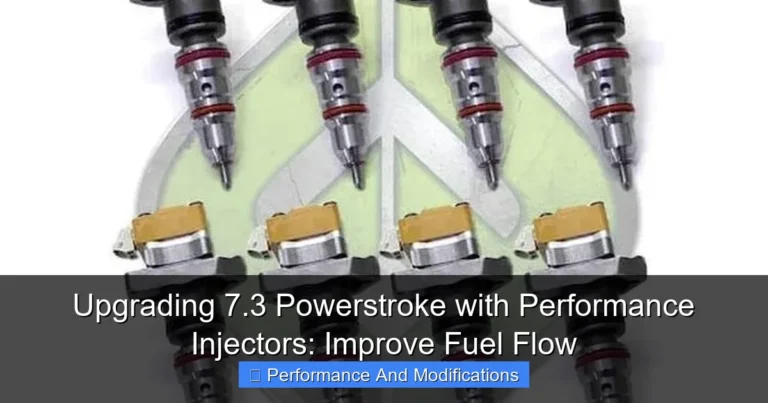
Aftermarket injectors deliver more fuel per injection event. They come in various sizes, often measured as a percentage over stock (e.g., 155cc/30% over stock, 175cc/75% over stock).
- Increased Fuel Quantity: Larger injectors allow the engine to receive more fuel, directly correlating to more power and torque. When combined with appropriate tuning and turbo upgrades, this is where significant torque gains are realized.
- Better Atomization: Some performance injectors also offer improved nozzle designs for better fuel atomization, leading to a more complete and efficient burn.
Choosing the right size injectors depends on your power goals and other modifications. Too large, and you risk excessive smoke, high EGTs, and poor drivability. It’s crucial to match injector size with your turbo and tuning for optimal 6.0 Powerstroke low-end power and overall efficiency.
Lift Pump and Fuel Delivery Mods
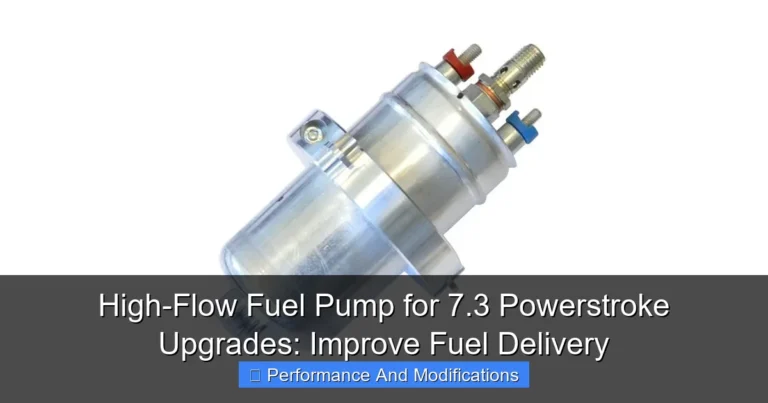
While the 6.0 Powerstroke has an in-tank electric lift pump, its flow rate and pressure can be a limiting factor when running larger injectors and aggressive tunes. An aftermarket lift pump system (like those from FASS or AirDog) ensures a constant, high-volume, and debris-free fuel supply to the injectors. These systems typically offer:
- Consistent Fuel Pressure: Preventing fuel pressure drops that can starve injectors and lead to damage.
- Improved Filtration: Often include superior water separation and fuel filtration, protecting your expensive injectors.
- Air Removal: Eliminate air from the fuel, which can cause erratic injector operation.
Maintaining optimal fuel pressure and flow to the injectors is paramount for maximizing efficiency and realizing the full potential of upgraded injectors when you aim to increase 6.0 Powerstroke torque.
Turbocharged Performance: Enhancing Forced Induction
The turbocharger is the heart of the 6.0 Powerstroke’s power delivery. Its variable geometry technology (VGT) allows it to spool up quickly at low RPMs for excellent 6.0 Powerstroke low-end power and then maintain boost at higher RPMs. Upgrading or optimizing your turbo is a key step to unlock serious torque gains.
Aftermarket Turbochargers
While the factory Garrett GT37VA VGT turbo is capable, it has limitations when pushing high horsepower and torque numbers. Aftermarket turbochargers can offer significant improvements:
- Larger Compressor Wheels: More air moved, higher peak boost.
- More Efficient Turbine Housing: Better exhaust flow characteristics, leading to quicker spool-up or higher sustained boost.
- Improved VGT Actuator Reliability: Some aftermarket VGT turbos use more robust actuators, reducing common failure points.
Options range from upgraded stock-replacement VGT turbos (e.g., KC Turbos, Powermax) that offer quicker spool and more top-end, to larger fixed-geometry turbos (e.g., S300 or S400 based setups) for extreme power levels. For pure 6.0 Powerstroke low-end power, a more efficient VGT turbo that spools faster than stock is often preferred, as it delivers boost earlier in the RPM range where torque is most critical for towing and daily driving.
Turbo Maintenance and Cleaning
Even if you don’t upgrade your turbo, regular maintenance is crucial, especially for the VGT mechanism. The vanes within the turbo can become caked with soot, leading to sticking and inconsistent boost control (“turbo lag” or “limp mode”). A thorough cleaning of the turbo’s unison ring and vanes can restore factory performance and responsiveness, making it feel like you’ve regained lost torque. Many performance shops offer turbo cleaning services, or it can be done DIY with the right tools and knowledge. A clean, well-functioning turbo is fundamental to maintaining and boost torque on 6.0 Powerstroke.
Drivetrain and Transmission: Harnessing Power Reliably
What good is all that newfound torque if your drivetrain can’t handle it? As you significantly increase 6.0 Powerstroke torque, the stock transmission and other drivetrain components become the next weakest link. Addressing these areas ensures the power actually makes it to the ground reliably.
Transmission Upgrades
The 5R110 “TorqShift” automatic transmission in the 6.0 Powerstroke is generally robust, but it has limits. Once you start exceeding 400-450 horsepower and 800+ lb-ft of torque, especially with aggressive tuning, the stock clutches and torque converter can begin to slip.
- Aftermarket Torque Converter: A multi-disc, billet torque converter is often the first and most crucial transmission upgrade. It can handle significantly more torque without slipping, transfer power more efficiently, and often features a lower stall speed for quicker take-offs and better low-end response.
- Clutch Packs: Upgraded, heavy-duty clutch packs (e.g., from Alto, Raybestos) with more friction material can be installed to increase the transmission’s torque capacity.
- Valve Body Upgrades: A modified valve body can increase line pressure, leading to firmer shifts and less slippage.
- Full Transmission Build: For extreme power levels (500+ HP), a fully built transmission with all the above components, plus hardened shafts and other internal upgrades, becomes necessary.
Ensuring your transmission can reliably put down the increased 6.0 Powerstroke low-end power is just as important as generating it.
Driveshaft and U-Joints
While less common for moderate builds, trucks pushing very high torque numbers (over 1000 lb-ft) might need to consider upgraded driveshafts and U-joints. The stock components are strong, but extreme power and hard launches can stress them to their breaking point. This is typically a concern for dedicated drag trucks or those with truly massive power outputs.
Potential Torque Gains from Common 6.0 Powerstroke Modifications
To help visualize the impact of these modifications, here’s an approximate breakdown of potential torque gains. These figures are estimates and can vary significantly based on the quality of parts, the tuner’s expertise, and the overall health of your engine. Always remember that comprehensive, matched modifications yield the best results.
| Modification Category | Estimated Torque Gain (ft-lbs) | Notes |
|---|---|---|
| Reliability Upgrades (EGR/Oil Cooler, Head Studs, Blue Spring Mod) | 0 (Preventative) | Essential foundation for *safe* power increases. Prevents future power loss from breakdowns. |
| Custom Tuning (with stock hardware) | +80 to +150 | Most significant initial gain. Requires monitoring. |
| Cold Air Intake | +5 to +20 | Modest gains, improved throttle response. |
| Aftermarket Exhaust (4-5 inch turbo-back) | +15 to +40 | Faster turbo spool, lower EGTs. |
| Upgraded Intercooler | +10 to +30 | Denser air charge, sustained power. |
| Upgraded Injectors (e.g., 155cc/30% over stock) | +50 to +100 (over tuned stock) | Requires complementary tuning and turbo. |
| Aftermarket Lift Pump | +5 to +15 (indirect) | Ensures consistent fuel pressure, critical for injectors and tune. Prevents power loss from fuel starvation. |
| Upgraded Turbocharger (Performance VGT) | +40 to +80 (over tuned stock) | Quicker spool, higher sustained boost. Highly dependent on turbo choice. |
| Transmission Upgrades (Torque Converter, Clutches) | 0 (Drivetrain Reliability) | Ensures power gets to the ground and is sustained. Prevents power loss from slippage. |
As you can see, combining multiple modifications in a cohesive package yields the greatest benefits. A truck with reliability mods, custom tuning, a good intake/exhaust, and upgraded injectors and turbo could easily see gains of 250-400+ lb-ft of torque over stock!
Conclusion: Unleash Your 6.0 Powerstroke’s True Potential
The 6.0 Powerstroke is an engine with a reputation, but also with incredible potential to deliver robust power and torque. By following a strategic approach, starting with essential reliability upgrades and then moving onto performance enhancements, you can safely and effectively boost torque on 6.0 Powerstroke, transforming it into a high-performance diesel machine.
Remember, the key to success is a holistic approach. Each modification complements the others. You can’t just throw parts at it and expect magic. A strong foundation, intelligent tuning, optimal airflow, precise fueling, and a robust drivetrain all work in concert to deliver the kind of 6.0 Powerstroke low-end power that makes towing a breeze and daily driving exhilarating. Always choose quality parts, consult with reputable diesel performance shops, and monitor your engine’s vitals closely as you embark on this exciting journey to increase 6.0 Powerstroke torque.
With the right modifications and a commitment to proper maintenance, your 6.0 Powerstroke will not only perform better than ever but also provide years of reliable, powerful service. So go ahead, unleash the beast and experience the true potential of your Ford 6.0 Powerstroke!
🎥 Related Video: Ford 6.0 Powerstroke lacks power. (low boost)
📺 DieselTechRon
I had one here that is actually pretty common. When the boost or manifold absolute pressure (MAP) sensor is not responding …
Frequently Asked Questions
What are the most effective ways to boost torque on my 6.0 Powerstroke?
The most effective methods to boost torque on a 6.0 Powerstroke typically involve performance tuning, upgrading fuel injectors, and improving turbocharger efficiency. Combining these with a free-flowing exhaust and intake system will yield significant gains in low-end power.
Will boosting torque on my 6.0 Powerstroke affect its reliability or lifespan?
Aggressively boosting torque on your 6.0 Powerstroke without proper supporting modifications or a conservative tune can indeed reduce reliability and shorten engine lifespan. It’s crucial to balance power gains with component integrity and consider upgrades like head studs and improved cooling if aiming for substantial power.
How does an aftermarket tuner or custom tune help boost torque on a 6.0 Powerstroke?
An aftermarket tuner or custom tune optimizes your 6.0 Powerstroke’s fuel delivery, injection timing, and turbocharger boost pressure. This allows the engine to burn fuel more efficiently and create more power, particularly in the low RPM range, directly increasing torque output.
Can upgrading my fuel injectors significantly increase torque on my 6.0 Powerstroke?
Yes, upgrading your fuel injectors can significantly increase torque on your 6.0 Powerstroke by allowing more fuel to be delivered into the cylinders. Larger injectors, especially when paired with a custom tune that maximizes their potential, are a cornerstone of substantial power gains.
Does upgrading the turbocharger contribute to better low-end torque on a 6.0 Powerstroke?
Absolutely, an upgraded turbocharger can dramatically improve low-end torque on a 6.0 Powerstroke by spooling faster and moving more air into the engine. This allows for increased fuel combustion earlier in the RPM band, resulting in quicker throttle response and greater pulling power.
What modifications are best for boosting torque on a 6.0 Powerstroke primarily used for towing?
For a 6.0 Powerstroke primarily used for towing, focusing on conservative tuning, slightly larger but efficient injectors, and improved cooling is ideal for boosting torque safely. Ensuring your transmission is up to the task and installing gauges to monitor critical parameters will also contribute to reliable towing performance.