Ford 7.3 Powerstroke Turbocharger Removal Tools: Quick and Easy Methods
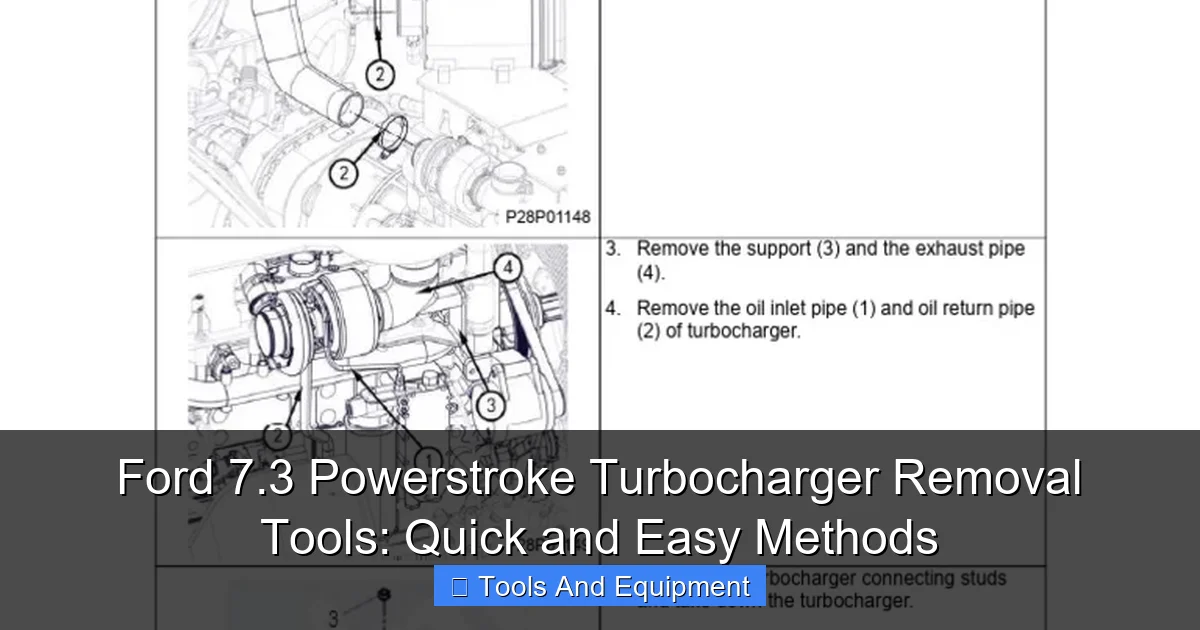
Featured image for this comprehensive guide about Ford 7.3 Powerstroke turbocharger removal tools
Image source: imgv2-1-f.scribdassets.com
Ah, the legendary Ford 7.3 Powerstroke – a true icon in the diesel world, revered for its robust reliability and undeniable power. Many proud owners swear by this engine, cherishing its longevity and workhorse capabilities. However, even the most durable engines require maintenance, and sometimes, that means delving into the heart of its performance: the turbocharger. Whether you’re upgrading, diagnosing a loss of boost, or addressing an oil leak, the day might come when you need to remove your 7.3 Powerstroke turbocharger.
Attempting such a critical job without the right equipment can quickly turn a manageable task into a frustrating ordeal, potentially leading to damaged components or hours of wasted time. This comprehensive guide is dedicated to equipping you with the knowledge of essential Ford 7.3 Powerstroke turbocharger removal tools. We’ll cover everything from the basic hand tools you can’t live without to the specialized implements that make the job infinitely easier, ensuring you approach your turbo project with confidence and efficiency. Get ready to empower your wrenching skills and keep that 7.3 roaring for years to come!
Quick Answers to Common Questions
What are the absolute essential Ford 7.3 Powerstroke turbocharger removal tools?
You’ll definitely need a good socket set (deep and shallow, metric and standard), various extensions, a ratcheting wrench set, and a pry bar for maneuvering. These are your bread and butter for tackling the bolts and connections.
Are there any “special” Ford 7.3 Powerstroke turbocharger removal tools I should know about?
While most of the job can be done with standard mechanics tools, an extra-long pry bar can be incredibly helpful for leverage, and an air impact wrench can save a lot of time on stubborn bolts. Having a good set of E-Torx sockets might also be necessary for some connections.
Do I need to buy a specific “turbo removal kit” for my 7.3 Powerstroke?
Not necessarily! Many experienced DIYers can get the job done with a comprehensive general mechanics tool set. However, some specialized kits might include useful things like turbo pedestal removal sockets or specific wrenches for tight spots, which can certainly make the process smoother.
What tools help with those hard-to-reach bolts when removing the 7.3 Powerstroke turbocharger?
This is where a good universal joint, wobble extensions, and various length ratcheting wrenches become your best friends. Sometimes a flexible head ratchet or a “crow’s foot” wrench can also be a lifesaver for those tricky, hidden fasteners.
Can I really do this with basic tools, or will I get stuck without specialized Ford 7.3 Powerstroke turbocharger removal tools?
For the most part, yes, you can accomplish this with a solid set of quality hand tools and some patience. While some specialized items can speed things up, a determined DIYer with a good selection of sockets, wrenches, and extensions can absolutely tackle the Ford 7.3 Powerstroke turbocharger removal.
📋 Table of Contents
- Why Your 7.3 Powerstroke Turbo Might Need Attention
- Essential General Tools for Turbocharger Removal
- Specialized Ford 7.3 Powerstroke Turbocharger Removal Tools
- Overcoming Common Obstacles During 7.3 Turbo Removal
- Step-by-Step Overview: Using Your Tools for Turbo Removal (Simplified)
- Investing in Quality Tools: The Long-Term Benefits
- Conclusion
Why Your 7.3 Powerstroke Turbo Might Need Attention
The turbocharger is a vital component for your 7.3 Powerstroke’s performance, force-feeding air into the engine to create more power and improve efficiency. Over time, even the mighty 7.3’s turbo can experience wear and tear, necessitating removal for inspection, repair, or replacement. Understanding the common culprits will help you diagnose issues and prepare for the task ahead.

Learn more about Ford 7.3 Powerstroke turbocharger removal tools – Ford 7.3 Powerstroke Turbocharger Removal Tools: Quick and Easy Methods
Image source: auto-data.net
Common Signs of Turbo Trouble
- Reduced Power and Acceleration: A noticeable drop in your truck’s ability to accelerate or maintain speed, especially under load, often points to insufficient boost.
- Excessive Smoke: Blue smoke (burning oil) or black smoke (unburnt fuel) from the exhaust can indicate oil leaks into the exhaust housing or a lack of proper combustion, often linked to turbo problems.
- Unusual Noises: A distinct whining, whistling, or grinding sound coming from the turbo area can signify failing bearings, impeller contact with the housing, or boost leaks.
- Oil Leaks: Leaks around the turbo housing or connections might be due to worn seals or a failing oil supply/drain line, a common issue requiring 7.3 Powerstroke turbo removal to fix.
- Check Engine Light: Fault codes related to boost pressure or turbocharger performance are a clear indicator that something isn’t right.
Addressing these issues promptly not only restores your truck’s performance but also prevents further damage to other engine components. Having the correct Ford 7.3 Powerstroke turbocharger removal tools will significantly reduce the time and effort required for diagnosis and repair.
| Tool Category | Specific Use / Key Sizes | Estimated Cost (USD) | Notes / Importance |
|---|---|---|---|
| Socket & Wrench Set | Up-pipe, Pedestal, Exhaust Bolts (10mm, 13mm, 15mm, 5/8″, 1/2″) | $50 – $150 | Deep well sockets are crucial for accessing various fasteners. |
| E-Torx Bit/Socket Set | Up-pipe to Manifold Bolts (Commonly E10, E12) | $20 – $60 | Specifically required for these unique external Torx fasteners. |
| Pry Bar / Lever | Separating Turbo Pedestal, Up-pipes (Medium length, approx. 12-18 inches) | $15 – $40 | Aids in breaking loose components that may be seized due to heat/corrosion. |
| Penetrating Oil | Loosening Rusted Bolts (e.g., PB Blaster, Liquid Wrench) | $8 – $20 | Apply generously to all exhaust and turbo bolts well in advance to prevent breakage. |
| Gasket Scraper / Wire Brush | Cleaning Mating Surfaces, Removing Old Gasket Material | $5 – $25 | Ensures a clean surface for new gaskets, preventing future exhaust leaks. |
Essential General Tools for Turbocharger Removal
Before diving into the specialized items, let’s lay the groundwork with the fundamental hand tools you’ll need for any significant engine work, including 7.3 Powerstroke turbo removal. These are the workhorses of any mechanic’s toolbox, and having a comprehensive set will save you countless trips to the hardware store.

Learn more about Ford 7.3 Powerstroke turbocharger removal tools – Ford 7.3 Powerstroke Turbocharger Removal Tools: Quick and Easy Methods
Image source: images.drive.com.au
Must-Have Hand Tools
A good quality set of these will be your best friend:
- Socket Set (Metric and SAE): You’ll encounter a mix of fastener sizes. A deep-well and standard set, ranging from 10mm to 19mm, and common SAE sizes will cover most bolts. Specifically, 10mm, 13mm, 15mm, and 18mm are very common.
- Ratchets: 3/8-inch and 1/2-inch drive ratchets are essential. A long-handle 1/2-inch ratchet provides better leverage for stubborn bolts.
- Wrench Set (Combination Wrenches): Open-end and box-end wrenches, again in both metric and SAE. For tight spots, a ratcheting wrench set can be a lifesaver.
- Extensions and Swivel Joints: Crucial for reaching bolts in awkward, confined spaces, especially around the turbo. A 6-inch, 10-inch, and wobble extension set will prove invaluable.
- Screwdrivers: Phillips and flat-head screwdrivers of various sizes for hose clamps, electrical connectors, and general prying.
- Pliers: Needle-nose, channel lock, and vice grips are versatile for hose clamps, securing lines, and holding components.
- Breaker Bar: A long 1/2-inch drive breaker bar is indispensable for loosening seized or overtightened bolts, especially those securing the up-pipes or the turbo pedestal.
- Torque Wrench: Absolutely vital for proper reassembly, ensuring bolts are tightened to factory specifications, preventing leaks and component damage.
Supporting General Tools
These items might not directly remove bolts, but they are crucial for a smooth process:
- Penetrating Oil: Think PB Blaster or Kroil. A generous application on rusty bolts hours or even a day before starting can prevent snapped fasteners.
- Safety Glasses and Gloves: Protect your eyes from falling debris and your hands from cuts, scrapes, and chemicals.
- Shop Rags and Parts Cleaner: For keeping things tidy and cleaning surfaces before reassembly.
- Magnetic Pick-up Tool: Inevitably, you’ll drop a bolt or washer into the engine bay. This tool will save your sanity.
- Flashlight or Headlamp: Engine bays are dark, even in daylight. A good light source is essential for seeing those hidden bolts.
Having these fundamental Ford 7.3 Powerstroke turbocharger removal tools at the ready will make the more specialized aspects of the job much smoother.
Specialized Ford 7.3 Powerstroke Turbocharger Removal Tools
While general hand tools get you far, the Ford 7.3 Powerstroke has some unique design elements that demand specific tools for efficient turbocharger removal. Investing in these specialized 7.3 turbo tools will dramatically simplify the process and prevent potential damage to components.
Key Specialized Tools for 7.3 Turbo Removal
These are the items that differentiate a frustrating struggle from a streamlined removal:
- EBPV Delete Pedestal Removal Tool / Pedestal Reinstallation Tool:
- The Exhaust Back Pressure Valve (EBPV) system is notorious for issues on older 7.3L engines. Many owners opt for an EBPV delete, which involves replacing the factory pedestal with a non-EBPV version.
- Removing the original turbo pedestal, especially if you’re not deleting the EBPV, often requires specific wrenches or sockets. The tight clearance between the pedestal and the engine block makes standard tools difficult to use. Some aftermarket pedestals also require a specific tool for tightening.
- Why it’s essential: Without this, reaching and loosening the pedestal bolts (often 10mm or 13mm) can be incredibly challenging, leading to stripped bolt heads or damaged hands.
- Up-Pipe Removal Tools (Specialty Wrenches/Sockets):
- The up-pipes connect the exhaust manifolds to the turbocharger’s exhaust housing. The bolts that secure these pipes are often rusted, seized, and in extremely tight locations.
- Some manufacturers offer specialty wrenches or modified sockets (often thin-walled or angled) designed to access these difficult bolts.
- Why it’s essential: Standard wrenches often don’t fit, and trying to force them can round off bolt heads, creating a much larger problem.
- Turbo Mounting Bolt Wrenches/Sockets:
- The four main bolts that secure the turbo to the pedestal can also be tricky due to their location and the heat cycles they endure.
- A specific offset wrench or a swivel socket with an extension is often the best approach here. The rear bolts are particularly notorious.
- Why it’s essential: Proper leverage and angle are critical to prevent stripping these bolts, which are under significant stress.
- Hose Clamp Pliers (Heavy Duty):
- While general pliers can handle some clamps, the larger, spring-loaded clamps on the intercooler boots and intake often require dedicated hose clamp pliers for easy and damage-free removal and installation.
- Why it’s essential: Prevents damage to clamps and hoses, making reassembly quicker and more reliable.
- Turbocharger Lift Bracket or Engine Hoist:
- The 7.3 Powerstroke turbo assembly is heavy, weighing approximately 40-50 pounds. Removing it from the tight confines of the engine bay without damaging surrounding components (or your back) is challenging.
- A turbo-specific lift bracket that bolts to the turbo housing and connects to an engine hoist or an overhead crane is highly recommended.
- Why it’s essential: Ensures safe and controlled removal and installation, preventing injury and damage to the turbo or other engine components. Attempting to strong-arm it is risky.
Having these specialized Ford 7.3 Powerstroke turbocharger removal tools will not only save you time and frustration but also protect your investment in your truck and the new or refurbished turbocharger.
Overcoming Common Obstacles During 7.3 Turbo Removal
Even with the right Ford 7.3 Powerstroke turbocharger removal tools, the job can present challenges. The 7.3L engine bay is notoriously cramped, and years of heat cycles, rust, and grime can turn straightforward bolt removals into epic battles. Knowing how to anticipate and address these common obstacles is key to a successful turbo replacement.
Dealing with Seized and Stubborn Bolts
This is perhaps the most frequent hurdle. Bolts exposed to extreme heat and moisture, like those on the up-pipes or turbo pedestal, tend to seize.
- Liberal Application of Penetrating Oil: As mentioned, this is your first line of defense. Apply it generously, and if possible, let it soak for several hours or overnight. Tapping the bolt head lightly after applying can help the oil wick into the threads.
- Heat: A propane torch or oxy-acetylene torch (used cautiously and with a fire extinguisher nearby) can be very effective. Heating the component *around* the bolt (e.g., the up-pipe flange) will cause it to expand, breaking the rust bond. Avoid heating the bolt head directly unless you’re prepared to replace it.
- Impact Tools: An air-powered impact wrench or a heavy-duty electric impact driver can sometimes shock a seized bolt loose when hand tools fail. Be mindful of overtightening on reassembly.
- Breaker Bars and Pipe Extensions: For maximum leverage, a long breaker bar is indispensable. Sometimes, a pipe slipped over the handle of a wrench or ratchet can provide the extra torque needed.
- The “Tighten, then Loosen” Trick: For very stubborn bolts, sometimes tightening them slightly (just a hair) before attempting to loosen can break the initial bond.
Navigating Tight Spaces and Awkward Angles
The 7.3 Powerstroke’s turbo is nestled deep, making access to some bolts a true test of patience.
- Swivel Sockets and Wobble Extensions: These are gold for bolts that aren’t perfectly aligned with your ratchet. Invest in good quality ones to prevent rounding off bolt heads.
- Flex-Head Ratchets: These allow you to adjust the angle of the ratchet head, providing better access in confined areas.
- Crowfoot Wrenches: For extremely tight spots where a socket won’t fit, but you need to use a torque wrench, crowfoot wrenches can be attached to an extension.
- Removing Obstructions: Sometimes, temporarily removing other components like the air intake box, intercooler tubes, or even the passenger-side battery can provide crucial extra clearance.
Dealing with Rusted Components and Gaskets
Old exhaust components and gaskets can be fused together, making separation difficult.
- Gasket Scrapers and Wire Brushes: Essential for cleaning mating surfaces thoroughly after components are removed. This ensures a proper seal with new gaskets.
- Small Pry Bar or Chisel: Used carefully, a small pry bar can help separate stubborn exhaust components, especially up-pipes from manifolds.
Patience, persistence, and the right 7.3 turbo tools are your allies when facing these challenges. Don’t rush, and always prioritize safety and preventing damage to your valuable engine components.
Step-by-Step Overview: Using Your Tools for Turbo Removal (Simplified)
While this isn’t a full DIY guide, understanding the general sequence of steps and where your specialized Ford 7.3 Powerstroke turbocharger removal tools come into play will help you visualize the process and prepare adequately. This overview focuses on the tool usage aspects.
- Preparation and Disconnection:
- Start by disconnecting the batteries and draining some coolant if necessary.
- Use your general hand tools (sockets, wrenches) to remove air intake components, intercooler tubes, and any electrical connectors or hoses leading to or around the turbo. Heavy-duty hose clamp pliers will make quick work of intercooler boot clamps.
- Up-Pipe Disconnection:
- This is where your up-pipe removal tools become critical. Apply penetrating oil beforehand.
- Using your specialized thin-walled sockets or angled wrenches, carefully loosen and remove the bolts connecting the up-pipes to the exhaust manifolds and the turbo’s exhaust housing. A breaker bar might be needed for initial loosening.
- Turbo Oil Lines and Pedestal Bolts:
- Locate and disconnect the turbo’s oil supply and drain lines. You’ll likely need combination wrenches or specific line wrenches. Be prepared for oil drips.
- Next, tackle the bolts securing the turbo to the pedestal. Your turbo mounting bolt wrenches/sockets (offset or swivel) will be indispensable here, especially for the rear bolts.
- Pedestal Removal (if applicable):
- If you’re removing the entire pedestal (e.g., for an EBPV delete or repair), this is where the EBPV delete pedestal removal tool shines.
- Access and loosen the pedestal bolts, often located in very tight spaces.
- Lifting the Turbocharger:
- Once all fasteners and connections are clear, attach your turbocharger lift bracket to the turbo housing.
- Using an engine hoist or appropriate lifting equipment, carefully lift the turbocharger straight up and out of the engine bay. This prevents damage to the turbo and surrounding components.
- Post-Removal and Cleanup:
- Use gasket scrapers and wire brushes to thoroughly clean all mating surfaces on the exhaust manifolds, pedestal, and engine block.
- Inspect components for wear or damage. Prepare for reinstallation with new gaskets and O-rings.
Remember, taking your time, using the correct 7.3 Powerstroke turbo removal tools for each step, and following safety precautions will ensure a successful outcome. Always refer to your vehicle’s service manual for specific torque specifications and detailed procedures.
Investing in Quality Tools: The Long-Term Benefits
When it comes to performing maintenance or repairs on a robust engine like the Ford 7.3 Powerstroke, the temptation might be to cut corners on tool costs. However, investing in high-quality Ford 7.3 Powerstroke turbocharger removal tools is not just an expense; it’s a wise investment that pays dividends in safety, efficiency, and component longevity.
Why Quality Tools Matter for Your 7.3
- Prevents Damage to Fasteners and Components: Cheap, ill-fitting tools are notorious for stripping bolt heads, rounding nuts, and damaging fragile components. A good quality socket or wrench fits precisely, transmitting force efficiently and safely. This is especially critical on older engines where bolts might be seized or corroded.
- Enhances Safety: Tools that break or slip under pressure can cause serious injury. A sturdy breaker bar or a reliable torque wrench provides the confidence and control you need, reducing the risk of accidents.
- Saves Time and Frustration: Imagine struggling for hours with a stubborn bolt only to find a specialized tool could have removed it in minutes. High-quality, specialized 7.3 turbo tools are designed for efficiency, streamlining the process and reducing overall labor time.
- Longevity of Tools: Quality tools are built to last. They withstand repeated use, impact, and high torque without deforming or failing, meaning you won’t have to replace them every time you tackle a project. This is particularly true for items like impact sockets and ratchets.
- Accuracy and Precision: A well-calibrated torque wrench ensures that fasteners are tightened to manufacturer specifications, preventing leaks, rattles, or over-stressed components. This is crucial for critical parts like turbo mounting bolts and oil lines.
- Professional Results: Using the right tools allows you to perform the job to a professional standard, ensuring that your 7.3 Powerstroke turbo is removed and reinstalled correctly, with proper seals and secure fastenings. This translates to better performance and reliability for your truck.
Considering the value of your 7.3 Powerstroke and the cost of engine repairs, spending a bit more on the right Powerstroke turbocharger tools is a small price to pay for peace of mind and successful outcomes. Don’t compromise where it counts!
Tool Necessity vs. Cost Effectiveness
Here’s a look at common tools, their general necessity, and an estimated cost range for quality versions. This table can help you prioritize your purchases for Ford 7.3 Powerstroke turbocharger removal tools.
| Tool Category / Specific Tool | Necessity Level | Typical Quality Cost Range (USD) | Impact on Job (Time/Difficulty) |
|---|---|---|---|
| General Socket/Wrench Set | High (Fundamental) | $100 – $300+ | Impossible without; major time saver |
| Breaker Bar (1/2″ drive) | High (Critical for Seized Bolts) | $30 – $70 | Essential for leverage; prevents stripped bolts |
| Torque Wrench (1/2″ drive) | High (Crucial for Reassembly) | $70 – $200 | Ensures proper specs; prevents leaks/damage |
| Penetrating Oil | High (Proactive) | $10 – $25 | Significantly reduces seized bolt issues |
| Swivel Sockets / Wobble Extensions | Medium-High (Access) | $40 – $100 | Greatly simplifies access to confined bolts |
| EBPV/Pedestal Tool (Specific) | High (If removing pedestal) | $50 – $150 | Makes pedestal removal feasible and safe |
| Up-Pipe Specialty Wrenches | Medium-High (Access/Seized) | $40 – $100 | Prevents rounding off notoriously difficult up-pipe bolts |
| Turbo Lift Bracket | Medium-High (Safety/Ease) | $80 – $200 | Crucial for safe, controlled turbo handling |
| Impact Wrench (Air/Electric) | Medium (Optional, but helpful) | $100 – $300+ | Speeds up removal, good for seized fasteners |
Conclusion
The Ford 7.3 Powerstroke stands as a testament to American engineering, but like all machines, it requires proper care and attention. When the time comes to service its turbocharger, approaching the task with the right Ford 7.3 Powerstroke turbocharger removal tools is paramount. From the foundational socket sets and penetrating oils to the specialized wrenches for up-pipes and the essential lift bracket, each tool plays a crucial role in ensuring a smooth, safe, and successful removal process.
By understanding the common challenges and arming yourself with the specific 7.3 Powerstroke turbo removal tools discussed in this guide, you’re not just buying metal and plastic; you’re investing in efficiency, safety, and the long-term health of your beloved diesel truck. Don’t let a lack of proper equipment turn a solvable problem into a frustrating ordeal. Equip yourself wisely, tackle that turbo project with confidence, and keep your 7.3 Powerstroke thumping down the road for many more miles to come!
🎥 Related Video: 99-03 Ford 7.3 Powerstroke FAST and EASY turbo removal
📺 Country Mile Garage
Fasted and easiest way to remove the turbo from your Ford Superduty from 99 to early 03 7.3 Powerstroke this counts for Ford …
Frequently Asked Questions
What are the essential Ford 7.3 Powerstroke turbocharger removal tools I’ll need?
For a successful removal, you’ll primarily need standard mechanic’s hand tools such as a good set of ratchets, extensions, sockets (deep and shallow, including metric and SAE), and wrenches. Specifically, a 1/2″ drive ratchet with extensions, a breaker bar, and sockets for the exhaust up-pipe bolts, EBPV (Exhaust Back Pressure Valve) nuts, and V-band clamp are crucial.
Can I remove the 7.3 Powerstroke turbocharger without specialized tools?
While many steps can be completed with common hand tools, a few specialized items can significantly ease the process. Tools like a specific EBPV nut wrench or a V-band clamp removal tool can make reaching and loosening fasteners much less frustrating. While not strictly mandatory, they are highly recommended for efficiency and to prevent stripping.
Are there specific kits available for Ford 7.3 Powerstroke turbocharger removal tools?
Yes, some automotive tool manufacturers offer specialized kits designed to assist with Ford 7.3 Powerstroke turbocharger removal and installation. These kits often bundle less common items like the EBPV wrench, specific torx bits, or even the unique V-band clamp spreader tools. Investing in such a kit can ensure you have all the necessary Ford 7.3 Powerstroke turbocharger removal tools at your disposal.
Are air tools necessary or helpful for removing the 7.3 Powerstroke turbocharger?
Air tools, such as an impact wrench or air ratchet, are not strictly necessary but can be incredibly helpful and save a significant amount of time and effort. They are particularly effective for breaking loose stubborn or rusted bolts, especially on exhaust components. However, the entire job can still be accomplished with high-quality hand tools and plenty of penetrating oil.
What common challenges might I face with the Ford 7.3 Powerstroke turbocharger removal tools, and how can I overcome them?
A common challenge involves severely rusted or seized bolts, particularly on the exhaust up-pipes and manifold. To overcome this, use generous amounts of penetrating oil on all fasteners well in advance, and utilize a breaker bar with appropriate extensions for maximum leverage. Patience, along with good quality impact sockets and a solid ratchet, will be your best allies.
Where can I purchase or rent the necessary Ford 7.3 Powerstroke turbocharger removal tools?
Most of the essential Ford 7.3 Powerstroke turbocharger removal tools, such as sockets, wrenches, and extensions, can be purchased at local auto parts stores, hardware stores, or online retailers. For more specialized tools like the EBPV wrench or specific V-band clamp tools, you might need to check dedicated automotive tool suppliers or online marketplaces. Some larger auto parts chains may also offer tool rental programs for less frequently used items.