Ford 7.3 Powerstroke Oil Pump Specifications: Key Details
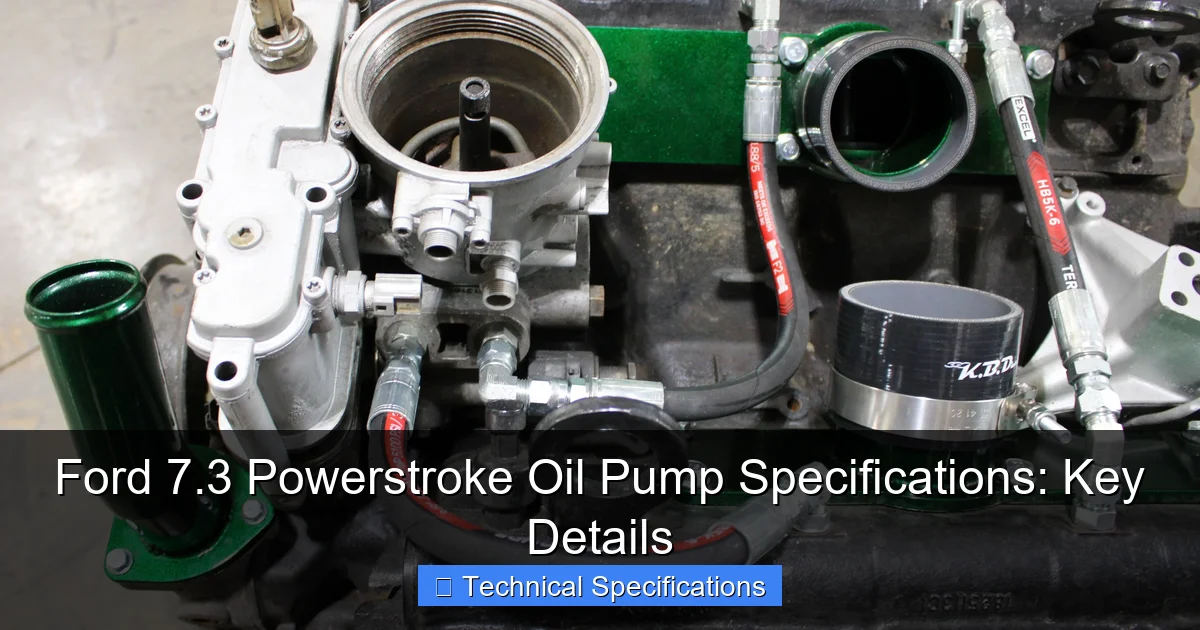
Featured image for this comprehensive guide about Ford 7.3 Powerstroke oil pump specifications
Image source: d2j6dbq0eux0bg.cloudfront.net
The Ford 7.3 Powerstroke diesel engine, often hailed as one of the most reliable and enduring powerplants ever built, owes much of its legendary status to a robust and meticulously engineered design. At the heart of its intricate operation lies a sophisticated oil system, crucial not only for lubrication and cooling but also for the very act of fuel injection. For any owner, enthusiast, or technician working on these iconic trucks, a deep understanding of the Ford 7.3 Powerstroke oil pump specifications is not just helpful—it’s essential for maintaining performance, diagnosing issues, and extending the life of this beloved engine.
Unlike many conventional engines, the 7.3 Powerstroke employs a unique dual oil pump system to manage its distinct lubrication and injection responsibilities. This complex interplay of low-pressure and high-pressure oil ensures everything from vital bearing surfaces to the cutting-edge HEUI (Hydraulically Actuated Electronic Unit Injector) system operates flawlessly. Ignoring the intricacies of these pumps can lead to costly failures, reduced power, and an engine that simply won’t start.
This comprehensive guide will meticulously break down the Ford 7.3 Powerstroke oil pump specifications, exploring the role of each pump, their critical performance metrics, common failure symptoms, and vital maintenance tips. Whether you’re a seasoned mechanic or a proud owner looking to delve deeper into your truck’s mechanical heart, understanding these specifications is your roadmap to ensuring your 7.3 Powerstroke continues to deliver reliable power for years to come.
Quick Answers to Common Questions
What kind of oil pump does the Ford 7.3 Powerstroke actually have?
The Ford 7.3 Powerstroke actually uses *two* oil pumps! There’s a Low-Pressure Oil Pump (LPOP) for general engine lubrication and feeding the High-Pressure Oil Pump (HPOP), which then pressurizes oil for the fuel injectors.
How do I know if my 7.3 Powerstroke oil pump is failing?
Common signs of a failing Ford 7.3 Powerstroke oil pump can include low oil pressure warnings on your dash, engine stuttering or misfires, or even a complete no-start condition if the HPOP isn’t building enough pressure for the injectors.
What are the normal operating pressure specifications for the 7.3 Powerstroke oil pumps?
For your Ford 7.3 Powerstroke oil pump specifications, the LPOP should typically maintain 40-70 psi, while the HPOP operates much higher, generally between 500-3000+ psi depending on engine load and RPM.
Is replacing the Ford 7.3 Powerstroke oil pump a common maintenance item?
While not a routine service like an oil change, the Ford 7.3 Powerstroke oil pump, especially the LPOP, can wear out with high mileage. It’s often recommended for inspection or proactive replacement when other major engine work is being performed.
Are there different types or upgrades for the Ford 7.3 Powerstroke oil pump?
Absolutely! Beyond standard replacement units, when looking at Ford 7.3 Powerstroke oil pump specifications, you’ll find upgraded options like billet or larger volume HPOPs designed to support higher performance and more demanding applications.
📋 Table of Contents
- The Dual Heartbeat: LPOP and HPOP in the 7.3 Powerstroke
- Unpacking Ford 7.3 Powerstroke Oil Pump Specifications
- Recognizing Trouble: Common Issues and Failure Symptoms for Your 7.3 Oil Pumps
- Maximizing Lifespan: Maintenance, Upgrades, and Replacement Insights for 7.3 Oil Pumps
- Quick Reference: Key 7.3 Powerstroke Oil Pump Specifications
- Conclusion
The Dual Heartbeat: LPOP and HPOP in the 7.3 Powerstroke
To truly grasp the Ford 7.3 Powerstroke oil pump specifications, one must first understand the fundamental concept of its dual oil pump system. This engine doesn’t just have one oil pump; it has two distinct units, each with a specialized role, working in concert to keep the diesel beast roaring.

Learn more about Ford 7.3 Powerstroke oil pump specifications – Ford 7.3 Powerstroke Oil Pump Specifications: Key Details
Image source: xecong.vn
The Low-Pressure Oil Pump (LPOP): Your Engine’s Lifeblood Foundation
The LPOP, or Low-Pressure Oil Pump, is the unsung hero that forms the foundation of the 7.3 Powerstroke’s oil system. Its primary function is akin to the main circulatory system of your body – ensuring every vital component receives a steady supply of oil for lubrication and cooling. Without the LPOP, the entire engine would seize, regardless of the HPOP’s condition.
| Specification | Low-Pressure Oil Pump (LPOP) | High-Pressure Oil Pump (HPOP) |
|---|---|---|
| Pump Type / Design | Gerotor (Internal Gear) | Radial Piston (Swashplate) |
| Primary Function | Engine Lubrication & Cooling | HEUI Injector Actuation |
| Drive Mechanism | Crankshaft Gear-Driven | Camshaft Gear-Driven |
| Typical Operating Pressure | 40-70 psi (Warm Idle to WOT) | 500-3000+ psi (Idle to WOT) |
| Oil Supply Source | Engine Oil Pan | HPOP Reservoir (filled by LPOP) |
| Key Specification / Note | High Volume for Engine Flow | Displacement (e.g., 15° or 17° Swashplate) |
- Function: The LPOP is responsible for circulating oil throughout the engine block. This includes lubricating crankshaft and camshaft bearings, piston skirts, cylinder walls, and feeding the turbocharger. Crucially, it also supplies the necessary volume of oil to the high-pressure oil pump (HPOP).
- Type: The 7.3 Powerstroke LPOP is a gerotor-style pump. This design features an inner rotor with a specific number of lobes (e.g., 7) and an outer rotor with one more lobe (e.g., 8). As the rotors turn, the increasing and decreasing volumes between the lobes draw in and push out oil, creating flow.
- Location: The LPOP is conveniently located at the front of the engine, mounted within the timing cover. It is directly driven by the crankshaft, meaning it operates whenever the engine is turning.
- Flow Path: Oil is drawn from the oil pan through the pickup tube by the LPOP. It then passes through the oil cooler, the oil filter, and then branches off to various lubrication points throughout the engine, including a dedicated feed line to the HPOP reservoir in the valley.
The High-Pressure Oil Pump (HPOP): The Muscle Behind Injection
The HPOP, or High-Pressure Oil Pump, is where the 7.3 Powerstroke truly differentiates itself. This pump doesn’t lubricate the engine; it’s an integral part of the fuel injection system, powering the unique HEUI injectors. Think of it as the high-pressure hydraulic pump that makes the injectors “fire.”
- Function: The HPOP’s sole purpose is to generate the incredibly high oil pressure required to actuate the HEUI injectors. These injectors use engine oil at high pressure to compress and spray fuel into the cylinders. The oil acts as a hydraulic fluid, multiplying the force from the camshaft-driven fuel injector pushrods to open the injector nozzle.
- Type: The 7.3 Powerstroke HPOP is a fixed-displacement piston pump. Early 1994-1997 models typically used a radial piston design, while later 1999-2003 models transitioned to a more robust axial piston design. Both types feature multiple pistons (typically 7-9) that reciprocate to create high pressure.
- Location: The HPOP is prominently situated in the valley of the engine, nestled beneath the intake manifold. It is gear-driven by the camshaft, ensuring synchronization with the engine’s firing order.
- Pressure Range: This is where the “high-pressure” name comes from. While the LPOP operates in tens of PSI, the HPOP operates in hundreds and thousands of PSI, typically ranging from 500 PSI at idle to well over 3,000 PSI under heavy load.
- Interaction with IPR Valve: The HPOP’s output pressure is precisely regulated by the Injector Pressure Regulator (IPR) valve. This electronically controlled solenoid valve diverts excess high-pressure oil back to the reservoir, ensuring the desired pressure for injection is maintained based on engine load and RPM.
Understanding the distinct roles and operational principles of both the LPOP and HPOP is the first step in appreciating the comprehensive Ford 7.3 Powerstroke oil pump specifications and effectively troubleshooting any oil system-related issues.
Unpacking Ford 7.3 Powerstroke Oil Pump Specifications
Diving into the specific metrics and design elements of these critical components provides a clearer picture of their capabilities and limitations. These Ford 7.3 Powerstroke oil pump specifications are fundamental to understanding engine performance and reliability.
Learn more about Ford 7.3 Powerstroke oil pump specifications – Ford 7.3 Powerstroke Oil Pump Specifications: Key Details
Image source: 2.bp.blogspot.com
LPOP Specifications
The LPOP, while operating at lower pressures, is vital for the overall health of the engine. Its specifications ensure adequate flow and pressure for basic lubrication and to feed the HPOP effectively.
- Operating Pressure:
- Idle: Typically 20-30 PSI (measured after the filter).
- Cruise/WOT: 60-70 PSI is considered healthy, though some sources allow for a minimum of 45-50 PSI at 2000 RPM.
- Minimum at hot idle: Generally, anything below 10-15 PSI at hot idle is cause for concern.
- Flow Rate: While a precise flow rate in gallons per minute isn’t commonly published for the LPOP, it is designed to provide sufficient volume for full engine lubrication and to keep the HPOP reservoir completely filled. A rough estimate is 6-8 GPM at higher RPMs.
- Construction: Made from durable cast iron or aluminum, housing precision-machined steel gerotor gears. The quality of these gears is paramount for longevity.
- Common Part Numbers (OEM): F81Z-6600-AA (later models), F4TZ-6600-A (early models).
HPOP Specifications
The HPOP’s specifications are much more dynamic due to its role in injection. There are notable differences between early and late 7.3 Powerstroke HPOPs, which are crucial to recognize.
- Operating Pressure Range:
- Cranking: A minimum of 500 PSI (or 34.5 bar) is generally required for the engine to start.
- Idle: 500-750 PSI.
- Full Load/WOT: Can reach 2,500-3,200 PSI, depending on the year model and engine tuning.
- Displacement: This refers to the volume of oil the pump can move per revolution.
- Early HPOPs (1994-1997): Often referred to as “15-degree” pumps, indicating the swash plate angle in the radial piston design. They typically have a lower maximum output pressure (around 2,100 PSI) compared to later models.
- Late HPOPs (1999-2003): These are commonly called “17-degree” pumps, featuring an axial piston design with a higher flow capacity and capable of achieving 3,000+ PSI. The change in design and displacement was a significant upgrade to support improved emissions and power.
- Number of Pistons: Typically 7 to 9 pistons, depending on the pump design. More pistons, generally, mean smoother operation and potentially higher flow for a given displacement.
- Construction: Precision-machined steel components within an aluminum or cast iron housing, designed to withstand extreme pressure and heat.
- Interaction with IPR Valve: The IPR valve has its own specifications, including resistance (around 10-12 ohms) and duty cycle (0-65% at idle, up to 85% at WOT) that dictate the actual oil pressure. A healthy IPR will maintain stable pressure.
- Common Part Numbers (OEM):
- Early (94-97): F6TZ-9A543-AA, F81Z-9A543-CRM (reman).
- Late (99-03): F81Z-9A543-AARM, 2C3Z-9A543-AARM (reman), AP63665.
These detailed Ford 7.3 Powerstroke oil pump specifications highlight the robust design and engineering that went into creating an engine capable of heavy-duty work. Understanding these numbers is crucial for diagnosing issues and ensuring proper engine function.
Recognizing Trouble: Common Issues and Failure Symptoms for Your 7.3 Oil Pumps
Even with their robust design, the LPOP and HPOP are wear items and can eventually fail or exhibit symptoms of impending trouble. Being able to identify these signs early can save you significant time, money, and potential engine damage. Knowledge of Ford 7.3 Powerstroke oil pump specifications will guide your diagnostic process.
LPOP Failure Signs
When the LPOP starts to falter, the engine’s foundational lubrication and cooling system is compromised. Symptoms are often general engine issues but can be traced back to low oil pressure.
- Low Oil Pressure Gauge Reading: The most obvious sign. The dash gauge may consistently read low, especially at idle or when the engine is hot. Always verify with a mechanical gauge as dash gauges can be inaccurate.
- Engine Clatter or Knocking: Insufficient oil pressure can starve critical components like lifters, pushrods, and bearings, leading to excessive valvetrain noise or a deeper knocking sound.
- Turbocharger Issues: The turbo relies heavily on engine oil for lubrication and cooling. A failing LPOP can lead to premature turbo wear, whining noises, excessive smoke, or even turbo failure.
- Overheating: Oil plays a significant role in cooling engine components. Reduced oil flow can contribute to elevated engine temperatures.
- Damage to Internal Components: In severe cases, prolonged low oil pressure will lead to catastrophic damage to bearings, camshafts, and other rotating assemblies.
- HPOP Reservoir Not Filling: If the LPOP isn’t supplying enough oil, the HPOP reservoir will run dry, leading to HPOP-related symptoms (see below).
HPOP Failure Signs
HPOP failures directly impact the engine’s ability to inject fuel, leading to distinct and often severe drivability issues, particularly related to starting and power delivery.
- No-Start or Hard-Start Conditions: This is the most common symptom. If the HPOP cannot generate the minimum 500 PSI required for injection, the engine will crank but not start, or will take excessive cranking. This is often worse when the engine is hot, as oil thins out and worn pump tolerances become more apparent.
- Engine Misfire or Rough Idle: Inconsistent high oil pressure can cause some injectors to fire weakly or not at all, leading to a noticeable stumble or misfire, especially at idle.
- Loss of Power Under Load: When accelerating or pulling a heavy load, the engine demands maximum HPOP pressure. A failing HPOP won’t be able to keep up, resulting in a significant loss of power, surging, or a feeling of “hitting a wall.”
- Stalling: The engine may start but then stall, particularly if the HPOP cannot maintain adequate pressure as the engine warms up or under load.
- Diagnostic Trouble Codes (DTCs): You’ll often see codes related to the Injector Control Pressure (ICP) sensor or Injector Pressure Regulator (IPR) valve. Common codes include P0226, P1211 (ICP Actual vs. Desired mismatch), P1280 (ICP circuit low), P1282 (Excessive IPR duty cycle), or P1283 (IPR fault).
- High IPR Duty Cycle: When monitoring with a scan tool, a high IPR duty cycle (e.g., above 65-70% at idle, 80-90%+ under load) indicates the IPR is working overtime to try and maintain pressure, suggesting the HPOP is failing to produce enough volume.
Diagnostic Steps
Proper diagnosis requires a systematic approach, often involving specialized tools.
- Verify with Mechanical Gauge: For LPOP issues, connect a mechanical oil pressure gauge to confirm dash gauge readings.
- Scan Tool Monitoring: This is critical for HPOP diagnosis. Monitor:
- ICP (Injector Control Pressure) Actual: This is the actual pressure in the high-pressure oil rails.
- ICP Desired: What the PCM (Powertrain Control Module) is requesting.
- IPR (Injector Pressure Regulator) Duty Cycle: The percentage the IPR valve is commanded open.
- Engine RPM while cranking: Must be above 100-150 RPM for the PCM to command injection.
- HPOP Reservoir Check: Visually inspect the HPOP reservoir (in the engine valley) to ensure it’s full of oil (within 1 inch from the top) before cranking. A low reservoir points to an LPOP or oil leak issue.
- High-Pressure Oil System Air Test: If HPOP failure is suspected, an air test involves pressurizing the high-pressure oil system with shop air (typically 100-120 PSI) through the ICP sensor port. Listen for air leaks in the valve covers (injectors, O-rings, standpipes, branch tubes) or from the HPOP itself. This can pinpoint leaks that cause low ICP.
- Oil Quality and Level: Always ensure the engine oil level is correct and that the oil itself is of the proper type and viscosity, and not excessively contaminated or diluted.
Timely and accurate diagnosis, guided by a solid understanding of Ford 7.3 Powerstroke oil pump specifications and their expected performance, is key to preventing further damage and getting your 7.3 Powerstroke back on the road.
Maximizing Lifespan: Maintenance, Upgrades, and Replacement Insights for 7.3 Oil Pumps
The longevity and performance of your 7.3 Powerstroke’s oil pumps are not solely dependent on their initial design; proper maintenance and, in some cases, strategic upgrades play a critical role. Understanding these aspects in conjunction with Ford 7.3 Powerstroke oil pump specifications empowers owners to make informed decisions.
Essential Maintenance Practices
Preventative maintenance is the bedrock of keeping both your LPOP and HPOP functioning optimally.
- Regular Oil and Filter Changes: This is paramount. The 7.3 Powerstroke is particularly sensitive to oil quality because the engine oil is also the hydraulic fluid for the injectors. Follow Ford’s recommended intervals (typically 5,000 miles or 6 months, or sooner for heavy use).
- Use the Correct Oil Type and Viscosity: Always use API CJ-4 or CK-4 rated diesel engine oil of the recommended viscosity (e.g., 15W-40 in most climates, 5W-40 synthetic in colder climates). Incorrect viscosity can lead to cavitation, increased wear, and improper HPOP function.
- Monitor Oil Levels Diligently: Low oil levels mean the LPOP has less oil to draw from, potentially leading to cavitation, increased wear, and insufficient oil for the HPOP reservoir. Check oil levels frequently, especially before long trips.
- Utilize Quality Oil Filters: Don’t skimp on oil filters. A high-quality filter ensures that abrasive contaminants, which are detrimental to precision-machined pump components, are effectively removed from the oil stream. Stick with reputable brands like Motorcraft (OEM), Wix, Donaldson, or Baldwin.
- Avoid Extended Idling (When Possible): While not always avoidable, prolonged idling can contribute to carbon buildup and oil dilution, which degrades oil quality faster.
Upgrade Options and Aftermarket Solutions
For owners seeking enhanced performance, increased reliability, or simply replacing a failing unit with something more robust, the aftermarket offers several upgrade options that often exceed OEM Ford 7.3 Powerstroke oil pump specifications.
- Why Upgrade?
- Performance: Modified engines with larger injectors or aggressive tuning require more high-pressure oil volume than stock HPOPs can provide to sustain desired fuel delivery.
- Reliability: Some aftermarket pumps boast improved internal components, materials, or designs that enhance longevity.
- Preventative Measure: Replacing an aging pump with an upgraded unit during a major engine service can offer peace of mind.
- Larger Displacement HPOPs (e.g., Adrenaline, Terminator, Stealth):
- These pumps are designed to deliver a greater volume of high-pressure oil, essential for injectors larger than stock (e.g., 238cc, 300cc, or more).
- Common terms include “17/17” (meaning both sides of the axial piston pump are 17-degree), “17/8,” or “Gen 3” pumps. They are engineered to sustain higher ICP under extreme demands.
- When selecting an upgraded HPOP, ensure it matches your injector size and overall engine modifications. Over-pumping an engine with stock injectors can lead to excessive ICP and related issues.
- Heavy-Duty LPOPs: While less common as a standalone “performance” upgrade, heavy-duty LPOP kits with stronger gerotor gears are available. These are excellent choices when replacing a failing LPOP, offering enhanced durability, especially for engines that see hard use or have higher demands.
- Consideration for OEM vs. Aftermarket: OEM (Motorcraft) pumps are excellent quality and are often the best choice for stock or mildly modified trucks. For heavily modified applications, quality aftermarket HPOPs are often superior in performance. Always research the brand and read reviews to ensure you’re getting a reliable product.
Replacement Tips
Replacing an oil pump on a 7.3 Powerstroke can be a significant undertaking, especially for the HPOP.
- HPOP Replacement Complexity: The HPOP is located in the engine valley, requiring removal of the intake manifold, turbocharger, and other components. It’s a labor-intensive job often referred to as “the valley of death” due to its difficulty.
- LPOP Replacement Complexity: The LPOP requires removal of the accessory drive, fan, harmonic balancer, and timing cover. While less involved than the HPOP, it still requires proper tools and attention to detail, especially when dealing with the front engine seal.
- Always Replace O-Rings and Gaskets: When replacing any oil pump, always use new gaskets and O-rings for all disturbed components (e.g., valve cover gaskets, injector O-rings, HPOP lines, IPR valve, LPOP cover gasket).
- Prime the System: After HPOP replacement, it’s crucial to properly prime the high-pressure oil system. This usually involves removing the ICP sensor, adding oil directly to the HPOP reservoir, and then cranking the engine for short bursts (with the fuel pump fuse removed) to allow the pump to build pressure before attempting to start. For LPOP, ensure the system is filled with fresh oil.
- Torque Specifications: Adhere strictly to factory torque specifications for all fasteners, especially for the HPOP mounting bolts and high-pressure oil line fittings. Over-tightening can strip threads, while under-tightening can lead to leaks.
- Tools: Specialized tools like an ICP sensor socket, a high-pressure oil line wrench, and a harmonic balancer puller are often required.
By understanding these maintenance, upgrade, and replacement aspects, coupled with a solid grasp of Ford 7.3 Powerstroke oil pump specifications, you can ensure your legendary diesel engine continues to perform at its best.
Quick Reference: Key 7.3 Powerstroke Oil Pump Specifications
For a concise overview, here’s a table summarizing the critical Ford 7.3 Powerstroke oil pump specifications:
| Feature | LPOP (Low-Pressure Oil Pump) | HPOP (High-Pressure Oil Pump – Late Model 99-03) | HPOP (Early Model 94-97) |
|---|---|---|---|
| Type | Gerotor | Axial Piston (fixed displacement) | Radial Piston (fixed displacement) |
| Primary Function | Engine lubrication, cooling, turbo feed, HPOP reservoir feed | Hydraulic power for HEUI fuel injectors | Hydraulic power for HEUI fuel injectors |
| Typical Operating Pressure Range | 20-30 PSI (idle), 60-70 PSI (cruise) | 500-750 PSI (idle), up to 3000-3200+ PSI (WOT) | 500-700 PSI (idle), up to 2100-2400 PSI (WOT) |
| Minimum Cranking Pressure for Start | Sufficient to fill HPOP reservoir | ~500 PSI (34.5 Bar) | ~500 PSI (34.5 Bar) |
| Location | Front engine cover, crankshaft driven | Engine valley, camshaft gear driven | Engine valley, camshaft gear driven |
| Fluid Type | Engine Oil (API CJ-4/CK-4, 15W-40 or 5W-40) | Engine Oil (API CJ-4/CK-4, 15W-40 or 5W-40) | Engine Oil (API CJ-4/CK-4, 15W-40 or 5W-40) |
| Common Failure Symptoms | Low oil pressure gauge, engine clatter, turbo issues, overheating | No-start (especially hot), hard-start, rough idle, loss of power, P1211 DTC | No-start (especially hot), hard-start, rough idle, loss of power, P1211 DTC |
| Key Diagnostic Tool | Mechanical oil pressure gauge | Scan tool (ICP Actual/Desired, IPR Duty Cycle), high-pressure air test | Scan tool (ICP Actual/Desired, IPR Duty Cycle), high-pressure air test |
| Common Upgrades | Heavy-duty gerotor kits | Larger displacement pumps (e.g., 17/17, Adrenaline, Terminator) | Typically replaced with later models or upgraded aftermarket options |
Conclusion
The Ford 7.3 Powerstroke’s enduring legacy is a testament to its robust design, and at the core of its reliability lies a meticulously engineered oil system. Understanding the distinct roles and detailed Ford 7.3 Powerstroke oil pump specifications for both the low-pressure (LPOP) and high-pressure (HPOP) pumps is more than just technical knowledge; it’s a vital part of owning and maintaining this legendary diesel engine.
From the LPOP’s foundational task of lubricating every critical component to the HPOP’s high-pressure hydraulic act of firing the injectors, each pump is indispensable. Recognizing the subtle symptoms of a failing pump, knowing the critical pressure ranges, and adhering to strict maintenance protocols—especially regarding oil and filter quality—are your best defenses against costly breakdowns and lost power.
Whether you’re performing routine maintenance, diagnosing a tricky no-start condition, or considering performance upgrades, keeping these Ford 7.3 Powerstroke oil pump specifications in mind will empower you to make informed decisions and ensure your 7.3 Powerstroke continues to be the reliable workhorse it was designed to be. Drive on with confidence, knowing you understand the heart of your truck’s hydraulic system.
Frequently Asked Questions
What type of oil pumps does the Ford 7.3 Powerstroke engine utilize?
The 7.3 Powerstroke engine actually uses two distinct oil pumps: a low-pressure oil pump (LPOP) for general engine lubrication and feeding the high-pressure pump, and a high-pressure oil pump (HPOP) which is critical for actuating the hydraulically activated electronic unit injectors (HEUI).
What are the typical pressure specifications for the Ford 7.3 Powerstroke High-Pressure Oil Pump (HPOP)?
The HPOP is designed to generate very high pressures, typically ranging from 500 PSI at idle up to 3,000+ PSI under heavy load or full throttle. These pressures are monitored by the Injector Control Pressure (ICP) sensor and regulated by the Injector Pressure Regulator (IPR) valve to ensure proper fuel injection.
How does the Low-Pressure Oil Pump (LPOP) contribute to the Ford 7.3 Powerstroke’s operation?
The LPOP, usually a gerotor-style pump located in the front cover, is responsible for supplying base oil pressure to the entire engine for lubrication of moving parts like the crankshaft, camshaft, and turbocharger. Crucially, it also feeds the HPOP with a constant supply of engine oil to be pressurized.
What are common signs of a failing Ford 7.3 Powerstroke oil pump?
Symptoms of a failing HPOP often include hard starting or a no-start condition, rough idle, misfires, or a significant loss of power, especially under load. A failing LPOP might present as persistent low oil pressure warnings on the dash or excessive engine noise due to lack of lubrication.
Is there a recommended replacement interval or lifespan for the 7.3 Powerstroke oil pump components?
While the Low-Pressure Oil Pump (LPOP) is generally very durable and often lasts the life of the engine if properly maintained, the High-Pressure Oil Pump (HPOP) can wear out over time, especially in high-mileage trucks. There isn’t a strict replacement interval, but failures typically occur due to internal wear or seal degradation.
Can a faulty High-Pressure Oil Pump (HPOP) lead to a no-start condition in a Ford 7.3 Powerstroke?
Yes, absolutely. Since the HPOP is responsible for generating the high oil pressure needed to actuate the fuel injectors, a failure or significant decline in its performance will prevent the injectors from firing, directly leading to a hard-start or complete no-start condition.