Ford 6.0 Powerstroke Injection Timing: How It Affects Your Engine
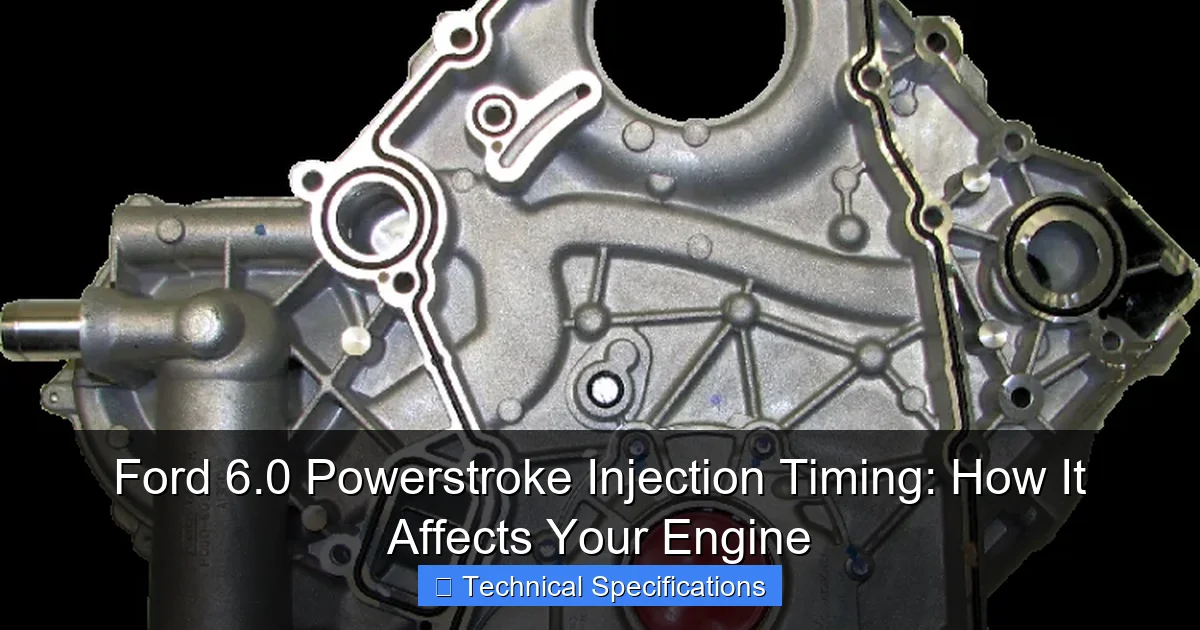
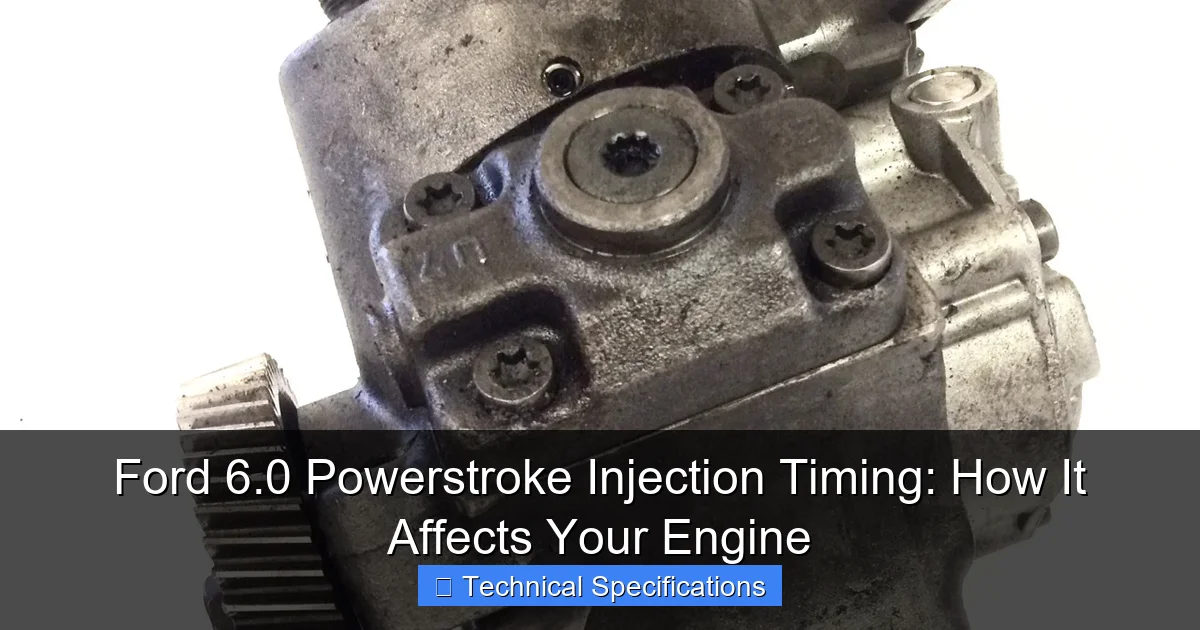
Featured image for this comprehensive guide about Ford 6.0 Powerstroke injection timing
Image source: puredieselpower.com
<p>For owners of the legendary <strong>Ford 6.0 Powerstroke</strong> engine, understanding its intricate workings is key to unlocking its full potential and ensuring its longevity. Among the myriad of critical systems, <strong>injection timing</strong> stands out as a fundamental element that dictates everything from horsepower and torque to fuel efficiency and exhaust emissions. It’s a precise dance between fuel delivery and engine rotation, choreographed by sophisticated electronics.</p>
<p>Often misunderstood, <strong>Ford 6.0 Powerstroke injection timing</strong> is far more than just “when the fuel squirts.” It’s a dynamic, constantly adjusting process that directly impacts combustion efficiency. Imagine trying to hit a moving target – if you shoot too early or too late, you miss the mark. Similarly, if fuel is injected too early or too late in the combustion cycle, you lose power, waste fuel, and generate excessive pollutants. This deep dive will unravel the complexities of this vital system, empowering you with the knowledge to diagnose issues, optimize performance, and keep your 6.0L roaring.</p>
<p>Whether you’re a seasoned diesel enthusiast, a professional technician, or simply a proud owner looking to better understand your truck, this comprehensive guide will illuminate the nuances of <strong>6.0 Powerstroke injection timing</strong>. We’ll cover how it works, what goes wrong when it’s off, and what you can do to maintain or even improve it. Get ready to dive deep into the heart of your <strong>6.0 Powerstroke</strong> and discover why precise <strong>injection timing</strong> is the secret sauce for a powerful, efficient, and reliable diesel engine.</p>
<h2>Understanding Diesel Injection Timing: The Basics</h2>
<p>Before we delve into the specifics of the <strong>Ford 6.0 Powerstroke</strong>, let’s establish a foundational understanding of <strong>diesel injection timing</strong> in general. In essence, <strong>injection timing</strong> refers to the precise moment fuel is introduced into the combustion chamber relative to the piston’s position and the engine’s rotation. Unlike gasoline engines, which use a spark plug to ignite an air-fuel mixture, diesel engines rely on the heat generated by compressing air to ignite the fuel.</p>
<h3>What is Injection Timing?</h3>
<p>In a diesel engine, air is drawn into the cylinder and compressed. As the piston approaches Top Dead Center (TDC), the air temperature inside the cylinder skyrockets. At this critical juncture, fuel is injected under extremely high pressure, atomizing into a fine mist that spontaneously ignites due to the hot compressed air. <strong>Injection timing</strong> is measured in degrees of crankshaft rotation before or after TDC (BTDC or ATDC).</p>
<ul>
<li><strong>Early Timing (Advanced)</strong>: Injecting fuel earlier in the compression stroke. This allows more time for the fuel to mix with air and burn, often leading to more power and better fuel economy, but can also increase combustion pressures, engine noise, and NOx emissions.</li>
<li><strong>Late Timing (Retarded)</strong>: Injecting fuel later in the compression stroke, closer to or after TDC. This reduces peak combustion pressures, lowers NOx emissions, and can make the engine run quieter, but typically at the cost of power and fuel efficiency. It can also lead to higher exhaust gas temperatures (EGTs) due to late burning fuel.</li>
</ul>
<h3>Why is Timing Critical for Diesel Engines?</h3>
<p>The precise control of <strong>injection timing</strong> is paramount for diesel engines because it directly influences the combustion process. An optimally timed injection ensures that the maximum amount of energy is extracted from the fuel during the power stroke. Incorrect timing, on the other hand, can lead to a host of problems:</p>
<ul>
<li><strong>Performance</strong>: Too early or too late, and your engine won’t produce its rated horsepower and torque.</li>
<li><strong>Fuel Economy</strong>: Inefficient combustion means more fuel is burned for less useful work.</li>
<li><strong>Emissions</strong>: Timing plays a crucial role in the formation of pollutants like NOx and particulate matter.</li>
<li><strong>Engine Longevity</strong>: Incorrect timing can lead to excessive stress on internal components, increased operating temperatures, and accelerated wear.</li>
<li><strong>Engine Noise</strong>: The characteristic “diesel knock” is heavily influenced by <strong>injection timing</strong>.</li>
</ul>
<h3>How the 6.0 Powerstroke’s HEUI System Works</h3>
<p>The <strong>Ford 6.0 Powerstroke</strong> utilizes the Hydraulic Electronic Unit Injection (HEUI) system, a sophisticated design that combines hydraulics and electronics for precise fuel delivery. Instead of a traditional mechanical injection pump, the HEUI system uses high-pressure engine oil to intensify fuel pressure within each injector. The key components include:</p>
<ul>
<li><strong>High Pressure Oil Pump (HPOP)</strong>: Generates high-pressure oil (up to 3,600 psi or more).</li>
<li><strong>Injection Control Pressure (ICP) Sensor</strong>: Monitors the pressure of the high-pressure oil.</li>
<li><strong>Injection Pressure Regulator (IPR) Valve</strong>: Controls the flow of oil from the HPOP to the injectors, thereby regulating ICP.</li>
<li><strong>Fuel Injection Control Module (FICM)</strong>: Boosts voltage to 48 volts to activate the solenoids in the injectors.</li>
<li><strong>Injectors</strong>: Each injector uses high-pressure oil to multiply fuel pressure to over 20,000 psi, then electronically opens a poppet valve to spray fuel into the cylinder.</li>
</ul>
<p>The precise activation of each injector’s solenoid, managed by the FICM based on commands from the Powertrain Control Module (PCM), is what determines the <strong>injection timing</strong> for the <strong>6.0 Powerstroke</strong>.</p>
<h2>The 6.0 Powerstroke’s Advanced Timing Control System</h2>
<p>The <strong>Ford 6.0 Powerstroke</strong> doesn’t just have an <strong>injection timing</strong> system; it has a highly dynamic and intelligent control system that constantly adjusts fuel delivery based on numerous engine parameters. This complexity is both a strength and, at times, a source of diagnostic challenges.</p>
<h3>Key Sensors and Their Role</h3>
<p>The PCM (Powertrain Control Module) relies on a network of sensors to calculate and command the optimal <strong>injection timing</strong> for your <strong>6.0 Powerstroke</strong> under varying operating conditions. Any fault in these sensors can throw the <strong>timing</strong> off.</p>
<ul>
<li><strong>Crankshaft Position Sensor (CKP)</strong>: Essential for determining engine RPM and piston position. This sensor provides the fundamental reference for <strong>injection timing</strong>.</li>
<li><strong>Camshaft Position Sensor (CMP)</strong>: Works in conjunction with the CKP to determine which cylinder is at the top of its compression stroke, ensuring fuel is injected into the correct cylinder at the correct time.</li>
<li><strong>Injection Control Pressure (ICP) Sensor</strong>: Monitors the pressure of the high-pressure oil system. The PCM uses this to ensure sufficient pressure is available for injector firing.</li>
<li><strong>Injection Pressure Regulator (IPR) Valve</strong>: Although not a sensor, its controlled by the PCM to regulate the ICP, which directly impacts the force behind each injection event.</li>
<li><strong>Manifold Absolute Pressure (MAP) Sensor</strong>: Measures boost pressure, informing the PCM about engine load and the amount of air available for combustion.</li>
<li><strong>Engine Oil Temperature (EOT) Sensor</strong>: Engine oil temperature affects oil viscosity and thus the performance of the HEUI system. Cold oil can impact <strong>injection timing</strong>.</li>
<li><strong>Exhaust Back Pressure (EBP) Sensor</strong>: Used for monitoring exhaust flow and controlling the Variable Geometry Turbocharger (VGT), which indirectly influences cylinder filling and thus optimal <strong>timing</strong>.</li>
</ul>
<h3>The FICM and PCM: The Brains of the Operation</h3>
<p>The <strong>Powertrain Control Module (PCM)</strong> is the primary computer that gathers data from all these sensors. It then uses complex algorithms and pre-programmed maps to calculate the ideal <strong>Ford 6.0 Powerstroke injection timing</strong> and fuel quantity for every conceivable operating condition. These calculations take into account engine speed, load, temperature, barometric pressure, and even desired power output.</p>
<p>Once the PCM determines the precise moment for injection, it sends a low-voltage signal to the <strong>Fuel Injection Control Module (FICM)</strong>. The FICM’s crucial role is to boost this signal to 48 volts (or sometimes 12V in later revisions during specific phases) and send it to the individual injectors, rapidly opening and closing their solenoids to initiate the fuel injection event. A failing FICM, particularly one with low voltage output, can severely compromise <strong>injection timing</strong> and overall engine performance, leading to misfires, hard starting, and rough idle.</p>
<h3>Dynamic Timing: Why It Changes</h3</h3>
<p>The <strong>6.0 Powerstroke injection timing</strong> is not static; it’s constantly adapting. This dynamic adjustment is essential for meeting the demands of varying driving conditions, from idling in traffic to towing a heavy load uphill. Factors influencing these real-time adjustments include:</p>
<ul>
<li><strong>Engine Speed (RPM)</strong>: Higher RPMs generally require more advanced timing to ensure complete combustion.</li>
<li><strong>Engine Load</strong>: Heavier loads often necessitate slight timing adjustments to maintain power and efficiency.</li>
<li><strong>Engine Temperature</strong>: Cold engines may have slightly retarded timing for smoother operation and reduced emissions during warm-up.</li>
<li><strong>Boost Pressure</strong>: Higher boost means more air, requiring corresponding adjustments in fuel quantity and <strong>timing</strong>.</li>
<li><strong>Atmospheric Pressure</strong>: Altitude affects air density, prompting the PCM to compensate.</li>
<li><strong>Emissions Requirements</strong>: The PCM will sometimes retard <strong>timing</strong> to reduce NOx emissions, especially at cruise.</li>
</ul>
<p>This continuous adjustment ensures optimal performance, fuel economy, and emission control across the entire operating range of the <strong>6.0 Powerstroke</strong>.</p>
<h2>Symptoms of Incorrect Ford 6.0 Powerstroke Injection Timing</h2>
<p>When <strong>Ford 6.0 Powerstroke injection timing</strong> is off, your truck will almost certainly let you know. The symptoms can range from subtle inefficiencies to severe operational problems, impacting your driving experience and potentially leading to costly repairs if ignored. Recognizing these signs early is crucial.</p>
<h3>Performance Degradation</h3>
<p>One of the most noticeable symptoms of incorrect <strong>injection timing</strong> is a significant drop in engine performance. You might experience:</p>
<ul>
<li><strong>Reduced Horsepower and Torque</strong>: The engine feels sluggish, struggles to accelerate, and lacks its usual pulling power, especially under load.</li>
<li><strong>Poor Throttle Response</strong>: A delay between pressing the accelerator and the engine responding.</li>
<li><strong>Lack of Top-End Power</strong>: The engine may perform adequately at lower RPMs but struggle to reach or maintain higher speeds.</li</ul>
<h3>Fuel Economy Issues</h3>
<p>Fuel efficiency is directly tied to combustion efficiency. If <strong>injection timing</strong> is not optimized, fuel is wasted, leading to more frequent trips to the pump.</p>
<ul>
<li><strong>Decreased MPG</strong>: A noticeable drop in miles per gallon, even without changes in driving habits or load.</li>
<li><strong>Excessive Fuel Consumption</strong>: The engine might be over-fueling to compensate for inefficient combustion or burning fuel at the wrong time.</li>
</ul>
<h3>Emissions Problems</h3>
<p>Modern diesel engines are designed with strict emissions controls. Incorrect <strong>injection timing</strong> can disrupt these controls.</p>
<ul>
<li><strong>Excessive Exhaust Smoke</strong>:
<ul>
<li><strong>Black Smoke</strong>: Often indicates incomplete combustion due to late timing or over-fueling.</li>
<li><strong>White/Blue Smoke</strong>: Can be unburnt fuel (especially on cold starts with very retarded timing) or burning oil, which might be exacerbated by timing issues.</li>
</ul>
</li>
<li><strong>Failure of Emissions Tests</strong>: If your region requires diesel emissions testing, incorrect timing can easily lead to a failed inspection.</li>
</ul>
<h3>Engine Noise and Vibration</h3>
<p>The characteristic “diesel knock” is a direct result of combustion characteristics. When <strong>injection timing</strong> is off, this noise can become more pronounced or change in character.</p>
<ul>
<li><strong>Harsh “Knocking” or “Rattling” Noise</strong>: Often associated with excessively advanced timing, causing rapid pressure rise inside the cylinder.</li>
<li><strong>Rough Idle or Misfires</strong>: The engine may run unevenly, particularly at idle, or exhibit noticeable misfires.</li>
<li><strong>Increased Engine Vibration</strong>: Imbalanced combustion events across cylinders can lead to noticeable vibration throughout the vehicle.</li>
</ul>
<h3>Starting Difficulties</h3>
<p>Proper <strong>injection timing</strong> is critical for successful engine startup, especially in colder temperatures.</p>
<ul>
<li><strong>Extended Crank Times</strong>: The engine takes longer than usual to start, requiring more cranking cycles.</li>
<li><strong>No-Start Condition</strong>: In severe cases, particularly with issues like a faulty CKP or CMP sensor, the engine may not start at all.</li>
<li><strong>Hard Starts in Cold Weather</strong>: Cold weather exasperates timing issues, making it harder for the engine to ignite fuel.</li>
</ul>
<p>If you experience any of these symptoms with your <strong>Ford 6.0 Powerstroke</strong>, it’s crucial to investigate the <strong>injection timing</strong> system, along with other related components, promptly.</p>
<h2>Factors That Influence Ford 6.0 Powerstroke Injection Timing</h2>
<p>The dynamic nature of <strong>Ford 6.0 Powerstroke injection timing</strong> means that many different components and conditions can influence its accuracy. When symptoms arise, it’s often not a single component but rather an interaction of factors. Understanding these influences is key to effective diagnosis and maintenance.</p>
<h3>Sensor Malfunctions</h3>
<p>As highlighted earlier, the PCM relies heavily on sensor data. If any of these sensors provide inaccurate or intermittent readings, the PCM cannot calculate the correct <strong>injection timing</strong>.</p>
<ul>
<li><strong>CKP/CMP Sensor Failure</strong>: These are perhaps the most critical for basic engine synchronization. A faulty CKP (Crankshaft Position) or CMP (Camshaft Position) sensor can cause erratic timing, misfires, or a no-start condition. The PCM uses these signals to know where the engine is in its rotation.</li>
<li><strong>ICP Sensor Issues</strong>: A failing Injection Control Pressure (ICP) sensor can give the PCM incorrect information about the high-pressure oil system, leading to improper injector firing and thus incorrect <strong>injection timing</strong>.</li>
<li><strong>EBP/MAP Sensor Errors</strong>: While less direct, inaccurate Exhaust Back Pressure (EBP) or Manifold Absolute Pressure (MAP) readings can cause the PCM to make suboptimal decisions regarding fueling and timing adjustments, impacting performance and emissions.</li>
</ul>
<h3>Fuel System Health (Injectors, Fuel Pressure)</h3>
<p>While the PCM commands the <strong>timing</strong>, the injectors are the physical mechanism that delivers the fuel. Their health is paramount.</p>
<ul>
<li><strong>Worn or Faulty Injectors</strong>: Clogged, sticking, or electrically failed injectors can lead to delayed, weak, or improper fuel spray patterns, effectively altering the *actual* injection event even if the PCM commanded the correct *electrical* timing. Internal leaks in injectors can also reduce high-pressure oil available for other injectors.</li>
<li><strong>Low Fuel Pressure</strong>: The <strong>6.0 Powerstroke</strong> relies on adequate fuel pressure (50-70 psi at idle) supplied to the injectors. If the supply pressure is too low, the injectors cannot properly atomize fuel, which can mimic <strong>timing</strong> issues and lead to poor combustion.</li>
</ul>
<h3>FICM Voltage and Performance</h3>
<p>The <strong>Fuel Injection Control Module (FICM)</strong> is a common weak point in the <strong>6.0 Powerstroke</strong> and plays a direct role in <strong>injection timing</strong>.</p>
<ul>
<li><strong>Low FICM Voltage</strong>: The FICM needs to output a consistent 48 volts (key on, engine running). If the voltage drops (e.g., to 24-30V), the injectors won’t fire with enough force or speed. This can lead to a delayed or incomplete injection event, effectively retarding the <strong>timing</strong> and causing rough idle, misfires, and hard starts.</li>
<li><strong>FICM Internal Failure</strong>: Complete or intermittent failure of the FICM can lead to random misfires or a no-start condition, as the PCM’s <strong>timing</strong> commands cannot be translated into actual injector firing.</li>
</ul>
<h3>Engine Condition (Compression, Turbocharger)</h3>
<p>The engine’s overall mechanical health provides the environment for combustion. Issues here can make even perfect <strong>injection timing</strong> ineffective.</p>
<ul>
<li><strong>Low Compression</strong>: If a cylinder has low compression, the air won’t get hot enough for proper ignition, leading to misfires and unburnt fuel, which can be mistaken for or exacerbated by <strong>timing</strong> issues.</li>
<li><strong>Turbocharger Malfunction</strong>: A sticking VGT (Variable Geometry Turbocharger) or a failing turbo can lead to insufficient boost, meaning less air in the cylinders. The PCM may try to compensate by adjusting <strong>timing</strong> and fueling, but the root problem will remain.</li>
</ul>
<h3>PCM Software and Tuning</h3>
<p>The PCM’s programming is the blueprint for <strong>injection timing</strong>.</p>
<ul>
<li><strong>Outdated PCM Calibration</strong>: Ford occasionally releases updates to address known issues or improve performance/emissions. Running an old calibration might not be optimal for your engine.</li>
<li><strong>Aftermarket Tuning</strong>: Performance tunes often modify <strong>injection timing</strong> (along with fuel quantity and pressure). A poorly written or aggressive tune can lead to excessive cylinder pressures, high EGTs, or other issues related to incorrect <strong>timing</strong>. Conversely, a well-written tune can optimize <strong>Ford 6.0 Powerstroke injection timing</strong> for increased power and efficiency.</li>
</ul>
<h2>Diagnosing and Adjusting Ford 6.0 Powerstroke Injection Timing</h2>
<p>Troubleshooting <strong>Ford 6.0 Powerstroke injection timing</strong> requires a systematic approach and the right tools. Because timing is dynamically controlled by the PCM, there’s no simple “adjusting screw” like on older mechanical diesels. Diagnosis involves reading sensor data and understanding what the PCM is commanding versus what the engine is actually doing.</p>
<h3>Essential Diagnostic Tools</h3>
<p>To effectively diagnose <strong>6.0 Powerstroke injection timing</strong> issues, you’ll need specialized equipment:</p>
<ul>
<li><strong>Diagnostic Scan Tool (e.g., Ford IDS, AutoEnginuity, ForScan)</strong>: This is indispensable. It allows you to read Diagnostic Trouble Codes (DTCs), monitor live sensor data, and perform diagnostic routines. Look for tools that specifically support Ford’s proprietary PIDs (Parameter Identifiers).</li>
<li><strong>Multimeter</strong>: For checking voltage at the FICM, battery, and other electrical components.</li>
<li><strong>Fuel Pressure Gauge</strong>: To verify adequate fuel supply pressure to the injectors. This is a common and often overlooked issue.</li>
<li><strong>Oil Pressure Gauge (High-Pressure Side)</strong>: While the ICP sensor monitors high-pressure oil, an independent gauge can confirm its accuracy and the health of the HPOP and IPR system.</li>
</ul>
<h3>Interpreting Live Data</h3>
<p>The real power of a good scan tool lies in its ability to display live data. When diagnosing <strong>injection timing</strong> issues, focus on these PIDs:</p>
<ul>
<li><strong>CKP and CMP Signals</strong>: Monitor these for consistency. Any erratic readings or sudden drops indicate a faulty sensor. Compare their readings with each other (e.g., using a “sync” PID).</li>
<li><strong>FICM MPWR (Main Power) and LPWR (Logic Power)</strong>: MPWR should be ~48V, and LPWR ~12V. If MPWR drops significantly (e.g., to 24-30V), it indicates FICM failure, which directly impacts <strong>injection timing</strong> and injector firing.</li>
<li><strong>ICP (Injection Control Pressure) Actual vs. Desired</strong>: These two values should closely match. If actual ICP is consistently lower than desired, it points to issues with the HPOP, IPR valve, or high-pressure oil leaks, all of which affect injector operation and <strong>timing</strong>.</li>
<li><strong>IPR Duty Cycle</strong>: This percentage indicates how hard the IPR valve is working to maintain ICP. High duty cycles (e.g., over 80-85% at idle) can indicate leaks in the high-pressure oil system.</li>
<li><strong>Injector Contribution Test</strong>: Many scan tools offer this. It helps identify individual injectors that are underperforming, which can cause rough running that appears to be <strong>timing</strong>-related.</li>
<li><strong>Fuel Pulse Width (FPW)</strong>: While not directly <strong>timing</strong>, this measures how long the injector is open. Abnormal FPW can indicate issues with fuel delivery or the PCM’s fueling strategy.</li>
</ul>
<h3>Common Troubleshooting Steps</h3>
<ol>
<li><strong>Check for DTCs</strong>: Start with a full scan for trouble codes. Codes related to CKP, CMP, ICP, IPR, or FICM are direct indicators of potential <strong>timing</strong> problems.</li>
<li><strong>Verify FICM Voltage</strong>: This is a primary culprit for poor <strong>6.0 Powerstroke injection timing</strong>. Check MPWR at key-on-engine-off and engine running. Replace or repair the FICM if voltage is low.</li>
<li><strong>Monitor ICP/IPR Values</strong>: Check for the desired vs. actual ICP match. If there’s a significant difference, investigate the HPOP, IPR valve, and the high-pressure oil system for leaks (e.g., standpipes, dummy plugs, STC fitting).</li>
<li><strong>Perform Fuel Pressure Test</strong>: Use a mechanical gauge to confirm consistent fuel pressure, especially under load.</li>
<li><strong>Check CKP/CMP Waveforms (if possible)</strong>: An oscilloscope provides the most accurate view of these sensor signals, revealing noise or dropouts that a scan tool might miss.</li>
<li><strong>Injector Buzz Test</strong>: A scan tool function that activates each injector solenoid, helping to identify electrically failed injectors. However, it doesn’t confirm fuel delivery or spray pattern.</li>
<li><strong>Glow Plug System Check</strong>: While not directly related to <strong>timing</strong> for running, a faulty glow plug system can cause hard starting and excessive white smoke that might be confused with <strong>timing</strong> issues on a cold engine.</li>
</ol>
<h3>When to Seek Professional Help</h3>
<p>If you’ve performed basic diagnostics and the issue persists, or if you’re uncomfortable with the complexity, it’s always best to consult a qualified diesel technician. They have access to advanced diagnostic equipment, specialized training, and experience with <strong>Ford 6.0 Powerstroke injection timing</strong> issues. Misdiagnosing and improperly repairing these systems can lead to further, more expensive damage.</p>
<h2>Optimizing Your 6.0 Powerstroke’s Injection Timing for Peak Performance</h2>
<p>While the <strong>Ford 6.0 Powerstroke</strong> is designed to operate efficiently with its factory <strong>injection timing</strong> strategies, there are avenues to optimize its performance, fuel economy, and longevity. This primarily revolves around diligent maintenance and, for those seeking more, strategic aftermarket modifications.</p>
<h3>The Role of Preventative Maintenance</h3>
<p>The single most effective way to ensure optimal <strong>6.0 Powerstroke injection timing</strong> and overall engine health is consistent, high-quality preventative maintenance.</p>
<ul>
<li><strong>Regular Oil Changes</strong>: The HEUI system relies on engine oil. Use high-quality, recommended synthetic or synthetic blend oils and change them religiously (typically 5,000-7,500 miles or less, depending on use). Dirty or degraded oil can lead to HPOP, IPR, and injector issues, directly impacting <strong>timing</strong>.</li>
<li><strong>Fuel Filter Replacement</strong>: The <strong>6.0 Powerstroke</strong> has two fuel filters. Replace them per manufacturer recommendations (typically every 10,000-15,000 miles). Clogged fuel filters starve the injectors, leading to poor atomization and symptoms similar to incorrect <strong>timing</strong>.</li>
<li><strong>Coolant System Maintenance</strong>: An efficiently running cooling system is vital. Overheating can damage seals and sensors, indirectly affecting <strong>injection timing</strong> and engine longevity. Consider upgrading the oil cooler and regularly flushing the cooling system.</li>
<li><strong>Sensor Health Checks</strong>: While you don’t replace sensors proactively without cause, being aware of their function and monitoring live data can catch potential failures before they become catastrophic.</li>
<li><strong>FICM Voltage Monitoring</strong>: Routinely check your FICM’s output voltage, especially if you have known cold-start issues or rough idle. Early detection of low voltage can prevent further damage.</li</ul>
<h3>Performance Tuning and Aftermarket Solutions</h3>
<p>For owners looking to extract more power, improve fuel economy, or achieve a specific driving characteristic, aftermarket tuning is a popular option. Quality performance tunes often optimize <strong>Ford 6.0 Powerstroke injection timing</strong> and fuel delivery beyond factory settings.</p>
<ul>
<li><strong>Custom PCM Tunes</strong>: Reputable tuners can adjust the <strong>injection timing</strong> maps within the PCM to:
<ul>
<li><strong>Increase Power</strong>: By advancing timing slightly at certain RPMs/loads, optimizing the combustion event for peak power output.</li>
<li><strong>Improve Fuel Economy</strong>: By fine-tuning timing for more efficient combustion in cruising conditions.</li>
<li><strong>Reduce EGTs</strong>: While advanced timing can sometimes increase EGTs, careful tuning can optimize the burn to reduce exhaust temperatures at sustained loads.</li>
<li><strong>Reduce “Turbo Lag”</strong>: More aggressive <strong>timing</strong> can sometimes help the turbo spool up faster.</li>
</ul>
</li>
<li><strong>FICM Upgrades</strong>: Some aftermarket FICMs offer slightly higher voltage outputs or more robust circuitry, which can improve injector response and <strong>injection timing</strong> accuracy, especially in demanding conditions.</li>
<li><strong>Injector Upgrades</strong>: Larger or “performance” injectors require complementary tuning to ensure the <strong>timing</strong> and fueling are correctly managed for the increased fuel flow. Without proper tuning, these can lead to serious engine damage.</li>
</ul>
<p><strong>Caution</strong>: Always choose reputable tuners and quality aftermarket parts. Aggressive or poorly written tunes can push the engine beyond its safe limits, leading to catastrophic failure. Be particularly wary of tunes that excessively advance <strong>injection timing</strong> without proper consideration for cylinder pressure and EGTs.</p>
<h3>Balancing Power, Economy, and Longevity</h3>
<p>The goal of optimizing <strong>Ford 6.0 Powerstroke injection timing</strong> is to find the sweet spot that balances your desired performance with engine health and longevity. Overly aggressive <strong>timing</strong> might give you impressive horsepower numbers on a dyno, but it could drastically shorten the lifespan of your engine by increasing stress on pistons, rods, and the crankshaft. Conversely, overly conservative <strong>timing</strong> will leave power on the table and hurt fuel economy.</p>
<p>A balanced approach involves:</p>
<ul>
<li><strong>Realistic Expectations</strong>: Understand that there are trade-offs. Extreme power gains often come with increased wear and reduced fuel economy.</li>
<li><strong>Monitoring</strong>: If you tune your truck, invest in gauges (EGT, boost, fuel pressure, oil pressure) to monitor critical parameters and ensure you’re operating within safe limits. Many tuning platforms offer live data logging.</li>
<li><strong>Gradual Changes</strong>: Implement performance upgrades and tuning in stages, carefully monitoring the effects.</li</ul>
<p>By adhering to best practices in maintenance and making informed decisions about performance modifications, you can truly optimize your <strong>6.0 Powerstroke injection timing</strong> for a powerful, efficient, and reliable driving experience for years to come.</p>
<h2>Troubleshooting Table: Common Issues Affecting 6.0 Powerstroke Injection Timing</h2>
<p>This table summarizes common components that can directly or indirectly affect <strong>Ford 6.0 Powerstroke injection timing</strong> and their typical symptoms.</p>
<table border=”1″ style=”width:100%; border-collapse: collapse;”>
<thead>
<tr>
<th style=”padding: 8px; border: 1px solid #ddd; text-align: left;”>Component</th>
<th style=”padding: 8px; border: 1px solid #ddd; text-align: left;”>Typical Malfunction Impact</th>
<th style=”padding: 8px; border: 1px solid #ddd; text-align: left;”>Potential Effect on Injection Timing/Symptoms</th>
</tr>
</thead>
<tbody>
<tr>
<td style=”padding: 8px; border: 1px solid #ddd;”><strong>FICM (Fuel Injection Control Module)</strong></td>
<td style=”padding: 8px; border: 1px solid #ddd;”>Low voltage output, intermittent power</td>
<td style=”padding: 8px; border: 1px solid #ddd;”>Delayed or weak injector firing, rough idle, misfires, hard/no start, poor cold start, effectively retards timing.</td>
</tr>
<tr>
<td style=”padding: 8px; border: 1px solid #ddd;”><strong>ICP Sensor (Injection Control Pressure)</strong></td>
<td style=”padding: 8px; border: 1px solid #ddd;”>Inaccurate/erratic pressure signal</td>
<td style=”padding: 8px; border: 1px solid #ddd;”>PCM receives bad data, commands incorrect IPR duty cycle. Can lead to rough idle, no start, low power, retarded or advanced <strong>timing</strong>.</td>
</tr>
<tr>
<td style=”padding: 8px; border: 1px solid #ddd;”><strong>IPR Valve (Injection Pressure Regulator)</strong></td>
<td style=”padding: 8px; border: 1px solid #ddd;”>Stuck open/closed, slow response, internal screen clogged</td>
<td style=”padding: 8px; border: 1px solid #ddd;”>Inability to build/maintain sufficient high-pressure oil (ICP). Causes extended crank, no start, power loss, erratic <strong>injection timing</strong> due to unstable fuel pressure.</td>
</tr>
<tr>
<td style=”padding: 8px; border: 1px solid #ddd;”><strong>CKP Sensor (Crankshaft Position)</strong></td>
<td style=”padding: 8px; border: 1px solid #ddd;”>Incorrect or intermittent RPM/position signal</td>
<td style=”padding: 8px; border: 1px solid #ddd;”>Incorrect base <strong>timing</strong> reference for PCM. Causes misfires, rough running, no start, P0335 code.</td>
</tr>
<tr>
<td style=”padding: 8px; border: 1px solid #ddd;”><strong>CMP Sensor (Camshaft Position)</strong></td>
<td style=”padding: 8px; border: 1px solid #ddd;”>Incorrect engine position signal</td>
<td style=”padding: 8px; border: 1px solid #ddd;”>PCM cannot identify correct cylinder for fuel injection, leading to misfires, rough idle, poor performance, P0340/P0341 codes.</td>
</tr>
<tr>
<td style=”padding: 8px; border: 1px solid #ddd;”><strong>Fuel Supply Pressure</strong></td>
<td style=”padding: 8px; border: 1px solid #ddd;”>Low pressure to injectors (below 50-70 psi)</td>
<td style=”padding: 8px; border: 1px solid #ddd;”>Poor fuel atomization, incomplete combustion. Mimics retarded <strong>timing</strong> with black smoke, low power, poor fuel economy. Can damage injectors.</td>
</tr>
<tr>
<td style=”padding: 8px; border: 1px solid #ddd;”><strong>High-Pressure Oil Leaks</strong></td>
<td style=”padding: 8px; border: 1px solid #ddd;”>O-rings on standpipes, dummy plugs, STC fitting, or internal injector leaks</td>
<td style=”padding: 8px; border: 1px solid #ddd;”>Loss of ICP. Leads to extended crank, no start (especially hot), low power, rough idle, and unstable <strong>injection timing</strong>.</td>
</tr>
</tbody>
</table>
<h2>Conclusion</h2>
<p>The heart of your <strong>Ford 6.0 Powerstroke</strong>’s performance, efficiency, and overall character lies in its meticulously controlled <strong>injection timing</strong>. This complex dance of sensors, modules, and hydraulic pressures dictates how effectively fuel is converted into power. From the moment the engine cranks to its highest RPMs, precise <strong>timing</strong> is paramount for optimal combustion, minimizing emissions, and ensuring your truck runs smoothly.</p>
<p>Understanding <strong>Ford 6.0 Powerstroke injection timing</strong> empowers you, the owner, to recognize potential issues early, make informed diagnostic decisions, and appreciate the engineering marvel under your hood. By adhering to a rigorous maintenance schedule, keeping a keen eye on sensor data, and being cautious with aftermarket modifications, you can significantly prolong the life of your engine and maximize its inherent capabilities. Remember, a well-timed engine is a happy, high-performing engine.</p>
<p>Invest in quality diagnostic tools, prioritize preventative maintenance, and don’t hesitate to consult experienced diesel technicians when faced with complex issues. Your <strong>6.0 Powerstroke</strong> is a robust machine, and with proper care and attention to critical systems like <strong>injection timing</strong>, it will continue to serve you reliably for many miles to come. Drive smart, maintain well, and enjoy the power of your <strong>Ford 6.0 Powerstroke</strong>!</p>
Quick Answers to Common Questions
What is Ford 6.0 Powerstroke injection timing?
It’s precisely when the fuel injectors spray fuel into your engine’s cylinders relative to the piston’s position. This timing is crucial for optimal combustion and overall engine performance.
Why is proper Ford 6.0 Powerstroke injection timing so important?
Correct timing ensures the fuel burns efficiently, delivering maximum power and fuel economy while minimizing emissions. It’s key to your engine running smoothly and reliably.
What happens if my Ford 6.0 Powerstroke injection timing is off?
Incorrect timing can lead to reduced power, poor fuel economy, increased exhaust smoke, rough idling, and even long-term engine damage. Your engine simply won’t perform as it should.
What controls the Ford 6.0 Powerstroke injection timing?
Your truck’s Powertrain Control Module (PCM) dynamically controls the injection timing based on various sensor inputs like engine speed, load, and temperature. It’s a complex, computer-controlled process designed for efficiency.
How can I tell if my Ford 6.0 Powerstroke injection timing might be an issue?
Look out for symptoms like a noticeable drop in power, excessive black or white smoke from the exhaust, rough running, or a sudden decrease in fuel mileage. These are often signs that your Ford 6.0 Powerstroke injection timing needs attention.
Frequently Asked Questions
What is Ford 6.0 Powerstroke injection timing and why is it so crucial?
Ford 6.0 Powerstroke injection timing refers to the precise moment fuel is delivered into the combustion chamber relative to the piston’s position. This timing is critical because it directly influences combustion efficiency, engine power output, fuel economy, and emissions. Correct timing ensures that the fuel ignites at the optimal point for maximum energy extraction and smooth engine operation.
Learn more about Ford 6.0 Powerstroke injection timing – Ford 6.0 Powerstroke Injection Timing: How It Affects Your Engine
Image source: dieselpunkcore.com
What are common symptoms of incorrect Ford 6.0 Powerstroke injection timing?
Symptoms of incorrect injection timing in a 6.0 Powerstroke can include hard starting, especially when cold, rough idling, reduced power and acceleration, and excessive black or white smoke from the exhaust. You might also notice a decrease in fuel efficiency and an increase in engine noise or vibrations, indicating the engine is not running optimally.
How does the Ford 6.0 Powerstroke’s ECU (PCM) control injection timing?
The Ford 6.0 Powerstroke’s Powertrain Control Module (PCM) continuously calculates and adjusts injection timing based on a multitude of sensor inputs. These inputs include crankshaft and camshaft position, engine load, engine temperature, and throttle position, allowing the PCM to optimize fuel delivery for current operating conditions. This precise electronic control ensures dynamic and efficient engine performance.
Can I adjust or modify the Ford 6.0 Powerstroke injection timing for better performance?
Direct manual adjustment of the Ford 6.0 Powerstroke’s injection timing is not possible, as it’s electronically controlled by the PCM. However, performance tuning software can recalibrate the PCM to alter timing parameters, often advancing it, to achieve increased horsepower, torque, or improved fuel economy. Such modifications should be done by experienced tuners to prevent potential engine damage.
What components directly influence Ford 6.0 Powerstroke injection timing accuracy?
Several key components directly influence the accuracy of the Ford 6.0 Powerstroke’s injection timing. The Crankshaft Position Sensor (CKP) and Camshaft Position Sensor (CMP) provide crucial positional data to the PCM, while the Fuel Injection Control Module (FICM) is responsible for providing the necessary high voltage to the injectors at the precisely timed moment. Issues with any of these parts can severely disrupt timing and engine performance.
Does incorrect Ford 6.0 Powerstroke injection timing lead to long-term engine damage?
Yes, persistent incorrect injection timing in a Ford 6.0 Powerstroke can definitely lead to long-term engine damage. If timing is too far off, it can cause excessive cylinder pressures, increased engine temperatures, and potential detonation, leading to accelerated wear on components like pistons, valves, and bearings. Addressing timing issues promptly is crucial for maintaining engine health and longevity.