Ford 6.0 Diesel Fuel System Pressure Specifications
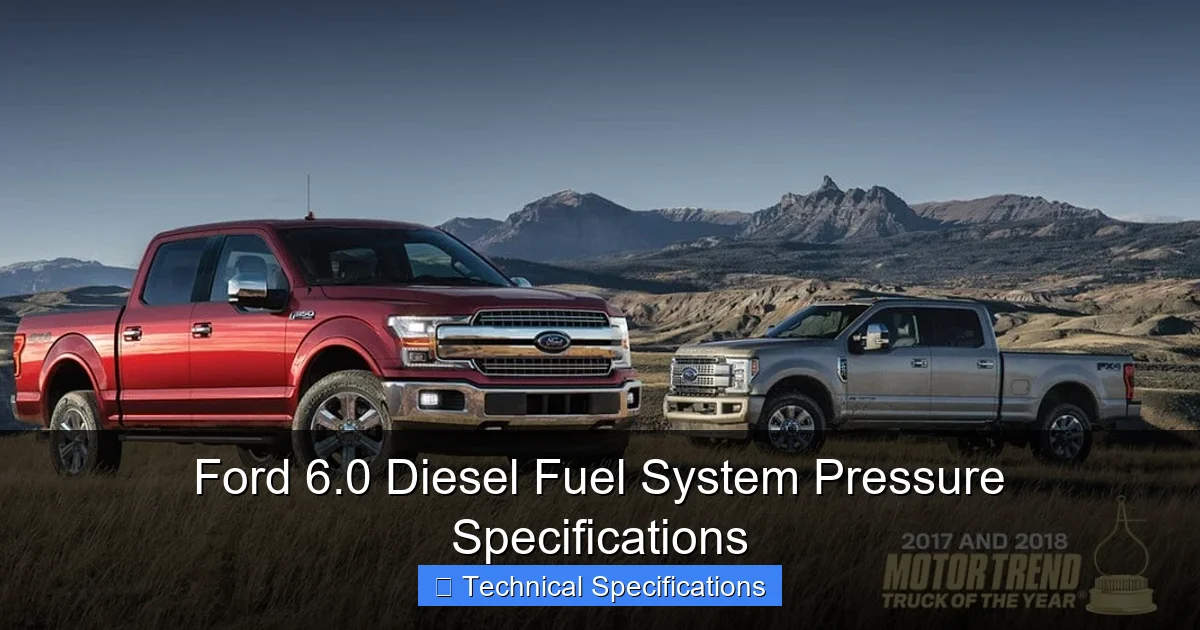
Featured image for this comprehensive guide about Ford 6.0 diesel fuel system pressure
Image source: ford.com
The Ford 6.0 Powerstroke diesel engine, while legendary for its power, also carries a reputation for certain complexities, particularly regarding its fuel system. For any owner or technician, understanding the intricacies of the Ford 6.0 diesel fuel system pressure is not just important – it’s absolutely critical for the engine’s longevity, performance, and overall reliability. This isn’t just about ensuring your truck runs; it’s about preventing costly failures that can leave you stranded.
Many of the common issues associated with the 6.0 Powerstroke, from injector failures to hard starts and poor performance, can often be traced back to inadequate or inconsistent fuel system pressure. Unlike some simpler diesel systems, the 6.0 relies on precise pressure delivery to function correctly, feeding its HEUI (Hydraulically Actuated Electronic Unit Injector) system. Without the right pressure, the entire engine’s operation is compromised.
In this comprehensive guide, we’ll dive deep into everything you need to know about the Ford 6.0 diesel fuel system pressure specifications. We’ll explore optimal pressure ranges, the dire consequences of low pressure, how to diagnose issues, and practical solutions to ensure your Powerstroke runs as strong and reliably as it should. Get ready to empower yourself with the knowledge to keep your 6.0 purring.
Quick Answers to Common Questions
What’s the ideal Ford 6.0 diesel fuel system pressure?
You’re generally looking for around 45-70 PSI at idle, but the sweet spot is typically 58-62 PSI under load for optimal performance.
Why is proper Ford 6.0 diesel fuel system pressure so important?
Adequate fuel pressure is crucial because it helps cool and lubricate the fuel injectors, preventing premature wear and expensive failures.
What happens if my Ford 6.0 diesel fuel system pressure is too low?
Low pressure starves your injectors, leading to a loss of power, rough idling, hard starting, and can quickly damage those expensive components.
How can I check my Ford 6.0 diesel fuel system pressure?
You’ll need to use a fuel pressure gauge connected to the test port on your secondary fuel filter housing to get an accurate reading.
What are common signs of an issue with Ford 6.0 diesel fuel system pressure?
Look out for symptoms like a noticeable drop in power, hesitation, black smoke from the exhaust, or the engine sputtering under acceleration.
📋 Table of Contents
- Understanding the Ford 6.0 Powerstroke Fuel System
- Ford 6.0 Diesel Fuel System Pressure Specifications: What’s Optimal?
- The Perils of Low Fuel Pressure in Your 6.0 Powerstroke
- Diagnosing Ford 6.0 Fuel Pressure Issues: A Step-by-Step Guide
- Solutions and Upgrades for 6.0 Powerstroke Fuel System Reliability
- Fuel Quality and Its Impact on Your 6.0 Fuel System
- Conclusion
Understanding the Ford 6.0 Powerstroke Fuel System
To truly grasp the importance of Ford 6.0 diesel fuel system pressure, we first need to understand how the system is designed. The 6.0 Powerstroke employs a sophisticated fuel delivery mechanism that is crucial for its performance and emissions compliance.

Learn more about Ford 6.0 diesel fuel system pressure – Ford 6.0 Diesel Fuel System Pressure Specifications
Image source: ford.com
The Basics: Low-Pressure vs. High-Pressure Sides
Unlike some earlier diesel engines, the 6.0 Powerstroke doesn’t just have one fuel pressure. It operates with both a low-pressure side and a high-pressure side that work in conjunction. The low-pressure side delivers fuel from the tank to the engine, while the high-pressure side is generated by the FICM (Fuel Injection Control Module) and the oil system to actuate the injectors. However, when we discuss “fuel system pressure” in the context of the primary fuel delivery system, we are primarily referring to the pressure supplied by the fuel pump to the injectors before they are hydraulically actuated.
| Specification Category | Parameter/Sensor | Target Pressure Range (PSI) | Notes / Impact |
|---|---|---|---|
| Low Pressure Fuel System | Primary Fuel Pump Output | 60-70 PSI | Measured pre-filter housing. Supplies fuel to the secondary system. |
| Secondary Fuel System | Fuel Rail Pressure (Post-Filter) | 45-50 PSI | Regulated pressure at the fuel filter housing outlet, supplying injectors. |
| Injector Supply | Minimum Operating Pressure | ≥ 45 PSI | Crucial for injector longevity. Below 45 PSI can cause injector damage/failure. |
| High Pressure Oil System | Injector Control Pressure (ICP) – Idle | 500-750 PSI | Oil pressure used to actuate fuel injectors. Monitored by the ICP sensor. |
| High Pressure Oil System | Injector Control Pressure (ICP) – WOT | ~3000-3800 PSI | Maximum ICP reached during wide-open throttle (WOT) operation. |
Key Components of the 6.0 Fuel System
Several critical components work together to maintain the proper 6.0 Powerstroke fuel pressure:
- Fuel Tank: Holds the diesel fuel.
- Fuel Pump (Electric): Located on the frame rail (or in-tank on later models), this pump is responsible for delivering fuel from the tank to the engine’s fuel rails at a specified pressure.
- Fuel Filters: The 6.0 has two primary fuel filters – one in the frame-mounted module (FMF) and one under the hood in the engine-mounted fuel filter housing. These are crucial for removing contaminants.
- Fuel Pressure Regulator: Integrated into the fuel filter housing, this component maintains the desired fuel pressure to the injectors. Often, a common upgrade for reliability is the “blue spring” kit, which improves this regulator.
- Fuel Rails: Distribute fuel to each injector.
- Injectors (HEUI): These are hydraulically actuated. The fuel pressure discussed here is the pressure of the fuel itself that enters the injector, which is then pressurized by high-pressure oil from the HPOP (High-Pressure Oil Pump) to atomize and inject it into the cylinder.
- FICM (Fuel Injection Control Module): While not directly creating the primary fuel pressure, the FICM is vital for providing the voltage necessary to fire the injectors, which is heavily influenced by the quality of fuel delivery.
Ford 6.0 Diesel Fuel System Pressure Specifications: What’s Optimal?
Knowing the correct Ford 6.0 diesel fuel system pressure specifications is paramount. Without this knowledge, diagnosing issues becomes a guessing game, and ensuring your engine’s health is nearly impossible. These specifications are for the pressure supplied by the primary fuel pump to the injectors.

Learn more about Ford 6.0 diesel fuel system pressure – Ford 6.0 Diesel Fuel System Pressure Specifications
Image source: chochotte.org
Ideal Fuel Pressure Readings
For a healthy 6.0 Powerstroke fuel system, you should aim for specific pressure ranges. The manufacturer’s specification for the fuel pressure at the secondary fuel filter housing (the one under the hood) is generally:
- Key-on Engine-off (KOEO): 45-60 PSI (this is a momentary prime pressure).
- Engine Idle: 45-60 PSI.
- Under Load/Wide Open Throttle (WOT): It’s critical that the pressure does not drop below 45 PSI, and ideally stays above 50 PSI, even under heavy acceleration or towing. Many recommend a minimum of 50-55 PSI at all times for optimal injector health.
Pressures consistently below 45 PSI are a red flag and indicate a problem that needs immediate attention. Pressures dipping below 40 PSI can cause significant damage to your injectors over time due to a lack of proper lubrication and cooling from the fuel itself.
Pressure During Different Operating Conditions
The diesel fuel pressure in your 6.0 isn’t static; it can fluctuate slightly depending on engine load and RPM. However, the fluctuations should remain within the acceptable range. A healthy system will maintain a steady pressure, even when you stomp on the accelerator or climb a steep hill. A significant drop in pressure under load is a classic symptom of a weakening fuel pump or a restricted fuel delivery system.
Consider this table for quick reference on optimal 6.0 Powerstroke fuel pressure values:
| Operating Condition | Optimal Fuel Pressure (PSI) | Notes |
|---|---|---|
| Key-On, Engine-Off (KOEO) Prime | 45-60 | Momentary pressure during pump prime cycle. |
| Engine Idle | 45-60 | Consistent pressure is key. |
| Under Load / Wide Open Throttle (WOT) | 50-60 (min 45 PSI) | Should not drop below 45 PSI. Ideally above 50 PSI for injector longevity. |
The Perils of Low Fuel Pressure in Your 6.0 Powerstroke
If your Ford 6.0 diesel fuel system pressure consistently falls below the recommended specifications, you’re in for a world of trouble. Low fuel pressure is not just an inconvenience; it’s a direct threat to the health and lifespan of your expensive fuel injectors and can lead to a cascade of other engine problems.
Common Symptoms of Low Fuel Pressure
Your 6.0 Powerstroke is often quite vocal when its fuel pressure isn’t right. Keep an eye out for these tell-tale signs:
- Hard Starts or No-Starts: Especially when the engine is warm. This is a classic symptom of injectors struggling due to insufficient fuel supply.
- Reduced Engine Performance: You might notice a lack of power, poor acceleration, or the engine feeling sluggish.
- Rough Idle or Stalling: Inconsistent fuel delivery can cause the engine to run erratically.
- Excessive Smoke: Unburnt fuel due to poor atomization can lead to black or white smoke from the exhaust.
- Injector Stiction and Failure: This is arguably the most significant long-term consequence. Low pressure means less fuel flow through the injectors, leading to increased heat, insufficient lubrication, and eventual “stiction” (internal moving parts sticking) or complete failure. This can be very costly.
- P0087 Diagnostic Trouble Code (DTC): “Fuel Rail/System Pressure – Too Low.” Your engine’s computer is designed to detect this issue.
- Misfires or Hesitation: The engine may stumble or miss, particularly under load.
Root Causes of Insufficient Fuel Pressure
Several factors can contribute to inadequate 6.0 Powerstroke fuel pressure:
- Clogged Fuel Filters: This is one of the most common and easiest-to-fix causes. Restricted filters impede fuel flow, leading to a pressure drop.
- Weak or Failing Fuel Pump: The electric fuel pump is a wear item. Over time, it can lose its ability to generate and maintain the required pressure.
- Leaking Fuel Injectors: While not a cause of low pressure from the pump, a leaky injector can reduce effective pressure in the rail, causing misfires and other issues.
- Defective Fuel Pressure Regulator: The stock regulator in the secondary fuel filter housing can weaken or fail, allowing too much fuel to bypass back to the tank, thus reducing pressure to the injectors.
- Fuel Line Restrictions or Leaks: Kinked lines, debris, or actual leaks in the fuel lines can all lead to pressure loss.
- Wiring or Electrical Issues: Problems with the fuel pump relay or wiring can cause the pump to receive insufficient voltage, resulting in weak operation.
Diagnosing Ford 6.0 Fuel Pressure Issues: A Step-by-Step Guide
Accurately diagnosing issues with your Ford 6.0 diesel fuel system pressure is crucial for effective repairs. Guessing can lead to wasted time, money, and potentially more damage. Here’s how to approach it methodically.
Essential Tools for Diagnosis
You’ll need a few key tools to properly check your 6.0 Powerstroke fuel pressure:
- Fuel Pressure Gauge: This is non-negotiable. Ensure it’s rated for diesel fuel and has the correct adapter for the 6.0’s secondary fuel filter housing (typically an 1/8″ NPT port).
- OBD-II Scanner with Live Data Capabilities: While not for direct fuel pressure reading (as the 6.0 doesn’t have a dedicated fuel pressure sensor for the primary fuel system), a scanner can help monitor other parameters that influence fuel delivery, like FICM voltage, injector pulse width, and engine load.
- Basic Hand Tools: Wrenches, sockets for removing components.
Performing a Fuel Pressure Test
The most reliable way to test your diesel fuel pressure is with a mechanical gauge. Follow these steps:
- Locate the Test Port: On the 6.0 Powerstroke, the primary test port for fuel pressure is on the secondary fuel filter housing, located on top of the engine. It’s a small Schrader valve or a plug that you’ll remove to install your gauge.
- Connect the Gauge: Carefully attach your fuel pressure gauge to the test port. Ensure it’s sealed to prevent leaks.
- Key-On Engine-Off (KOEO) Prime: Turn the ignition key to the “on” position without starting the engine. The fuel pump will cycle for about 20-30 seconds. Observe the pressure reading. This gives you an initial prime pressure.
- Engine Idle Test: Start the engine and let it warm up. Observe the steady idle pressure. It should fall within the 45-60 PSI range.
- Under Load Test (Crucial): This is where many problems reveal themselves. With the gauge connected and safely routed (or using a remote gauge), take the truck for a drive. Accelerate hard, go up hills, and simulate conditions where the engine is under significant load. Monitor the pressure. It should NOT drop below 45 PSI, and ideally should stay above 50 PSI. A sustained drop indicates a problem.
- Key-Off Residual Pressure: After shutting off the engine, observe if the pressure holds for an extended period (e.g., 30 minutes). A rapid drop could indicate a leaking injector or a faulty check valve in the fuel system.
Interpreting Your Readings
- Consistently Low Pressure (below 45 PSI at idle/load): Likely a weak fuel pump, clogged filters, or a faulty pressure regulator.
- Pressure Drops Significantly Under Load: Almost always indicates a weak fuel pump or severely clogged filters. The pump can’t keep up with demand.
- Good Pressure at Idle, Drops and Recovers: Could point to intermittent issues, perhaps with electrical supply to the pump or a partially clogged filter.
- Rapid Pressure Drop After Shut-off: Suggests a leak somewhere in the system, possibly an injector or a check valve.
- No Pressure: Check for a completely dead fuel pump, blown fuse, or severed fuel line.
Solutions and Upgrades for 6.0 Powerstroke Fuel System Reliability
Once you’ve diagnosed an issue with your Ford 6.0 diesel fuel system pressure, it’s time to consider the solutions. From basic maintenance to essential upgrades, there are several ways to bolster your 6.0’s fuel delivery and prevent future problems.
Regular Maintenance: The First Line of Defense
Prevention is always better than cure, especially with the 6.0. Adhering to a strict maintenance schedule is paramount for maintaining healthy 6.0 Powerstroke fuel pressure:
- Fuel Filter Replacement: This is arguably the most critical and often overlooked maintenance item. Ford recommends replacing both primary and secondary fuel filters every 15,000 miles or 6 months, whichever comes first. Using genuine Ford filters or high-quality aftermarket equivalents is highly recommended. Clogged filters are a primary cause of low fuel pressure.
- Use Quality Diesel Fuel: Source your fuel from reputable stations. Poor quality fuel can lead to contamination and premature filter clogging.
- Consider Fuel Additives: While not a substitute for maintenance, quality fuel additives can help with lubricity (especially important with ULSD), cetane boosting, and water emulsification, all of which contribute to a healthier fuel system.
Addressing Common Pressure Problems
If your diagnosis points to a specific issue, here are common fixes:
- Fuel Pump Replacement: If your frame-mounted pump is weak or failing, a direct replacement is necessary. Many owners opt for upgraded aftermarket pumps (e.g., FASS, AirDog) for better flow and filtration, especially if they plan on performance modifications.
- “Blue Spring” Upgrade: This is one of the most popular and cost-effective upgrades for the 6.0. It replaces the stock fuel pressure regulator spring with a stronger one, typically raising the baseline fuel pressure by 5-10 PSI. This helps ensure your injectors receive adequate pressure, especially under load, mitigating the risk of injector stiction. It’s often considered a mandatory upgrade for any 6.0 owner.
- Fuel Line Inspection and Repair: Check for any visible leaks, kinks, or damage to the fuel lines. Replace any compromised sections.
- Electrical System Check: Ensure the fuel pump is receiving proper voltage. Inspect the fuel pump relay, fuses, and wiring for corrosion or damage.
Performance Upgrades for Enhanced Fuel Delivery
For those looking to get more out of their 6.0 Powerstroke, or simply seeking maximum reliability, several upgrades can significantly improve the fuel system pressure and overall delivery:
- Aftermarket Fuel Pumps (e.g., FASS, AirDog): These systems provide superior filtration, water separation, and often higher, more consistent fuel pressure than the stock pump. They are particularly beneficial for modified engines.
- Regulated Return Fuel Systems: In the stock 6.0 system, fuel flows through the heads in a series. This can lead to a slight pressure drop and hotter fuel at the back of the engine. A regulated return system reroutes the excess fuel back to the tank directly from the heads, ensuring more consistent pressure and cooler fuel to all injectors. This is a highly recommended upgrade for injector longevity and performance.
- Upgraded Fuel Filters: Beyond regular replacement, some aftermarket systems offer larger, more efficient filtration options.
Fuel Quality and Its Impact on Your 6.0 Fuel System
While discussing Ford 6.0 diesel fuel system pressure, it would be a glaring omission not to address the critical role of fuel quality. What goes into your tank directly impacts how well your fuel system operates and, consequently, how long your engine lasts.
The Importance of Clean Diesel
Modern diesel engines, especially those with high-pressure common rail or HEUI systems like the 6.0 Powerstroke, are incredibly sensitive to fuel contamination. Dirt, rust, and other particulates can quickly clog your fuel filters, leading directly to reduced fuel pressure and flow. Over time, these contaminants can bypass filters or wear them down, leading to direct damage to your fuel pump and injectors.
Always purchase diesel from reputable, high-volume fuel stations. These stations typically have fresher fuel and better-maintained tanks, reducing the risk of drawing contaminated fuel. Regular fuel filter changes, as mentioned earlier, are your primary defense against particulate contamination.
Water Contamination and Its Effects
Water is another silent killer for diesel fuel systems. Even small amounts of water can cause significant damage:
- Corrosion: Water promotes rust and corrosion within the fuel tank, lines, and delicate internal components of the fuel pump and injectors.
- Lubricity Loss: Water displaces diesel fuel, which acts as a lubricant for many fuel system components. This leads to increased wear and friction.
- Microbial Growth: In the presence of water, microbes (diesel bugs) can grow in the fuel tank, forming sludge that clogs filters and lines.
- Freezing: In cold climates, water in fuel can freeze, blocking lines and filters, leading to hard starts or no-starts.
The 6.0 Powerstroke does have a “Water In Fuel” (WIF) sensor, but it’s a warning, not a preventative measure. Regularly draining your fuel water separator (often integrated with the secondary fuel filter housing) is a good practice, especially in humid environments or after fueling from questionable sources.
Additives: Friend or Foe?
The debate around diesel fuel additives is ongoing, but for the 6.0 Powerstroke, quality additives can be a friend, not a foe, when used correctly.
- Lubricity Enhancers: Ultra-Low Sulfur Diesel (ULSD) has reduced lubricating properties compared to older diesel fuels. Lubricity additives can help protect your fuel pump and injectors from premature wear, indirectly supporting consistent diesel fuel pressure.
- Cetane Boosters: Can improve combustion efficiency, leading to smoother running and potentially better fuel economy.
- Detergents: Help keep fuel injectors clean, which is vital for proper spray patterns and optimal engine performance.
- Anti-Gel/Cold Flow Improvers: Essential in cold climates to prevent fuel gelling.
- Water Emulsifiers/Demulsifiers: Some additives help disperse water into tiny droplets (emulsifiers) so it can pass through the system, while others (demulsifiers) cause water to separate from the fuel so it can be drained. Understand which type you are using and its implications.
Choose reputable brands and follow dosage instructions. Overuse or using incompatible additives can sometimes cause more harm than good.
Conclusion
The health of your Ford 6.0 diesel fuel system pressure is not a trivial matter; it’s the heartbeat of your Powerstroke engine. Maintaining optimal fuel pressure is crucial for preventing common and costly failures, particularly concerning your fuel injectors. From understanding the core components to meticulously diagnosing issues and implementing smart solutions, proactive care of your 6.0’s fuel system is paramount.
By regularly replacing your fuel filters, considering the essential “blue spring” upgrade, and being vigilant about monitoring your 6.0 Powerstroke fuel pressure, you can significantly extend the life and enhance the performance of your truck. Don’t wait for symptoms to appear; empower yourself with knowledge and proactive maintenance to ensure your 6.0 continues to be a reliable and powerful machine for years to come. Your Powerstroke, and your wallet, will thank you for it.
🎥 Related Video: Fuel Pressure Check on a Ford F250 6.0 Diesel
📺 Paul’s Performance
Frequently Asked Questions
What is the normal operating Ford 6.0 diesel fuel system pressure?
The factory specified fuel pressure for a Ford 6.0 Powerstroke should be between 45-50 PSI at idle and ideally 60-70 PSI under load. Maintaining this correct Ford 6.0 diesel fuel system pressure is crucial for optimal engine performance and injector longevity.
What are the common symptoms of low fuel pressure in a Ford 6.0 Powerstroke?
Low fuel pressure can manifest as hard starting, particularly when warm, a rough idle, or a noticeable loss of power under acceleration. You might also experience misfires, poor fuel economy, and potentially trigger “check engine” lights with related diagnostic trouble codes (DTCs).
How can I accurately check the fuel system pressure on my Ford 6.0 diesel?
To check your Ford 6.0 diesel fuel system pressure, you’ll need a fuel pressure gauge with the correct adapter. Connect the gauge to the Schrader valve test port located on top of the secondary fuel filter housing. Cycle the key on and off, then start the engine to observe the pressure at idle and under load.
What are the primary causes of low Ford 6.0 diesel fuel system pressure?
The most common culprits for low Ford 6.0 diesel fuel system pressure include clogged fuel filters (both primary and secondary), a weak or failing fuel pump, or a malfunctioning fuel pressure regulator (FPR) located in the secondary fuel filter housing. Leaks in the fuel lines or return system can also contribute.
Is higher Ford 6.0 diesel fuel system pressure always better, or can it cause problems?
While adequate pressure is essential, excessively high Ford 6.0 diesel fuel system pressure is generally not beneficial and can also lead to issues. It could potentially over-stress the fuel pump, injector seals, or other fuel system components over time, though low pressure is a far more common and detrimental problem.
Why is maintaining the correct fuel system pressure vital for the 6.0 Powerstroke’s injectors?
The high-pressure oil injection system of the 6.0 Powerstroke relies heavily on the fuel for cooling and lubrication of its internal components. Insufficient Ford 6.0 diesel fuel system pressure can lead to injector cavitation, premature wear, and eventual failure due to a lack of proper cooling and lubrication, leading to costly repairs.