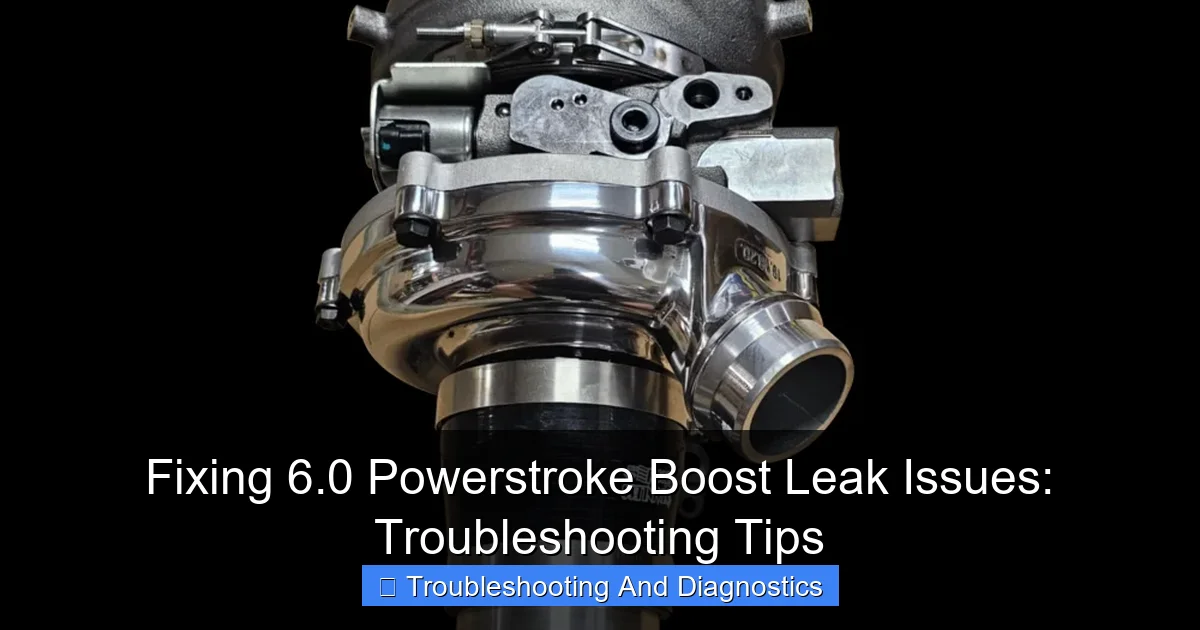
Fixing 6.0 Powerstroke Boost Leak Issues: Troubleshooting Tips
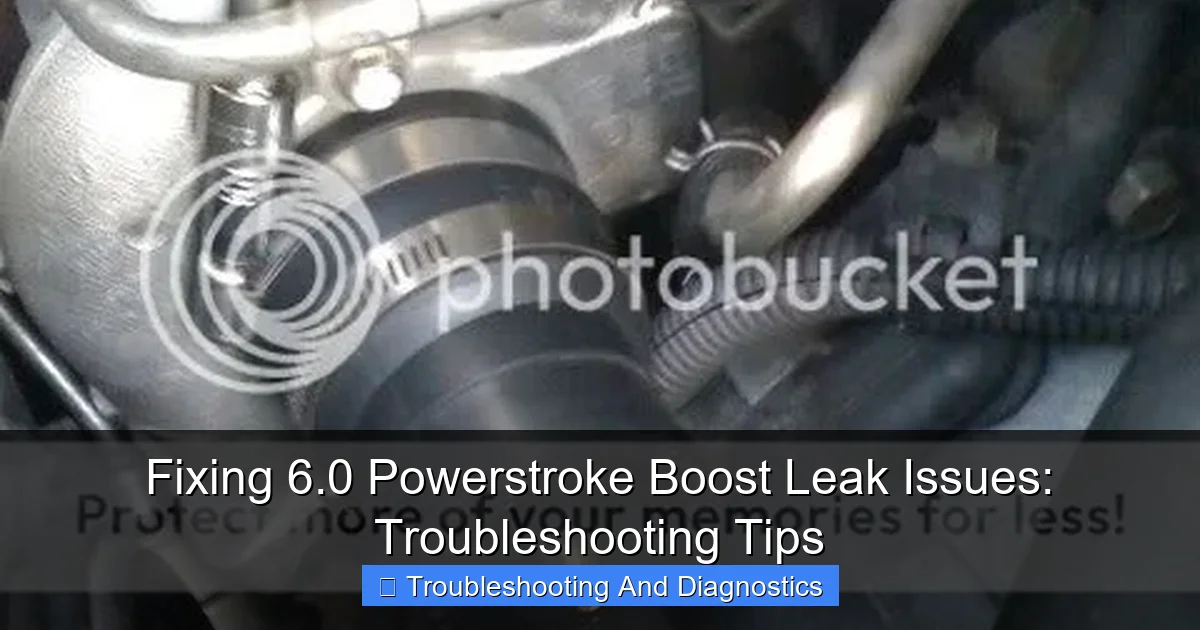
Featured image for this comprehensive guide about Fixing 6.0 Powerstroke boost leak issues
Image source: i216.photobucket.com
Ah, the mighty 6.0 Powerstroke! A legend in the diesel world, known for its raw power and capability. However, even the most robust engines have their quirks, and for many 6.0 owners, one of the most frustrating and performance-robbing issues is a 6.0 Powerstroke boost leak. If you’ve noticed a drop in power, excessive smoke, or a strange new whistle from under the hood, chances are your beloved truck is suffering from a loss of precious boost pressure.
A boost leak in a 6.0 Powerstroke isn’t just an annoyance; it directly impacts your engine’s efficiency, performance, and can even lead to more serious problems down the road if left unaddressed. Your turbocharger works hard to force pressurized air into the engine, and when that air escapes before reaching the cylinders, it throws off the air-to-fuel ratio, causing a host of drivability issues. But don’t despair! With the right knowledge and a bit of elbow grease, you can effectively diagnose and fix 6.0 Powerstroke boost leak problems.
This comprehensive guide will walk you through everything you need to know about fixing 6.0 Powerstroke boost leak issues, from understanding the underlying causes and identifying common symptoms to detailed diagnostic techniques and step-by-step repair instructions for various leak points. We’ll also cover preventative maintenance to keep your Powerstroke roaring strong for years to come. Let’s get that boost back where it belongs!
Quick Answers to Common Questions
How do I know if my 6.0 Powerstroke has a boost leak?
You’ll likely experience a noticeable loss of power, especially when accelerating, a hissing sound under the hood, and potentially more black smoke from the exhaust. Fixing 6.0 Powerstroke boost leak issues will bring back that lost power!
What are the most common culprits for 6.0 Powerstroke boost leaks?
The usual suspects when fixing 6.0 Powerstroke boost leak issues are cracked intercooler pipes, worn-out turbo boots, or loose clamps. Don’t forget to also check your EGR cooler or valve as a potential source.
Can I drive my 6.0 Powerstroke with a boost leak?
While it might still drive, it’s really not recommended as it significantly reduces performance, increases exhaust gas temperatures, and can lead to more serious engine or turbo damage over time. It’s best to prioritize fixing 6.0 Powerstroke boost leak issues.
What’s the quickest way to find a boost leak on my 6.0?
A boost leak tester, which pressurizes your intake system with compressed air, is your best friend here! You can then listen for air escaping or spray soapy water on suspect areas to spot bubbles, making fixing 6.0 Powerstroke boost leak issues much easier to pinpoint.
Is fixing 6.0 Powerstroke boost leak issues a DIY job?
Absolutely, many common leaks like bad boots or loose clamps are totally manageable for a DIYer with basic tools. More complex leaks might require a bit more expertise, but start with the simple stuff first when fixing 6.0 Powerstroke boost leak issues!
📋 Table of Contents
- Understanding Boost Leaks in Your 6.0 Powerstroke
- Common Symptoms of a 6.0 Powerstroke Boost Leak
- Pinpointing the Problem: Diagnosing Your 6.0 Powerstroke Boost Leak
- Top Sources of 6.0 Powerstroke Boost Leaks and How to Fix Them
- Preventative Maintenance and Best Practices for Your 6.0 Powerstroke
- Advanced Troubleshooting and When to Seek Professional Help
- Conclusion
Understanding Boost Leaks in Your 6.0 Powerstroke
Before diving into fixes, it’s crucial to understand what a boost leak is and why it matters so much for your Ford Super Duty with a 6.0 Powerstroke engine. In simple terms, a boost leak occurs when the pressurized air generated by your turbocharger escapes from the intake system before it can enter the engine’s combustion chambers. This pressurized air, known as “boost,” is vital for increasing engine power and efficiency, especially in turbocharged diesel engines like the 6.0.

Learn more about Fixing 6.0 Powerstroke boost leak issues – Fixing 6.0 Powerstroke Boost Leak Issues: Troubleshooting Tips
Image source: i.ytimg.com
The Role of the Turbocharger and Intake System
Your 6.0 Powerstroke’s turbocharger is a sophisticated component designed to force more air into the engine than it could naturally aspirate. This extra air allows for more fuel to be burned, resulting in a significant increase in horsepower and torque. The path this boosted air travels includes:
| Boost Leak Source/Component | Key Symptoms & Diagnostic Clues | Typical Repair Action | Estimated Repair Cost (Parts & Labor) |
|---|---|---|---|
| Charge Air Cooler (CAC) Boots & Pipes | Loud “whoosh” or whistling sound under acceleration, noticeable loss of power, black smoke under heavy load. Visual inspection often reveals cracked or oil-soaked boots. | Replace damaged CAC boots and inspect pipes for cracks. Upgrade to silicone boots and T-bolt clamps for durability. | $50 – $250 |
| EGR Valve Gasket/Seals | Hissing noise from the top of the engine near the EGR valve, reduced boost, black smoke, possibly exhaust smell in the cabin. Can sometimes cause an exhaust leak sound. | Replace EGR valve seals/gaskets. Inspect the EGR valve for carbon buildup and clean or replace if necessary. | $100 – $400 |
| Turbocharger Up-Pipe Gaskets | High-pitched exhaust leak sound (like a whistle or hiss) at idle or under light load, slow turbo spool-up, reduced power, higher EGTs (Exhaust Gas Temperatures). Often mistaken for an actual boost leak. | Replace exhaust up-pipe gaskets (and possibly the up-pipes themselves if warped/cracked). Requires removal of the turbocharger. | $400 – $1,200 |
| Intake Manifold (Branch Tube) Seals | Boost loss, sluggish throttle response, high EGTs, visible oil/soot residue in the engine valley around the intake manifold. Can be a subtle leak initially. | Replace the branch tube seals and the main intake manifold gaskets. Requires careful cleaning of the sealing surfaces. | $250 – $700 |
| MAP Sensor & Hose | Intermittent or consistent low boost readings, check engine light (DTCs like P0236/P0238), lack of power, rough running. The hose often cracks or becomes clogged. | Replace the rubber hose to the MAP sensor (often 1/4″ vacuum hose). Clean or replace the MAP sensor itself if it’s faulty or clogged with soot/oil. | $20 – $200 |
- The turbocharger’s compressor housing
- Charge Air Cooler (CAC) pipes (also known as intercooler pipes)
- The intercooler (CAC) itself
- CAC boots and clamps connecting the pipes and intercooler
- EGR cooler and valve (if not deleted)
- Intake manifold and its gaskets
- Up-pipes from the exhaust manifold to the turbo (exhaust side, but critical for turbo spool)
Any compromise in the integrity of these components – a crack, a loose connection, a worn-out boot – can create a pathway for the pressurized air to escape, leading to a 6.0 Powerstroke boost leak. Imagine trying to inflate a balloon with a small hole; no matter how much air you pump in, it won’t hold pressure. The same principle applies here.
Why Boost Leaks Are Detrimental to Your Engine
The consequences of a 6.0 Powerstroke boost leak are far-reaching and can significantly impact your truck’s performance and longevity:
- Reduced Power and Torque: Less air reaching the engine means less fuel can be efficiently burned, leading to noticeable power loss, especially under load or during acceleration. Many owners report a feeling of “lag” or sluggishness.
- Poor Fuel Economy: The engine’s computer (PCM) will try to compensate for the lost air by injecting more fuel, leading to a rich condition and increased fuel consumption.
- Excessive Smoke: An imbalanced air-to-fuel ratio, particularly a rich one, often results in black or dark gray smoke from the exhaust, especially under acceleration.
- Elevated Exhaust Gas Temperatures (EGTs): A rich condition and decreased efficiency can cause EGTs to climb, potentially damaging the turbocharger, exhaust manifolds, or even the engine itself over time.
- Turbocharger Over-speed/Failure: The turbo may work harder to try and build boost that it cannot hold, leading to increased wear and tear, and potentially premature turbocharger failure.
- Diagnostic Trouble Codes (DTCs): Your truck’s PCM might log codes related to insufficient boost pressure, MAF (Mass Air Flow) sensor readings, or lean/rich conditions. Common codes include P0236, P0299, P0404.
Common Symptoms of a 6.0 Powerstroke Boost Leak
Catching a 6.0 Powerstroke boost leak early can save you a lot of headache and money. Be vigilant for these common signs:
Learn more about Fixing 6.0 Powerstroke boost leak issues – Fixing 6.0 Powerstroke Boost Leak Issues: Troubleshooting Tips
Image source: legendarydiesel.com
Audible Clues
- Hissing or Whistling Sound: This is often the most tell-tale sign. As pressurized air escapes, it creates a distinct hissing, whooshing, or whistling noise, particularly when the turbo is spooling up under acceleration. Some describe it as a “jet engine” sound.
- Loud "Pshhh" on Throttle Release: While some turbocharger noise is normal, an abnormally loud whoosh or hiss when you let off the throttle can indicate a leak in the system, as the pressure suddenly drops.
Performance Indicators
- Loss of Power or Sluggish Acceleration: Your truck feels weaker than usual, struggles to get up to speed, or has trouble maintaining speed on inclines. This is a primary symptom of a 6.0 Powerstroke low boost condition.
- Increased Turbo Lag: The time it takes for your turbo to “spool up” and deliver power seems longer than normal.
- Poor Fuel Economy: You’re filling up more often because your engine is less efficient due to the improper air-fuel mixture.
Visual & Diagnostic Evidence
- Black Smoke from Exhaust: A sign of unburnt fuel, which happens when there isn’t enough air (boost) to properly combust the injected diesel.
- Check Engine Light (CEL) / Diagnostic Trouble Codes (DTCs): Your dashboard may illuminate with a CEL. Common codes associated with 6.0 Powerstroke boost leak issues include:
- P0236: Turbocharger/Supercharger Boost Sensor “A” Circuit Range/Performance
- P0299: Turbocharger/Supercharger Underboost
- P0404: Exhaust Gas Recirculation (EGR) Circuit Range/Performance
- P006A: MAP – Mass or Volume Air Flow Correlation (less common but possible)
- Fluctuating Boost Gauge Readings: If you have an aftermarket boost gauge, you might notice lower-than-normal peak boost or erratic readings.
Pinpointing the Problem: Diagnosing Your 6.0 Powerstroke Boost Leak
Once you suspect a 6.0 Powerstroke boost leak, the next step is to accurately locate it. This can be a bit of a detective job, but with the right tools and methodical approach, you can succeed.
The Boost Leak Test (Smoke/Pressure Test)
This is by far the most effective method to diagnose 6.0 Powerstroke boost leak problems. You’ll need:
- A boost leak test kit (can be homemade or purchased, often consists of a cap for the turbo inlet and an air compressor fitting).
- An air compressor with a regulator.
- Soapy water in a spray bottle.
- Optional: Smoke machine (for more precise detection).
Steps for a Pressure Test:
- Access the Turbo Inlet: Remove the air filter box and disconnect the intake tube from the turbocharger’s inlet.
- Seal the Turbo Inlet: Install your boost leak test cap securely into the turbo inlet.
- Block Off the EGR (Optional but Recommended): If you haven’t done an EGR delete, it’s wise to temporarily block the EGR valve or cooler to prevent air from escaping there during the test.
- Apply Low Pressure: Connect your air compressor to the fitting on the test cap. Start with a very low pressure, around 5-10 PSI. Gradually increase to no more than 20-25 PSI. *Never exceed factory boost pressure to avoid damaging components.*
- Listen and Look: With pressure applied, listen carefully for any hissing sounds. Systematically inspect all potential leak points:
- All 6.0 Powerstroke CAC boots and clamps (charge air cooler boots).
- The intercooler itself (look for dents, cracks, or oil residue).
- CAC pipes.
- EGR cooler (if present).
- Intake manifold gaskets.
- Use Soapy Water: Spray soapy water generously on suspicious areas. If there’s a leak, bubbles will form where air is escaping.
- Use a Smoke Machine (Advanced): For elusive leaks, injecting smoke into the system (after sealing the turbo inlet) will make the escaping smoke clearly visible.
Visual Inspection and Manual Check
Even without a pressure tester, a thorough visual inspection can reveal obvious issues:
- Inspect all CAC Boots: Look for cracks, tears, swelling, or oil saturation. Worn 6.0 Powerstroke intercooler boots are a very common failure point. Wiggle them to check for looseness.
- Check Clamps: Ensure all hose clamps are tight and not stripped.
- Intercooler Condition: Look for external damage, bent fins, or oil residue around the intercooler tanks.
- Exhaust Manifold/Up-pipes: While these are exhaust leaks, they can prevent the turbo from spooling correctly, mimicking a boost leak. Look for sooty areas.
- EGR Valve/Cooler: Check for signs of coolant or oil leaks around the EGR system.
Top Sources of 6.0 Powerstroke Boost Leaks and How to Fix Them
The 6.0 Powerstroke boost leak issues often stem from a few usual suspects. Here’s a breakdown of the most common locations and their respective fixes:
1. Charge Air Cooler (CAC) Boots and Clamps
This is by far the most frequent culprit. The silicone or rubber boots connecting the intercooler pipes to the intercooler and the engine can degrade over time due to heat, oil exposure, and vibration.
- Problem: Cracked, torn, swollen, or loose boots. Damaged or stripped clamps.
- Fix: Replace all suspect boots with high-quality, reinforced silicone boots (e.g., Mishimoto, Riffraff Diesel). Ensure new T-bolt clamps are used and tightened securely (but don’t overtighten and strip them!).
2. Charge Air Cooler (Intercooler) Itself
The intercooler can develop leaks from stone chips, corrosion, or fatigue over time.
- Problem: Pinhole leaks in the core, cracked end tanks, or leaky welds.
- Fix: While some minor leaks might be temporarily patched, a compromised intercooler usually requires replacement. Consider an aftermarket upgraded intercooler for better performance and durability.
3. Up-Pipes and Exhaust Manifolds
While not a “boost leak” in the traditional sense (as they’re on the exhaust side), leaks here prevent the turbo from receiving adequate exhaust gas volume to spin efficiently, leading to low boost 6.0 Powerstroke. These are notoriously common.
- Problem: Cracked exhaust manifolds, leaking exhaust manifold gaskets, rusted or cracked up-pipes, especially at the collector.
- Fix:
- Up-Pipes: Replace with an upgraded aftermarket set that features thicker bellows and better sealing, often a one-piece design to eliminate problem areas.
- Manifolds/Gaskets: Replace cracked manifolds and all associated gaskets. Inspect and replace exhaust manifold bolts if they appear corroded or stretched.
4. EGR System (Cooler, Valve)
If your truck still has its EGR system, it’s another potential source for air leaks.
- Problem: Leaking EGR valve gaskets, internal cooler leaks (which usually manifest as coolant loss and white smoke, but can also cause air leaks), or exhaust leaks around the EGR cooler flanges.
- Fix:
- Gaskets: Replace any worn EGR valve or cooler gaskets.
- EGR Cooler: If the cooler is leaking internally or externally, it may need to be replaced. Many owners opt for an EGR delete 6.0 Powerstroke kit to eliminate this potential failure point entirely, though this is for off-road use only in many jurisdictions and requires ECM tuning.
5. Intake Manifold Gaskets
Less common but still a possibility, particularly if other work has been done on the engine.
- Problem: Degraded or damaged intake manifold gaskets allowing boost pressure to escape.
- Fix: Replace the intake manifold gaskets. This is a more involved job, often requiring removal of the turbo and other components.
6. Turbocharger Compressor Housing
While rarer, the turbocharger itself can sometimes be the source of a leak.
- Problem: Cracked compressor housing, loose bolts, or a worn compressor wheel that’s not sealing properly (though this is usually more a symptom of turbo failure than a simple leak).
- Fix: If the housing is cracked, the turbocharger may need to be rebuilt or replaced. Ensure all V-band clamps are secure.
Data Table: Common 6.0 Powerstroke Boost Leak Points & Typical Resolutions
Here’s a quick reference for the most common sources of boost leaks and their solutions:
| Leak Point | Frequency of Occurrence | Typical Symptoms | Recommended Fix |
|---|---|---|---|
| CAC Boots & Clamps | Very High | Hissing/whooshing, low power, black smoke | Replace with high-quality silicone boots & T-bolt clamps |
| Up-Pipes / Exhaust Manifolds | High | Reduced turbo spool, exhaust smell, sooty areas, low boost | Upgrade up-pipes, replace gaskets/manifolds |
| Intercooler (CAC) | Moderate | Hissing, oil residue on cooler, low power | Replace intercooler, consider upgraded unit |
| EGR System (Gaskets/Cooler) | Moderate | Coolant loss, white/black smoke, low power | Replace gaskets/cooler, consider EGR delete (off-road) |
| Intake Manifold Gaskets | Low | General low boost, engine vacuum issues | Replace intake manifold gaskets |
| Turbo Compressor Housing | Low | Loud whistle, oil leaks, severe boost loss | Turbo rebuild or replacement |
Preventative Maintenance and Best Practices for Your 6.0 Powerstroke
Preventing 6.0 Powerstroke boost leak issues is always better than fixing them. A proactive approach will keep your truck running stronger for longer.
Regular Inspections
- Check CAC Boots Regularly: Make it a habit to visually inspect your intercooler boots every time you’re under the hood for oil changes or other maintenance. Look for cracks, tears, bulges, or signs of oil saturation.
- Tighten Clamps: Periodically check and tighten all hose clamps in the intake system, especially those on the CAC pipes. Vibration can cause them to loosen over time.
- Monitor for Soot: Inspect around exhaust manifolds and up-pipes for any signs of black soot, which indicates an exhaust leak that can impact turbo performance.
Upgrade Critical Components
- Silicone CAC Boots: If your truck still has factory rubber boots, upgrading to high-quality silicone boots with robust T-bolt clamps is one of the best preventative measures you can take. They are more resistant to heat and oil.
- Upgraded Up-Pipes: Many aftermarket up-pipe kits eliminate the problematic bellows design of the factory pipes, significantly reducing the chance of exhaust leaks that cause low boost 6.0 Powerstroke.
- Intercooler: If you tow heavy or live in a hot climate, an upgraded aftermarket intercooler can offer better cooling efficiency and often more robust construction, reducing the chance of failure.
General Engine Health
- Proper Oil Changes: Use the correct grade and quality of engine oil and perform changes at recommended intervals. Clean oil helps maintain turbocharger bearing health.
- Maintain Air Filter: A clogged air filter can restrict airflow, making the turbo work harder and potentially leading to other issues.
- Monitor Gauges: If you have an aftermarket boost gauge or monitor, pay attention to your boost levels. Any consistent deviation from normal operating ranges could signal an impending problem.
Advanced Troubleshooting and When to Seek Professional Help
Most 6.0 Powerstroke boost leak issues can be identified and fixed with a thorough pressure test and visual inspection. However, some leaks can be particularly stubborn or indicate deeper problems.
When Your Leak is Elusive
- Smoke Machine: As mentioned earlier, a smoke machine is invaluable for finding tiny, hair-thin cracks or pinholes that might not bubble with soapy water or make a loud hiss.
- Listen Carefully: Use a mechanic’s stethoscope or a length of hose to pinpoint the exact location of a faint hiss.
- Re-test Thoroughly: Sometimes, fixing one leak reveals another. After repairing a known leak, re-run your pressure test to ensure you haven’t missed anything.
Advanced Diagnostic Tools
- Diagnostic Scanner with Live Data: A robust scan tool can monitor parameters like MAP (Manifold Absolute Pressure), BARO (Barometric Pressure), MAF (Mass Air Flow), and EBP (Exhaust Back Pressure). Analyzing these values under different driving conditions can help confirm a 6.0 Powerstroke low boost condition and sometimes narrow down the source. For example, a significant difference between commanded boost and actual boost is a clear indicator.
- Infrared Thermometer: While not directly for boost leaks, an IR thermometer can help identify cooler parts of the exhaust system, which might indicate an exhaust leak (up-pipes, manifolds) preventing the turbo from fully spooling.
When to Call a Professional
While a DIY approach is empowering, there are times when professional help is the wisest course of action:
- If You’ve Exhausted All Options: If you’ve performed multiple pressure tests, inspected everything meticulously, and still can’t find the source of your 6.0 Powerstroke boost leak, a specialist might have more advanced equipment or experience to track it down.
- Complex Repairs: Some repairs, like replacing intake manifold gaskets or rebuilding a turbocharger, require specialized tools, knowledge, and significant disassembly. If you’re not comfortable with these, it’s best left to a professional.
- Suspected Internal Engine Damage: If you notice symptoms like excessive oil consumption, coolant in the oil, or significant metal shavings in the oil filter, your low boost might be a symptom of a much larger internal engine issue.
- Lack of Proper Tools: Performing a boost leak test safely and effectively requires an air compressor and a proper test kit. If you lack these, a shop will have them readily available.
An experienced diesel mechanic, especially one familiar with the 6.0 Powerstroke, can quickly diagnose and fix 6.0 Powerstroke boost leak issues that might be beyond the scope of a home mechanic. Don’t let pride prevent you from seeking expert advice when needed.
Conclusion
A 6.0 Powerstroke boost leak is a common and frustrating problem, but it’s far from insurmountable. By understanding the symptoms, learning how to properly diagnose the issue with a pressure test, and knowing the most common failure points, you’re well on your way to restoring your truck’s performance. Remember, early detection and quality replacement parts are key to a successful repair and preventing future recurrences.
Whether you’re tackling the repair yourself or seeking professional help, addressing 6.0 Powerstroke boost leak issues promptly will not only bring back your truck’s power and fuel efficiency but also protect your engine from potential long-term damage. Keep those boots tight, your up-pipes sealed, and enjoy the full, unbridled power of your 6.0 Powerstroke for many miles to come!
🎥 Related Video: Ford 6.0 Powerstroke lacks power. (low boost)
📺 DieselTechRon
I had one here that is actually pretty common. When the boost or manifold absolute pressure (MAP) sensor is not responding …
Frequently Asked Questions
What are the common symptoms of a 6.0 Powerstroke boost leak?
You might notice a significant loss of power, especially under acceleration, and reduced fuel economy. Other signs include excessive black smoke from the exhaust, a loud “hissing” or “whooshing” sound from the engine bay, and potentially the “Check Engine” light illuminating with related diagnostic trouble codes (DTCs).
What are the most common causes of 6.0 Powerstroke boost leak issues?
Common culprits include cracked or loose intercooler pipes (CAC boots), a faulty or worn-out exhaust back pressure (EBP) sensor tube, a leaking up-pipe/exhaust manifold, or issues with the turbocharger’s unison ring or variable geometry turbo (VGT) mechanism. The EGR cooler can also sometimes contribute to exhaust leaks that mimic boost issues.
How do I effectively diagnose and locate a 6.0 Powerstroke boost leak?
The most effective method is a “boost leak test,” which involves pressurizing the intake system (usually through the turbo inlet or charge pipe) with shop air while the engine is off. Listen carefully for hissing sounds, or use a soapy water solution sprayed on suspected areas to look for bubbles indicating a leak.
Is it safe to drive my 6.0 Powerstroke with a boost leak?
While you *can* drive it, it’s not recommended for extended periods. A boost leak not only reduces performance and fuel economy but can also lead to higher exhaust gas temperatures (EGTs) and increased strain on the turbocharger and other engine components over time, potentially causing more severe and costly damage.
What essential tools are needed to fix boost leak issues on a 6.0 Powerstroke?
For diagnosis, a boost leak tester kit is highly recommended, along with a shop air compressor. For repairs, you’ll typically need basic hand tools like sockets, wrenches, screwdrivers, and possibly specialty tools for removing certain clamps or pipes. A flashlight and a can of soapy water are also invaluable for locating leaks.
How can I prevent 6.0 Powerstroke boost leak issues in the future?
Regular inspection of your intercooler pipes (CAC boots) for cracks or looseness is crucial; consider upgrading to higher-quality silicone boots. Ensure all clamps are secure and properly torqued. Routine maintenance, including checking exhaust components and turbocharger function, also contributes significantly to preventing future boost leaks.