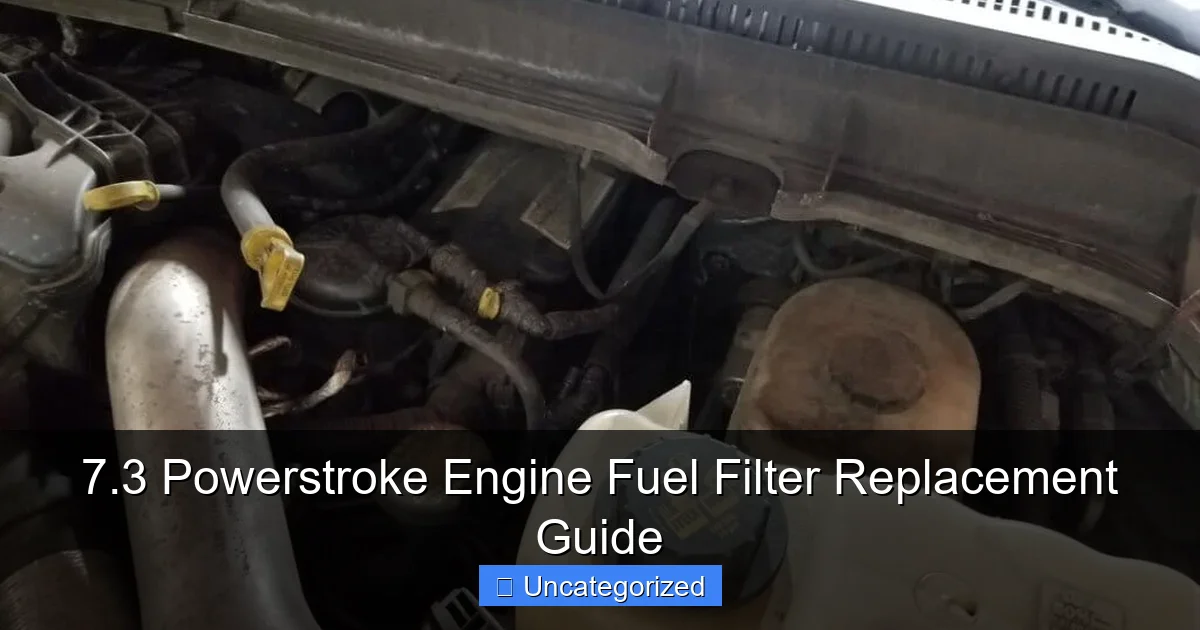
7.3 Powerstroke Engine Fuel Filter Replacement Guide

Featured image for this comprehensive guide about 7.3 powerstroke engine change fuel filter
Image source: cdn.pixabay.com
Are you the proud owner of a Ford truck powered by the legendary 7.3 Powerstroke diesel engine? If so, you know these workhorses are renowned for their durability, reliability, and immense power. But even the most robust engines demand consistent, quality maintenance to keep purring like a kitten and roaring like a lion. One of the most critical, yet often overlooked, aspects of this maintenance is regularly changing your 7.3 Powerstroke fuel filter.
Think of your fuel filter as your engine’s first line of defense against the myriad of contaminants that can lurk in diesel fuel. From rust particles and dirt to water and microbial growth, these impurities can wreak havoc on your injectors, fuel pump, and ultimately, your engine’s performance and longevity. A clogged or inefficient 7.3 Powerstroke fuel filter can lead to a host of problems: reduced power, poor fuel economy, rough idling, misfires, and even complete engine shutdown. Ignoring this vital component isn’t just an inconvenience; it can lead to costly repairs down the line.
Fortunately, replacing the fuel filter on your 7.3 Powerstroke is a straightforward DIY task that most owners can tackle with basic tools and a bit of mechanical know-how. This comprehensive guide will walk you through everything you need to know, from understanding why it’s so important to a detailed, step-by-step replacement process. By the end, you’ll have the confidence to keep your beloved 7.3 Powerstroke running efficiently and reliably for years to come. Let’s dive into keeping your diesel powerhouse’s fuel system pristine!
Quick Answers to Common Questions
When should I change my 7.3 Powerstroke engine fuel filter?
You should plan on replacing your 7.3 Powerstroke engine fuel filter every 15,000 miles or once a year, whichever comes first. Regular changes are crucial for maintaining optimal fuel system health and engine performance.
Is changing the 7.3 Powerstroke engine fuel filter a difficult job for a DIYer?
Not at all! Replacing your 7.3 Powerstroke engine fuel filter is actually one of the simpler maintenance tasks you can tackle yourself. With a few basic tools and a little guidance, you’ll have it done quickly.
What essential tools do I need to change my 7.3 Powerstroke engine fuel filter?
You’ll primarily need a fuel filter wrench (or a large adjustable wrench), a drain pan, some shop rags, and of course, a new 7.3 Powerstroke engine fuel filter. Gloves are also a good idea to keep things clean.
Why is replacing the 7.3 Powerstroke engine fuel filter so important?
Your 7.3 Powerstroke engine fuel filter protects your vital fuel injectors and pump from harmful contaminants, ensuring clean fuel delivery. Neglecting this can lead to reduced performance, poor mileage, and expensive repairs.
Where exactly is the 7.3 Powerstroke engine fuel filter located on my truck?
On your 7.3 Powerstroke, the fuel filter is conveniently located right on top of the engine, within the fuel bowl assembly. It’s pretty easy to spot once you open the hood!
📋 Table of Contents
- Why Your 7.3 Powerstroke Fuel Filter is Crucial (and When to Change It)
- Gathering Your Arsenal: Tools and Parts for the Job
- Safety First: Essential Precautions Before You Begin
- Step-by-Step Guide: Replacing Your 7.3 Powerstroke Fuel Filter
- Post-Replacement Checks and Troubleshooting Tips
- Pro Tips for Optimal 7.3 Powerstroke Fuel System Health
- Conclusion: Empowering Your 7.3 Powerstroke’s Longevity
Why Your 7.3 Powerstroke Fuel Filter is Crucial (and When to Change It)
The 7.3 Powerstroke fuel filter plays an indispensable role in safeguarding your engine’s delicate fuel injection system. Diesel fuel, despite efforts to refine it, is never 100% pure. It can pick up contaminants during transportation, storage, and even from the fuel tank itself (think condensation leading to water).

Learn more about 7.3 powerstroke engine change fuel filter – 7.3 Powerstroke Engine Fuel Filter Replacement Guide
Image source: drodd.com
Here’s why this little component is so vital:
| Aspect | Recommended Specification/Value | Importance/Impact |
|---|---|---|
| **Filter Type** | Motorcraft FD-4596 (or equivalent high-quality aftermarket) | Ensures proper filtration, maintains fuel system integrity and performance. |
| **Service Interval** | Every 15,000 miles or 12 months (whichever comes first) | Prevents fuel flow restriction, protects expensive injectors and fuel pump from contaminants. |
| **Estimated Part Cost** | $25 – $55 (varies by brand and supplier) | A small investment for significant protection against fuel system wear and tear. |
| **Difficulty Level (DIY)** | Easy to Moderate | Accessible for most DIYers with basic tools; numerous online guides and videos available. |
| **Symptoms of Clogged Filter** | Reduced power, rough idle, hard starting, engine stalling, poor fuel economy | Timely replacement prevents these performance issues and potential damage to fuel system components. |
- Protects Fuel Injectors: The 7.3 Powerstroke utilizes an HEUI (Hydraulically actuated Electronically controlled Unit Injector) system, which operates at extremely high pressures and tight tolerances. Even microscopic particles can cause abrasive wear, leading to injector failure, poor spray patterns, and reduced fuel efficiency. The filter ensures only clean fuel reaches these expensive components.
- Prevents Fuel Pump Damage: The fuel pump delivers fuel from the tank to the engine. Contaminants can cause premature wear on the pump’s internal components, reducing its lifespan and efficiency.
- Maintains Engine Performance: A clean fuel supply ensures optimal combustion. When the filter becomes clogged, fuel flow is restricted, leading to a “starved” engine. This manifests as a loss of power, hesitation during acceleration, and general sluggishness.
- Ensures Fuel Economy: An engine struggling with contaminated fuel often compensates by demanding more fuel, or simply runs less efficiently, negatively impacting your miles per gallon.
- Water Separation: Many 7.3 Powerstroke fuel filters incorporate a water separator element. Water is highly detrimental to a diesel engine, causing rust, microbial growth, and severe damage to fuel system components if not removed.
When to Change Your 7.3 Powerstroke Fuel Filter
The general recommendation for 7.3 Powerstroke fuel filter replacement is every 15,000 miles or once a year, whichever comes first. However, several factors might necessitate more frequent changes:
- Fuel Quality: If you frequently fuel up at less reputable stations or in areas with known poor fuel quality, consider shortening your interval.
- Operating Conditions: Trucks used for heavy towing, off-roading, or in dusty, dirty environments will likely accumulate contaminants faster.
- Symptoms of Clogging: Don’t wait for the recommended interval if you experience symptoms like:
- Reduced power or acceleration
- Rough idling or stalling
- Engine surging or sputtering
- Difficulty starting
- Increased exhaust smoke
- The “Water In Fuel” (WIF) light illuminated on your dashboard (though this typically means you need to drain water, not necessarily change the filter, it highlights fuel quality issues).
Proactive maintenance, especially with your 7.3 Powerstroke fuel filter, is always cheaper than reactive repairs. A new filter costs significantly less than a new set of injectors or a high-pressure oil pump.
Gathering Your Arsenal: Tools and Parts for the Job
Before you start any work on your truck, ensure you have all the necessary tools and parts within reach. This not only makes the job smoother but also ensures you won’t be scrambling mid-process.
Learn more about 7.3 powerstroke engine change fuel filter – 7.3 Powerstroke Engine Fuel Filter Replacement Guide
Image source: theweekendmechanic.com
Essential Parts:
- New 7.3 Powerstroke Fuel Filter: This is non-negotiable! Always use a high-quality, reputable brand filter. Many enthusiasts recommend OEM (Motorcraft FD-4596) or trusted aftermarket brands like Racor. Ensure it comes with new O-rings (gaskets).
- New O-rings (if not included with filter): These are crucial for a proper seal and preventing fuel leaks.
- Clean Diesel Fuel or Motor Oil: A small amount (e.g., a quart) to pre-fill the new filter. This helps prevent air pockets and aids in priming.
Essential Tools:
- Rags or Shop Towels: You’ll be dealing with diesel fuel, which can be messy.
- Drain Pan or Bucket: To catch drained fuel (at least 1-2 gallons capacity).
- Socket Wrench Set: You’ll typically need a 1-1/8 inch (or 28mm) socket for the fuel filter cap. Some earlier models might use a different size, so check your owner’s manual or visually inspect.
- Torque Wrench: Essential for tightening the fuel filter cap to the correct specification (usually 14 ft-lbs or 168 in-lbs) to prevent overtightening and cracking the housing, or undertightening and causing leaks.
- Safety Glasses: Protect your eyes from fuel splashes.
- Gloves: Protect your hands from diesel fuel, which can be irritating.
- Flashlight or Work Light: To illuminate the work area.
- Optional: Funnel: For pre-filling the new filter cleanly.
- Optional: Small pick or screwdriver: For carefully removing old O-rings.
Having these items ready before you begin will make the 7.3 Powerstroke fuel filter change process much more efficient and less frustrating. Double-check your new filter package to ensure it contains the correct O-rings; often, the main filter cap O-ring and the smaller drain valve O-ring are included.
Safety First: Essential Precautions Before You Begin
Working with fuel on a diesel engine requires a few critical safety considerations. Neglecting these can lead to injury, fire, or damage to your vehicle.
- Work in a Well-Ventilated Area: Diesel fumes can be harmful. Ensure you’re in an open area or a garage with good airflow.
- No Smoking or Open Flames: This is paramount. Diesel fuel is combustible. Keep all ignition sources away from your work area.
- Wear Personal Protective Equipment (PPE):
- Safety Glasses: Protect your eyes from splashing fuel.
- Gloves: Diesel fuel can irritate skin and is absorbed through contact.
- Engine Off and Cool: Never attempt this job on a hot engine. Let the engine cool down completely to avoid burns and to ensure fuel system pressures have normalized.
- Relieve Fuel System Pressure (Optional but Recommended): While the 7.3 Powerstroke fuel system isn’t under extremely high pressure at the filter housing when the engine is off, it’s good practice to be aware that some residual pressure might exist. Cycling the key to the “on” position without starting the engine for a few seconds can sometimes help cycle the fuel pump, but generally, waiting for the engine to cool allows pressures to dissipate naturally.
- Have a Fire Extinguisher Nearby: Just in case of an unforeseen accident, a fire extinguisher rated for Class B fires (flammable liquids) should be within reach.
- Proper Fuel Disposal: The old fuel in the housing and the dirty filter itself must be disposed of responsibly. Most auto parts stores or municipal waste facilities have recycling programs for used oil and fuel. Never pour it down a drain or onto the ground.
Taking these precautions seriously ensures a safe and successful 7.3 Powerstroke fuel filter replacement experience.
Step-by-Step Guide: Replacing Your 7.3 Powerstroke Fuel Filter
Now that you’re prepared, let’s get down to the actual process of changing your 7.3 Powerstroke fuel filter. Follow these steps carefully for a smooth replacement.
Locating the Fuel Filter Housing
The 7.3 Powerstroke fuel filter is conveniently located on top of the engine, typically towards the front, near the intake manifold. It’s a cylindrical canister with a large cap, often black or grey, prominently visible. This is known as the fuel filter housing or Fuel Bowl.
- Pop your hood and secure it.
- Locate the fuel filter housing. It’s usually a large, round cap directly on top of the engine, often slightly offset to the passenger side.
Draining the Fuel
The fuel filter housing contains about a quart of diesel fuel. This needs to be drained before removing the filter to avoid a significant spill.
- Place your drain pan directly under the fuel filter housing to catch the draining fuel.
- Locate the yellow (or sometimes red) plastic drain valve on the passenger side of the fuel filter housing, usually near the bottom.
- Open the drain valve by turning it counter-clockwise about a quarter turn. You should hear a hiss and see fuel begin to drain.
- Allow all the fuel to drain completely. This can take a few minutes. If the flow slows, you might hear air being sucked in, indicating it’s nearly empty.
- Once drained, close the drain valve by turning it clockwise until snug. Do not overtighten, as it’s plastic and can break.
Removing the Old Filter
With the fuel drained, you can now remove the old filter and cap.
- Using your 1-1/8 inch (or 28mm) socket and ratchet, carefully loosen the fuel filter cap by turning it counter-clockwise.
- Once loose, you can often unscrew it by hand. Lift the cap straight up. The old filter element will usually come out attached to the cap. If not, carefully reach in and pull it out.
- Inspect the cap and filter. Note the position of the large O-ring on the cap and the smaller O-ring on the drain valve assembly (if applicable).
- Carefully remove the old large O-ring from the fuel filter cap using a small pick or screwdriver if needed. Be careful not to scratch the cap.
- Clean the cap thoroughly with a clean rag. Inspect it for any cracks or damage.
Installing the New Filter
This is where careful attention to detail ensures proper sealing and priming.
- Take your new 7.3 Powerstroke fuel filter. It’s highly recommended to pre-fill the new filter with clean diesel fuel or motor oil (many prefer clean diesel). This helps prevent air pockets in the system, making priming easier and faster. Fill it slowly to avoid air bubbles.
- Lubricate the new large O-ring with a thin film of clean diesel fuel or motor oil. Install it into the groove on the fuel filter cap.
- If your kit included a new O-ring for the drain valve, replace it as well.
- Carefully insert the new, pre-filled fuel filter into the housing, ensuring it sits correctly at the bottom.
- Thread the fuel filter cap back onto the housing by hand, ensuring it engages properly and isn’t cross-threaded.
- Once hand-tight, use your torque wrench and socket to tighten the cap. The specified torque is typically 14 ft-lbs (or 168 in-lbs). Do NOT overtighten, as this can crack the plastic housing, leading to leaks and costly repairs.
Priming the Fuel System
This is a crucial step after any 7.3 Powerstroke fuel filter change to ensure the system is free of air and the injectors receive a steady supply of fuel.
- After the filter is installed and torqued, turn the ignition key to the “ON” position (without starting the engine) for about 30 seconds. You should hear the electric fuel pump in the frame rail run. This action primes the fuel bowl.
- Turn the key back to “OFF”.
- Repeat steps 1 and 2 at least 3-4 more times. You might hear the pump sound change as it builds pressure and fills the housing. Some prefer to cycle it 6-8 times for good measure.
- After priming, start the engine. It may crank a bit longer than usual, or run rough for a few seconds as any remaining air purges from the system.
- Let the engine idle for several minutes. While it idles, carefully inspect the fuel filter housing and surrounding lines for any signs of leaks.
- Take your truck for a short drive, paying attention to engine performance. It should run smoothly. After the drive, re-check for leaks.
Congratulations! You’ve successfully replaced your 7.3 Powerstroke fuel filter.
Post-Replacement Checks and Troubleshooting Tips
Even after a successful 7.3 Powerstroke fuel filter replacement, it’s wise to perform a few checks and be aware of potential issues.
Immediate Checks:
- Leak Detection: The most common issue after a filter change is a fuel leak. Visually inspect the filter cap seal and the drain valve for any drips or wetness, especially after the engine has run for a few minutes and again after a short drive. A small mirror and flashlight can help you see under the housing.
- Engine Smoothness: The engine should idle smoothly. Minor roughness for the first few seconds is normal as air purges, but persistent rough idling or misfires indicate a problem.
- Power Delivery: Ensure the truck accelerates normally and doesn’t exhibit any power loss or hesitation.
Common Issues and Troubleshooting:
| Symptom | Potential Cause | Solution |
|---|---|---|
| Fuel Leak from Filter Cap |
|
|
| Engine Cranks, No Start |
|
|
| Rough Idling / Stalling After Start |
|
|
| Loss of Power / Hesitation |
|
|
| Water in Fuel (WIF) Light On |
|
|
Always address any leaks immediately. A fuel leak can not only be a fire hazard but also lead to reduced fuel pressure and engine performance issues. If troubleshooting doesn’t resolve the issue, it might be time to consult a qualified diesel mechanic.
Pro Tips for Optimal 7.3 Powerstroke Fuel System Health
Beyond the basic 7.3 Powerstroke fuel filter replacement, there are several advanced practices and habits that can significantly extend the life of your fuel system and ensure peak performance from your legendary diesel engine.
1. Choose Quality Fuel Filters
Don’t skimp on your filter. Generic or low-quality filters might save a few dollars initially but can have inferior filtration media, poor O-rings, and less effective water separation. Invest in an OEM Motorcraft (FD-4596) or a reputable aftermarket brand like Racor. These filters are designed to meet the specific requirements of the 7.3 Powerstroke engine and offer superior protection. High-quality filters often have better micron ratings, meaning they can trap finer particles.
2. Consider an Airaid Intake (Not Directly Fuel, but Related to Engine Health)
While an Airaid intake system isn’t directly related to the fuel filter, it’s worth noting for overall engine health. An efficient air intake ensures your 7.3 Powerstroke breathes properly, contributing to better combustion and overall engine longevity. However, be cautious not to choose an intake that lets in too much unfiltered air, which could ironically introduce more contaminants into the engine, albeit not directly into the fuel system. Focus on proper fuel filtration for the fuel system.
3. Fuel Additives – Use Them Wisely
Quality diesel fuel additives can be a great asset for your 7.3 Powerstroke fuel system, especially for older trucks or in colder climates.
- Cetane Boosters: Improve combustion efficiency, leading to better cold starts, smoother running, and potentially better fuel economy.
- Lubricity Enhancers: Modern ultra-low sulfur diesel (ULSD) has reduced lubricity, which can affect older fuel pumps and injectors. Additives can restore this lost lubricity.
- Anti-Gel Additives: Essential in winter to prevent fuel from gelling, which can block fuel filters and lines.
- Water Demulsifiers: These help separate water from fuel more effectively, allowing the water separator in your fuel filter to do its job better.
Always follow the manufacturer’s recommendations for dosage and usage.
4. Regular Fuel Tank Maintenance
Your fuel tank is where it all begins. Over time, sludge, rust, and microbial growth can accumulate.
- Avoid Running on Empty: Keeping your tank fuller reduces the space for condensation to form, which is a primary source of water in fuel.
- Consider Tank Cleaning: If you suspect significant contamination, a professional fuel tank cleaning service might be necessary, though this is a more involved and expensive procedure.
5. Monitor Your “Water In Fuel” (WIF) Light
The 7.3 Powerstroke has a sensor in the fuel bowl that detects water. If the WIF light illuminates on your dash, it’s crucial to address it immediately by opening the drain valve and purging the water. Ignoring this can lead to severe rust and damage within your fuel system components.
6. Inspect Fuel Lines Periodically
While changing your filter, take a moment to visually inspect the surrounding fuel lines for any cracks, chafing, or signs of leaks. Early detection can prevent larger problems. Look for any wet spots or fuel odors around the lines.
By incorporating these pro tips into your maintenance routine, you’re not just changing a filter; you’re proactively safeguarding the heart of your 7.3 Powerstroke engine for many miles and years of reliable service.
Conclusion: Empowering Your 7.3 Powerstroke‘s Longevity
The 7.3 Powerstroke diesel engine holds a special place in the hearts of truck enthusiasts and hardworking individuals alike. Its reputation for bulletproof reliability is well-earned, but that longevity isn’t purely by chance; it’s the result of consistent, diligent maintenance. As we’ve thoroughly explored, the humble 7.3 Powerstroke fuel filter is a pivotal component in this maintenance regimen, acting as the vigilant guardian of your engine’s sophisticated fuel injection system.
By understanding the critical role your fuel filter plays, knowing when and how to replace it, and adhering to the safety precautions outlined in this guide, you empower yourself to significantly contribute to your truck’s long-term health and performance. This isn’t just a simple parts swap; it’s an investment in preventing costly repairs, maintaining optimal fuel efficiency, and ensuring your Powerstroke delivers the consistent power you depend on.
Taking the DIY approach to your 7.3 Powerstroke fuel filter replacement not only saves you money but also deepens your connection with your vehicle, giving you a greater understanding of its inner workings. So, roll up your sleeves, gather your tools, and confidently tackle this essential maintenance task. Your 7.3 Powerstroke engine will thank you with many more miles of robust, reliable service on the road ahead. Keep that diesel running clean, and it will keep running strong!
Frequently Asked Questions
How often should I replace the fuel filter on my 7.3 Powerstroke engine?
It’s generally recommended to replace your 7.3 Powerstroke fuel filter every 15,000 to 20,000 miles, or at least once a year, whichever comes first. However, if you frequently use low-quality fuel or operate in dusty conditions, more frequent changes might be necessary to maintain optimal engine performance and longevity.
What are the essential tools needed for a 7.3 Powerstroke fuel filter replacement?
You’ll typically need a ratchet, a suitable socket (often 36mm or a large crescent wrench) for the fuel bowl cap, a drain pan, and shop rags. A fuel filter wrench or strap wrench can also be helpful for stubborn caps, and safety glasses are always recommended for this task.
Why is it important to regularly change the fuel filter in my 7.3 Powerstroke?
The fuel filter prevents contaminants like dirt, rust, and debris from reaching your engine’s sensitive fuel injectors and pump. A clogged or old fuel filter can lead to reduced engine performance, poor fuel economy, hard starting, or even significant damage to your fuel system components.
Can a DIY mechanic easily perform a 7.3 Powerstroke fuel filter change, or should I take it to a professional?
A 7.3 Powerstroke fuel filter replacement is considered a relatively straightforward maintenance task that most DIY mechanics can perform with basic tools and some mechanical aptitude. However, proper safety precautions and knowledge of the priming process are crucial to avoid issues.
What specific type of fuel filter do I need for my 7.3 Powerstroke engine?
You’ll need a fuel filter specifically designed for the 7.3L Powerstroke diesel engine, often referred to as the “fuel bowl filter” or “engine-mounted filter.” Ensure you purchase a high-quality filter from a reputable brand that meets or exceeds OEM specifications to ensure proper filtration and fit.
After changing the fuel filter, how do I properly prime or bleed the fuel system on my 7.3 Powerstroke?
To prime the system after a fuel filter change, turn the ignition key to the “ON” position (without starting the engine) for about 30 seconds, then turn it off. Repeat this cycle 3-4 times; you should hear the fuel pump run, which allows the fuel pump to fill the fuel bowl and purge air before you attempt to start the engine.