6.7L Powerstroke V8 Turbo Diesel Engine Fuel Economy Tips
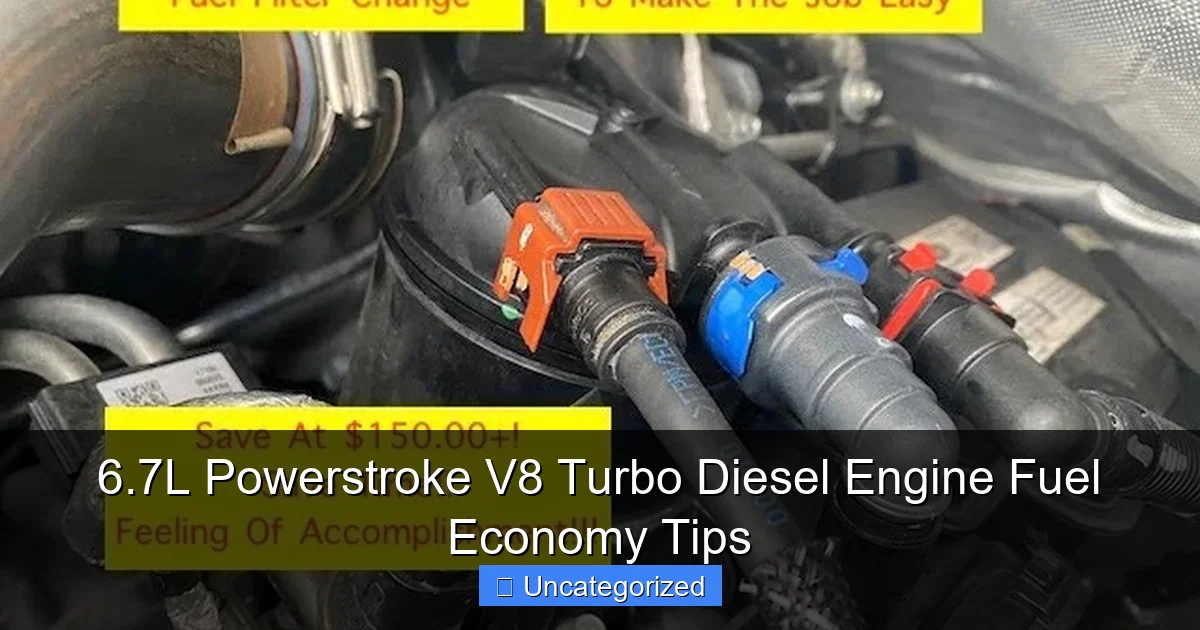
Featured image for this comprehensive guide about 6.7l powerstroke v8 turbo diesel engine fuel economy
Image source: i.ytimg.com
6.7L Powerstroke V8 Turbo Diesel Engine Fuel Economy Tips
Ah, the mighty 6.7L Powerstroke V8 Turbo Diesel engine. For many Ford Super Duty owners, it’s more than just an engine; it’s the heart of their workhorse, the muscle for their adventures, and the reliable power plant that gets the job done. Whether you’re hauling heavy loads across state lines, towing your fifth-wheel to a remote campsite, or simply navigating daily commutes, the 6.7L Powerstroke delivers an undeniable blend of power, torque, and surprising refinement. However, with great power often comes a great desire for efficiency, especially when fuel prices fluctuate. The question on many owners’ minds is: “How can I maximize my 6.7L Powerstroke fuel economy?”
Let’s face it, nobody buys a heavy-duty diesel truck expecting Prius-like mileage. These beasts are designed for capability, not ultimate frugality. Yet, understanding the factors that influence your Powerstroke MPG and implementing smart strategies can significantly impact your wallet and your truck’s long-term performance. From subtle changes in driving style to critical maintenance routines and even thoughtful modifications, there’s a whole world of opportunities to improve your diesel truck fuel consumption. This comprehensive guide will dive deep into actionable tips and insights to help you get the most out of every drop of diesel.
So, buckle up! We’re about to embark on a journey to uncover the secrets to better 6.7L Powerstroke fuel efficiency. Whether you own an earlier model Super Duty or the latest iteration, the principles remain largely the same. By the end of this post, you’ll be equipped with the knowledge to drive smarter, maintain better, and ultimately enjoy your powerful diesel truck with greater peace of mind and a happier fuel gauge.
Quick Answers to Common Questions
What kind of fuel economy can I generally expect from a 6.7L Powerstroke V8 Turbo Diesel Engine?
Owners often report averages of 14-18 MPG for the 6.7L Powerstroke V8 Turbo Diesel Engine under mixed driving conditions, though this can fluctuate significantly based on your truck’s setup and driving style. For optimal 6.7L Powerstroke V8 Turbo Diesel Engine fuel economy, consistent and gentle acceleration is key.
What’s one common thing that really hurts my 6.7L Powerstroke V8 Turbo Diesel Engine fuel economy?
A heavy foot is a major culprit! Aggressive driving, including rapid acceleration and hard braking, significantly reduces your 6.7L Powerstroke V8 Turbo Diesel Engine fuel economy, as does prolonged idling.
Are there any immediate, easy changes I can make to improve my 6.7L Powerstroke’s fuel efficiency?
Absolutely! Ensuring your tires are properly inflated and keeping up with routine maintenance, like replacing dirty air and fuel filters, can noticeably boost your 6.7L Powerstroke V8 Turbo Diesel Engine fuel economy right away. Also, remove any unnecessary weight from your truck bed.
Does towing heavily impact the 6.7L Powerstroke V8 Turbo Diesel Engine fuel economy?
Yes, towing a heavy load will almost certainly reduce your 6.7L Powerstroke V8 Turbo Diesel Engine fuel economy, often dropping it into the single-digit range depending on the weight and aerodynamics. Be prepared for more frequent fuel stops when hauling.
Can aftermarket modifications actually improve my 6.7L Powerstroke V8 Turbo Diesel Engine fuel economy?
Some modifications, like certain performance tuners, can potentially improve your 6.7L Powerstroke V8 Turbo Diesel Engine fuel economy when used correctly and conservatively. However, others, especially those focused solely on power, can drastically hurt it, so research thoroughly!
📋 Table of Contents
- Understanding the 6.7L Powerstroke’s Fuel Economy Landscape
- Driving Habits: The Biggest Lever for 6.7L Powerstroke Fuel Efficiency
- Maintenance Matters: Keeping Your 6.7L Powerstroke Running Lean
- Modifications and Upgrades for Better 6.7L Powerstroke MPG
- Towing, Hauling, and Environmental Factors
- Real-World 6.7L Powerstroke Fuel Economy: What to Expect and How to Track It
- Conclusion: Maximizing Your 6.7L Powerstroke’s Potential
Understanding the 6.7L Powerstroke’s Fuel Economy Landscape
Before we dive into tips, it’s crucial to understand the inherent nature of the 6.7L Powerstroke V8 Turbo Diesel and what dictates its fuel appetite. This engine, introduced in 2011, was a revolutionary step for Ford, moving away from International Navistar to an in-house design. It’s a powerhouse, consistently delivering increasing horsepower and torque figures with each generation, now exceeding 500 hp and 1200 lb-ft of torque in some configurations. This immense capability is fantastic for towing and hauling, but it comes at the cost of lightweight efficiency.

Learn more about 6.7l powerstroke v8 turbo diesel engine fuel economy – 6.7L Powerstroke V8 Turbo Diesel Engine Fuel Economy Tips
Image source: usengineproduction.com
Several fundamental factors influence the baseline Powerstroke MPG you can expect:
| Driving Scenario | Typical Vehicle Configuration | Average Fuel Economy (MPG) |
|---|---|---|
| City Driving (Unloaded) | F-250 SRW (Single Rear Wheel) | 14-16 |
| Highway Driving (Unloaded) | F-250 SRW | 18-22 |
| Combined Driving (Unloaded) | F-250 SRW | 16-18 |
| Light Towing (approx. 5,000 lbs) | F-250 / F-350 SRW | 12-15 |
| Heavy Towing (approx. 15,000 lbs) | F-350 DRW (Dual Rear Wheel) | 8-11 |
- Vehicle Weight: Super Duty trucks are heavy. The sheer mass requires more energy to move, especially from a standstill.
- Aerodynamics: These are large, boxy vehicles. Air resistance increases exponentially with speed, making highway fuel economy particularly sensitive to this factor.
- Emissions Systems: Modern diesel engines, including the 6.7L Powerstroke, employ complex emissions control systems (EGR, DPF, SCR with DEF). While essential for environmental compliance, these systems can introduce additional parasitic losses and require energy for regeneration cycles, directly impacting diesel engine fuel economy.
- Engine Design: While incredibly efficient for its size and output, it’s still a large displacement V8 designed for heavy-duty work.
- Transmission: The TorqShift automatic transmission, while robust and smooth, has internal friction and gearing that affects overall efficiency. Modern 10-speed transmissions are generally more efficient than older 6-speed units.
Real-world 6.7L Powerstroke fuel economy typically ranges from 12-18 MPG for unladen highway driving, dropping significantly to 8-12 MPG or even lower when towing heavy loads. City driving generally sits in the 10-14 MPG range. These are broad averages, and your individual results will vary.
Driving Habits: The Biggest Lever for 6.7L Powerstroke Fuel Efficiency
The single most impactful factor on your 6.7L Powerstroke’s fuel economy is, without a doubt, the person behind the wheel. Your driving style can account for a significant percentage of variation in your Powerstroke MPG. Adopting more mindful driving habits requires discipline but pays dividends at the pump.
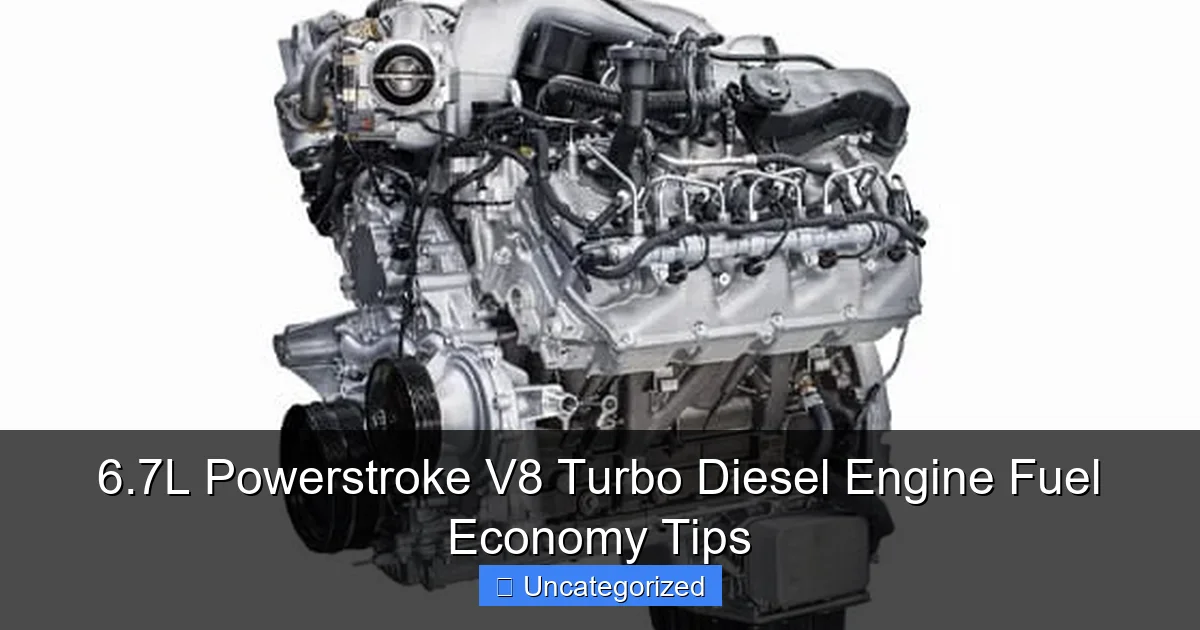
Learn more about 6.7l powerstroke v8 turbo diesel engine fuel economy – 6.7L Powerstroke V8 Turbo Diesel Engine Fuel Economy Tips
Image source: dorianford.com
Smooth Acceleration and Braking
- Gentle Throttle Input: Jackrabbit starts consume a tremendous amount of fuel as the engine works harder to overcome inertia. Gradually accelerate, allowing the transmission to shift smoothly. Think of it as “rolling into” speed rather than “punching it.” This is crucial for optimizing 6.7L Powerstroke efficiency.
- Anticipate Traffic: Look far ahead. By anticipating stops and slowdowns, you can coast more often, reducing the need for hard braking and subsequent re-acceleration. Every time you brake, you’re converting kinetic energy (which took fuel to create) into wasted heat.
Maintain Consistent Speeds
- Use Cruise Control: On flat highways, cruise control is your best friend. It maintains a steady speed more efficiently than your foot can, preventing subtle speed fluctuations that burn extra fuel. However, on hilly terrain, it might be better to manage throttle manually to avoid aggressive downshifts and uphill power surges.
- Respect Speed Limits: As mentioned, aerodynamic drag increases with speed. Driving 70 mph instead of 75 mph can yield a noticeable improvement in diesel truck fuel consumption. Find the “sweet spot” speed for your truck where the engine is cruising at optimal RPMs.
Minimize Idling
Modern diesel engines, particularly the 6.7L Powerstroke, do not need extensive warm-up idling. Unless temperatures are extremely cold, a minute or two is usually sufficient before driving off gently. Idling produces zero miles per gallon and can contribute to DPF issues due to lower exhaust temperatures. If you’re going to be stopped for more than a minute, it’s often more fuel-efficient to shut the engine off and restart.
Maintenance Matters: Keeping Your 6.7L Powerstroke Running Lean
A well-maintained engine is an efficient engine. Neglecting routine maintenance can silently chip away at your 6.7L Powerstroke fuel economy. Sticking to the factory-recommended service schedule isn’t just about reliability; it’s about efficiency too.
Regular Oil Changes
Using the correct type and viscosity of engine oil (e.g., 10W-30 for the 6.7L Powerstroke) is critical. Fresh, clean oil reduces internal engine friction, allowing components to move more freely and efficiently. Old, degraded oil loses its lubricating properties, increasing friction and potentially reducing Powerstroke MPG. Always use high-quality, API-certified CJ-4 or CK-4 diesel engine oil.
Air Filter Replacement
A clogged air filter restricts airflow to the engine, forcing it to work harder and potentially leading to an incomplete combustion. This directly impacts diesel fuel economy tips. Check and replace your air filter according to the manufacturer’s recommendations, or more frequently if you drive in dusty conditions.
Fuel Filter Maintenance
The 6.7L Powerstroke has two fuel filters (primary frame-mounted and secondary engine-mounted). These are vital for protecting the sophisticated high-pressure fuel system from contaminants. Clogged fuel filters restrict fuel flow, making the fuel pump work harder and starving the injectors, which can decrease power and hurt fuel efficiency. Replace them diligently per the service schedule.
Tire Pressure and Type
Underinflated tires increase rolling resistance, which means your engine has to work harder to move the truck. Check your tire pressure regularly, preferably once a week, and always inflate to the recommended pressures listed on your door jamb sticker. Using tires with lower rolling resistance (often highway-oriented rather than aggressive mud-terrain tires) can also contribute to better 6.7L Powerstroke fuel economy.
Clean Fuel Injectors
Over time, injectors can get dirty, leading to less efficient fuel atomization and spray patterns. While less common with modern ULSD fuel, a quality fuel additive designed for diesel engines can help keep injectors clean and the fuel system lubricated, ensuring optimal combustion and improve Powerstroke MPG.
Modifications and Upgrades for Better 6.7L Powerstroke MPG
While the primary purpose of most aftermarket modifications is often performance, some can indirectly or directly contribute to improved 6.7L Powerstroke fuel economy. However, caution is advised, as not all mods are created equal, and some can negatively impact reliability or emissions compliance.
Performance Tuning (Carefully Considered)
Custom tuning, when done responsibly by reputable companies, can optimize engine parameters for better fuel efficiency. This might involve adjusting fuel injection timing, duration, and turbocharger boost. However, aggressive “race” tunes often prioritize power over economy and can increase wear. “Economy” tunes specifically designed to improve diesel truck fuel consumption are available but should be chosen carefully and installed with professional guidance. Be aware of local emissions regulations.
Air Intake Systems
A well-designed cold air intake (CAI) can improve airflow to the engine. While the stock intake is generally very good, some aftermarket systems can offer marginal improvements in efficiency and throttle response by delivering cooler, denser air. Don’t expect dramatic MPG gains, but it can contribute to overall efficiency.
Exhaust Systems (DPF-Back)
A DPF-back exhaust system replaces the exhaust components after the Diesel Particulate Filter. This generally has little to no impact on 6.7L Powerstroke fuel economy as it doesn’t change the crucial emissions components or backpressure upstream. Full “delete” kits that remove emissions components are illegal for road use in most places and will void warranties. They may show MPG gains due to less restrictive exhaust flow and no DPF regenerations, but the legal and environmental consequences are severe.
Weight Reduction (Practical Limits)
While difficult for a heavy-duty truck, reducing unnecessary weight can marginally improve Powerstroke MPG. This might involve removing seldom-used tools, heavy bed liners, or opting for lighter aftermarket wheels if appropriate. Every pound counts, but realistically, the gains here will be small unless you’re shedding hundreds of pounds.
Towing, Hauling, and Environmental Factors
The 6.7L Powerstroke is built for work, and work inherently burns more fuel. Understanding how towing, hauling, and external conditions affect your fuel economy is key to managing expectations and adapting your driving.
Towing and Hauling Strategy
- Proper Load Distribution: Ensure your trailer is properly loaded with the correct tongue weight. An unbalanced load can cause sway, requiring more steering corrections and more engine power to maintain control, reducing towing fuel economy Powerstroke.
- Aerodynamics of the Load: A tall, wide fifth-wheel or toy hauler creates immense aerodynamic drag. Reducing speed is the most effective way to combat this. Even a small drop from 65 mph to 60 mph can yield significant diesel fuel economy improvements when towing.
- Transmission Gearing: Let your transmission do its job. While it might be tempting to manually select a gear to prevent frequent shifting, ensure the engine isn’t lugging (too low RPM) or over-revving (too high RPM). The truck’s computer is generally very good at finding the optimal gear for the load and speed.
Weather and Terrain
- Headwinds: Driving into a strong headwind is like driving uphill constantly. Your 6.7L Powerstroke will consume significantly more fuel. There’s little you can do besides reducing speed or waiting for the wind to change.
- Uphill Grades: Climbing hills naturally requires more power and thus more fuel. Use your truck’s immense torque, but don’t try to maintain an unrealistic speed up every incline.
- Temperature: Extremely cold weather can reduce diesel engine fuel economy. Thicker fluids, longer warm-up times, and the regeneration cycles of the emissions system can all contribute to lower MPG.
Real-World 6.7L Powerstroke Fuel Economy: What to Expect and How to Track It
It’s vital to have realistic expectations for your 6.7L Powerstroke’s fuel economy. This isn’t a small sedan; it’s a powerful workhorse. Advertised MPG figures are often for light-duty trucks under ideal conditions, which rarely reflect a Super Duty’s real-world usage.
Average MPG Ranges
Based on owner reports and various tests, here’s a general idea of what to expect:
| Driving Condition | Typical 6.7L Powerstroke MPG Range | Key Factors |
|---|---|---|
| Unladen Highway (60-70 mph) | 14 – 19 MPG | Speed, terrain, aerodynamics, tire pressure |
| Unladen City Driving | 10 – 15 MPG | Stop-and-go frequency, idling, acceleration habits |
| Towing Light (3,000-7,000 lbs) | 10 – 14 MPG | Trailer type, speed, hills |
| Towing Heavy (10,000+ lbs) | 7 – 11 MPG | Load weight, aerodynamics, speed, grades |
| Mixed Driving | 12 – 17 MPG | Ratio of city to highway, driving style |
These ranges are approximate. Factors like truck configuration (crew cab, long bed, 4×4), gear ratio, and even specific model year (due to engine and transmission updates) will influence your actual results. The newest generation 6.7L Powerstroke V8 Turbo Diesel engines often show marginal improvements in MPG due to more advanced engine and transmission technologies.
Tracking Your Fuel Economy Accurately
Relying solely on your truck’s onboard computer for MPG can sometimes be misleading. For the most accurate assessment, use the “fill-up method”:
- Fill your tank completely until the pump automatically clicks off.
- Record your odometer reading.
- Drive as you normally would.
- At your next fill-up, record the total gallons added to fill the tank and your new odometer reading.
- Calculate: (New Odometer – Old Odometer) / Gallons Added.
Repeating this over several fill-ups will give you a much clearer picture of your actual Powerstroke MPG. Many smartphone apps are available to automate this tracking, making it easier to monitor your progress as you implement these fuel efficiency tips.
Conclusion: Maximizing Your 6.7L Powerstroke’s Potential
The 6.7L Powerstroke V8 Turbo Diesel engine is a marvel of modern engineering, offering unparalleled capability for those who demand it. While it will never be the cheapest vehicle to fuel, implementing a combination of smart driving habits, diligent maintenance, and thoughtful considerations about modifications and loads can significantly enhance your 6.7L Powerstroke fuel economy. It’s not about achieving unrealistic numbers, but about optimizing what you have and reducing unnecessary waste.
Remember, every gallon saved is money back in your pocket. By being mindful of your acceleration, maintaining consistent speeds, keeping your truck in peak mechanical condition, and adapting your driving when towing or facing adverse conditions, you’ll not only enjoy better Powerstroke MPG but also extend the life and performance of your beloved Ford Super Duty. Drive smarter, not harder, and experience the full potential of your 6.7L Powerstroke V8 Turbo Diesel engine.
Frequently Asked Questions
What kind of average fuel economy can I expect from a 6.7L Powerstroke?
The average fuel economy for a 6.7L Powerstroke V8 turbo diesel engine typically ranges from 14-20 miles per gallon (MPG) for unladen highway driving. However, this can vary significantly based on the truck’s year, transmission, axle ratio, driving conditions, and whether it’s towing or carrying a heavy load.
What are the most effective tips to improve my 6.7L Powerstroke V8 turbo diesel fuel economy?
To significantly improve your 6.7L Powerstroke V8 turbo diesel fuel economy, focus on smooth driving habits, regular maintenance, and proper tire inflation. Avoiding aggressive acceleration and braking, performing timely oil changes, and ensuring your air filter is clean are crucial steps.
How does towing affect the 6.7L Powerstroke’s fuel economy?
Towing significantly reduces the 6.7L Powerstroke’s fuel economy, as the engine works harder to pull the additional weight. Expect a considerable drop, often into the 8-12 MPG range, depending on the weight of the trailer, terrain, and driving speed.
Does regular maintenance really affect the 6.7L Powerstroke V8’s fuel economy?
Absolutely, consistent and proper maintenance is critical for optimizing your 6.7L Powerstroke V8’s fuel economy. Keeping up with fluid changes, filter replacements (oil, fuel, air), and ensuring all sensors are functioning correctly helps the engine run at peak efficiency, preventing unnecessary fuel consumption.
Are there specific driving habits that can help improve the 6.7L Powerstroke’s fuel economy?
Yes, adopting specific driving habits can greatly enhance your 6.7L Powerstroke’s fuel economy. Practicing smooth acceleration and deceleration, maintaining a consistent highway speed, and anticipating traffic to avoid unnecessary stops are key strategies.
What role do tire pressure and type play in the 6.7L Powerstroke’s fuel economy?
Tire pressure and type play a significant role in your 6.7L Powerstroke’s fuel economy. Properly inflated tires reduce rolling resistance, requiring less effort from the engine and thus saving fuel. Additionally, choosing tires designed for lower rolling resistance, rather than aggressive off-road treads, can further improve efficiency.