6.0 Powerstroke High Pressure Oil Reservoir Specifications
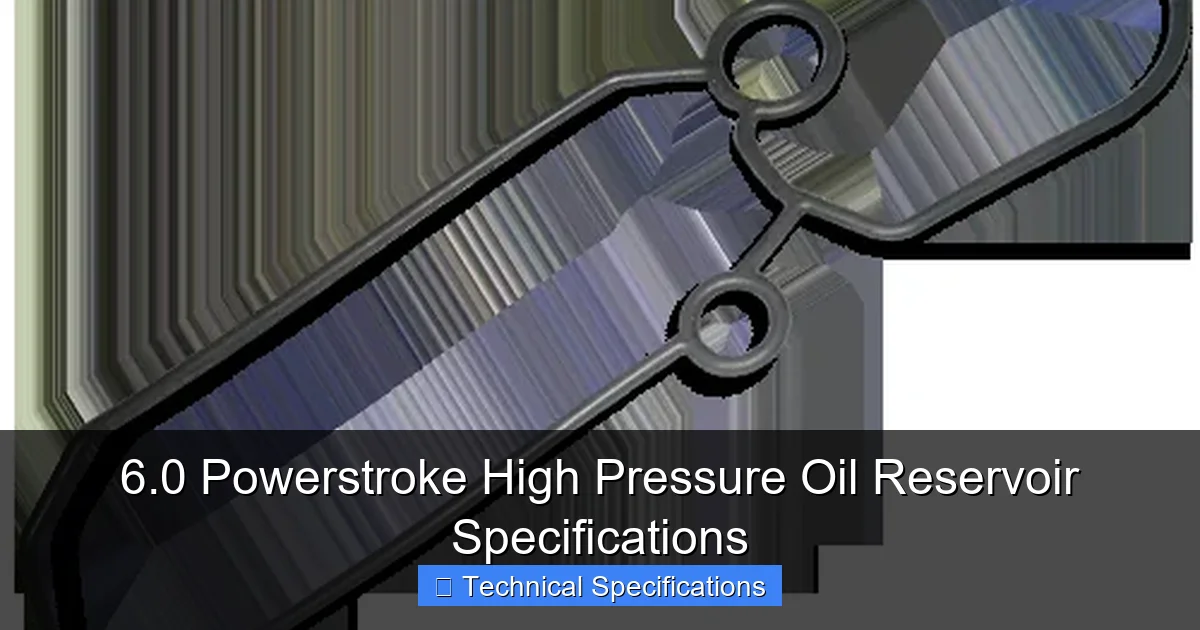
Featured image for this comprehensive guide about 6.0 Powerstroke high pressure oil reservoir specs
Image source: dieselsite.com
The Ford 6.0 Powerstroke diesel engine, a marvel of engineering for its time, holds a unique place in the hearts (and sometimes repair budgets) of truck enthusiasts. Known for its impressive power output and advanced fuel injection system, it’s also infamous for a few critical areas that demand meticulous attention. One such area, often overlooked yet absolutely vital to the engine’s operation, is the High-Pressure Oil (HPO) system. At the heart of this system, acting as a crucial buffer and supply point, lies the 6.0 Powerstroke high pressure oil reservoir.
Far from being a simple plastic tank, this component is an integral part of how your 6.0 Powerstroke’s injectors fire. Without a properly functioning reservoir providing a consistent, clean supply of oil to the High-Pressure Oil Pump (HPOP), your engine simply won’t start, or will exhibit severe performance issues. Understanding the 6.0 Powerstroke high pressure oil reservoir specs isn’t just for mechanics; it’s essential knowledge for any owner looking to maintain their truck’s reliability and prevent costly breakdowns. This comprehensive guide will dive deep into everything you need to know about this critical component, from its design and function to common issues and best maintenance practices.
Whether you’re battling an extended crank, a no-start condition, or simply want to educate yourself on your Powerstroke’s intricate workings, mastering the specifics of the HPO reservoir is a significant step. We’ll explore its role, dissect its specifications, discuss diagnostic strategies, and provide actionable tips to ensure your 6.0 Powerstroke’s high-pressure oil system remains robust and reliable. Let’s embark on this journey to demystify one of the 6.0’s most important, yet often misunderstood, components.
Quick Answers to Common Questions
Why is the 6.0 Powerstroke high pressure oil reservoir so important?
This critical component stores the engine oil that your High Pressure Oil Pump (HPOP) needs to operate the fuel injectors, making sure your engine runs smoothly. Proper function and maintaining the correct 6.0 Powerstroke high pressure oil reservoir specs are key to reliable starting and performance.
What are the typical 6.0 Powerstroke high pressure oil reservoir specs for oil capacity?
The reservoir typically holds around 1 quart (or roughly 1 liter) of engine oil. This specific volume ensures the HPOP has an immediate supply of oil to build pressure until the main engine oil pump can replenish it.
What kind of oil should I use when dealing with 6.0 Powerstroke high pressure oil reservoir specs?
You should use the same engine oil specified for your 6.0 Powerstroke’s crankcase, generally a CJ-4 rated 15W-40 or 5W-40 synthetic depending on your climate. The reservoir directly utilizes the engine’s main oil supply for its function.
How do I check the oil level in my 6.0 Powerstroke high pressure oil reservoir?
To check the 6.0 Powerstroke high pressure oil reservoir specs for its oil level, remove the yellow reservoir cap on top of the engine and look inside; the oil should be visible near the fill neck when the engine is off and cold. Some caps even have a small dipstick attached for easier checking.
What happens if the 6.0 Powerstroke high pressure oil reservoir is low or empty?
If the reservoir is low, your engine will likely experience hard starting, a no-start condition, or rough idling because the HPOP can’t get enough oil to properly fire the injectors. Maintaining proper 6.0 Powerstroke high pressure oil reservoir specs is absolutely crucial to avoid these frustrating issues.
📋 Table of Contents
- Unraveling the 6.0 Powerstroke’s High-Pressure Oil System
- The Indispensable Role of the High-Pressure Oil Reservoir
- Dissecting the Key 6.0 Powerstroke High Pressure Oil Reservoir Specifications
- Common Issues and Symptoms Linked to the HPO Reservoir
- Maintenance and Best Practices for Your 6.0 HPO System
- Troubleshooting HPO Reservoir-Related Engine Woes
- Key 6.0 Powerstroke HPO System Data
- Conclusion
Unraveling the 6.0 Powerstroke’s High-Pressure Oil System
Before we pinpoint the 6.0 Powerstroke high pressure oil reservoir, it’s crucial to understand the ecosystem it supports: the High-Pressure Oil (HPO) system. The 6.0 Powerstroke utilizes a Hydraulically actuated Electronically controlled Unit Injector (HEUI) system. Unlike conventional diesel engines where fuel is injected purely mechanically or electronically, the 6.0’s injectors are actuated by high-pressure engine oil, not just fuel pressure. This is a fundamental design aspect that sets it apart and makes the oil system paramount.
The journey of the oil begins in the engine’s low-pressure system. Oil is drawn from the oil pan by the low-pressure oil pump, filtered, and then routed to various engine components for lubrication, and crucially, to the high pressure oil reservoir. From the reservoir, a dedicated supply of oil is made available to the High-Pressure Oil Pump (HPOP). The HPOP, located at the back of the engine’s valley, is a robust radial piston pump that pressurizes this oil up to an astonishing 3,600 PSI.
| Specification | Detail / Value | Significance / Notes |
|---|---|---|
| Component Function | Stores engine oil for the High Pressure Oil Pump (HPOP) | Crucial for consistent HPOP prime and operation |
| Typical Material | Cast Aluminum | Durable, designed for engine bay environment |
| Oil Supply Source | Feeds from the engine’s main oil gallery | Ensures a continuous supply of clean engine oil |
| Integration / Location | Integrated into the HPOP front cover assembly | Located at the front top of the engine under the oil cooler |
| Critical Role | Maintains HPOP submerged in oil | Prevents cavitation and air ingestion into the HPOP system |
| Associated Components | Standpipes and Dummy Plugs | Common leak points, leading to “no-start hot” conditions |
This intensely pressurized oil is then sent through a complex system of standpipes and dummy plugs, connecting to the oil rails that feed each of the eight injectors. The Fuel Injection Control Module (FICM) plays a pivotal role here, providing the electrical signal to the solenoid in each injector. When the FICM signals an injector to fire, the high-pressure oil forces a plunger down, pressurizing the fuel inside the injector, and finally opening the injector nozzle to spray fuel into the cylinder. This intricate dance highlights why the integrity of the entire HPO system, from the reservoir to the injector tip, is non-negotiable for engine operation.
The Indispensable Role of the High-Pressure Oil Reservoir
While often overshadowed by the HPOP itself, the 6.0 Powerstroke high pressure oil reservoir is an unsung hero. It’s not just a tank; it’s a precisely engineered component designed to ensure the HPOP always has an immediate and clean supply of oil, especially during critical moments like cold starts or high-demand operation.
More Than Just a Tank: Its Core Functions
The primary function of the HPO reservoir is to act as a buffer. It holds a dedicated, separate supply of engine oil specifically for the HPOP. Why is this separation necessary? Imagine trying to draw high-pressure oil directly from the crankcase – it would be prone to aeration, inconsistent supply, and potential cavitation in the HPOP. The reservoir mitigates these issues by:
- Ensuring Immediate Oil Availability: During cranking, particularly after the vehicle has been sitting, the HPOP needs instant oil. The reservoir guarantees this supply, preventing the HPOP from running dry even for a fraction of a second.
- Preventing Cavitation: By maintaining a consistent head of oil pressure, the reservoir helps prevent the HPOP from drawing air or creating vacuum pockets, which can severely damage the pump.
- Managing Aeration: Engine oil in the crankcase can become aerated, especially under hard driving conditions. The reservoir allows any entrained air bubbles to escape before the oil is drawn into the HPOP, protecting the pump and injectors from damage caused by air compressibility.
- Providing a Filtration Point: Many reservoirs incorporate a filter screen or standpipe to catch larger debris before the oil enters the sensitive HPOP, adding another layer of protection.
The reservoir is strategically located on top of the engine, typically beneath the oil cooler and coolant degas bottle, making it somewhat challenging to access but perfectly positioned to feed the HPOP located directly below it.
Key Components Within the Reservoir
The internal design of the HPO reservoir is relatively simple but effective. Most OEM units feature an internal standpipe that draws oil from the bottom of the reservoir, ensuring that any air or foam remains on top. This standpipe often has a fine mesh screen to filter the oil one last time before it enters the HPOP. Some aftermarket reservoirs might include a drain plug for easier servicing, although this is not common for OEM units.
Dissecting the Key 6.0 Powerstroke High Pressure Oil Reservoir Specifications
Understanding the actual 6.0 Powerstroke high pressure oil reservoir specifications involves looking at its material, capacity, and how it interacts with the broader HPO system. While the reservoir itself doesn’t generate pressure, its design directly impacts the system’s ability to do so.
Material and Construction
Original Equipment Manufacturer (OEM) 6.0 Powerstroke high pressure oil reservoirs are typically constructed from a durable, high-temperature-resistant plastic or composite material. This material is chosen for its ability to withstand the engine’s operating temperatures, its compatibility with various engine oils, and its resistance to vibrations and minor impacts. The design includes specific mounting points and sealing surfaces to integrate seamlessly with the engine block and oil cooler housing. Aftermarket options may sometimes be offered in aluminum for increased durability, though the benefits are often marginal compared to a well-designed composite unit.
Internal Volume and Capacity
The internal volume or capacity of the 6.0 Powerstroke high pressure oil reservoir is a critical specification. While exact figures can vary slightly between model years or aftermarket designs, most OEM reservoirs hold approximately 2 to 3 quarts (roughly 2 to 3 liters) of engine oil. This volume is precisely engineered to ensure that there is always enough oil for the HPOP to draw from, even during prolonged cranking periods or when the engine is under heavy load. The reservoir is replenished from the low-pressure oil system, but its immediate dedicated supply is vital. Maintaining the correct overall engine oil level is paramount, as a low overall level will eventually lead to the reservoir running dry, causing a no-start condition or HPOP damage.
Pressure Ratings (Indirect)
It’s important to clarify that the 6.0 Powerstroke high pressure oil reservoir itself is not a pressurized component. It operates at ambient pressure, fed by the low-pressure oil system. However, its integrity is essential for the *downstream* components, especially the HPOP, which generates pressures ranging from 580 PSI (minimum for starting) up to 3,600 PSI under full load. Any issues within the reservoir that impede oil flow or cause cavitation will directly impact the HPOP’s ability to achieve and maintain these high pressures, leading to drivability issues or a complete no-start.
Mounting and Sealing
The reservoir sits within the engine’s valley, typically nestled beneath the oil cooler housing. Its mounting relies on robust bolts and, critically, a series of O-rings and gaskets that form a leak-proof seal with the engine block. These seals prevent high-pressure oil from leaking into the engine valley, which can be a common source of diagnostic confusion. A leak here can mimic other HPO system failures, as it directly depletes the reservoir’s effective capacity.
Filtration Mechanisms
As mentioned, the OEM reservoir often incorporates a standpipe with an integrated fine mesh screen. This acts as a final filtration stage, catching any larger particles that might have bypassed the primary engine oil filter or accumulated within the reservoir itself. While this screen is generally robust, prolonged neglect of oil changes or severe engine wear can overwhelm it, potentially allowing debris into the HPOP and injectors, leading to premature wear and failure.
Common Issues and Symptoms Linked to the HPO Reservoir
While the 6.0 Powerstroke high pressure oil reservoir itself is a durable component, its function is often compromised by issues stemming from elsewhere in the HPO system. Understanding these common problems is key to accurate diagnosis.
Low Oil Level in Reservoir
The most common and impactful issue is an insufficient oil level within the reservoir. This isn’t usually due to the reservoir itself leaking, but rather downstream leaks in the high-pressure oil system that deplete the reservoir faster than the low-pressure system can replenish it during cranking.
- Causes:
- External HPO Leaks: Oil leaks from the HPOP cover gasket, standpipes, dummy plugs, branch tube, or the infamous STC (Snap-To-Connect) fitting. These leaks allow high-pressure oil to escape into the engine valley, eventually draining into the crankcase, but first depleting the reservoir.
- Internal HPO Leaks: Leaks past injector O-rings or within the HPOP itself can also contribute, though external leaks are more common causes for the reservoir running dry during cranking.
- Low Overall Engine Oil Level: While the reservoir maintains its own supply, if the engine’s overall oil level is critically low, the low-pressure pump cannot adequately replenish the reservoir.
- Symptoms:
- Extended Crank, No-Start: The classic symptom. The engine cranks endlessly but won’t fire because the HPOP can’t build sufficient Injector Control Pressure (ICP) due to lack of oil.
- Rough Idle/Stalling: If the reservoir is marginally low, it might start but run poorly, especially under load, and could stall.
- Low ICP Codes: Diagnostic Trouble Codes (DTCs) such as P2288 (ICP Too High), P2290 (ICP Too Low), or P2291 (ICP Not Attainable) are common. While P2288 can indicate an IPR valve issue, P2290/P2291 directly point to an inability to build pressure.
Contaminated Oil
While the HPO reservoir has a screen, it’s not a primary filter. Contaminated oil, often a result of infrequent oil changes or a failing oil cooler (allowing coolant into the oil), can wreak havoc on the entire HPO system.
- Causes: Poor maintenance, clogged oil cooler, engine wear.
- Symptoms: Premature HPOP wear, injector stiction (sticky injectors), overall engine degradation, and potential clogging of the reservoir’s internal screen.
Internal Reservoir Component Failure
Though rare, the reservoir itself can fail.
- Causes: Extreme heat cycling, age, physical damage during other repairs.
- Symptoms: A cracked reservoir can leak oil directly into the valley, mimicking other HPO leaks. A damaged internal filter screen could allow debris into the HPOP, leading to pump or injector failure.
Maintenance and Best Practices for Your 6.0 HPO System
Proactive maintenance is the cornerstone of 6.0 Powerstroke reliability. While direct maintenance on the 6.0 Powerstroke high pressure oil reservoir is limited, maintaining the overall HPO system directly benefits its function.
Regular Oil Changes and Proper Oil Specification
This cannot be stressed enough. The 6.0 Powerstroke’s HEUI system is incredibly sensitive to oil quality. Using the correct engine oil is paramount:
- Specification: Always use a high-quality diesel engine oil that meets CJ-4 or, more recently, CK-4 standards. These oils have formulations designed to withstand the high shear forces in the HPO system and protect against injector stiction.
- Intervals: Adhere to manufacturer-recommended oil change intervals, typically every 5,000 miles or 6 months, whichever comes first. If you tow heavily or operate in harsh conditions, consider more frequent changes.
- Capacity: Ensure the engine’s oil level is always at the full mark on the dipstick. The 6.0 Powerstroke holds approximately 15 quarts (nearly 4 gallons) of oil, and even being a quart or two low can start to impact HPO system performance, especially reservoir replenishment.
Oil Cooler Maintenance
The oil cooler’s health directly impacts the HPO system. A clogged oil cooler restricts oil flow, leading to higher oil temperatures. Hot oil degrades faster and can contribute to injector stiction and HPOP wear. Consider a flush or replacement of the oil cooler, especially if you experience high delta-T readings (difference between EOT and ECT).
Monitoring for Leaks
Regularly inspect the engine valley for signs of oil. A small puddle of oil in the valley, especially towards the back, is a tell-tale sign of an HPO system leak. Common culprits include:
- STC Fitting: The original Snap-To-Connect fitting for the HPOP discharge tube is a notorious failure point. Upgrading to a one-piece heavy-duty unit is highly recommended.
- Dummy Plugs and Standpipes: These components, located under the valve covers, seal the high-pressure oil rails to the cylinder heads. Their O-rings commonly fail.
- HPOP Cover Gasket: Another potential leak point, although less common than the others.
Addressing these leaks promptly is crucial, as they directly deplete the reservoir and can lead to a no-start condition.
When to Consider Reservoir Replacement
The HPO reservoir itself rarely fails in a way that necessitates replacement, unless it’s physically damaged or shows signs of cracking. Often, if it’s replaced, it’s during a major HPOP or oil cooler job as a preventative measure or for peace of mind, especially if installing an aftermarket HPOP. Some aftermarket reservoirs offer slight design improvements, such as a built-in drain plug, but generally, the OEM unit is robust.
Troubleshooting HPO Reservoir-Related Engine Woes
Diagnosing issues related to the 6.0 Powerstroke high pressure oil reservoir often involves looking at the broader HPO system. The reservoir itself is typically an indicator rather than the root cause of a problem. Here’s how to approach troubleshooting:
Diagnostic Steps for No-Start/Extended Crank
If your 6.0 is cranking but won’t start, or takes a very long time to fire, suspect the HPO system:
- Check Engine Oil Level: First and foremost, check the dipstick. A critically low overall oil level means the reservoir can’t be adequately replenished.
- Scan for Codes: Use an OBD-II scanner to pull any Diagnostic Trouble Codes (DTCs). Specifically look for ICP (Injector Control Pressure) codes like P2288, P2290, P2291.
- Monitor ICP and IPR During Cranking: With your scanner, monitor ICP (psi) and IPR (Injector Pressure Regulator) duty cycle (%) while cranking.
- The PCM needs to see at least 500 PSI ICP to command the injectors to fire. If ICP doesn’t reach this threshold, you have an HPO system issue.
- IPR duty cycle will typically be high (around 85%) during cranking if the system is trying to build pressure but failing.
- Perform an HPO System Air Test: This is arguably the most effective diagnostic tool.
- Remove the IPR valve (located at the back of the HPOP).
- Install an air test fitting into the IPR port.
- Apply shop air (100-120 PSI) to the system.
- Listen for air leaks in the engine valley (STC fitting, HPOP gasket), under the valve covers (dummy plugs, standpipes), or at the fuel filter housing (if the branch tube is leaking).
- Leaking air indicates where high-pressure oil is escaping.
- Visually Inspect Reservoir (If Accessible): If you’ve removed the oil cooler or are doing other valley work, visually inspect the reservoir for cracks or obvious damage. Also, ensure its internal screen is clear.
Identifying Specific Leak Points
As mentioned, most “reservoir issues” are actually leaks downstream. When air testing, pay close attention to:
- STC Fitting: A whistling sound or spray of air from the back of the HPOP area indicates a failed STC.
- Dummy Plugs & Standpipes: Air hissing from under the valve covers, especially with the oil fill cap removed, points to these culprits.
- Branch Tube: Leaks here can cause air to escape around the fuel filter housing area.
- HPOP Cover Gasket: Air escaping from the top of the HPOP cover.
The Role of the IPR Valve
A faulty Injector Pressure Regulator (IPR) valve can also mimic low HPO issues. If the IPR gets stuck open or has weak springs, it won’t be able to effectively regulate and hold pressure within the system, even if the HPOP has a good oil supply. Monitoring IPR duty cycle and ICP simultaneously can help differentiate this from a leak. If the IPR duty cycle is high (e.g., 85%) and ICP remains low, it suggests a leak or a failed HPOP. If the IPR duty cycle is normal but ICP is low, a faulty IPR might be the issue, or the HPOP itself.
Key 6.0 Powerstroke HPO System Data
To further aid in your understanding and troubleshooting, here’s a table summarizing critical data related to the 6.0 Powerstroke’s high-pressure oil system and, by extension, the reservoir’s environment:
| Parameter | Value / Range | Notes |
|---|---|---|
| HPO Reservoir Capacity | ~2.5 – 3 Quarts (approx.) | Provides dedicated oil supply for HPOP. Exact volume can vary slightly. |
| Max HPOP Pressure | Up to 3,600 PSI | Pressure generated *by* the HPOP, fed *from* the reservoir. |
| Min ICP for Start | ~500 PSI (3.45 MPa) | PCM requires this much pressure to command injectors to fire. |
| Typical Operating ICP (Idle) | 580 – 750 PSI | Varies with engine load and RPM. |
| Recommended Oil Spec | CJ-4 / CK-4 | Essential for HEUI system longevity and performance. |
| Engine Oil Capacity | 15 Quarts (approx.) | Overall engine oil level directly affects reservoir replenishment. |
| IPR Valve Ohms (at 68°F/20°C) | 10.2 – 10.6 Ohms | Resistance check helps diagnose a faulty IPR solenoid. |
Conclusion
The 6.0 Powerstroke high pressure oil reservoir, while unassuming in appearance, is an absolutely foundational component for the engine’s operation. Its specifications, though seemingly simple, are precisely calibrated to ensure a consistent, clean, and dedicated supply of oil to the high-pressure oil pump, which in turn powers the complex HEUI injection system. Understanding its role, typical capacity, and how it integrates into the broader HPO system is not just academic; it’s a critical piece of knowledge for any 6.0 Powerstroke owner or technician.
Most issues attributed directly to the reservoir are, in fact, symptoms of upstream or downstream problems within the high-pressure oil system itself, such as common leaks from the STC fitting, dummy plugs, or standpipes. By prioritizing regular, high-quality oil changes, addressing oil cooler health, and proactively monitoring for and repairing any oil leaks in the valley, you directly contribute to the longevity and reliable function of your HPO reservoir and, by extension, your entire engine.
Embrace the challenge of maintaining your 6.0 Powerstroke by educating yourself on these vital components. A healthy 6.0 Powerstroke high pressure oil reservoir, supported by a meticulously maintained HPO system, translates directly into a more dependable, powerful, and ultimately, more enjoyable truck. Don’t let this small but mighty component be the reason your Powerstroke leaves you stranded – arm yourself with knowledge and keep that oil flowing!
🎥 Related Video: car vacuum brake booster/servo #mechanic #brake #servo #booster #mecanica #automotive
📺 meca systema
Frequently Asked Questions
What is the purpose of the 6.0 Powerstroke high pressure oil reservoir?
The high pressure oil reservoir acts as a critical buffer, providing a constant and immediate supply of engine oil to the High Pressure Oil Pump (HPOP). This ensures the HPOP can maintain consistent pressure to operate the fuel injectors efficiently, especially during sudden engine load changes or when engine oil levels in the pan might fluctuate.
What is the approximate oil capacity of the 6.0 Powerstroke high pressure oil reservoir?
The 6.0 Powerstroke high pressure oil reservoir is designed to hold approximately 1.5 to 2 quarts of engine oil. This specific volume is crucial for ensuring the High Pressure Oil Pump (HPOP) has an adequate reserve, preventing oil starvation even under demanding conditions.
Where is the 6.0 Powerstroke high pressure oil reservoir located on the engine?
The 6.0 Powerstroke high pressure oil reservoir is strategically located within the engine’s “valley,” positioned beneath the oil cooler and standpipe assembly. It sits directly above the High Pressure Oil Pump (HPOP), creating a direct path for oil supply.
Do I need to check or manually fill the 6.0 Powerstroke high pressure oil reservoir during an oil change?
No, you do not directly check or manually fill the high pressure oil reservoir during a standard oil change. It automatically fills with engine oil from the low-pressure system whenever the engine is running and the oil pump is circulating oil throughout the engine.
How does the 6.0 Powerstroke HPOP reservoir get refilled after major engine work, like an HPOP replacement?
After any work that might drain the 6.0 Powerstroke high pressure oil reservoir, it will automatically refill once the engine is cranked. The low-pressure oil pump pushes oil into the reservoir; however, it might require several crank cycles to build sufficient pressure to start the engine as the entire high-pressure system needs to prime itself.
Are there common failure points or issues with the 6.0 Powerstroke high pressure oil reservoir itself?
The 6.0 Powerstroke high pressure oil reservoir itself is a relatively robust, non-moving component and rarely fails directly. Issues are more commonly associated with the seals (o-rings) of the standpipes and dummy plugs that pass through it, or problems with the High Pressure Oil Pump (HPOP) that draws oil from the reservoir, rather than the reservoir housing itself.