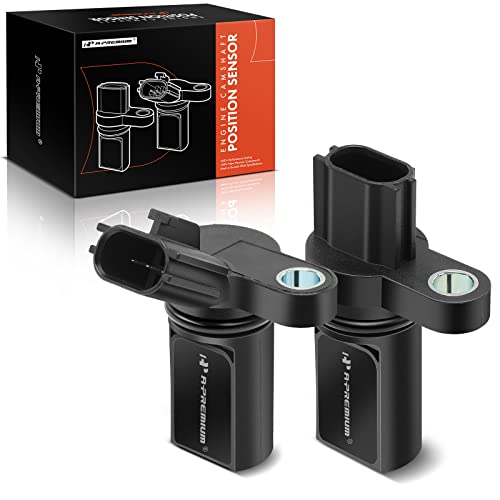

Top 9 Engine Position Sensors for Your Jeep XJ: Camshaft & Crankshaft Options Reviewed
If you’re a proud owner of a Jeep XJ Cherokee, you know these vehicles are legendary for their ruggedness and capability. But even the toughest rigs need their vital components working perfectly. When your check engine light comes on, or your beloved XJ starts acting sluggish, one common culprit can be a faulty engine position sensor. Specifically, we’re talking about the jeep xj camshaft position sensor and its close cousin, the crankshaft position sensor. Both play a critical role in your engine’s performance, ensuring everything runs smoothly and efficiently.
A failing sensor can lead to a host of problems, from hard starts and rough idling to misfires and poor fuel economy. Replacing a problematic sensor is often a straightforward DIY job, and getting the right part is key. In this comprehensive guide, we’ll dive into the world of Jeep XJ engine position sensors, reviewing 9 top options available. We’ll cover both camshaft and crankshaft sensors, explaining their differences and helping you choose the best replacement for your classic Cherokee.
Camshaft vs. Crankshaft Position Sensors: What’s the Difference?
Before we jump into the reviews, let’s clear up some common confusion. Both the camshaft position sensor (CPS) and crankshaft position sensor (CKP) are vital components of your engine’s electronic control system, feeding information to the Engine Control Unit (ECU) or Powertrain Control Module (PCM).
- Camshaft Position Sensor (CPS): This sensor monitors the rotational position of the camshaft, which controls the opening and closing of your engine’s valves. The ECU uses this data, along with information from the crankshaft sensor, to determine which cylinder is ready for ignition and fuel injection. A bad jeep xj camshaft position sensor can cause issues like misfires, stalling, or extended cranking.
- Crankshaft Position Sensor (CKP): This sensor tracks the rotational speed and position of the crankshaft, which is directly connected to the pistons. It’s crucial for determining engine RPM and piston position. This information is vital for spark timing and fuel delivery. A failing crankshaft sensor often results in no-start conditions, stalling, or random misfires.
While both are essential for proper engine timing, they monitor different parts and can manifest different symptoms when they fail. Make sure you diagnose your issue correctly before purchasing a replacement!
The Top 9 Engine Position Sensors for Your Jeep XJ
Here’s our breakdown of some of the best replacement options for your Jeep XJ, covering both camshaft and crankshaft sensors.
1. Dorman 917-727 Engine Camshaft Position Sensor

Dorman is a well-known name in aftermarket auto parts, and their 917-727 camshaft position sensor is designed as a direct replacement for your Jeep XJ. This sensor is engineered to precisely match the fit and function of the original part, making installation straightforward. It’s built to withstand the tough conditions under your hood, ensuring reliable performance and helping your ECU get the proper inputs for smooth engine operation.
- Key Features:
- Direct replacement for original sensor
- Engineered for proper fit and function
- Durable construction for reliable performance
- Backed by a century of automotive experience
- Pros:
- Reputable brand with quality control
- Designed for easy, direct installation
- Helps resolve common engine timing issues
- Cons:
- May be slightly pricier than generic alternatives
- Some users report variability in long-term durability
- User Impressions: Many Jeep XJ owners appreciate Dorman’s commitment to OEM-like fitment, finding this sensor to be a reliable fix for their rough-running engines. The ease of installation is frequently highlighted.
- See it on Amazon here
2. TAMKKEN 917-727 4897023AA Camshaft Position Sensor

The TAMKKEN 917-727 is another strong contender for your Jeep XJ camshaft position sensor needs, offering an OEM-spec replacement at a competitive price. This sensor is rigorously tested before shipment to ensure stable performance and durability under typical road conditions. It’s designed to eliminate failure codes, improve performance, and offer a direct, calibration-free installation, getting you back on the road quickly.
- Key Features:
- Meets OEM standards and specifications
- Stable performance, durable construction
- Eliminates failure light codes
- Direct replacement, no calibration needed
- Compatible with various Jeep models (Grand Cherokee, Wrangler, XJ 4.0L)
- Pros:
- Affordable OEM alternative
- Easy to install without special tools
- Often resolves common camshaft sensor symptoms
- Cons:
- Brand lesser known than Dorman for some consumers
- Specific fitment for the 4.0L XJ should be double-checked
- User Impressions: Customers often praise this TAMKKEN sensor for its excellent value, noting that it effectively resolves issues like stalling and rough idling, making it a popular choice for budget-conscious repairs.
- See it on Amazon here
3. NTK Crankshaft Position Sensor

While our main focus is the jeep xj camshaft position sensor, it’s crucial to also consider the crankshaft position sensor, as symptoms of failure can often overlap. This NTK sensor is a genuine replacement for your Jeep XJ’s crankshaft position sensor. NTK is known for its high-quality ignition and sensor products, ensuring you’re getting a reliable part that feeds precise engine speed and position data to your ECU.
- Key Features:
- Genuine NTK part
- Direct replacement for crankshaft sensor
- Includes original packaging and hardware
- Compatible with Jeep Cherokee 4.0L (1997-2001)
- Pros:
- Trusted brand for sensor technology
- High-quality components for accuracy
- Essential for proper ignition timing
- Cons:
- Note: This is a crankshaft sensor, not a camshaft sensor. Be sure this is the part you need.
- May be a bit more expensive than budget options
- User Impressions: Owners appreciate the reliability and precision of NTK sensors, often choosing them for critical engine components like the crankshaft position sensor to avoid future headaches.
- See it on Amazon here
4. TAMKKEN 56027865AB PC169 Crankshaft Position Sensor

Here’s another option from TAMKKEN, this time for the crankshaft position sensor in your Jeep XJ. Similar to their camshaft sensor, this CKP aims to deliver stable performance and durability, meeting OEM specifications. It’s designed for a direct, hassle-free replacement, helping to resolve issues like starting problems or intermittent stalling caused by a faulty crankshaft signal.
- Key Features:
- Meets OEM standards, durable construction
- Tested before shipment for stable performance
- Designed as a direct replacement
- Compatible with Jeep Cherokee 2.5L (1997-2000)
- Pros:
- Cost-effective solution
- Easy plug-and-play installation
- Helps resolve various engine performance issues
- Cons:
- Note: This is a crankshaft sensor, specifically for 2.5L XJ models. Not a camshaft sensor.
- Ensure compatibility with your specific XJ engine (2.5L vs 4.0L)
- User Impressions: Users report that this TAMKKEN crankshaft sensor is an effective and affordable fix, especially for those with the 2.5L engine, helping their XJ start reliably again.
- See it on Amazon here
5. Dorman 907-800 Engine Crankshaft Position Sensor

Another reliable crankshaft position sensor from Dorman, the 907-800 is engineered to provide an exact fit and function for specific vehicles, including your Jeep XJ. With Dorman’s long history in the automotive aftermarket, you can generally trust their parts to deliver consistent performance, critical for a sensor that dictates engine timing and fuel delivery.
- Key Features:
- Direct replacement, matching OEM fit and function
- Engineered to ensure proper ECU inputs
- Durable construction for longevity
- Backed by Dorman’s product expertise
- Pros:
- Trusted brand quality
- Designed for easy, precise installation
- Critical for reliable engine starting and operation
- Cons:
- Note: This is a crankshaft sensor, not a camshaft sensor.
- Specific XJ fitment details should be confirmed
- User Impressions: Dorman’s crankshaft sensors are often praised for their reliability and ease of installation, making them a go-to choice for DIYers looking for an OEM-quality replacement.
- See it on Amazon here
6. OEG Parts New Camshaft Synchronizer Assembly W/Sensor
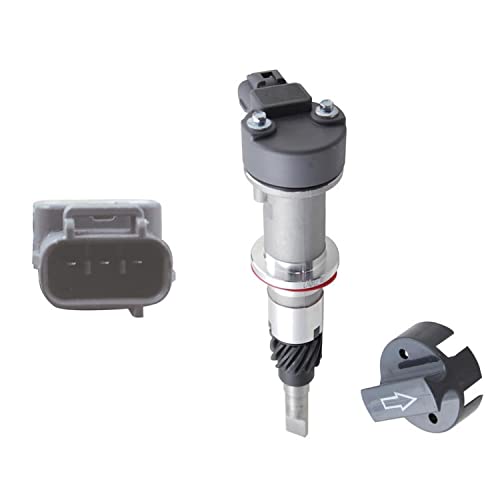
For your Jeep XJ, sometimes the issue isn’t just the jeep xj camshaft position sensor itself, but the entire synchronizer assembly that houses it. This OEG Parts assembly offers a complete unit, manufactured with new premium quality components to meet or exceed OEM specifications. Getting the whole assembly ensures all related parts are fresh and working in harmony for accurate camshaft position readings.
- Key Features:
- Complete camshaft synchronizer assembly with sensor
- Manufactured with new premium quality components
- Engineered to meet or exceed OEM specifications
- Includes the sensor for a comprehensive fix
- Pros:
- Comprehensive replacement for optimal performance
- High-quality components for durability
- Ensures accurate camshaft readings
- Cons:
- Installation might be slightly more involved than just replacing the sensor itself
- May be a more expensive option
- User Impressions: Customers who opt for the full synchronizer assembly often report a complete resolution of their engine timing issues, appreciating the “all-in-one” solution for their Jeep XJ.
- See it on Amazon here
7. A-Premium Engine Crankshaft Position Sensor

A-Premium offers an OE replacement brand-new crankshaft position sensor, providing another solid option for your Jeep XJ. This sensor is designed to directly fit, ensuring compatibility and ease of installation. With a focus on quality and a one-year warranty, A-Premium aims to give you peace of mind when tackling engine timing issues related to your crankshaft.
- Key Features:
- OE Replacement brand new part
- Direct fitment with 3 pins
- Compatible with various Jeep XJ models (L4 2.5L/L6 4.0L, 1993-1996)
- One-year unlimited-mileage guarantee
- Pros:
- Reliable OE replacement quality
- Good warranty for peace of mind
- Covers both 2.5L and 4.0L XJ engines
- Cons:
- Note: This is a crankshaft sensor, not a camshaft sensor.
- Fitment limited to earlier XJ models (1993-1996)
- User Impressions: Users generally find A-Premium sensors to be a good value, providing effective solutions for their engine issues and appreciating the included warranty.
- See it on Amazon here
8. 4897023AA Camshaft Position Sensor

This camshaft position sensor, identified by the OEM part number 4897023AA, is specifically designed for various Jeep models, including the 4.0L L6 Jeep XJ Cherokee (2000-2001). It aims to be a direct plug-and-play replacement, making it easy for DIY enthusiasts to tackle common symptoms of a faulty sensor like misfires or erratic acceleration.
- Key Features:
- Direct OEM replacement (4897023AA)
- Compatible with Jeep XJ 4.0L (2000-2001)
- Addresses common failure symptoms (stalling, misfires)
- Easy plug-in installation
- 18-month warranty
- Pros:
- Direct fit for specific Jeep XJ models
- Clear OEM cross-reference for confident purchase
- Good warranty period
- Cons:
- Fitment mainly for later 4.0L XJs, not all years
- Brand specific details can be less known
- User Impressions: Customers report this sensor successfully clearing check engine lights and restoring smooth engine operation, highlighting its effectiveness as a direct replacement for the 4.0L XJ’s camshaft sensor.
- See it on Amazon here
9. Engine Cam Camshaft Position Sensor Compatible with Jeep…

This generic-named camshaft position sensor is a direct fit for a range of Jeep models, including the Cherokee, Grand Cherokee, TJ, and Wrangler from 2000-2004, making it a viable option for your Jeep XJ. It boasts advanced circuitry and custom magnetic circuit programming for improved accuracy and reliability, ensuring your ECU gets precise timing data.
- Key Features:
- Replaces multiple OEM part numbers (e.g., PC380, 4897023AA)
- Compatible with Jeep Cherokee 2000-2001 (XJ)
- Advanced circuitry for accuracy and protection
- Ensures consistent product reliability through testing
- Pros:
- Wide compatibility for several Jeep models
- Focus on precision and reliability
- Cost-effective aftermarket solution
- Cons:
- Generic branding might deter some buyers
- Always double-check the specific OEM part number matches your needs
- User Impressions: Many users find this sensor to be a perfectly functional and affordable replacement, effectively solving their engine timing issues and getting their Jeep XJ back to optimal performance.
- See it on Amazon here
Frequently Asked Questions (FAQ)
Q1: What are the common symptoms of a bad camshaft position sensor in a Jeep XJ?
A1: A failing jeep xj camshaft position sensor can cause symptoms like a check engine light, engine misfires, rough idling, stalling (especially after warming up), poor acceleration, or extended cranking before the engine starts. You might also notice a reduction in fuel economy.
Q2: What’s the difference between a camshaft and a crankshaft position sensor, and do I need both?
A2: Yes, your Jeep XJ needs both. The camshaft position sensor (CPS) tells the ECU the position of the camshaft for valve timing and fuel injection. The crankshaft position sensor (CKP) reports the crankshaft’s speed and position for ignition timing. While they provide different data, the ECU uses information from both to ensure precise engine timing.
Q3: Can a bad camshaft position sensor prevent my Jeep XJ from starting?
A3: While a faulty crankshaft position sensor is more commonly associated with no-start conditions, a severely malfunctioning jeep xj camshaft position sensor can also prevent your engine from starting, or cause it to start and immediately stall, as the ECU might not get the necessary information to properly synchronize fuel and spark.
Q4: Is replacing a Jeep XJ camshaft position sensor a difficult DIY job?
A4: For most Jeep XJ models with the 4.0L inline-six engine, replacing the camshaft position sensor (or the entire synchronizer assembly) is generally considered a moderately easy DIY task. It typically involves removing a few bolts and disconnecting a wiring harness. However, proper indexing (timing) of the synchronizer assembly is crucial if you’re replacing the whole unit.
Q5: How can I tell if my issue is the camshaft or crankshaft sensor?
A5: The best way to diagnose is by using an OBD-II scanner to read diagnostic trouble codes (DTCs). Codes like P0340 (Camshaft Position Sensor Circuit Malfunction) usually point to the camshaft sensor, while P0335 (Crankshaft Position Sensor Circuit Malfunction) points to the crankshaft sensor. Sometimes, a P0300 (Random/Multiple Cylinder Misfire) code could be caused by either.
Q6: Should I buy an OEM or aftermarket sensor for my Jeep XJ?
A6: Both OEM (Original Equipment Manufacturer) and quality aftermarket sensors can be good choices. OEM parts guarantee exact fit and performance, but aftermarket options from reputable brands (like Dorman, NTK, or the tested options above) often provide similar quality at a more affordable price. Always check reviews and specific fitment details.
Q7: How long do these sensors typically last in a Jeep XJ?
A7: Engine position sensors are durable parts, but they can degrade over time due to heat, vibration, and general wear and tear. Their lifespan can vary widely, but they commonly last well over 100,000 miles. However, it’s not uncommon for them to fail earlier, especially in older vehicles like the Jeep XJ.
Conclusion
Finding the right engine position sensor for your Jeep XJ doesn’t have to be a headache. Whether you need a new jeep xj camshaft position sensor or a crankshaft position sensor, there are plenty of quality aftermarket and OEM-style options available to get your classic Cherokee running like new. Always double-check compatibility with your specific year and engine size, use an OBD-II scanner for accurate diagnosis, and don’t be afraid to tackle this relatively straightforward repair yourself. Happy Jeeping!