Symptoms of a Faulty 6.0 Powerstroke High Pressure Oil Leak: How to Fix
A sudden loss of power can ruin your day fast. Your diesel truck may refuse to start or run very rough. These signs point to a serious oil system issue that needs quick action. Always follow official safety and maintenance guidelines for best results.
Ignoring Symptoms of a Faulty high pressure oil system can lead to expensive repairs. You need to spot the warning signs early to protect your engine and wallet.
[
[EZ_UI_BLOCK_0]
]
📌 AT A GLANCE
- ✓Hard Starting: Engine cranks long before it finally starts.
- ✓Rough Idle: Truck shakes and runs unevenly at a stop.
- ✓Loss of Power: You feel a big drop in acceleration.
- ✓Oil Pressure Drop: Gauge shows low pressure while driving.
- ✓Leak Check: Inspect oil rails and fittings for wet spots.
Understanding the High Pressure Oil System
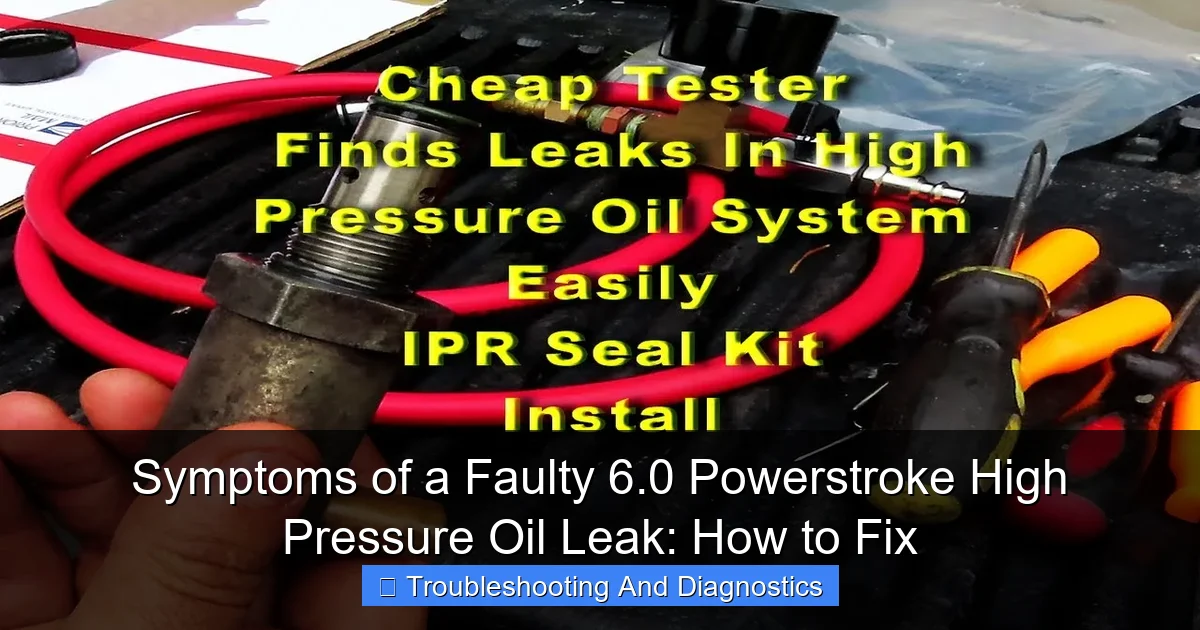
The 6.0 Powerstroke uses high pressure oil to fire the injectors. This system relies on a pump, rails, and seals to build strong pressure. When any part leaks, the engine cannot run right.
Applying these proven insights on Symptoms of a Faulty helps you avoid costly mistakes. The high pressure oil pump sits in the front cover. It pulls oil from the main sump and pushes it through the rails. These rails run along the top of each cylinder head. They feed oil straight into the fuel injectors. For our complete category overview. Core buyer criteria, explore our cornerstone guide to Upgrading 6.0 Powerstroke Engine Components for Performance: Boost Power and Efficiency.
Each injector uses oil pressure to spray fuel into the cylinder. If pressure drops, the fuel does not atomize well. This causes poor combustion and weak power. You may also see black smoke from the exhaust.
The system needs tight seals at every joint. Dummy plugs cap the rail ends. Stand pipes hold oil in the rails when the engine stops. O-rings stop leaks at the injector bases. If one seal fails, pressure bleeds off fast.
Heat and time wear out these parts. Old oil breaks down and forms sludge. Sludge blocks small oil passages. This starves the injectors of pressure. Regular oil changes keep the system clean and strong.
You must know how the system works before you fix it. A good grasp of the parts helps you find the leak fast.
- Oil Pump: This part creates the high pressure needed for injection.
- Oil Rails: These tubes carry oil to each injector under pressure.
- Dummy Plugs: These seals stop oil from escaping at the rail ends.
- Stand Pipes: These parts help maintain pressure in the rail system.
- Injector Seals: These keep oil from leaking at the injector base.
Regular checks keep your engine healthy and strong. Small leaks grow into big problems if you ignore them.
Spotting Symptoms of a Faulty High Pressure Oil Leak
You will notice clear signs when the oil system leaks. The truck may crank for a long time before starting. It might also stall or run rough at idle.
Always replace dummy plugs and stand pipe seals as a set. Mixing old and new parts can cause uneven pressure and new leaks.
Long crank time is the first clue. The engine turns over many times before it fires. This happens because the rails lack enough pressure to open the injectors. You may hear the starter motor grind for ten seconds or more.
Rough idle comes next. The truck shakes when stopped at a light. You feel vibration in the steering wheel and seat. One or more injectors may not fire on every cycle. This creates a miss that you can hear and feel.
Power loss happens under load. You press the gas and the truck does not respond. Merging onto the highway feels slow and scary. Towing a trailer becomes nearly impossible. The engine may also surge up and down.
Low oil pressure shows on the dash gauge. The needle drops below the normal range while driving. At idle, the pressure may fall even lower. This warns you that oil is leaking somewhere in the high pressure circuit.
Wet oil spots near the rails confirm a leak. Look under the valve covers and around the rail fittings. Fresh oil looks dark and shiny. Old oil looks black and grimy. Either way, you have a seal that needs spare.
Black smoke from the exhaust is another sign. Unburned fuel exits the tailpipe when injection pressure is low. You may also notice a strong diesel smell in the cab or near the truck.
These warning signs mean you should check the system right away. Fast action saves you from a tow bill or worse.
- Long Crank Time: Engine turns over many times before it fires up.
- Rough Idle: Truck shakes and feels uneven when stopped.
- Low Oil Pressure: Gauge reads lower than normal while driving.
- Oil Leaks: You see wet oil near the rails or fittings.
li>Power Loss: You feel less strength when you press the gas.
Write down what you see and hear. This list helps you explain the issue to a mechanic.
Tools You Need for the Fix
Gather the right tools before you start work. You need basic hand tools and a few special items for this job. Having everything ready saves time and stress.
A clean workspace also helps you spot small leaks and parts. Lay out your tools on a clean mat. Keep a magnetic tray for bolts and small clips. This prevents lost parts and keeps the job moving.
You will need a good set of metric sockets. Most rail bolts use 10mm or 12mm heads. A deep socket helps reach bolts in tight spots. A ratchet with a swivel head makes the job easier.
A torque wrench is critical. You must tighten rail bolts to factory spec. Over-tightening can crack the rail or strip the threads. Under-tightening leaves a leak path. Buy a beam or click-style torque wrench that reads in inch-pounds.
An oil catch pan keeps the mess contained. Drain some oil before you open the rails. This stops oil from pouring onto the ground. Dispose of used oil at a recycling center or auto parts store.
Shop rags wipe away oil and dirt. Use clean rags to dry the rails before you install new seals. Dirt on a sealing surface causes a new leak right away. Brake cleaner helps degrease the area before reassembly.
Spare seals are the heart of the fix. Get new dummy plugs and stand pipe seals. Buy injector O-rings if you remove the injectors. Choose quality parts that match your engine year. Cheap seals often fail again soon.
A scan tool helps you test the repair. It reads live injector data and oil pressure values. You can confirm that pressure builds correctly after the fix. This saves guesswork and time.
Buy quality parts that match your engine year. Cheap seals often fail again soon.
- Socket Set: You need metric sockets to remove rail bolts.
- Torque Wrench: This tool tightens bolts to the right spec.
- Oil Catch Pan: Use this to catch old oil safely.
- Shop Rags: Clean rags wipe away oil and dirt.
- Replacement Seals: Get new dummy plugs and stand pipe seals.
Step-By-Step Repair Guide
First, disconnect the battery for safety. Then drain some oil and remove the valve covers. This gives you access to the high pressure oil rails.
Park the truck on level ground. Set the parking brake. Disconnect the negative battery cable. This stops accidental starts while you work.
Drain about two quarts of oil into a catch pan. You do not need to drain the whole pan. Just lower the level enough to stop spills when you open the rails.
Remove the valve covers one at a time. Take off the bolts in a crisscross pattern. Lift the cover off gently. Set it aside on a clean rag.
Next, inspect the dummy plugs and stand pipes for wear. Replace any bad seals and torque the rails back down properly.
Locate the high pressure oil rails. They run along the top of each head. Look for wet spots and damaged seals. Use a flashlight to see into tight corners.
Remove the dummy plugs at the end of each rail. Check the O-rings for cracks or flat spots. Replace them with new ones. Lubricate the new O-rings with clean oil before installation.
Pull out the stand pipes if they show wear. These sit under the dummy plugs. Install new stand pipes with fresh seals. Do not reuse old O-rings. For complementary picks and expert testing advice, see our guide on Symptoms of a Faulty EBP (Exhaust Back Pressure) Sensor on a 6.0 Powerstroke Engine.
Torque the rail bolts to factory spec. Use your torque wrench for this step. Follow the sequence in your service manual. This ensures even pressure across the rail.
- Disconnect Battery: Remove the negative cable to stop power.
- Drain Oil: Let some oil out into a catch pan.
- Remove Covers: Take off the valve covers to reach rails.
- Inspect Rails: Look for wet spots and damaged seals.
- Replace Parts: Install new dummy plugs and stand pipes.
- Torque Bolts: Tighten rail bolts to factory spec.
Double check all connections before you start the engine. A loose bolt can cause a new leak right away.
Testing Your Repair Work
Reconnect the battery and turn the key to the on position. Listen for the oil pump to build pressure. Then crank the engine and watch for smooth starts.
Turn the key to the run position. Do not start the engine yet. Listen for the high pressure oil pump to cycle. You may hear a faint hum or whine. This means the pump is building pressure in the rails.
Crank the engine. It should start faster than before. If it still cranks for a long time, you may have missed a seal. Shut it off and recheck your work.
Check for any oil leaks while the engine runs. If it starts fast and runs smooth, your fix worked.
Watch the oil pressure gauge. It should rise quickly to the normal range. If the needle stays low, pressure is still bleeding off somewhere.
Let the engine idle for five minutes. Look at the rails and fittings. Use a flashlight to check for fresh oil. Wipe any wet spots and recheck after ten minutes.
- Prime System: Turn key on to build oil pressure first.
- Start Engine: Crank and listen for smooth firing.
- Check Idle: Make sure the truck runs even at a stop.
- Inspect for Leaks: Look at rails and fittings for new oil.
- Test Drive: Drive a short distance to confirm power.
If the truck still runs rough, you may have a deeper issue. A scan tool can help find injector or sensor faults.
Take a short test drive. Accelerate gently at first. Then try harder acceleration. The truck should feel strong and smooth. No smoke, no shaking, no loss of power.
If the truck still runs rough, you may have a deeper issue. A scan tool can help find injector or sensor faults.
Preventing Future Oil Leaks
Regular upkeep keeps your high pressure oil system strong. Change your oil on time and use the right filter. Clean oil prevents seal wear and sludge buildup.
Change your oil every 5,000 miles or sooner. Use the viscosity top for your climate. Synthetic oil handles heat better and lasts longer. It also keeps seals soft and pliable.
Replace the oil filter with every change. A clogged filter restricts flow to the high pressure pump. This causes wear and low pressure over time.
Check your oil rails and fittings during every oil change. Catching a small leak early saves you from a big repair later.
Look for wet spots under the hood often. A flashlight helps you see dark areas. Catch a drip before it becomes a puddle.
- Oil Changes: Use quality oil and change it on schedule.
- Filter Replacement: Install a new filter with every oil change.
- Visual Checks: Look for wet spots under the hood often.
- Seal Replacement: Change dummy plugs every few years.
- Warm Up: Let the engine warm before hard driving.
Good habits extend the life of your 6.0 Powerstroke. A little care goes a long way.
Summary Table: Common Leak Sources and Fixes
Testing Symptoms of a Faulty side by side makes it much easier to choose with confidence. [
[EZ_UI_BLOCK_2]
]
Best Practices for 6.0 Powerstroke Owners
Follow these dos and don’ts to keep your truck running strong. Simple habits prevent costly breakdowns and keep your engine healthy.
Warm up the engine before hard driving. Cold oil is thick and does not flow well. Let it idle for a few minutes in winter. This protects the pump and seals from stress.
Never ignore a small leak. A drip today can become a flood tomorrow. Fix wet spots right away to save money and stress.
Keep a log of your upkeep. Write down oil changes, seal spares, and repairs. This helps you track patterns and spot issues early.
Use a scan tool to monitor injector health. Check for codes related to injection control pressure. Early detection saves you from major injector failure. For complementary picks and expert testing advice, see our guide on Symptoms of a Bad 7.3 Powerstroke ICP Sensor: Diagnosing and Repairing.
Do not skip service intervals. The 6.0 Powerstroke needs regular care. Stick to your schedule and your truck will last for many miles.
Follow these dos and don’ts to keep your truck running strong. Simple habits prevent costly breakdowns and keep your engine healthy.
- Do Use Quality Oil: Pick the right viscosity for your climate.
- Do Check Levels: Look at your dipstick every few weeks.
- Do Warm Up: Let oil circulate before you drive hard.
- Don’t Ignore Leaks: Fix wet spots right away.
- Don’t Skip Service: Stick to your upkeep schedule.
These habits protect your investment and your wallet. A well-maintained truck lasts for many miles.
When to Call a Professional Mechanic
Some repairs are too big for a home garage. Know your limits before you start. A bad injector or cracked rail needs expert help.
Never work on a hot engine. Let it cool down to avoid burns and oil spray injuries.
- If You Replace: If you replace seals. The truck still runs rough, call a pro.
- Have a Faulty: You may have a faulty injector or a worn pump.
- These Parts Need: These parts need special tools to test and replace.
A cracked high pressure oil rail is a serious issue. You cannot fix it with sealant or tape. It must be replaced by a shop with the right parts.
If you see metal shavings in the oil, stop driving. This means internal engine damage. A mechanic must inspect the pump and bearings right away.
Safety matters most when you work on your engine. If you feel unsure, call a trusted diesel mechanic. Quality work keeps you and your truck safe on the road.
Gather required tools and clear your work area before starting.
Confirm baseline specs and maker guidelines first.
Complete each stage in order without skipping safety checks.
Run a quick test pass and wipe down key parts after use.
| Leak Source | Common Symptom | Fix Method | Difficulty |
|---|---|---|---|
| Dummy Plugs | Long crank time | Replace plugs | Easy |
| Stand Pipes | Rough idle | Replace seals | Medium |
| Oil Rails | Low pressure | Tighten or replace | Medium |
| Injector Seals | Oil at base | Replace injector seals | Hard |
| Pump Wear | No pressure | Replace pump | Hard |
Frequently Asked Questions
What Are the Symptoms of a Faulty High Pressure Oil System?
The main signs include long crank times, rough idle, and loss of power. You may also see low oil pressure on your gauge. Wet spots near the oil rails confirm a leak.
Can I Drive with a High Pressure Oil Leak?
You should not drive if the truck runs rough or lacks power. Driving can damage the injectors or leave you stranded. Fix the leak before you drive again.
How Much Does It Cost to Fix?
Parts like dummy plugs and seals cost under two hundred dollars. Labor at a shop can add several hundred more. Doing it yourself saves a lot of money.
How Often Should I Check My Oil System?
Check your oil level and look for leaks every time you fill up with fuel. A full inspection during each oil change is also smart.
Will a Scan Tool Help Find the Leak?
A scan tool shows injector data and oil pressure readings. It helps you confirm if the high pressure system is the problem. This saves guesswork and time.
Final Thoughts and Next Steps
You now know the signs of a high pressure oil leak on your 6.0 Powerstroke. Watch for hard starts, rough idle, and power loss. Fixing these issues early protects your engine.
Gather your tools and follow the steps in this guide. Take your time and check every seal and fitting. Your truck will thank you with strong power.
If you feel unsure, call a trusted diesel mechanic. Safety and quality matter most when you work on your engine.