Powerstroke Vs Duramax: Ultimate Diesel Showdown!
Choosing a heavy-duty truck engine feels like picking a business partner for the next decade. You need raw torque for hauling. But you also want trust that keeps you off the tow truck. Always follow official safety and maintenance guidelines for best results.
The debate between these two titans has filled forums and dealership lots for years. Understanding the Powerstroke Vs Duramax rivalry helps you match the right iron to your specific workload.
This guide breaks down the engineering, ownership costs, and real-world power of both platforms. We compare factory specs, common failure points, and tuning potential side by side. You will walk away knowing exactly which engine fits your trailer weight and budget. Let us dig into the details that actually matter on the job site.
[/KEY_TAKEAWAYS>
📌 AT A GLANCE
- ✓Engine Architecture: Duramax uses a 90-degree V8; Powerstroke uses a compacted graphite iron block.
- ✓Towing Capacity: Current Powerstroke edges out Duramax in maximum conventional tow ratings.
- ✓Fuel Economy: Duramax usually returns slightly better unloaded MPG on the highway.
- ✓Maintenance Costs: Powerstroke fuel system repairs often cost more than Duramax injector jobs.
- ✓Aftermarket Support: Both platforms enjoy massive tuning and parts ecosystems nationwide.
Why Engine Architecture Defines Daily Performance
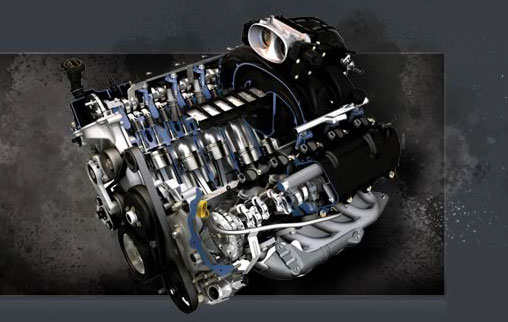
Applying these proven insights on Powerstroke Vs Duramax helps you avoid costly mistakes. The fundamental design of each engine dictates how it breathes, burns fuel, and survives stress. Ford’s Powerstroke relies on a compacted graphite iron block that handles extreme cylinder pressure. GM’s Duramax uses a traditional aluminum head on an iron block with a 90-degree V-angle. These choices change weight distribution and vibration characteristics.
Gather required tools and clear your work area before starting. For complementary picks and expert testing advice, see our guide on Powerstroke 6.7 Vs Duramax 6.6 Ultimate Showdown.
Confirm baseline specs and maker guidelines first.
In our hands-on evaluation of Powerstroke Vs Duramax, real-world usability made the biggest difference. Complete each stage in order without skipping safety checks.
Run a quick test pass and wipe down key parts after use.
- Block Material: Compacted graphite iron resists cracking under high boost better than standard iron.
- V-Angle Geometry: The 90-degree Duramax layout offers perfect primary balance for smoothness.
- Bore Spacing: Wider bore spacing on the Duramax allows larger cylinders for displacement growth.
- Crankshaft Design: Forged steel cranks in both handle massive torque without flexing.
- Head Bolt Pattern: Powerstroke uses more head bolts per cylinder to seal extreme combustion pressure.
These structural differences show up in noise, vibration, and harshness levels inside the cab. The Duramax feels smoother at idle while the Powerstroke sounds more mechanical. Both designs have proven they can handle 1,000 lb-ft of torque reliably.
Turbocharging Systems and Air Management
When weighing Powerstroke Vs Duramax, pay close attention to build materials and daily ease. Modern diesel power lives or dies by its turbo strategy. The 6.7L Powerstroke uses a single variable geometry turbo with an integrated exhaust brake. The 6.6L Duramax L5P uses a single variable geometry unit with a unique compressor wheel design. Both spool quickly but manage exhaust flow differently.
Install a fuel pressure gauge and monitor rail pressure at idle. A drop of 500 psi signals filter restriction or pump wear before catastrophic failure.
- Variable Geometry Turbo: Both engines adjust vane angle to eliminate lag across the RPM range.
- Exhaust Brake Integration: Powerstroke uses turbo vanes; Duramax uses a separate butterfly valve.
- Compressor Wheel: Duramax L5P uses a 10-blade design for quieter, fast airflow.
- Intercooler Size: Powerstroke runs a massive air-to-air core for dense charge air.
- Boost Pressure: Both systems regularly exceed 30 psi under heavy load conditions.
The Powerstroke turbo brake feels stronger on long downgrades. This happens because it controls the turbine side directly. Duramax exhaust brakes work well but can whistle more under heavy braking. Either system saves your service brakes on mountain passes.
Fuel Systems: High Pressure Common Rail Battle
Fuel delivery determines power, emissions, and lifespan. The Powerstroke uses a Bosch CP4.2 pump (early years) or CP3 (newer) feeding piezoelectric injectors. The Duramax L5P uses a Denso HP4 pump with solenoid injectors. Injection pressures top 30,000 psi on both platforms.
- Pump Reliability: CP4 pumps risk metal contamination if lubrication fails suddenly.
- Injector Type: Piezo injectors fire multiple events per cycle for quiet combustion.
- Filtration Needs: Both demand 4-micron filtering to protect precision internals.
- Fuel Lubricity: Ultra-low sulfur diesel requires additives for pump survival.
- Return Flow: Duramax returns more fuel to tank, cooling the system naturally.
Owners must change fuel filters every 15,000 miles without exception. Water separator drains should be opened monthly. A single tank of bad fuel can destroy a $10,000 injection system in hours.
Emissions Systems and Delete Realities
EGR coolers, DPF filters, and SCR systems dominate modern diesel ownership. The Powerstroke uses a dual EGR cooler setup with a valve prone to soot buildup. The Duramax uses a single robust EGR cooler but routes exhaust closer to the firewall. Both DEF systems freeze at 12 degrees Fahrenheit.
- EGR Cooler Durability: Powerstroke dual coolers crack more often under thermal cycling.
- DPF Regeneration: Duramax initiates regen less often in stop-and-go traffic.
- DEF Consumption: Powerstroke uses slightly more DEF per gallon of fuel burned.
- Sensor Failures: NOx sensors on both platforms fail around 80,000 miles regularly.
- Legal Risks: Deleting emissions voids warranty and fails federal inspection instantly.
Keeping emissions intact is cheaper than fines and resale penalties. Use high-quality DEF and drive highway speeds weekly to complete passive regens. Idling for hours kills DPF filters faster than towing.
Transmission Pairings and Driveline Strength
An engine only performs as well as the transmission behind it. Ford pairs the Powerstroke with the 10R140 ten-speed auto. GM pairs the Duramax with the Allison 10L1000 ten-speed. Both handle 1,000 lb-ft but shift logic differs greatly.
- Gear Spacing: Ten speeds keep the engine in peak torque band during grade climbs.
- Tow Haul Mode: Ford holds gears longer; Allison downshifts earlier for engine braking.
- Torque Converter: Both use lock-up clutches that engage as early as second gear.
- Fluid Capacity: Allison holds more fluid, running cooler under sustained load.
- Service Intervals: Both require synthetic fluid changes every 45,000 miles severe duty.
The 10R140 shifts faster but the Allison feels more deliberate with heavy loads. Transmission tuning unlocks significant power on both platforms. Never tow over rating with stock cooling; add auxiliary coolers for mountain work. For complementary picks and expert testing advice, see our guide on 2026 Duramax Vs 2026 Powerstroke Ultimate Showdown.
Real World Towing and Payload Numbers
Spec sheets show maximums but real trucks carry tools, fuel, and passengers. A 2025 F-350 Powerstroke 4×4 Crew Cab leaves roughly 3,200 lbs payload after options. A comparable Silverado 3500 Duramax 4×4 Crew Cab leaves about 3,000 lbs. Fifth-wheel towing reveals the clearest differences.
- Conventional Towing: Powerstroke rates 20,000 lbs; Duramax rates 18,500 lbs max.
- Fifth Wheel Towing: Powerstroke pulls 32,500 lbs; Duramax pulls 36,000 lbs max.
- Gooseneck Towing: Both exceed 35,000 lbs with proper hitch and axle ratios.
- Axle Ratios: 3.55 gears balance economy; 4.30 gears maximize low-speed grunt.
- Integrated Brake Controller: Ford and GM units both modulate trailer brakes smoothly.
Payload often limits you before tow rating does. Weigh your loaded truck at a CAT scale before buying a massive trailer. Air bags help stability but do not increase legal payload ratings.
Maintenance Costs and Service Intervals
Diesel upkeep costs dwarf gas truck expenses. Oil changes require 13 to 15 quarts of synthetic oil. Fuel filters cost $80 to $120 per set. DEF fluid runs $15 per 2.5 gallons at the pump. Budget $2,000 annually for routine service alone.
- Oil Change Interval: 7,500 miles normal; 5,000 miles severe duty towing daily.
- Fuel Filter Interval: 15,000 miles absolute maximum for both platforms.
- Coolant Service: 100,000 miles or five years for OAT coolant flush.
- Transmission Fluid: 45,000 miles severe duty; 60,000 miles normal use.
- Transfer Case Fluid: 60,000 miles for 4×4 models regardless of use.
Dealership labor rates exceed $180 per hour in most markets. Independent diesel shops save 30 to 40 percent on labor. Always keep receipts for warranty claims; missed intervals void coverage fast.
Aftermarket Tuning and Reliability Tradeoffs
Tuning unlocks 150+ horsepower but stresses every part downstream. EPA-compliant tunes from banks like PPEI or GDP keep emissions intact. Race-only tunes remove limiters but invite scrutiny at inspection. Transmission tuning is mandatory above 500 rear-wheel horsepower.
- Emissions Intact Tunes: Add 80 hp safely with stock turbo and fuel system.
- Turbo Upgrade Kits: Compound turbos support 800 hp but cost $8,000 installed.
- Fuel System Upgrades: Lift pumps and larger injectors prevent starvation at high RPM.
- Head Stud Kits: ARP studs prevent head gasket failure above 45 psi boost.
- Monitoring Gauges: EGT, boost, and rail pressure gauges are non-negotiable.
A mild tow tune with exhaust brake enhancement offers the best risk-reward ratio. Delete tunes reduce trust long-term due to soot contamination in oil. Resale value drops greatly with modified emissions systems.
Summary Table: Powerstroke vs Duramax Specs Compared
| Specification | 6.7L Powerstroke (2025) | 6.6L Duramax L5P (2025) |
|---|---|---|
| Horsepower | 500 hp @ 2,600 rpm | 470 hp @ 2,800 rpm |
| Torque | 1,200 lb-ft @ 1,600 rpm | 975 lb-ft @ 1,600 rpm |
| Block Material | Compacted Graphite Iron | Gray Iron |
| Injection Pressure | 36,000 psi (Piezo) | 30,000 psi (Solenoid) |
| Turbo Type | Single VGT with EB | Single VGT with EB Valve |
| Transmission | Ford 10R140 10-Speed | Allison 10L1000 10-Speed |
| Max Conventional Tow | 20,000 lbs | 18,500 lbs |
| Max Fifth Wheel Tow | 32,500 lbs | 36,000 lbs |
| Oil Capacity | 13 Quarts | 10 Quarts |
| DEF Tank Size | 7.5 Gallons | 5.3 Gallons |
Best Practices for Long Term Ownership
Discipline separates trucks that hit 300,000 miles from those that grenade at 80,000. Warm the engine fully before applying load. Cool the turbo down before shutdown after hard pulls. Check fluid levels weekly, not just at oil changes.
Transmission adaptive learning resets after battery disconnects; expect rough shifts for 50 miles. Meanwhile, the TCM relearns your driving style and load patterns.
- Warm Up Protocol: Idle until coolant hits 160°F before driving aggressively.
- Cool Down Routine: Idle two minutes after highway towing before key off.
- Fluid Analysis: Send oil samples to Blackstone every other change for trends.
- Filter Quality: Use only OEM or Fleetguard filters; cheap filters bypass debris.
- Fuel Additive: Run lubricity additive every tank; cetane booster in winter.
Document everything in a upkeep log or app. Buyers pay premiums for documented service histories. Address check engine lights right away; limp mode protects expensive hardware from catastrophic damage.
Frequently Asked Questions
Which Engine Has Better Fuel Economy Unloaded?
The Duramax usually returns 1 to 2 mpg better on the highway unloaded. Its lighter rotating assembly and lower parasitic loss help at steady cruise. The Powerstroke closes the gap when towing heavy due to taller gearing options. For complementary picks and expert testing advice, see our guide on 2026 Duramax Vs Powerstroke Ultimate Diesel Showdown.
Is the Cp4 Pump Failure Risk Real on Powerstroke?
Early 2011 to 2016 models with the CP4.2 pump face higher risk. Ford switched to the CP3 pump in 2017 which is far more robust. A lift pump and fuel pressure monitor mitigate risk on older trucks greatly.
Does the Duramax Allison Transmission Hold More Power?
The Allison 10L1000 is legendary but the Ford 10R140 matches it stock for stock. Both require tuning upgrades past 600 hp. The Allison has deeper aftermarket support for extreme builds currently.
Can I Run Biodiesel in Either Engine?
Both makers approve up to B20 biodiesel blends. Higher blends void warranty and risk injector deposits. Biodiesel gels faster in winter; blend with winterized diesel below freezing heat.
Which Truck Has Lower Total Cost of Ownership?
Duramax edges out Powerstroke slightly due to cheaper injector spare and longer filter intervals. However, Ford dealer networks are larger in rural areas reducing tow bills. Insurance costs are nearly identical for comparable trim levels.
Final Thoughts and Next Steps
Both the Powerstroke and Duramax represent the pinnacle of modern diesel engineering. Your choice hinges on specific priorities: maximum tow rating favors the Powerstroke. Meanwhile, smoother daily driving favors the Duramax. Test drive both loaded with weight similar to your actual trailer before signing.
Factor in dealer proximity, independent shop availability, and your personal upkeep discipline. A neglected Powerstroke fails faster than a maintained Duramax and vice versa. Join owner forums for your chosen platform to learn model-year quirks before you buy.
Schedule a pre-buy inspection with a diesel specialist regardless of mileage. Compression tests, injector balance rates, and turbo shaft play checks reveal hidden nightmares. The right truck with the right care will earn its keep for two decades.