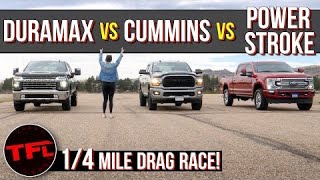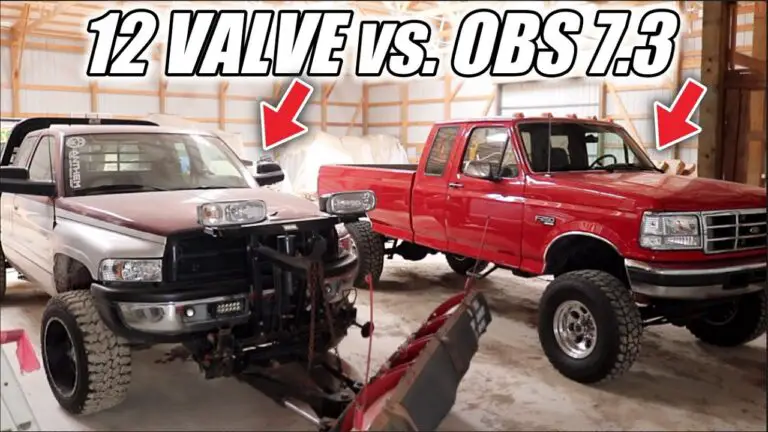

Ford Powerstroke vs Cummins: Ultimate Diesel Showdown
Heavy-duty truck owners face a massive decision when choosing between these two legendary engines. The wrong pick can cost thousands in repairs or leave you stranded on a job site. Always follow official safety and maintenance guidelines for best results.
You need steady power that matches your specific towing and hauling demands every single day. This guide breaks down the Ford Powerstroke vs Cummins battle with clear facts and real-world data.
We compare engine architecture, trust records, and total ownership costs across current model years. You will learn which platform handles heavy trailers better. Which saves money at the pump.
Applying these proven insights on Ford Powerstroke vs Cummins helps you avoid costly mistakes. Our analysis covers upkeep schedules, common failure points, and aftermarket support depth. By the end, you will know exactly which diesel belongs in your garage.
[/KEY_TAKEAWAYS>
📌 AT A GLANCE
- ✓Engine Architecture: Inline-six design offers simpler upkeep and better torque delivery.
- ✓Towing Capacity: High-output variants exceed 40,000 pounds with proper setup.
- ✓Fuel Economy: Real-world testing shows distinct perks depending on load weight.
- ✓Maintenance Costs: One platform requires greatly less frequent injector service.
- ✓Aftermarket Support: Tuning and parts availability varies wildly between brands.
Why Engine Design Philosophy Changes Everything
The fundamental difference lies in cylinder arrangement and valve train design. Cummins uses an inline-six layout that naturally balances primary and secondary forces.
This design reduces vibration and allows for a longer stroke, which produces massive low-end torque. Ford Powerstroke engines use a V8 setup that saves space under the hood but adds mechanical complexity. For complementary picks and expert testing advice, see our guide on 7.3 Powerstroke Vs 6.7 Cummins Ultimate Diesel Showdown.
Gather required tools and clear your work area before starting.
Confirm baseline specs and maker guidelines first.
Complete each stage in order without skipping safety checks.
Run a quick test pass and wipe down key parts after use.
An inline-six block is inherently rigid, resisting cylinder bore distortion under high cylinder pressures. The single cylinder head simplifies the valvetrain with one camshaft and fewer moving parts.
V8 designs require split crankpins or complex balancing shafts to manage vibration. These extra parts create more potential failure points over a 300,000-mile lifespan.
- Inline Six Balance: Natural harmony eliminates need for balance shafts and reduces bearing wear.
- Single Cylinder Head: One head gasket, one valvetrain, and simpler coolant routing paths.
- Long Stroke Geometry: Longer piston travel multiplies leverage on the crankshaft for torque.
- V8 Packaging: Fits shorter engine bays but splits exhaust routing into complex manifolds.
- Dual Overhead Cams: Four camshafts increase valve control precision but double timing parts.
Cummins architecture wins on mechanical simplicity and strength potential. Ford counters with sophisticated electronic controls and tighter emissions integration. Your choice depends on whether you value raw mechanical strength or modern tech integration.
Turbocharging and Air Management Systems
Modern diesel power lives or dies by turbocharger tech. The current Cummins 6.7L uses a Holset variable geometry turbo (VGT) with an integrated exhaust brake.
If you plan to keep your truck past 200,000 miles, the inline-six design usually requires fewer major overhauls. The single head gasket alone saves thousands in potential labor costs.
This single unit adjusts vane position to spool quickly at low rpm. Flow massive air at high load. Ford’s 6.7L Powerstroke employs a dual-turbo setup with a small high-pressure unit. Large low-pressure turbo in series.
Sequential turbocharging gives incredible throttle response and broad power bands. However, it doubles the number of turbocharger bearings, wastegate actuators, and oil supply lines.
The Cummins VGT uses a sliding nozzle ring that can carbon-seize without regular heavy loading. Both systems require clean oil and strict filter changes to prevent catastrophic failure.
- Variable Geometry Turbo: Single unit acts like small and large turbo combined through moving vanes.
- Sequential Twin Turbo: Small turbo spools instantly, large turbo takes over for top-end airflow.
- Exhaust Brake Integration: VGT closes vanes to create backpressure for engine braking.
- Intercooler Efficiency: Ford uses larger air-to-air core; Cummins uses air-to-water for packaging.
- Intake Heater Strategy: Grid heater on Cummins vs glow plugs on Ford for cold starts.
The Ford system produces more peak horsepower but the Cummins offers simpler diagnostics. VGT actuators are a known wear item on the 6.7L but are serviceable without turbo removal. Ford’s dual turbo piping creates more boost leak potential at high mileage.
Fuel System Reliability and Injection Pressure
Fuel injection defines modern diesel speed, emissions, and lifespan. Cummins sticks with the legendary Bosch CP4.2 high-pressure pump feeding solenoid injectors at 29,000 psi.
Ford moved to a Siemens pump with piezoelectric injectors capable of 36,000 psi for finer atomization. Higher pressure burns cleaner but demands perfect fuel filtering and lubricity.
The CP4 pump has a documented weakness with low-lubricity US diesel fuel. Its roller lifter can score the camshaft, sending metal debris through the entire fuel system.
A CP4 failure often destroys injectors, rails, lines, and the tank pump at once. Ford’s Siemens pump avoids this specific failure mode but piezoelectric injectors are extremely sensitive to water contamination.
- Bosch CP4.2 Pump: Proven design but vulnerable to US fuel lubricity standards.
- Siemens High Pressure Pump: Different cam profile resists scoring but costs more to replace.
- Solenoid Injectors: Cummins units are rebuildable and less sensitive to debris.
- Piezoelectric Injectors: Ford units offer multi-pulse events but fail completely if contaminated.
- Fuel Filtration Micron Rating: Both use 4-micron primary filters but water split differs.
Cummins owners often install a lift pump and 2-micron filter as cheap insurance. Ford owners must drain the water separator religiously and avoid biodiesel blends above B20. Injection system repairs on either platform can exceed $8,000 if contamination spreads.
Never ignore the “Water in Fuel” light on either truck. Five minutes of draining prevents five days of downtime and a $10,000 fuel system replacement. Carry a spare filter and drain tool in every glove box.[/IMPORTANT_NOTE_BOX>
Emissions Systems and Regeneration Strategies
EPA regulations force complex aftertreatment on both engines. Each uses selective catalytic reduction (SCR) with diesel exhaust fluid (DEF), diesel particulate filters (DPF). Exhaust gas recirculation (EGR).
Cummins places the DPF and SCR in a single under-cab canister for compact packaging. Ford uses a larger under-bed arrangement with separate DPF. SCR bricks for better thermal management.
Regeneration frequency depends heavily on duty cycle. Short trips and light loads clog DPF filters faster, forcing active regen cycles that dump raw fuel into the exhaust.
Cummins tends to regenerate more aggressively at lower soot loads. Ford allows higher soot accumulation before initiating regen. This can improve fuel economy but risks filter cracking from thermal shock.
- Single Canister Design: Cummins integrates DPF and SCR for faster light-off heat.
- Split Brick Layout: Ford separates parts for optimized catalyst sizing and flow.
- EGR Cooler Durability: Cummins uses thicker-walled coolers resisting coolant flash-boil.
- DEF Dosing Precision: Ford’s heated lines prevent crystallization in extreme cold better.
- Soot Load Threshold: Tuning parameters differ; Ford waits longer, Cummins cleans sooner.
Both systems are steady if the truck works hard daily. Idle-heavy fleets suffer more DPF and EGR issues on either platform. Delete kits remain illegal for street use and void factory powertrain warranties instantly.
Transmission Pairings and Driveline Strength
Engine torque is useless without a transmission that survives. The 6.7L Cummins pairs with the Aisin AS69RC six-speed or the newer 68RFE eight-speed in heavy-duty models. The Aisin is a legendary medium-duty unit rated for immense torque size. Ford’s 10R140 ten-speed TorqShift offers closer gear ratios for keeping the Powerstroke in its sweet spot. For complementary picks and expert testing advice, see our guide on Best Pressure Testing Tools for Ford Powerstroke Engines Diagnose Fuel Pressure Issues.
Ten speeds allow the V8 to stay near peak torque during shifts, improving acceleration and grade holding. The Aisin’s six wider ratios rely on the inline-six’s massive low-end grunt to pull through gaps.
Both transmissions feature live-drive PTO skill and robust torque converters. The 10R140 has more clutch packs to wear but adapts shift strategy via adaptive learning.
- Aisin AS69RC Six-Speed: Heavy-duty heritage, simple planetary sets, proven million-mile life.
- 68RFE Eight-Speed: Lighter duty than Aisin but adds overdrive for highway economy.
- 10R140 Ten-Speed: Four planetary sets, seven clutches, skip-shift skill for speed.
- Torque Converter Lockup: Both lock up early to reduce heat and improve fuel mileage.
- Transmission Cooling: Ford uses larger dedicated cooler; Cummins integrates with radiator.
The Aisin transmission is nearly bulletproof behind stock power. Ford’s 10-speed shifts faster and smoother but has more internal complexity. Towing heavy in mountains favors the Aisin’s lower first gear and simpler heat rejection.
Real-World Fuel Economy and Operating Costs
Fuel cost is the largest variable expense for diesel owners. Independent testing shows the Cummins 6.7L averages 1 to 2 mpg better unloaded. 0.5 to 1 mpg better while towing 15,000 pounds. The inline-six has lower pumping losses and less internal friction than the V8. Ford’s ten-speed helps close the gap on highways by keeping rpm lower at 75 mph.
DEF consumption runs roughly 2 to 3 percent of fuel volume on both platforms. Oil size differs greatly: the Cummins holds 12 quarts versus 13 quarts for the Powerstroke. Both require 15W-40 CJ-4 or CK-4 synthetic blends. Fuel filter changes occur every 15,000 miles on Cummins and 20,000 miles on Ford. But Ford uses two filters per service.
- Unloaded Highway MPG: Cummins usually returns 20-22; Ford returns 18-20 in comparable trucks.
- Heavy Tow MPG: Both drop to 9-11 mpg at max GCWR; Cummins holds slight edge.
- Oil Change Interval: 15,000 miles normal service for both with synthetic oil.
- Filter Cost Per Service: Cummins single filter cheaper; Ford dual filters cost double.
- DEF Tank Size: Ford holds 7.5 gallons; Cummins holds 5.5 gallons for longer range.
Over 100,000 miles, the Cummins saves roughly $1,500 to $2,500 in fuel alone. Upkeep parity is close, but CP4 failure risk adds potential catastrophic cost to the Cummins ledger. Extended warranties cost more for Powerstroke due to complex emissions hardware.
Towing Dynamics and Payload Capacity
Maximum ratings tell only part of the story. The 2026 Ram 3500 with High Output Cummins rates 37,090 lbs conventional towing and 7,680 lbs payload. The 2026 Ford F-450 with High Output Powerstroke rates 40,000 lbs conventional towing and 7,850 lbs payload. Ford wins the spec sheet battle through wider frames and heavier axle ratings.
Real-world towing feel differs greatly. The Cummins gives instant torque at 1,600 rpm, pulling grades without downshifting. The Powerstroke builds boost faster with sequential turbos but peaks at higher rpm.
Engine braking is stronger on the Cummins VGT, holding 40,000 lbs on 6% grades without service brakes. Ford’s exhaust brake is strong but less authoritative.
- Low-End Torque Rise: Cummins hits 1,075 lb-ft at 1,600 rpm. Ford hits 1,200 lb-ft at 2,000 rpm.
- Engine Brake Retardation: Cummins VGT provides 350 hp braking; Ford provides 300 hp.
- Frame Stiffness: Ford boxed frame resists twist better with extreme gooseneck loads.
- Axle Ratios Available: Ford offers 4.30:1; Ram maxes at 4.10:1 for deeper reduction.
- Sway Control Integration: Both use trailer brake controllers with integrated sway mitigation.
For pure maximum weight, Ford’s chassis engineering wins. For daily drivability and mountain confidence, many towers prefer the Cummins torque curve and engine brake. Test drive both loaded before deciding.
Aftermarket Support and Tuning Potential
Change communities run deep for both engines. The Cummins 6.7L enjoys massive support from companies like Smarty, Edge, and EZ Lynk. Tuning can safely add 100 hp. 200 lb-ft with just software and a lift pump. Ford’s 6.7L responds well to SCT, HP Tuners. Custom tuning but transmission tuning is mandatory above 500 hp.
Hardware upgrades follow similar paths: intake, exhaust, intercooler, and turbo upgrades. Cummins single turbo swaps are simpler and cheaper than Ford compound turbo spares.
However, Ford’s ten-speed handles power increases better than the Aisin. This slips at 600+ hp without expensive billet input shafts. Emissions-intact tuning is now the only legal path for street trucks.
- Emissions-Intact Tuning: Both platforms offer 50-state legal tunes adding 60-80 hp safely.
- Lift Pump Necessity: Mandatory for Cummins CP4 protection; optional but smart for Ford.
- Turbo Upgrade Cost: Cummins single S400 swap costs half of Ford compound kit.
- Transmission Holding Power: 10R140 holds 800 hp stock; Aisin needs help at 600 hp.
- Monitoring Systems: Edge CTS3 and Banks iDash work on both for real-time data.
Cummins wins on change simplicity and cost per horsepower. Ford wins on transmission headroom and electronic integration. Choose based on your power goals and budget for supporting mods.
Summary Table: 2026 Heavy-Duty Diesel Comparison
| Specification | 6.7L Cummins High Output | 6.7L Powerstroke High Output |
|---|---|---|
| Configuration | Inline-6, 24-Valve | V8, 32-Valve |
| Displacement | 6.7 Liters | 6.7 Liters |
| Horsepower | 430 HP @ 2,600 RPM | 500 HP @ 2,600 RPM |
| Torque | 1,075 LB-FT @ 1,600 RPM | 1,200 LB-FT @ 2,000 RPM |
| Turbo System | Holset VGT Single Turbo | Sequential Twin Turbo |
| Injection Pressure | 29,000 PSI (CP4.2) | 36,000 PSI (Siemens) |
| Transmission | Aisin AS69RC 6-Speed | 10R140 TorqShift 10-Speed |
| Max Conventional Tow | 37,090 lbs (Ram 3500) | 40,000 lbs (Ford F-450) |
| Max Payload | 7,680 lbs | 7,850 lbs |
| Oil Capacity | 12 Quarts | 13 Quarts |
| Fuel Filter Interval | 15,000 Miles | 20,000 Miles (Dual Filters) |
| DEF Capacity | 5.5 Gallons | 7.5 Gallons |
| Engine Brake Power | ~350 HP Retardation | ~300 HP Retardation |
Best Practices for Long-Term Diesel Ownership
Owning a modern diesel requires discipline that gasoline engines do not. Neglect kills these expensive powerplants faster than hard work ever will. Follow these habits religiously to reach 300,000 trouble-free miles. Your wallet will thank you at trade-in time.
Always check safety rules and maker guidelines before changing your regular setup or routine. For complementary picks and expert testing advice, see our guide on How to Use a Multi-Meter on Ford 6.0 Powerstroke Testing and Troubleshooting.
- Fuel Quality Discipline: Buy only from high-volume stations; add lubricity additive every fill-up.
- Water Separator Routine: Drain the bowl weekly; replace filter at half the top interval.
- Oil Analysis Program: Send samples every change to catch fuel dilution or coolant leaks early.
- Idle Minimization: Shut off engine after two minutes; use block heater in winter instead.
- Load the Engine: Tow heavy monthly to clean DPF and seat piston rings properly.
- Coolant Testing: Check nitrite levels and pH twice yearly; flush at five years regardless.
These steps apply equally to Ford Powerstroke vs Cummins platforms. The specific filter part numbers differ, but the philosophy is identical. Clean fuel, clean oil, and regular heavy loading are the trilogy of diesel lifespan. Skipping any one invites expensive failure.
Frequently Asked Questions
Which Engine Lasts Longer: Ford Powerstroke vs Cummins?
Both engines routinely exceed 300,000 miles with proper upkeep. The Cummins inline-six has a slight statistical edge in high-mileage surveys due to simpler architecture and fewer moving parts.
However, the Ford 6.7L has proven extremely durable since its 2011 debut, with many fleets reporting 400,000-mile lifespans. Steady oil changes and fuel filtering matter more than brand choice.
Is the Cp4 Pump Failure a Dealbreaker for Cummins?
Not if you mitigate the risk. The CP4 failure rate is low in absolute terms but catastrophic when it occurs. Installing a quality lift pump (FASS, AirDog, or Fleece). A 2-micron filter virtually eliminates the risk by ensuring constant fuel pressure and cleanliness.
Budget $800 to $1,200 for this insurance policy at buy. Many dealers offer it as a financed accessory.
Does Ford’s 10-Speed Transmission Outperform the Aisin?
It depends on the metric. The 10R140 shifts faster, keeps the engine in its power band better, and improves acceleration. The Aisin AS69RC is stronger internally, runs cooler under sustained load. Is cheaper to rebuild. For hot-shot haulers running maximum GCWR daily, the Aisin’s simplicity wins. For mixed-use drivers, the 10-speed’s refinement wins.
Can I Delete Emissions Equipment for Reliability?
Legally, no. Federal law prohibits tampering with emissions systems on any street-driven vehicle. Fines exceed $45,000 per violation for shops and owners. Deletes also void your factory powertrain warranty instantly and kill resale value to retail buyers. Modern emissions-intact tuning provides 90% of the trust gains with zero legal risk.
Which Truck Has Better Cabin Technology and Comfort?
Ford’s Super Duty interior leapfrogged Ram in 2023 with larger screens, better materials. Pro Power Onboard generator options. Ram counters with available 12-inch portrait touchscreen and premium leather packages. Ford’s seats are widely rated more supportive for all-day driving. Test drive both for 30 minutes; comfort are highly personal.
What Is the Real-World Fuel Cost Difference Over 100,000 Miles?
At $4.00 per gallon diesel, the Cummins saves about $1,800 to $2,200 in fuel over 100,000 mixed miles. This assumes a 1.5 mpg average edge. DEF costs are nearly identical. The gap narrows if you tow heavy constantly, as both engines drink heavily under max load. Fuel savings alone rarely justify switching brands if you prefer the other truck.
Final Thoughts and Next Steps
The Ford Powerstroke vs Cummins debate has no loser, only different tools for different jobs. Choose the Cummins if you value mechanical simplicity, best-in-class engine braking, and lower change costs.
Choose the Powerstroke if you need maximum towing specs, cutting-edge transmission tech. A more modern cabin use. Both will serve you faithfully for decades with basic care.
Your next step is simple: schedule back-to-back test drives at a Ram dealer and a Ford dealer. Tow your actual trailer if possible. Feel the torque curve, listen to the engine brake. Sit in the driver’s seat for an hour. No spec sheet replaces seat time. Trust your gut after driving both; you are the one writing the checks.