Ford 6.0 Powerstroke Horsepower and Torque: Performance Insights
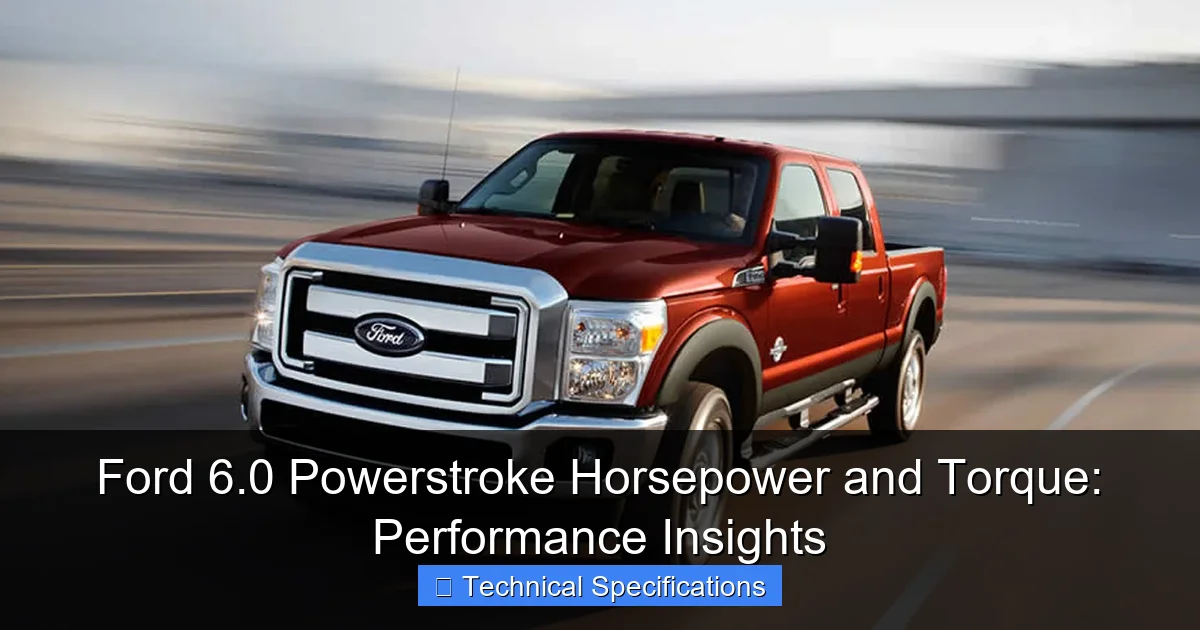
Featured image for this comprehensive guide about Ford 6.0 Powerstroke horsepower and torque
Image source: rasekhoon.net
The Ford 6.0 Powerstroke diesel engine. Few names in the automotive world evoke such a strong mix of admiration, frustration, and sheer fascination. Introduced in late 2002 for the 2003 model year, this V8 beast was designed to replace the legendary 7.3L Powerstroke, a daunting task for any engine. While its journey was certainly rocky, plagued by well-documented reliability issues, one aspect that consistently impressed was its raw performance potential. Drivers who understand its quirks and have taken the necessary steps to “bulletproof” it often swear by its incredible power delivery and capability.
For many truck enthusiasts and heavy-duty users, the heart of any diesel engine discussion revolves around one thing: power. Specifically, we’re talking about the critical metrics of Ford 6.0 Powerstroke horsepower and torque. These numbers don’t just look good on a spec sheet; they dictate a truck’s ability to tow massive loads, conquer challenging terrain, and deliver exhilarating acceleration when needed. Understanding the factory specifications, what they mean in real-world driving, and how to safely unlock even more power is crucial for any 6.0L owner or prospective buyer.
In this comprehensive guide, we’ll dive deep into the fascinating world of the Ford 6.0 Powerstroke horsepower and torque. We’ll explore its factory ratings across different model years, decode what those numbers truly signify for your driving experience, and reveal the pathways to safely enhancing its performance. Get ready to gain insightful knowledge that will help you appreciate, maintain, and potentially unleash the full might of this iconic, albeit controversial, Ford Powerstroke engine.
Quick Answers to Common Questions
What are the factory Ford 6.0 Powerstroke horsepower and torque figures?
The 6.0L Powerstroke typically produced 325 horsepower and 560 lb-ft of torque from the factory, though figures varied slightly by year. These robust numbers provided ample power for towing and hauling right off the lot.
How did the Ford 6.0 Powerstroke horsepower and torque stack up against its competitors?
Absolutely! At its release, the 6.0L Powerstroke offered competitive horsepower and torque, making it a powerful contender in the heavy-duty truck market. Its impressive output was a significant leap forward for Ford diesel trucks.
Is it easy to get more Ford 6.0 Powerstroke horsepower and torque?
Yes, relatively so! Many owners easily boost their Ford 6.0 Powerstroke horsepower and torque with aftermarket tuning, often seeing significant gains. This platform responds well to common modifications.
What’s the go-to method for increasing Ford 6.0 Powerstroke horsepower and torque?
The most popular method is custom engine tuning or a performance programmer, which optimizes fuel delivery and turbo boost. This can unlock substantial improvements in Ford 6.0 Powerstroke horsepower and torque with a relatively simple installation.
How much extra Ford 6.0 Powerstroke horsepower and torque can I realistically expect from common mods?
With basic tuning, it’s common to see gains of 80-150 horsepower and 150-250 lb-ft of torque or more. More extensive modifications can push the Ford 6.0 Powerstroke horsepower and torque even further, delivering a truly exhilarating driving experience.
📋 Table of Contents
- Understanding the Heart of the Beast: The 6.0 Powerstroke Engine
- Ford 6.0 Powerstroke Horsepower and Torque: The Factory Numbers
- Beyond the Factory: Unlocking More 6.0 Powerstroke Performance
- The Impact of Performance on Reliability: A Balancing Act
- Driving Experience: What Does That Power Feel Like?
- Choosing the Right Path: Stock vs. Modified 6.0 Powerstroke
- Conclusion
Understanding the Heart of the Beast: The 6.0 Powerstroke Engine
Before we dissect the numbers, let’s briefly touch upon what makes the 6.0L Powerstroke tick. Developed by International Navistar and branded by Ford, this 32-valve, 6.0-liter (365 cubic inch) V8 turbocharged diesel engine was a technological leap from its predecessor. It featured a host of advanced systems designed to meet stricter emissions standards and deliver more power in a smaller, lighter package. This included a variable geometry turbocharger (VGT), a high-pressure common rail injection system, and an upgraded Electronic Control Unit (ECU).
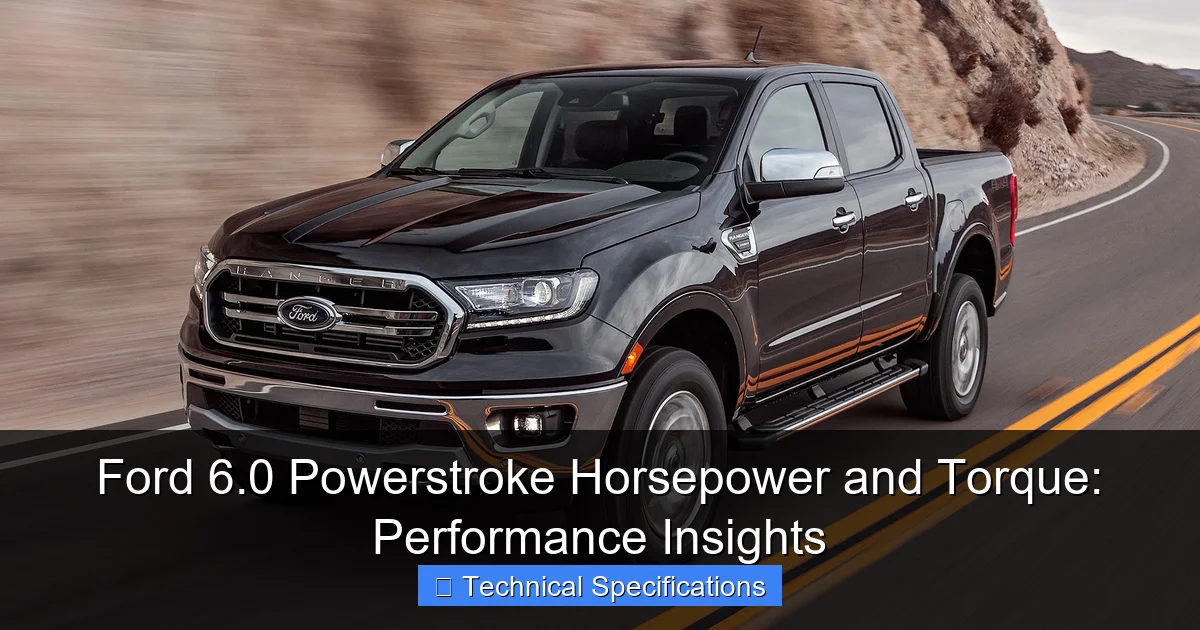
Learn more about Ford 6.0 Powerstroke horsepower and torque – Ford 6.0 Powerstroke Horsepower and Torque: Performance Insights
Image source: motortrend.com
Key Design Elements and Innovations
- Variable Geometry Turbocharger (VGT): This was a significant innovation, allowing the turbo to adjust its exhaust housing geometry. This meant quicker spool-up at lower RPMs for reduced turbo lag and better boost control across the entire RPM range, directly impacting accessible 6.0 Powerstroke horsepower and torque.
- High-Pressure Oil Pump (HPOP) and Injectors: The 6.0L utilized a HEUI (Hydraulically actuated Electronically controlled Unit Injector) system, similar to the 7.3L, but refined. It relied on high-pressure oil from the HPOP to actuate the fuel injectors, which then delivered ultra-fine atomized fuel into the cylinders. This precise control contributed to improved combustion and power output.
- Common Rail Fuel System: While not a true common rail like later designs, the 6.0L did feature a high-pressure oil rail and a separate fuel rail. This system provided precise fuel delivery, optimizing power and emissions.
- Intercooler: A large air-to-air intercooler efficiently cooled the compressed air from the turbocharger before it entered the engine, increasing air density and thus, the potential for greater power output.
These sophisticated components collectively contributed to the initial impressive Ford 6.0 Powerstroke horsepower and torque figures, setting a new benchmark for Ford’s heavy-duty truck lineup. However, some of these very innovations also became sources of the engine’s infamous reliability challenges, which often need to be addressed before performance modifications are pursued.
| Model Year Range | Stock Horsepower (HP) | Stock Torque (lb-ft) | Notes / Common Upgrade Impact |
|---|---|---|---|
| 2003 (Early Production) | 300 HP | 560 lb-ft | Initial release figures |
| 2004-2005 | 325 HP | 560 lb-ft | HP increase with same torque rating |
| 2006-2007 | 325 HP | 600 lb-ft | Revised torque specification |
| Common Tuned (Stage 1) | ~375-400 HP | ~700-750 lb-ft | Typical gains from a performance tuner |
Ford 6.0 Powerstroke Horsepower and Torque: The Factory Numbers
When the 6.0 Powerstroke debuted, its factory ratings were a significant upgrade over the outgoing 7.3L. Ford and International aimed for class-leading performance, and on paper, they delivered. Over its production run from 2003 to 2007, the engine saw minor revisions, leading to slight bumps in its official power figures. Understanding these baseline numbers is essential before considering any modifications.
Learn more about Ford 6.0 Powerstroke horsepower and torque – Ford 6.0 Powerstroke Horsepower and Torque: Performance Insights
Image source: ford.com
Decoding Horsepower vs. Torque for the 6.0L
It’s important to differentiate between horsepower and torque, especially for a heavy-duty truck engine:
- Horsepower (HP): This represents the engine’s ability to do work quickly. Higher horsepower generally translates to a higher top speed and better acceleration at higher RPMs. For a truck, it’s about how fast you can get to highway speeds, especially when loaded.
- Torque (lb-ft): This is the rotational force an engine produces. For trucks, torque is arguably more critical than horsepower. It’s what gets a heavy load moving from a standstill, climbs steep grades, and provides the pulling power needed for serious towing and hauling. Diesel engines, like the 6.0 Powerstroke, are renowned for their prodigious torque at low RPMs.
The Ford 6.0 Powerstroke horsepower and torque combination was designed for a perfect balance of these two forces, allowing it to perform admirably under demanding conditions.
Official Ford 6.0 Powerstroke Horsepower and Torque by Model Year
Here’s a breakdown of the factory ratings:
| Model Year | Horsepower (HP) | Torque (lb-ft) |
|---|---|---|
| 2003 (Early) | 325 HP @ 3,300 RPM | 560 lb-ft @ 2,000 RPM |
| 2003 (Late) – 2004 | 325 HP @ 3,300 RPM | 560 lb-ft @ 2,000 RPM |
| 2005 – 2007 | 325 HP @ 3,300 RPM | 570 lb-ft @ 2,000 RPM |
As you can see, the improvements over the years were subtle but present. The jump to 570 lb-ft of torque in later models might seem small, but in the context of towing and hauling, every bit of low-end grunt makes a difference. These figures established the 6.0L as a powerhouse in its class, especially given its displacement.
Beyond the Factory: Unlocking More 6.0 Powerstroke Performance
While the factory Ford 6.0 Powerstroke horsepower and torque figures are respectable, the engine’s true potential lies in its tunability. With the right modifications and a careful approach, owners can significantly boost power output. However, it’s crucial to understand that increasing power without addressing known reliability issues is a recipe for disaster.
Common Performance Modifications
For those looking to get more out of their 6.0L, a range of modifications can enhance 6.0 Powerstroke horsepower and torque:
- Custom Tuning/ECU Flashing: This is often the first and most impactful modification. Aftermarket tuners can optimize fuel delivery, injection timing, turbo boost, and transmission shift points. Gains of 50-150 HP and 100-250 lb-ft of torque are common with a good tune, transforming the truck’s character.
- Cold Air Intake (CAI): Allowing the engine to breathe better by providing a less restrictive flow of cooler, denser air can lead to modest gains in power and improved throttle response.
- Performance Exhaust System: A larger diameter, less restrictive exhaust system reduces backpressure, allowing the turbo to spool faster and the engine to expel exhaust gases more efficiently. This can contribute to better power and often a more aggressive exhaust note.
- Upgraded Fuel System Components: For significant power increases, the stock fuel system might become a limiting factor. Upgraded fuel pumps, injectors (e.g., larger nozzles), and regulated return systems ensure the engine receives adequate fuel under high load.
- Aftermarket Turbochargers: For extreme power, replacing the factory VGT turbo with a larger, more efficient aftermarket unit (or a compound turbo setup) can dramatically increase boost and airflow, leading to very substantial increases in Ford 6.0 Powerstroke horsepower and torque.
- Intercooler Upgrades: A more efficient intercooler can further cool the charged air, allowing for denser air intake and more power potential, especially under sustained high-load conditions.
Realistic Gains and What to Expect
With a combination of basic modifications like a tune, intake, and exhaust, it’s not uncommon to see a 6.0L Powerstroke reach 400-450 HP and 700-800 lb-ft of torque at the wheels. More aggressive builds with upgraded injectors and turbos can push these numbers even higher, often exceeding 500 HP and 1000 lb-ft of torque. However, it’s critical to understand that these significant gains put immense stress on the engine and driveline components.
The key is to balance desired power with reliability. For a daily driver or a truck that frequently tows, moderate power increases (Stage 1 or 2 tunes) are generally sufficient and safer. For racing or extreme pulling, more extensive modifications and “bulletproofing” are absolutely essential.
The Impact of Performance on Reliability: A Balancing Act
This is where the rubber meets the road for the 6.0 Powerstroke. While its potential for high Ford 6.0 Powerstroke horsepower and torque is undeniable, the engine has several design flaws that must be addressed, especially when adding power. Ignoring these can lead to costly and frustrating breakdowns.
Essential “Bulletproofing” for Enhanced Power
Before seriously considering significant power increases, most experienced 6.0L owners advocate for “bulletproofing” the engine. This involves addressing the known weak points to improve reliability. Without these, even moderate power tunes can exacerbate existing issues:
- EGR Cooler Delete or Upgrade: The stock EGR cooler is notorious for failing, leading to coolant leaks, often into the exhaust system, which can cause catastrophic damage. An EGR delete or a robust aftermarket cooler is paramount.
- Head Studs: The factory Torque-To-Yield (TTY) head bolts are prone to stretching under increased cylinder pressure, especially with higher boost levels from tuning. Replacing them with stronger ARP head studs is critical to prevent head gasket failure.
- Upgraded Oil Cooler: The factory oil cooler can plug up, restricting oil flow to the High-Pressure Oil Pump (HPOP) and turbo, leading to a cascade of issues. Upgrading or regularly maintaining the oil cooler is vital.
- High-Pressure Oil Pump (HPOP) System Check/Upgrade: The HPOP system components, particularly the STC (Snap To Connect) fitting and branch tube, can fail. Addressing these prevents a no-start condition.
- Coolant Filtration System: Installing a coolant filter helps remove casting sand and other debris from the cooling system, preventing blockages in the EGR cooler and oil cooler.
By investing in these reliability upgrades, you create a much more robust foundation for safely increasing 6.0 Powerstroke horsepower and torque. Attempting to run aggressive tunes on an un-bulletproofed 6.0L is a high-risk gamble.
Maintenance Practices for a Modified 6.0L
Beyond bulletproofing, diligent maintenance becomes even more critical with increased 6.0 Powerstroke horsepower and torque:
- Frequent Oil Changes: Use high-quality synthetic diesel engine oil and change it at shorter intervals than factory recommendations.
- Fuel Filter Changes: The 6.0L is sensitive to fuel quality. Regular fuel filter changes (both frame-mounted and engine-mounted) are a must.
- Coolant System Maintenance: Flush and refill with high-quality extended-life diesel coolant, and monitor coolant health (pH, nitrates, etc.).
- Monitor Gauges: Install aftermarket gauges (EGT, boost, fuel pressure, oil temperature) to monitor engine vitals, especially when pushing the engine hard.
A well-maintained, bulletproofed, and properly tuned 6.0 Powerstroke can be a truly formidable and reliable machine, offering incredible Ford 6.0 Powerstroke horsepower and torque that rivals much newer diesel engines.
Driving Experience: What Does That Power Feel Like?
So, what do these numbers—factory or modified—actually translate to when you’re behind the wheel of a Ford Super Duty equipped with a 6.0 Powerstroke? The driving experience is where the Ford 6.0 Powerstroke horsepower and torque truly shine.
Towing and Hauling Prowess
This is where the 6.0L excels. The abundance of low-end torque, especially from 2000 RPM, makes light work of heavy trailers. Whether you’re pulling a large fifth-wheel camper, a gooseneck with farm equipment, or a flatbed loaded with construction materials, the 6.0L pulls strong and confidently. Even at highway speeds, there’s ample reserve power for passing or climbing grades without needing to downshift constantly. A modified 6.0L takes this to another level, making heavy loads feel almost effortless.
Daily Driving and Acceleration
For daily driving, the 6.0L offers a spirited experience. The VGT turbo’s quick spool-up minimizes turbo lag, providing excellent throttle response. You’ll feel a surge of power from a standstill, and merging onto highways is done with ease. While not a sports car, the factory 325 HP feels more than adequate for most situations. With a good performance tune, the truck becomes genuinely fast, capable of surprisingly quick 0-60 MPH times for such a large vehicle. The increased 6.0 Powerstroke horsepower and torque make passing on two-lane roads a breeze.
Compared to its Peers
- Vs. 7.3L Powerstroke: The 6.0L offers a noticeable increase in both horsepower and torque over the 7.3L, especially in later models. It’s more refined, quieter, and quicker-revving. While the 7.3L is legendary for its reliability, the 6.0L offers superior performance out of the box and even more so when modified.
- Vs. Later 6.4L and 6.7L Powerstrokes: Later engines certainly surpass the 6.0L in factory power output and refinement. However, a properly built and tuned 6.0L can still hold its own, often at a significantly lower cost of entry and modification. Many enthusiasts still prefer the simpler (relatively) design and the distinct sound of the 6.0L.
The characteristic rumble of a 6.0 Powerstroke, especially with an aftermarket exhaust, is unmistakable. The sensation of being pushed back into your seat by a wave of torque, even with a trailer in tow, is a defining characteristic of this engine. It’s a powerful and engaging driving experience that, once tamed, breeds loyalty among its owners.
Choosing the Right Path: Stock vs. Modified 6.0 Powerstroke
Deciding whether to keep your 6.0L Powerstroke stock or delve into modifications for more Ford 6.0 Powerstroke horsepower and torque is a personal choice that depends on several factors. There’s no single “right” answer, only the right path for your specific needs and budget.
Assessing Your Needs
- Daily Driver/Light Towing: If your truck is primarily a daily commuter with occasional light towing, the factory 6.0 Powerstroke horsepower and torque is likely more than sufficient. You might consider a mild, reliable tune for better fuel economy or slightly improved throttle response, but extensive power mods are unnecessary and potentially risky without reliability upgrades.
- Heavy Towing/Hauling: For those frequently maxing out their truck’s towing capacity, a modest increase in 6.0 Powerstroke horsepower and torque can make a huge difference in confidence and comfort. However, this is where bulletproofing becomes non-negotiable. The added stress of heavy loads combined with increased power demands a robust engine.
- Performance/Racing: If your goal is to compete in drag races, sled pulls, or simply have one of the fastest diesel trucks on the road, then extensive modifications are your path. This requires a significant budget, comprehensive bulletproofing, and an understanding that reliability might still be compromised despite your best efforts.
Budget Considerations for Performance Upgrades
Modifying a 6.0L Powerstroke can range from relatively inexpensive to very costly:
- Basic Tune: ~$400 – $1,000 (depending on tuner and custom options).
- Reliability Upgrades (“Bulletproofing”): This is the most significant investment, often ranging from $3,000 to $8,000+, depending on what’s included (EGR delete, head studs, oil cooler, HPOP repairs, labor). This is money well-spent BEFORE increasing power.
- Performance Components (Intake, Exhaust, Injectors, Turbo): These can add several hundred to several thousand dollars per component. A full build can easily exceed $10,000 on top of bulletproofing.
Always factor in the cost of professional installation and dyno tuning, which ensures everything is working optimally and safely. Cutting corners on parts or labor is a common mistake that leads to bigger problems down the line.
The Importance of Professional Installation and Tuning
The 6.0L Powerstroke is a complex engine. While some owners are highly capable DIY mechanics, certain upgrades, especially tuning and internal engine work, are best left to experienced diesel performance shops. Professional tuners have the expertise and equipment to:
- Optimize the engine’s performance safely, without pushing components beyond their limits.
- Calibrate fuel, boost, and timing precisely for your specific modifications.
- Troubleshoot potential issues and ensure overall system harmony.
A bad tune can cause more damage than almost any other modification. Invest in quality tuning to truly maximize your Ford 6.0 Powerstroke horsepower and torque safely.
Conclusion
The Ford 6.0 Powerstroke is an engine with a polarizing legacy, but its performance capabilities are rarely questioned. From its respectable factory Ford 6.0 Powerstroke horsepower and torque figures of 325 HP and up to 570 lb-ft, to its incredible potential for modification, this engine has proven it can deliver serious power for towing, hauling, and spirited driving. However, its story is also a testament to the crucial relationship between power and reliability.
For those willing to address its well-known weaknesses through meticulous “bulletproofing” and disciplined maintenance, the 6.0 Powerstroke transforms into a true workhorse and a performance monster. The ability to safely boost its 6.0 Powerstroke horsepower and torque allows owners to tailor their truck’s performance precisely to their needs, turning a challenging engine into a rewarding one. Whether you choose to keep it stock and appreciate its original design or unleash its full potential, understanding the nuances of its power output is key to maximizing your ownership experience.
Ultimately, the 6.0 Powerstroke remains a significant chapter in Ford’s diesel history – a powerful, complex, and capable engine that continues to capture the hearts and minds of dedicated diesel enthusiasts worldwide. Its impressive Ford 6.0 Powerstroke horsepower and torque, coupled with the right care, ensures it will continue to haul, tow, and accelerate with authority for years to come.
🎥 Related Video: Shift On The Fly 6.0 Powerstroke Tuning 💪🇺🇲 Blessedperformance.com 1-800-577-2698
📺 Blessed Performance LLC
Frequently Asked Questions
What are the stock horsepower and torque figures for the Ford 6.0 Powerstroke?
The Ford 6.0 Powerstroke typically came with factory ratings of 325 horsepower and 560 lb-ft of torque. These figures made it a strong performer for its time, especially in heavy-duty truck applications like the Ford Super Duty.
How does the torque of the 6.0 Powerstroke benefit towing and hauling?
The impressive torque output of the 6.0 Powerstroke, particularly its 560 lb-ft, is crucial for towing and hauling heavy loads. High torque at lower RPMs allows the truck to accelerate and maintain speed under significant stress, making it very capable for commercial and recreational towing.
Can the 6.0 Powerstroke’s horsepower and torque be significantly increased with modifications?
Absolutely, the 6.0 Powerstroke has considerable potential for performance upgrades. Many owners modify these engines with aftermarket tuners, larger turbos, and upgraded fuel systems to achieve significantly higher horsepower and torque figures, often reaching well over 400 HP and 800+ lb-ft.
How do the 6.0 Powerstroke’s horsepower and torque compare to other Ford Powerstroke engines?
The 6.0 Powerstroke offered a substantial increase in horsepower and torque over its predecessor, the 7.3L Powerstroke, which generally produced around 275 HP and 525 lb-ft. While impressive for its era, it was later surpassed by the 6.4L and 6.7L Powerstroke engines in factory output.
Does “bulletproofing” a 6.0 Powerstroke affect its horsepower and torque?
“Bulletproofing” primarily addresses common reliability issues like head gasket failure, oil cooler problems, and EGR cooler issues, rather than directly increasing power. However, by improving the engine’s integrity and cooling, it allows the engine to safely handle stock power levels more reliably and also enables it to support increased horsepower and torque from other modifications without premature failure.
Are there factors that can cause a 6.0 Powerstroke’s actual horsepower and torque to differ from factory ratings?
Yes, several factors can influence the actual power output of a 6.0 Powerstroke, including maintenance history, fuel quality, altitude, and the condition of components like injectors and the turbocharger. Over time, worn components or poor maintenance can lead to a decrease in the engine’s peak horsepower and torque.