7.3 Powerstroke Injector Nozzle Size: Optimal Settings for Performance
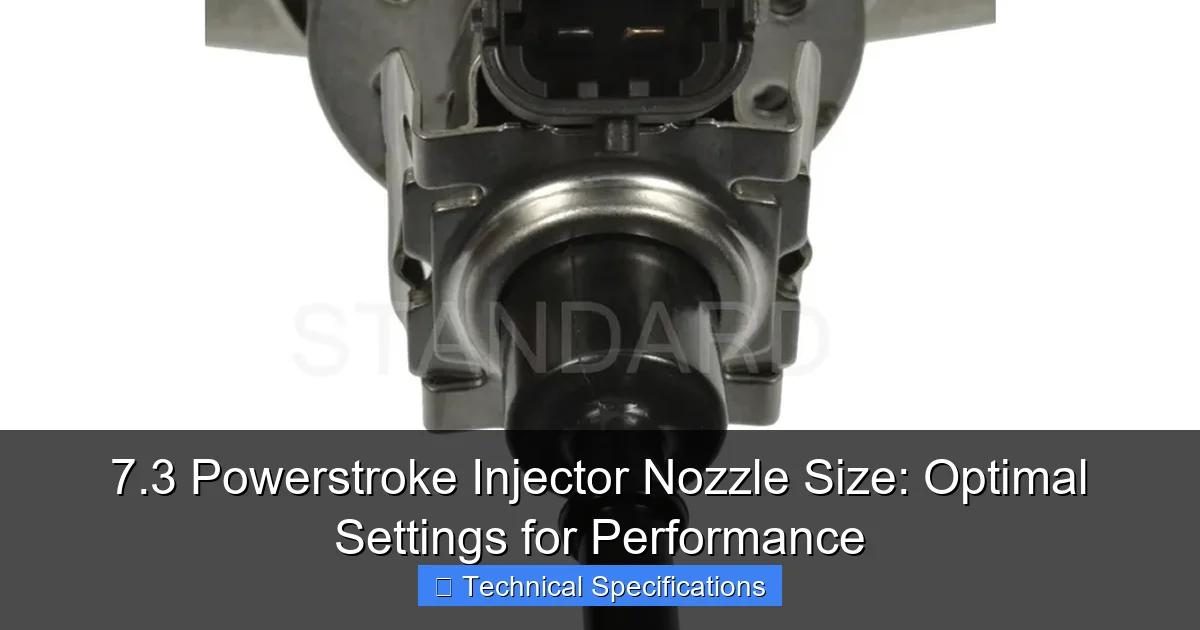
Featured image for this comprehensive guide about 7.3 Powerstroke injector nozzle size
Image source: idparts.com
7.3 Powerstroke Injector Nozzle Size: Optimal Settings for Performance
Ah, the legendary 7.3 Powerstroke. For countless truck enthusiasts and working professionals, this iconic diesel engine represents the pinnacle of reliability, raw power, and an unmistakable growl. It’s an engine that, with the right care and modifications, can truly stand the test of time and outperform expectations. But when it comes to unlocking its full potential, few components are as critical as the fuel injectors, and specifically, understanding the nuanced world of 7.3 Powerstroke injector nozzle size.
You see, your truck’s injectors are like the heart of its fuel delivery system. They dictate precisely how much fuel enters the combustion chamber, how finely it’s atomized, and the pattern in which it sprays. Get this wrong, and you’re looking at issues ranging from excessive smoke and poor fuel economy to high EGTs (Exhaust Gas Temperatures) and a significant drop in power. Get it right, however, and you’ll transform your 7.3 into a beast that’s not only more powerful but potentially more efficient and responsive. This comprehensive guide will dive deep into everything you need to know about 7.3 Powerstroke injector nozzle size, helping you make informed decisions for your rig.
Whether you’re chasing more horsepower, better towing capabilities, or simply want to optimize your engine’s longevity and fuel efficiency, understanding injector nozzle dynamics is paramount. We’ll explore the stock offerings, demystify aftermarket options, and reveal how choosing the correct injector nozzle size can dramatically impact your truck’s performance. Prepare to unlock the secrets that lie within your 7.3 Powerstroke’s fuel system!
Quick Answers to Common Questions
What does the 7.3 Powerstroke injector nozzle size actually mean for my truck?
The 7.3 Powerstroke injector nozzle size refers to the specific diameter of the tiny holes at the tip of your fuel injectors, which directly controls how much fuel sprays into the cylinder per injection. It’s a critical factor that dictates your engine’s fuel delivery, power output, and even fuel economy.
How do I know what 7.3 Powerstroke injector nozzle size I currently have?
If your truck is stock, you’ll likely have the factory 7.3 Powerstroke injector nozzle size. For modified trucks, you’d typically look at the injector codes stamped on the injector body or consult previous build records; aftermarket injectors often specify their flow rate (e.g., 160cc, 238cc) and nozzle size (e.g., 0%, 30%, 80%).
Why would someone want to change their 7.3 Powerstroke injector nozzle size?
Most enthusiasts change their 7.3 Powerstroke injector nozzle size to increase fuel delivery for more horsepower and torque, especially when combined with other performance upgrades like a larger turbocharger or custom tuning. It’s all about matching the fuel delivery to your engine’s air intake and power goals.
What are some common upgrade options for 7.3 Powerstroke injector nozzle size?
Popular 7.3 Powerstroke injector nozzle size upgrades range from mild options like 160/0 or 160/30 for towing and light performance, to much larger sizes such as 238/80 or 250/100 for serious high-horsepower builds. The first number usually indicates the injector’s flow rate in cubic centimeters, while the second refers to the nozzle’s flow increase over stock.
Will changing my 7.3 Powerstroke injector nozzle size require other modifications?
Yes, absolutely! When you install a larger 7.3 Powerstroke injector nozzle size, custom tuning is almost always mandatory to properly manage the increased fuel flow and prevent engine damage. You might also need a stronger high-pressure oil pump (HPOP), a better fuel pump, and potentially a bigger turbo to fully maximize the benefits of the extra fuel.
📋 Table of Contents
- Understanding Your 7.3 Powerstroke Injector System
- What Exactly is “Injector Nozzle Size”?
- Stock 7.3 Powerstroke Injector Nozzle Sizes and Their Limitations
- Upgrading Your 7.3 Powerstroke Injector Nozzle Size: Performance & Considerations
- The Impact of Nozzle Size on Performance Metrics
- Making the Right Choice: Tips for Selecting Your 7.3 Powerstroke Injector Nozzle Size
- Conclusion
Understanding Your 7.3 Powerstroke Injector System
Before we delve into the specifics of 7.3 Powerstroke injector nozzle size, it’s crucial to grasp the fundamental workings of your engine’s fuel injection system. The 7.3L Powerstroke utilizes a High-Pressure Oil Pump (HPOP) driven, Hydraulically Actuated Electronically Controlled Unit Injector (HEUI) system. This innovative design, introduced by International Navistar, uses engine oil pressure to actuate the fuel injectors, providing extremely precise control over fuel delivery.
Learn more about 7.3 Powerstroke injector nozzle size – 7.3 Powerstroke Injector Nozzle Size: Optimal Settings for Performance
Image source: c8.alamy.com
The Basics of HEUI Injection
In a HEUI system, the HPOP pressurizes engine oil, which is then sent to the injectors. Inside each injector, this high-pressure oil acts on an intensifier piston, which in turn amplifies the pressure on the fuel. This super-pressurized fuel is then forced through the tiny orifices of the injector nozzle into the combustion chamber. The precise timing and duration of this injection are controlled by the engine’s Powertrain Control Module (PCM), which sends an electrical signal to a solenoid on each injector.
| Injector Flow Rate (cc) | Nozzle Size (% over Stock) | Estimated Horsepower Range (RWHP)* | Primary Application |
|---|---|---|---|
| 140cc (Stock AD/AE) | 0% (Stock) | 235 – 275 HP | Daily Driver, Light Towing, OEM Replacement |
| 160cc | 0% (Stock) | 300 – 350 HP | Mild Performance, General Towing, Improved Economy |
| 160cc | 30% over Stock | 325 – 375 HP | Enhanced Performance, Heavy Towing, Street Use |
| 200cc | 30% over Stock | 375 – 450 HP | Performance Build, Street/Strip, Heavy Hauling |
| 238cc | 80% over Stock | 475 – 550+ HP | Aggressive Performance, Competition, Drag/Sled Pulling |
| 250cc+ | 100%+ over Stock | 550 – 650+ HP | Dedicated Racing, Max Effort Competition Builds |
This ingenious system allows for incredibly high injection pressures, leading to excellent fuel atomization and efficient combustion. However, the performance and characteristics of this atomization are heavily dependent on the design and nozzle size of the injector itself.
Stock Injector Types: Split Shot vs. Single Shot
The 7.3 Powerstroke came with two primary types of stock injectors: split shot and single shot. Understanding which type you have is the first step in considering any upgrades.
- Split Shot Injectors: Most 7.3L Powerstrokes from late 1999 to 2003 came with split shot injectors. These injectors deliver fuel in two distinct events: a small “pilot” shot followed by the main injection. This design was primarily implemented to reduce combustion noise and improve emissions. While quieter, the two-stage injection process can be less efficient for maximizing power, especially when chasing high horsepower numbers. Common split shot injector codes include AD and AE.
- Single Shot Injectors: Earlier 7.3L Powerstrokes (1994.5-early 1999) typically utilized single shot injectors. As the name suggests, these deliver all the fuel in one continuous burst. This simpler injection strategy is often preferred for performance applications because it allows for a more potent, consolidated fuel charge, leading to better power potential when properly tuned. Common single shot injector codes include AB, AC, and AL.
While an injector upgrade can involve changing from split shot to single shot, the critical common denominator for both types, and the focus of our discussion, remains the 7.3 Powerstroke injector nozzle size.
The Role of the Nozzle in Fuel Delivery
The nozzle is the business end of the injector. It’s where the highly pressurized fuel exits the injector body and enters the combustion chamber. The design of this small, yet immensely important, component directly influences the quality of the fuel spray. Factors like the number of holes, their diameter, and the spray angle all work in concert to determine how effectively fuel mixes with air for combustion. A well-designed nozzle ensures optimal atomization, leading to more complete burns, better power, lower emissions, and improved fuel economy.
What Exactly is “Injector Nozzle Size”?
When enthusiasts talk about “7.3 Powerstroke injector nozzle size,” they’re referring to a combination of specifications that dictate the flow characteristics of the injector’s tip. It’s not just a single dimension, but a set of parameters that work together to define how fuel is atomized and delivered into the cylinder. Let’s break down these critical aspects.
Learn more about 7.3 Powerstroke injector nozzle size – 7.3 Powerstroke Injector Nozzle Size: Optimal Settings for Performance
Image source: cocolo-ent.co.jp
Explaining the Parameters: Hole Count, Diameter, and Spray Angle
- Hole Count: This refers to the number of orifices on the tip of the injector nozzle. Common configurations include 5-hole, 6-hole, and 7-hole designs. More holes generally allow for a wider, more even spray pattern, which can improve fuel distribution within the cylinder.
- Hole Diameter (Micron Size): This is perhaps the most direct measure of “size.” The diameter of each individual hole on the nozzle is measured in microns. Larger holes allow more fuel to pass through in a given amount of time, increasing the injector’s overall flow rate. However, simply going bigger isn’t always better, as hole diameter also impacts fuel atomization. Smaller holes generally produce finer, more easily combustible droplets.
- Spray Angle: The angle at which the fuel is sprayed from the nozzle is also crucial. It needs to be matched to the specific combustion chamber design of the 7.3 Powerstroke to ensure the fuel is directed optimally for mixing with air and efficient combustion. An incorrect spray angle can lead to fuel washing down cylinder walls or hitting pistons, both of which are detrimental to performance and longevity.
How These Factors Influence Fuel Atomization, Spray Pattern, and Combustion Efficiency
The interplay of these three factors is what defines a nozzle’s performance:
- Fuel Atomization: This is the process of breaking liquid fuel into a fine mist of tiny droplets. Excellent atomization is vital because smaller droplets have a larger surface area relative to their volume, allowing them to vaporize and mix with air more readily. This leads to a more complete and efficient burn, yielding more power and less unburnt fuel (smoke). Generally, smaller nozzle holes contribute to finer atomization, assuming sufficient fuel pressure.
- Spray Pattern: The shape and distribution of the fuel exiting the nozzle. An ideal spray pattern ensures that fuel is evenly distributed throughout the combustion chamber, maximizing air-fuel mixture quality.
- Combustion Efficiency: This is the ultimate goal. When fuel is well-atomized and evenly distributed, it burns more completely, converting more of the fuel’s chemical energy into mechanical energy. This results in higher power output, better fuel economy, and reduced emissions.
Relationship Between Flow Rate and Nozzle Size
It’s important to understand that while 7.3 Powerstroke injector nozzle size (specifically, the hole diameter and count) directly impacts flow, the overall “size” of an injector is often described by its flow rate. Injectors are typically rated by their maximum fuel delivery, often expressed in cubic millimeters per thousand strokes (cc/1000) or simply “cc.” For example, a “160/30” injector means it’s a 160cc injector with a 30% larger-than-stock nozzle. The nozzle percentage (e.g., 30%, 80%, 100%) indicates how much larger the total nozzle area is compared to a stock injector, directly correlating to its potential fuel flow capacity.
A larger nozzle size allows more fuel to be delivered per injection event, which translates to more power potential. However, simply installing larger nozzles without considering other factors like fuel pressure, turbocharger capabilities, and engine tuning is a recipe for disaster. The engine needs to be able to efficiently burn the extra fuel, which is where proper tuning and supporting modifications become critical.
Stock 7.3 Powerstroke Injector Nozzle Sizes and Their Limitations
When your 7.3 Powerstroke rolled off the factory line, it was equipped with injectors designed to meet a balance of power, emissions, and reliability for a broad range of driving conditions. These stock injectors, while robust, have inherent limitations that become apparent when you start pushing for more performance. Understanding these limitations is key to appreciating the benefits of an aftermarket 7.3 Powerstroke injector nozzle size upgrade.
Discuss Common Stock Injector Codes and Characteristics
Over the production run of the 7.3L Powerstroke, several different stock injector codes were used. While their exact specifications can vary slightly, here’s a general overview:
- AB Code Injectors (1994.5-1997): These are single shot injectors, typically found in early “OBS” (Old Body Style) 7.3s. They generally flow around 120-130cc (cubic centimeters) with a relatively small nozzle. These are often considered good for mild upgrades due to their single-shot design.
- AC Code Injectors (Early 1999): Also single shot, these were found in some early “Super Duty” trucks. They share similar flow characteristics to ABs but are less common.
- AD Code Injectors (Late 1999-2003): These are the most common stock injectors for the Super Duty 7.3L. They are split shot injectors, typically flowing around 140cc. Their split shot design, as discussed, provides quieter operation and reduced emissions but can limit peak power potential compared to a single-shot equivalent.
- AE Code Injectors (Some 1999 models): These are a less common variation of split shot injectors, often found in California emissions trucks, typically flowing around 135cc.
- AL Code Injectors (Wicked Wheel 2 type injectors for specific applications): Less common, these were sometimes used in high altitude applications or specific fleet vehicles. They are single shot injectors and often flow around 140cc.
The “nozzle size” on these stock injectors is relatively conservative, designed for efficient operation within factory parameters. For instance, a stock AD injector might have a 6-hole nozzle with relatively small diameter holes to ensure excellent atomization for emissions compliance and driveability.
Why Stock Might Not Be Enough for Modified Engines
While perfect for stock applications, factory injectors hit a ceiling quickly when you introduce performance modifications. If you’ve upgraded your turbocharger, installed a performance air intake, or especially if you’re running custom tuning, your engine’s ability to ingest and process more air will quickly outpace the stock injectors’ ability to deliver enough fuel. This leads to a lean condition, which manifests in several undesirable ways:
- High EGTs (Exhaust Gas Temperatures): When your engine runs lean, combustion temperatures skyrocket. Excessively high EGTs (above 1250-1300°F sustained) can lead to serious engine damage, including cracked cylinder heads, melted pistons, and turbocharger failure. Stock injectors simply can’t provide the necessary fuel to cool the combustion charge under heavy load with more airflow.
- Excessive Smoke: Counter-intuitively, too little fuel can sometimes lead to black smoke, especially if the tuning isn’t optimized for the air/fuel ratio. More commonly, if you try to push stock injectors beyond their limits with an aggressive tune, the fuel isn’t atomized or burned efficiently, resulting in thick black smoke.
- Poor Fuel Economy: While more fuel might seem like it would hurt economy, optimized larger injectors, especially with a proper 7.3 Powerstroke injector nozzle size and custom tuning, can actually improve efficiency. Stock injectors struggling to meet demand will work harder and less efficiently, potentially decreasing MPG in modified setups.
- Power Ceiling: Ultimately, the biggest limitation of stock injectors is their inability to support significant horsepower gains. If your goal is to move beyond 300-350 horsepower reliably, you’ll inevitably need to upgrade your injectors to a larger 7.3 Powerstroke injector nozzle size and flow rate.
The stock injectors are a compromise, and for anyone looking to truly wake up their 7.3, they quickly become the bottleneck. Upgrading them opens up a world of performance possibilities, but it demands careful consideration of the right injector nozzle size and supporting modifications.
Upgrading Your 7.3 Powerstroke Injector Nozzle Size: Performance & Considerations
Once you’ve decided to move beyond the limitations of stock injectors, you’re faced with a vast array of aftermarket options. This is where understanding 7.3 Powerstroke injector nozzle size becomes paramount, as the choices you make will directly impact your truck’s performance, driveability, and longevity. The goal is to match your injectors to your specific goals and supporting modifications, creating a balanced and powerful system.
Matching Injectors to Your Goals
Before even looking at specific injector codes, define what you want your 7.3 to do:
- Horsepower Targets: Are you aiming for a modest bump to 350 HP, a robust 400-450 HP for daily driving and towing, or pushing the envelope for 500+ HP? Each tier requires progressively larger 7.3 Powerstroke injector nozzle sizes and higher flow rates.
- Fuel Economy vs. Raw Power: While often inversely related, a properly sized and tuned injector can offer a good balance. Going too large without proper tuning will destroy economy, but a well-matched upgrade might even improve it slightly under certain conditions due to increased efficiency.
- Towing vs. Street Performance: Towing requires excellent EGT management and consistent power delivery through a wide RPM range. Overly aggressive injectors might be fine for short bursts of power on the street but could lead to dangerously high EGTs when pulling a heavy load up a long grade.
Common Aftermarket Injector Nozzle Sizes and Codes
Aftermarket injectors for the 7.3 Powerstroke are typically described by two numbers: their flow rate in cubic centimeters (cc) and the percentage increase in their nozzle’s flow area over a stock nozzle. For example, a “160/30” injector is a 160cc injector with a 30% larger nozzle than stock. Let’s look at some popular options:
- “Mild” Upgrades (e.g., 160/0, 160/30, 180/30):
- 160/0 (stock AD nozzle on a single shot body): Often referred to as “Stage 1” or “AD-code single shots,” these use a stock AD nozzle on a larger single-shot injector body. They flow around 160cc but retain the stock 7.3 Powerstroke injector nozzle size for atomization. Good for 350-375 HP.
- 160/30: A 160cc injector with a 30% larger nozzle. Excellent choice for improved towing, moderate horsepower gains (375-400 HP), and good driveability. A very popular all-around upgrade.
- 180/30: Slightly more flow than 160/30, also with a 30% larger nozzle. Good for similar applications as the 160/30 but pushing slightly more power, often into the 400-425 HP range.
- “Moderate” Upgrades (e.g., 200/30, 205/30, 238/80):
- 200/30 or 205/30: These injectors offer a significant boost in power (450-475 HP) while still maintaining good street manners and tow capability with proper tuning. The 30% nozzle helps maintain good atomization.
- 238/80: Often considered a “Stage 2” or “Hybrid” injector. These are true performance injectors designed for serious power (475-525 HP). The 80% larger 7.3 Powerstroke injector nozzle size allows for a massive increase in fuel flow, but they absolutely require significant supporting modifications (HPOP, fuel system, turbo) and aggressive custom tuning.
- “Aggressive” Upgrades (e.g., 250/100, 300/200+):
- 250/100: For high-horsepower builds (500-550+ HP). The 100% larger nozzle is designed for maximum fuel delivery. Requires substantial supporting modifications and expert tuning.
- 300/200+ and larger: Reserved for competition trucks and extreme builds where maximum power is the sole focus. These demand massive supporting modifications and are not suitable for street or towing applications.
The Critical Role of Tuning
This cannot be stressed enough: installing larger 7.3 Powerstroke injector nozzle size injectors without custom tuning is a catastrophic mistake. The factory PCM calibration is designed for stock fuel delivery rates. When you introduce significantly more fuel, the engine’s computer will have no idea how to properly control it. This will lead to:
- Excessive Smoke: Unburnt fuel billows out as thick black smoke.
- Sky-High EGTs: Even though you’re injecting more fuel, if it’s not timed and atomized correctly, combustion can become inefficient and dangerously hot.
- Poor Fuel Economy: The engine will be running extremely rich and inefficiently.
- Poor Driveability: Rough idle, sluggish throttle response, bucking, and surging.
- Engine Damage: Prolonged operation with improperly tuned larger injectors can lead to washed-down cylinder walls (diluting engine oil), piston damage, and turbocharger failure.
Custom tuning, performed by a reputable 7.3 Powerstroke specialist, is absolutely essential. The tuner will adjust fuel pulse width, injection timing, and other parameters to optimize the air/fuel ratio for your new injectors, turbo, and other modifications. This ensures maximum power, controlled EGTs, acceptable smoke levels, and good driveability.
The Impact of Nozzle Size on Performance Metrics
The choice of 7.3 Powerstroke injector nozzle size, coupled with appropriate tuning, profoundly influences various performance metrics. Understanding these impacts will help you make a decision that aligns with your specific goals for your truck.
Horsepower and Torque Gains
This is often the primary reason for upgrading injectors. A larger injector nozzle size allows for more fuel to be injected per combustion event. When combined with sufficient airflow from an upgraded turbocharger and precise custom tuning, this translates directly to significant increases in both horsepower and torque. For instance, a common upgrade from stock AD injectors (approx. 140cc) to 160/30 or 180/30 injectors can yield 50-75+ horsepower at the wheels, while larger 238/80 or 250/100 injectors can push power well into the 500-600 HP range, provided the rest of the engine (HPOP, fuel system, transmission) can support it.
Fuel Economy Considerations
It’s a common misconception that larger injectors automatically equate to worse fuel economy. While it’s true that the potential to inject more fuel exists, a properly sized and expertly tuned setup can actually maintain or even slightly improve fuel economy under certain conditions. This is because larger injectors, when matched with the right tuning, can operate more efficiently, leading to a more complete burn and less wasted fuel. However, if you choose an overly aggressive 7.3 Powerstroke injector nozzle size for your application or if your tuning is poor, fuel economy will plummet due to excessive fueling and inefficient combustion.
EGT Management (Exhaust Gas Temperatures)
EGTs are a critical factor for diesel engine longevity. Stock injectors struggling to provide enough fuel under load with increased boost can lead to dangerously high EGTs. Larger injectors, when tuned correctly, can actually help manage EGTs by providing adequate fuel to cool the combustion chamber. However, if the injector nozzle size is too large, or if the tuning is aggressive with excessive fuel for the available air, EGTs can still climb rapidly. It’s a delicate balance that relies heavily on custom tuning to optimize the air-to-fuel ratio.
Smoke Output and Emissions
Smoke is essentially unburnt fuel. A healthy, properly tuned diesel engine should produce minimal to no black smoke under normal operating conditions. If you upgrade to a larger 7.3 Powerstroke injector nozzle size without proper tuning, you will almost certainly experience excessive black smoke. This indicates incomplete combustion, poor efficiency, and potentially high EGTs. A good tune will aim to maximize power while keeping smoke to an acceptable minimum, often resulting in “cleaner” power than a poorly tuned stock truck. Emissions will generally increase with larger injectors due to the potential for more particulate matter, though a good tune mitigates this as much as possible.
Driveability and Turbo Spool
The choice of injector nozzle size also impacts the daily driveability of your 7.3. Mild to moderate upgrades (e.g., 160/30, 200/30) with a good tune can actually improve throttle response and low-end torque, making the truck feel more lively and responsive. This can also help the turbocharger spool up quicker, reducing turbo lag. However, going too large with the injectors, especially with an aggressively large nozzle, can sometimes make the truck feel “lazy” off idle until the turbo catches up, or it can lead to a less refined, “chuggy” feel at lower RPMs if not tuned perfectly. Matching the injector size to your turbo and HPOP is essential for optimal driveability.
Making the Right Choice: Tips for Selecting Your 7.3 Powerstroke Injector Nozzle Size
Choosing the ideal 7.3 Powerstroke injector nozzle size is a critical decision that will impact your truck’s performance, reliability, and the overall enjoyment of your driving experience. It’s not a one-size-fits-all situation, and making an informed choice requires careful consideration of your specific goals and existing setup. Here are some actionable tips to guide you through the process.
Assess Your Current Setup & Future Goals
Before you even think about new injectors, take stock of your current modifications and what you realistically want to achieve:
- Turbocharger: Is your turbo stock or upgraded? A stock turbo (like the Garrett GTP38) can efficiently support injectors up to around 180cc, maybe 200cc with very careful tuning. Larger injectors will necessitate a larger, more efficient aftermarket turbo to prevent excessive drive pressure and high EGTs.
- High-Pressure Oil Pump (HPOP): The HPOP provides the oil pressure to fire the injectors. Larger injectors demand more oil volume. A stock HPOP is typically sufficient for injectors up to 160/0 or 160/30. Beyond that, a upgraded HPOP (like an Adrenaline, Stealth, or dual HPOP setup) is crucial to maintain adequate oil pressure at high RPM and load.
- Fuel System: Stock fuel pumps can sometimes struggle with larger injectors, particularly in older trucks. An upgraded fuel pump, larger fuel lines, and a regulated return system ensure a consistent, debris-free supply of fuel to the injectors, preventing fuel starvation issues.
- Transmission: If you’re significantly increasing horsepower and torque, your transmission will bear the brunt of that extra power. A stock 4R100 or E4OD transmission will likely need upgrades (heavy-duty torque converter, larger input shaft, better clutches) to reliably handle power levels above 400-450 HP.
- Desired Power/Usage: Are you looking for a mild bump for daily driving and light towing, or are you building a dedicated workhorse or a high-performance street truck? Your injector nozzle size choice should align directly with these aspirations.
Consult Experts and Reputable Shops
The 7.3 Powerstroke community is vast, and there are many knowledgeable experts, tuners, and reputable diesel performance shops available. Don’t hesitate to reach out to them. Share your goals, your current setup, and ask for their recommendations on 7.3 Powerstroke injector nozzle size and supporting modifications. They often have real-world experience and can provide invaluable insights to prevent costly mistakes.
Prioritize Quality Injectors and Tuning
When it comes to injectors, you truly get what you pay for. Avoid cheap, rebuilt injectors from unknown sources. Invest in high-quality, reputable remanufactured or new injectors from trusted brands. Similarly, custom tuning is not an area to cut corners. A generic, off-the-shelf tune will not be optimized for your specific injector nozzle size and setup. Seek out a tuner renowned for their 7.3 Powerstroke expertise; their custom calibration will unlock the full potential of your injectors safely and efficiently.
Budgetary Considerations
Remember that injectors are rarely a standalone upgrade. Account for the cost of:
- The injectors themselves.
- Custom tuning (a must-have).
- Potentially an upgraded HPOP.
- Fuel system upgrades (pump, regulated return).
- Turbocharger upgrade (if going with larger injectors).
- Transmission upgrades (if going for high power).
- Gauges (EGT, boost, fuel pressure, HPOP pressure) for monitoring.
- Installation labor (if you’re not doing it yourself).
Having a realistic budget for the entire ecosystem of upgrades will help you choose an appropriate 7.3 Powerstroke injector nozzle size that fits within your financial plan.
Don’t Forget Supporting Mods
As touched upon, injectors don’t work in a vacuum. A larger 7.3 Powerstroke injector nozzle size requires adequate air (turbo), fuel delivery (fuel pump, regulated return), and actuation (HPOP). Neglecting any of these supporting modifications will limit the effectiveness of your new injectors, potentially lead to reliability issues, and leave significant power on the table. Plan your upgrades holistically for the best results.
Data Table: Common 7.3 Powerstroke Injector Flow & Power Estimates
Below is a general guide to common 7.3 Powerstroke injector sizes and their approximate capabilities. Note that actual power figures depend heavily on tuning, supporting modifications, and engine health.
| Injector Type/Size | Flow Rate (cc) | Nozzle Size (% over stock) | Approx. HP Range (w/ supporting mods & tune) | Recommended HPOP | Recommended Turbo |
|---|---|---|---|---|---|
| Stock AD (Split Shot) | ~140cc | Stock | 230-275 HP | Stock | Stock GTP38 |
| 160/0 (Single Shot) | ~160cc | Stock | 325-375 HP | Stock | Stock GTP38 |
| 160/30 | ~160cc | 30% | 350-400 HP | Stock/Mild Upgrade | Stock/Mild Upgrade |
| 180/30 | ~180cc | 30% | 375-425 HP | Mild Upgrade (e.g., Adrenaline) | Mild Upgrade (e.g., KC Turbo) |
| 200/30 or 205/30 | ~200-205cc | 30% | 425-475 HP | Upgrade (e.g., Stealth, Dual HPOP) | Upgrade (e.g., S366, T4 kits) |
| 238/80 (Hybrid) | ~238cc | 80% | 475-525+ HP | Dual HPOP (Mandatory) | Large Single (e.g., S369, S400) |
| 250/100+ | ~250cc+ | 100%+ | 500-600+ HP | Dual HPOP (Mandatory) | Very Large Single/Compounds |
Conclusion
Navigating the world of 7.3 Powerstroke injector nozzle size can seem daunting, but with the right knowledge, it becomes an exciting journey towards unlocking your engine’s true potential. We’ve explored the fundamental role of the nozzle, dissected the differences between stock and aftermarket options, and highlighted the profound impact that nozzle size has on horsepower, fuel economy, EGTs, and overall driveability.
Remember, the key to a successful injector upgrade lies not just in choosing a larger injector nozzle size, but in a holistic approach. This means meticulously matching your injectors to your performance goals, ensuring your High-Pressure Oil Pump (HPOP), fuel system, and turbocharger can support the increased demands, and, perhaps most importantly, investing in high-quality custom tuning from a reputable specialist. Without proper tuning, even the most expensive injectors can lead to disappointment, damage, and poor performance.
Your 7.3 Powerstroke is a magnificent machine, and with careful planning and the right choices regarding its 7.3 Powerstroke injector nozzle size, you can transform it into a more powerful, more efficient, and even more enjoyable truck to drive. Take the time to research, consult with experts, and make decisions that ensure the longevity and peak performance of your beloved diesel legend. Happy wrenching!
🎥 Related Video: Best Powerstroke Injectors for Towing? 7.3L Powerstroke Diesel
📺 Power Hungry Performance
Best Powerstroke Injectors for Towing? 7.3L Powerstroke Diesel What injectors should I get for my 7.3L Powerstroke? It’s a loaded …
Frequently Asked Questions
What is the stock 7.3 Powerstroke injector nozzle size?
The stock 7.3 Powerstroke injector nozzle size varies slightly by year model. Early trucks (94-97) typically came with 135cc/0.006″ injectors, while later models (99-03) often feature 160cc/0.006″ or 160cc/0.008″ injectors. These base sizes determine the baseline fuel delivery capacity for your engine.
How do different 7.3 Powerstroke injector nozzle sizes impact performance?
Varying the 7.3 Powerstroke injector nozzle size directly affects fuel delivery and overall engine performance. Larger nozzles allow more fuel to be injected per cycle, leading to increased horsepower and torque, especially when paired with adequate air and custom tuning. Conversely, smaller nozzles can offer finer fuel atomization, potentially benefiting fuel economy or reducing smoke at lower power levels.
What’s the optimal 7.3 Powerstroke injector nozzle size for towing applications?
For optimal towing performance, a moderately larger 7.3 Powerstroke injector nozzle size, such as a 180cc/30% or 205cc/30%, is often recommended. This size provides a good balance of increased power and torque for hauling, while still allowing for manageable exhaust gas temperatures (EGTs) and reasonable fuel economy under load. Proper tuning is crucial to ensure efficiency and reliability.
Do I need other modifications when upgrading my 7.3 Powerstroke injector nozzle size?
Yes, upgrading your 7.3 Powerstroke injector nozzle size almost always necessitates supporting modifications. Larger injectors demand more fuel, requiring an upgraded fuel pump, custom tuning, and often an improved air intake and turbocharger to supply enough air. Ignoring these can lead to excessive smoke, high EGTs, and potential engine damage.
How do I choose the right 7.3 Powerstroke injector nozzle size for my specific goals?
To choose the right 7.3 Powerstroke injector nozzle size, consider your primary goals: daily driving, towing, or high-performance racing. Evaluate your current engine modifications, such as turbo upgrades and fuel system enhancements, as these dictate what injector size your truck can effectively support. Consulting with a reputable 7.3 Powerstroke tuner or specialist is highly recommended to ensure optimal performance and longevity.
Will changing my 7.3 Powerstroke injector nozzle size affect fuel economy?
Changing your 7.3 Powerstroke injector nozzle size can indeed affect fuel economy. While larger injectors inherently have the capacity to use more fuel, a properly sized and custom-tuned setup can sometimes maintain or even improve efficiency at cruise by optimizing combustion. However, the increased power potential often tempts drivers to use more throttle, which will inevitably lead to lower MPG.