6.0 Powerstroke High Pressure Oil Reservoir Specifications
Featured image for this comprehensive guide about 6.0 Powerstroke high pressure oil reservoir specs
The venerable 6.0 Powerstroke diesel engine, a staple in many Ford Super Duty trucks and E-Series vans from 2003 to 2007.5, is a marvel of engineering that has both captivated and challenged its owners. Known for its impressive torque and horsepower, it relies on a sophisticated and intricate High-Pressure Oil (HPO) system to achieve its performance. At the heart of this system, often overlooked but absolutely critical, is the high pressure oil reservoir. Understanding the specifications, function, and common issues related to this vital component isn’t just for mechanics; it’s essential for any 6.0 Powerstroke owner looking to maximize their engine’s longevity and reliability.
Far from being a simple oil catch can, the 6.0 Powerstroke high pressure oil reservoir acts as a crucial buffer, ensuring a steady, uninterrupted supply of highly pressurized engine oil to the injectors. Without this reservoir functioning perfectly, your engine’s performance can plummet, leading to rough idling, misfires, hard starting, or even a complete no-start condition. Delving into its design, operational nuances, and potential weak points provides invaluable insight into keeping your Powerstroke running strong.
This comprehensive guide will unpack everything you need to know about the 6.0 Powerstroke HPOP reservoir specs, its role within the complex High-Pressure Oil Injection (HEUI) system, and offer actionable advice for maintenance and troubleshooting. Whether you’re a seasoned mechanic or a curious owner, prepare to gain a deeper appreciation for this often-misunderstood component and arm yourself with the knowledge to tackle common 6.0 Powerstroke HPOP reservoir issues.
Quick Answers to Common Questions
What exactly is the 6.0 Powerstroke high pressure oil reservoir and what does it do?
This critical component, often called the HPO reservoir, holds a reserve of engine oil, which the high-pressure oil pump (HPOP) then pressurizes to actuate your fuel injectors. It’s essentially the starting point for your engine’s high-pressure oil system.
How much oil should the 6.0 Powerstroke high pressure oil reservoir typically hold?
The 6.0 Powerstroke high pressure oil reservoir typically holds about 1 to 1.5 quarts of engine oil. It’s designed to always be full from the main oil pan whenever the engine is running or has been recently shut off.
Do I need to manually fill or prime my 6.0 Powerstroke high pressure oil reservoir during an oil change?
Nope, you don’t need to manually fill it! The HPO reservoir automatically fills with oil from the main engine oil pan as soon as the engine starts, or even just by gravity after an oil change, ensuring proper 6.0 Powerstroke high pressure oil reservoir specs for operation.
What happens if the 6.0 Powerstroke high pressure oil reservoir is low on oil?
If the 6.0 Powerstroke high pressure oil reservoir is low, especially during startup, the high-pressure oil pump can cavitate, leading to no-start conditions or rough running. It’s a clear sign of either low overall engine oil or a leak within the reservoir system.
Is the oil level in the 6.0 Powerstroke high pressure oil reservoir important for starting the truck?
Absolutely! A properly filled 6.0 Powerstroke high pressure oil reservoir is crucial for quick starts, as it provides the immediate oil supply the HPOP needs to build injector pressure. Without the correct oil level, your truck simply won’t fire up.
📋 Table of Contents
- The Heart of Injection: Understanding the 6.0 Powerstroke’s HEUI System
- Unpacking the 6.0 Powerstroke High Pressure Oil Reservoir: Design and Location
- Critical Components and Functional Specifications Within the HPOP Reservoir
- Beyond the Specs: Common Failure Points and Diagnostic Clues
- Maintaining Optimal Performance: Best Practices for Your HPOP Reservoir
- The Unsung Hero: Why Engine Oil Quality and Level are Paramount
- Conclusion
The Heart of Injection: Understanding the 6.0 Powerstroke’s HEUI System
To truly grasp the importance of the 6.0 Powerstroke high pressure oil reservoir, we first need to understand the intricate dance of the High-Pressure Oil Injection (HEUI) system it supports. Unlike conventional diesel engines that use a direct mechanical pump or common rail system to pressurize fuel, the 6.0 Powerstroke utilizes engine oil as its hydraulic medium to actuate the fuel injectors.
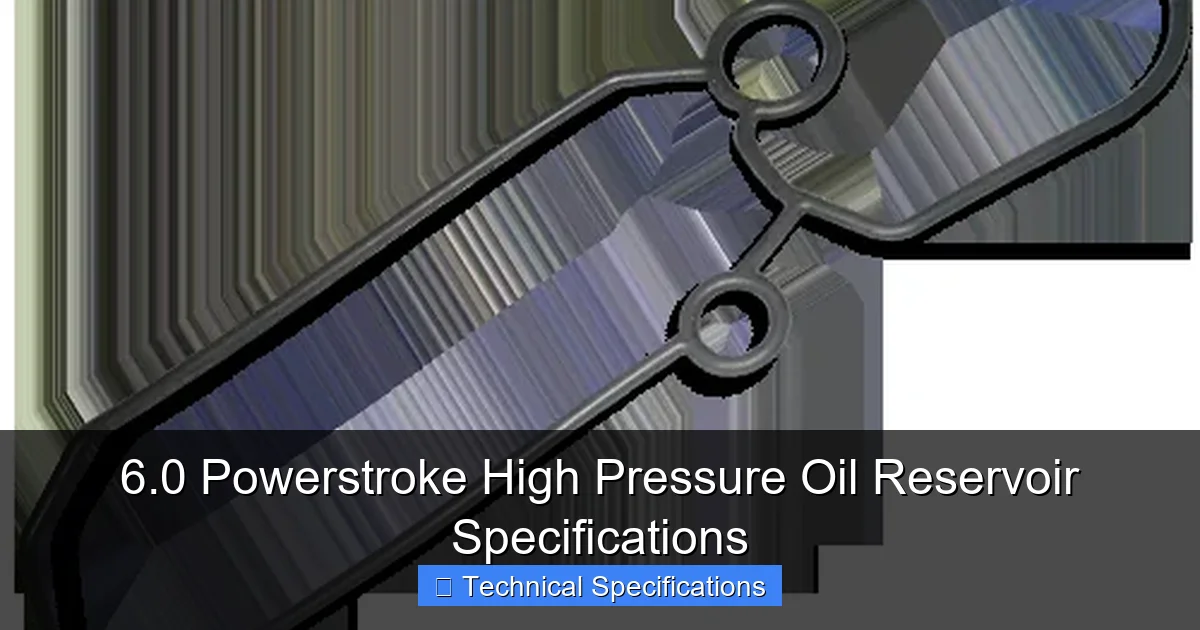
Learn more about 6.0 Powerstroke high pressure oil reservoir specs – 6.0 Powerstroke High Pressure Oil Reservoir Specifications
Image source: dieselsite.com
Here’s a simplified breakdown:
| Specification | Value / Detail | Notes / Purpose |
|---|---|---|
| Function | Stores engine oil for HPOP supply | Ensures constant oil supply to the High-Pressure Oil Pump (HPOP) for injection. |
| Location | Under the oil cooler, in the engine’s “valley” | Central location within the V8 engine configuration. |
| Approximate Capacity | 1.5 – 2 Quarts | A critical subset of the overall engine oil capacity. |
| Key Internal Components | Standpipes, Dummy Plugs, STC Fitting (early models) | These components route high-pressure oil to the fuel injectors. |
| Common Failure Point | O-rings on standpipes/dummy plugs or STC fitting | Leads to “no-start” or “hard-start” conditions, especially when hot, due to high-pressure oil leaks. |
- Low-Pressure Oil System: The standard engine oil pump circulates oil throughout the engine for lubrication and cooling. A portion of this oil is routed to the HPOP reservoir.
- High-Pressure Oil Pump (HPOP): This specialized pump takes the engine oil from the reservoir and pressurizes it to extreme levels—ranging from 500 PSI at idle to over 3,600 PSI under load.
- Injector Actuation: This highly pressurized oil is then delivered to the fuel injectors. Inside each injector, this high-pressure oil acts on an intensifier piston, which in turn pressurizes the fuel within the injector itself to even higher pressures (upwards of 20,000-26,000 PSI) before it’s injected into the combustion chamber.
- Injection Pressure Regulator (IPR) Valve: The IPR valve, typically located at the rear of the HPOP, is an electronically controlled solenoid that regulates the output pressure of the HPOP by allowing excess oil to bleed back to the crankcase. Its functionality is directly tied to the oil supply from the reservoir.
The HEUI system’s brilliance lies in its precision and ability to deliver incredibly fine control over fuel injection events. However, its reliance on engine oil means that oil quality, level, and the integrity of every component in the high-pressure oil circuit—especially the reservoir—are paramount. Any disruption in the supply, pressure, or cleanliness of this oil can lead to significant engine performance problems.
Unpacking the 6.0 Powerstroke High Pressure Oil Reservoir: Design and Location
The 6.0 Powerstroke high pressure oil reservoir is more than just a holding tank; it’s a strategically designed component that plays a critical role in the HEUI system’s startup and consistent operation. Understanding its physical attributes and exact location is key for both diagnosis and maintenance.
Physical Location and Accessibility
On the 6.0 Powerstroke engine, the high-pressure oil reservoir is nestled on top of the engine, typically situated beneath the oil cooler and the fuel filter housing. This location, while central to the engine’s oil system, makes it somewhat challenging to access. To gain clear access for inspection or service, the fuel filter housing and potentially other components often need to be removed.
Core Function and Design Principles
The primary function of the HPOP reservoir is to provide a constant, immediate supply of filtered engine oil to the High-Pressure Oil Pump (HPOP). This is especially crucial during engine startup. When the engine is shut off, oil drains from the high-pressure system, including the reservoir, back into the crankcase. However, the reservoir is designed to retain a specific volume of oil to ensure the HPOP can immediately build pressure when the engine is cranked. This prevents air from being drawn into the HPOP, which would lead to a delayed start or a no-start condition. The HPOP reservoir capacity is engineered precisely for this purpose.
Key design elements include:
- Internal Baffles: These help to prevent oil sloshing and ensure a consistent oil supply to the HPOP, especially during aggressive driving or when the vehicle is on an incline.
- Integrated Filter Screen: Inside the reservoir, there’s often a coarse screen or mesh. While not a fine filtration system like your main oil filter, it’s designed to catch larger debris before it can enter the HPOP, protecting its precision components.
- Oil Supply and Return Ports: The reservoir has specific ports for low-pressure engine oil to enter and fill it, and for the HPOP to draw its supply.
The integrity of the reservoir’s seals and the proper functioning of its internal components are non-negotiable for reliable 6.0 Powerstroke performance. Any cracks, leaks, or blockages within this unit can severely compromise the entire high-pressure oil system.
Critical Components and Functional Specifications Within the HPOP Reservoir
While the reservoir itself is a container, its functional specifications are heavily influenced by several critical components that either reside within it or are directly connected to it. These components are often the source of common 6.0 Powerstroke high pressure oil issues.
Functional Oil Capacity and Level Maintenance
When discussing 6.0 Powerstroke high pressure oil reservoir specs, the precise volumetric capacity isn’t as critical as the *functional* oil level it maintains. The design ensures that enough oil (typically around 1 to 1.5 quarts, though not an exact published spec) is retained at all times to fully submerge the HPOP’s intake port. This ensures the HPOP never “starves” for oil, particularly during startup after the engine has been sitting.
- Why it matters: If the oil level in the reservoir drops too low, the HPOP can draw air instead of oil. Air in the high-pressure oil system is highly compressible and prevents the HPOP from building sufficient pressure to actuate the injectors. This is a primary cause of extended crank times and no-start conditions.
- How it’s maintained: The reservoir is constantly replenished by the low-pressure oil system. A standpipe or internal design ensures a minimum operating level is always present, allowing excess oil to drain back to the crankcase, but keeping a reserve for the HPOP.
Standpipes and Dummy Plugs: The Unsung Heroes (and Common Villains)
These components are vital for delivering the high-pressure oil from the HPOP to the fuel injector oil rails. While technically part of the oil rails, their connection to the high-pressure oil system and their notorious failure rate make them essential to discuss in the context of the reservoir’s overall system integrity.
- Standpipes: These are essentially tubes that connect the high-pressure oil manifold (which gets oil from the HPOP) to the oil rails that feed the injectors. They are sealed by O-rings at both ends. There are typically two standpipes per engine, one for each head/rail.
- Dummy Plugs: These are caps that seal off unused ports in the oil rails. They also rely on O-rings for a proper seal.
- The Critical Spec: O-Rings: The Achilles’ heel of both standpipes and dummy plugs are their O-rings. Over time, heat and oil degradation cause these O-rings to harden, shrink, and lose their sealing ability. When these O-rings fail, high-pressure oil leaks into the low-pressure return system instead of reaching the injectors, leading to a significant drop in oil pressure to the injectors.
- Symptoms of Failure: Extended crank times, rough idle, misfires, and a lack of power are all common indicators of failing standpipe or dummy plug O-rings. This is a prime example of why checking the 6.0 Powerstroke HPOP reservoir level and ensuring system integrity is crucial.
Interaction with the IPR Valve
The Injection Pressure Regulator (IPR) valve is physically located on the HPOP, but its operation is directly dependent on the supply of oil from the reservoir. The HPOP draws oil from the reservoir, pressurizes it, and the IPR valve then meters that pressure. If the reservoir cannot supply adequate oil, the HPOP cannot build pressure, and the IPR cannot regulate what isn’t there. Furthermore, the IPR valve itself has a screen that can become clogged, restricting oil flow and causing pressure regulation issues, even if the reservoir is full.
Oil Pathway and Contamination Prevention
The oil pathway from the crankcase to the reservoir and then to the HPOP is critical. The reservoir’s internal screen helps prevent larger debris from entering the HPOP. However, smaller contaminants can still pass through. This highlights the importance of regular engine oil changes and using high-quality engine oil, as the HPOP and injectors are highly sensitive to contamination.
Beyond the Specs: Common Failure Points and Diagnostic Clues
While the 6.0 Powerstroke high pressure oil reservoir specifications are essential, understanding the real-world implications of component failure is even more valuable. The HPOP reservoir and its associated parts are frequent culprits in 6.0 Powerstroke reliability issues.
Low Oil Level in the Reservoir (Functional Capacity Failure)
This is arguably the most straightforward issue but often misdiagnosed. If the low-pressure oil system isn’t adequately supplying the reservoir, or if there’s an internal leak, the HPOP reservoir may not retain enough oil. This leads to:
- Extended Cranking: The starter turns the engine over for an unusually long time before it fires, as the HPOP struggles to purge air and build pressure.
- No-Start Condition: In severe cases, especially after sitting for a while, the reservoir might be so depleted that the engine won’t start at all.
- Symptoms: Often, the engine will start normally when cold but exhibit extended crank when hot. This is because hot oil is thinner and drains back quicker, exacerbating the problem.
Standpipe and Dummy Plug O-Ring Failures
As mentioned, these are notorious. The failure of these O-rings creates an internal high-pressure oil leak. Instead of the oil going to actuate the injectors, it escapes back into the low-pressure return system. This directly impacts the ability of the HPOP to maintain the required pressure.
- Symptoms: Similar to low reservoir oil – extended crank, rough running, misfires (often P0261-P0288 cylinder contribution/balance codes). A common diagnostic is to perform an air pressure test on the HPOP system to listen for leaks.
- Data Point: Updated standpipe and dummy plug kits (often featuring improved O-ring materials like Viton) are a common and highly recommended upgrade for any 6.0 Powerstroke, especially when the top of the engine is already apart for other service.
IPR Valve Screen Clogging or Valve Failure
The IPR valve itself, while not part of the reservoir, directly impacts high-pressure oil regulation. A clogged screen on the IPR valve restricts oil flow, leading to erratic or insufficient oil pressure. A failing IPR valve solenoid can also cause similar issues.
- Symptoms: Hard starting (hot or cold), rough idle, stalling, and various diagnostic trouble codes (DTCs) related to injection pressure control (e.g., P2290, P2291, P0069, P006F).
- Diagnostic Insight: Monitoring ICP (Injection Control Pressure) and IPR duty cycle with a scan tool is crucial for diagnosing IPR-related issues.
STC Fitting Failure (Snap-To-Connect)
Again, not strictly part of the reservoir, but the STC fitting connects the HPOP outlet to the high-pressure oil branch tube, which then feeds the standpipes. This fitting is a common failure point on early 6.0 Powerstroke engines, prone to cracking and leaking high-pressure oil. This results in an external leak within the high-pressure system.
- Symptoms: Similar to standpipe/dummy plug failures – extended crank, no-start, rough running.
- Upgrade: Ford and aftermarket companies offer updated, one-piece STC fittings that are much more robust than the original two-piece design. This is another highly recommended preventative upgrade.
Understanding these failure points is paramount. When facing any symptoms related to starting or running issues on a 6.0 Powerstroke, always consider the integrity of the high-pressure oil system, starting with the fundamental supply from the reservoir.
Maintaining Optimal Performance: Best Practices for Your HPOP Reservoir
Proactive maintenance and strategic upgrades are key to preventing the common and often expensive issues associated with the 6.0 Powerstroke high pressure oil reservoir and the broader HEUI system. Here’s how to keep your engine running reliably:
Regular and Timely Oil Changes
This cannot be stressed enough. The HEUI system, including the HPOP and injectors, relies entirely on the engine oil. Contaminated, degraded, or incorrect oil directly impacts the life and performance of these expensive components.
- Spec: Always use API CJ-4 or FA-4 rated engine oil with the manufacturer-recommended viscosity (typically 15W-40 or 5W-40 synthetic in colder climates).
- Frequency: Adhere strictly to Ford’s recommended oil change intervals, or even slightly sooner if your truck sees heavy use or extreme conditions.
- Impact: Fresh, clean oil ensures proper lubrication, cooling, and most importantly, provides the correct hydraulic medium for the HEUI system, minimizing wear on the HPOP and injectors and preventing sludge buildup that could clog the reservoir screen or IPR valve.
Inspect for Leaks and Proper Functionality
While the HPOP reservoir itself is not prone to external leaks (unless cracked due to extreme impact or corrosion, which is rare), the components it interacts with are.
- Visual Inspection: Whenever you’re performing other maintenance under the hood, take a moment to look for any signs of oil leaks around the fuel filter housing and under the oil cooler. Access to the HPOP reservoir specifically is difficult without disassembly, but collateral damage or evidence of issues often appears elsewhere.
- HPOP Reservoir Screen: If you’re replacing your oil cooler or doing other work that requires removing the fuel filter housing, it’s an excellent opportunity to inspect and clean the coarse screen inside the HPOP reservoir. Ensure it’s free of debris.
- Check IPR Screen: Similarly, if replacing the IPR valve, or if you have the HPOP accessible, inspect its screen for any clogging or damage.
Consider Preventative Upgrades
Many of the 6.0 Powerstroke’s high-pressure oil system weaknesses have been addressed by updated OEM and aftermarket parts. Installing these proactively can save you significant headaches and repair costs down the road.
- Updated Standpipes and Dummy Plugs: This is a must-do upgrade. Replace the original standpipes and dummy plugs with the updated versions that feature improved O-ring materials (e.g., Viton) and often a superior design. These are widely available.
- Updated STC Fitting: If your truck still has the original two-piece snap-to-connect fitting, upgrade it to the one-piece design. This prevents a common and debilitating leak.
- HPOP Cover Gasket with Integrated Screen: Some aftermarket HPOP covers offer improved gasketing and enhanced internal screens for better debris protection, though this is a more involved upgrade.
Diagnostic Awareness
Being aware of early warning signs is your best defense. If you notice extended cranking, especially when hot, or any signs of rough running, investigate immediately. Early diagnosis can often prevent more severe damage or a complete breakdown. Utilizing a diagnostic scan tool that can monitor ICP (Injection Control Pressure) and IPR duty cycle is invaluable for quickly identifying issues within the high-pressure oil system.
By integrating these maintenance practices and considering wise upgrades, you can significantly enhance the reliability of your 6.0 Powerstroke’s high pressure oil reservoir and the entire HEUI system, ensuring your truck performs as it should.
The Unsung Hero: Why Engine Oil Quality and Level are Paramount
While we’ve delved deep into the 6.0 Powerstroke high pressure oil reservoir specs and its surrounding components, it’s vital to circle back to the absolute foundation of the HEUI system’s health: the engine oil itself. The oil is not just a lubricant; it’s the lifeblood and the hydraulic fluid that makes everything work. Therefore, its quality and correct level are the most critical factors influencing the performance and longevity of your HPOP reservoir and the entire high-pressure oil system.
The Dual Role of Engine Oil
In a 6.0 Powerstroke, engine oil performs a double duty:
- Lubrication and Cooling: This is the traditional role of engine oil, protecting moving parts from friction and dissipating heat.
- Hydraulic Medium: As discussed, engine oil is pressurized by the HPOP to actuate the fuel injectors. This requires the oil to maintain specific properties under extreme pressure and temperature.
Because of this dual role, the demands on the engine oil in a 6.0 Powerstroke are significantly higher than in many other engines. This is why using the correct oil and adhering to strict change intervals is not merely a recommendation but a necessity.
Impact of Oil Quality on the HPOP Reservoir and System
- Viscosity Stability: The correct viscosity ensures the HPOP can efficiently draw and pressurize the oil, and that the IPR valve can effectively regulate pressure. Incorrect viscosity, especially at operating temperature, can lead to poor pressure control.
- Additive Package: Modern diesel engine oils contain advanced additive packages that resist shear, prevent foaming (which would introduce air into the hydraulic system), and protect against wear and corrosion. Using cheap or incorrect oil compromises these critical properties.
- Cleanliness: Contaminants, soot, and sludge can clog the coarse screen in the HPOP reservoir, restrict flow to the HPOP, or worst of all, damage the precision components of the HPOP and the injectors. Regular oil changes flush out these contaminants.
The Absolute Necessity of Correct Oil Level
The HPOP reservoir relies on a constant supply of engine oil from the crankcase to maintain its functional capacity. If the overall engine oil level drops below the “add” mark on your dipstick, it means the reservoir’s supply line is at risk of starvation. This is a direct path to:
- Air Ingestion: The HPOP draws air instead of oil, leading to no-start or extended crank conditions.
- HPOP Damage: Running the HPOP dry, even for short periods, can cause significant wear and premature failure of this expensive component.
- Injector Damage: Inconsistent high-pressure oil supply can also stress and damage the fuel injectors.
Actionable Tip: Check your engine oil level frequently, not just at oil change intervals. The 6.0 Powerstroke is known to consume some oil, and keeping it topped off to the “full” mark is one of the easiest and most effective preventative maintenance steps you can take for the health of your high-pressure oil system.
In essence, the performance of your 6.0 Powerstroke high pressure oil reservoir and the integrity of the entire HEUI system are a direct reflection of the care you put into your engine’s oil. Treat your oil like the critical component it is, and your Powerstroke will reward you with reliable service.
Conclusion
The 6.0 Powerstroke high pressure oil reservoir, though often out of sight and out of mind, is a foundational element of the engine’s unique HEUI injection system. From its strategic design to ensure a constant oil supply during startup, to its intricate connections with crucial components like standpipes, dummy plugs, and the IPR valve, its specifications and functional integrity are paramount for the 6.0 Powerstroke’s performance and reliability.
Understanding the common failure points—such as failing O-rings on standpipes and dummy plugs, or issues stemming from inadequate oil supply to the reservoir—empowers owners to diagnose problems accurately and implement preventative measures. By embracing regular maintenance, adhering to strict oil change intervals with the correct 6.0 Powerstroke oil specs, and proactively upgrading known weak links like the STC fitting and standpipes, you can significantly enhance the longevity and dependability of your truck.
Ultimately, the health of your 6.0 Powerstroke HPOP reservoir is a direct reflection of the care given to your engine’s oil system. Invest in quality oil, maintain proper levels, and address issues promptly, and your Powerstroke will continue to deliver the power and performance it was designed for, for many miles to come. Remember, a little knowledge and proactive maintenance go a long way in keeping these powerful diesel engines running strong.
Frequently Asked Questions
What is the 6.0 Powerstroke high pressure oil reservoir for?
The high pressure oil reservoir on a 6.0 Powerstroke stores engine oil that is then supplied to the High Pressure Oil Pump (HPOP). This pressurized oil is critical for operating the fuel injectors, which are hydraulically actuated, allowing them to inject fuel into the cylinders.
What is the oil capacity of the 6.0 Powerstroke high pressure oil reservoir?
The 6.0 Powerstroke high pressure oil reservoir typically holds approximately 1 quart (about 0.95 liters) of engine oil. It’s designed to provide a ready supply of oil to the HPOP for immediate engine startup and continuous operation.
What type of engine oil should I use when filling my 6.0 Powerstroke HPOP reservoir?
You should use the same type of engine oil recommended for the rest of your 6.0 Powerstroke engine, which is typically a 15W-40 CK-4 rated diesel engine oil. Ensuring the correct oil viscosity and specification is crucial for the longevity and proper function of the High Pressure Oil Pump (HPOP) and injectors.
How do I properly check the oil level in my 6.0 Powerstroke high pressure oil reservoir?
To check the oil level, locate the yellow dipstick on the passenger side of the engine, typically just behind the oil filter housing. The reservoir should be full to the top of the standpipe (visible once the cap/dipstick is removed) or at least within the “full” range on the dipstick when the engine is cold and off.
Why is maintaining the correct oil level in the 6.0 Powerstroke high pressure oil reservoir so important?
Maintaining the correct oil level in the 6.0 Powerstroke high pressure oil reservoir is crucial because a low level can cause the High Pressure Oil Pump (HPOP) to cavitate, leading to a loss of fuel injector pressure. This can result in hard starting, no-start conditions, rough running, and accelerated wear on critical engine components.
Where is the high pressure oil reservoir located on a 6.0 Powerstroke engine?
The high pressure oil reservoir on the 6.0 Powerstroke engine is located on the top of the engine, underneath the oil cooler and standpipe assembly. It is often accessed by removing the yellow oil fill cap/dipstick on the passenger side, positioned towards the rear of the engine bay.