6.0 Powerstroke High Pressure Oil Pump Specifications
Featured image for this comprehensive guide about 6.0 Powerstroke high pressure oil pump specs
6.0 Powerstroke High Pressure Oil Pump Specifications: Decoding the Heart of Your Diesel
The Ford 6.0 Powerstroke diesel engine, a legend in the heavy-duty truck world, is renowned for its incredible power and torque, making it a favorite for hauling, towing, and demanding work. However, beneath its robust exterior lies a complex ecosystem of components, each critical to its performance. Among these, one component stands out as the unsung hero, or sometimes, the notorious villain: the High Pressure Oil Pump (HPOP). This intricate device is not just another part; it’s the very heartbeat of the 6.0 Powerstroke’s fuel injection system.
Understanding the intricacies of your 6.0 Powerstroke, particularly its high-pressure oil system, is paramount for any owner or enthusiast. The HPOP orchestrates the precise timing and volume of high-pressure oil delivered to the fuel injectors, directly influencing everything from engine starting to full-throttle performance. Ignoring its health or misunderstanding its operational parameters can lead to costly repairs and significant downtime. If you’ve ever experienced a hard start, rough idle, or a sudden loss of power, chances are the HPOP or its related components were involved.
This comprehensive guide aims to peel back the layers of complexity, delving deep into the 6.0 Powerstroke high pressure oil pump specs. We’ll explore its fundamental role, dissect its specifications, discuss common failure points, and equip you with actionable knowledge to maintain, diagnose, and even upgrade this vital component. Whether you’re a seasoned mechanic, a DIY enthusiast, or simply a proud 6.0 owner, understanding these specifications is key to unlocking the full potential and ensuring the longevity of your Powerstroke engine.
Quick Answers to Common Questions
What’s the primary role of the 6.0 Powerstroke high pressure oil pump?
This vital component is responsible for generating the extremely high oil pressure needed to activate your engine’s fuel injectors. It’s an essential part of the HEUI fuel system, directly impacting how your 6.0 Powerstroke runs.
How can I tell if my 6.0 Powerstroke high pressure oil pump might be failing?
Common symptoms include extended crank times, rough idling, stalling, or a complete no-start condition. These issues often arise when the pump can no longer maintain the required 6.0 Powerstroke high pressure oil pump specs for proper fuel injection.
What kind of oil pressure should a healthy 6.0 Powerstroke high pressure oil pump produce?
At idle, you should typically see around 500-700 PSI, while under load, the pressure can soar above 3,000 PSI. Monitoring these 6.0 Powerstroke high pressure oil pump specs with a diagnostic scanner is crucial for assessing its health.
Are there common failure points for the 6.0 Powerstroke high pressure oil pump?
Unfortunately, yes. Internal wear due to dirty oil, cavitation from low oil levels, and seal failures are common culprits. Understanding these vulnerabilities is key to maintaining your 6.0 Powerstroke high pressure oil pump specs.
Is it possible to upgrade the 6.0 Powerstroke high pressure oil pump?
Absolutely! Many owners opt for aftermarket high-volume or “Adrenaline” pumps, especially in modified engines. These upgrades aim to exceed the stock 6.0 Powerstroke high pressure oil pump specs, ensuring adequate pressure even under heavy loads.
📋 Table of Contents
- Understanding the Heartbeat: What is the 6.0 Powerstroke HPOP?
- Unpacking the Core: 6.0 Powerstroke High Pressure Oil Pump Specifications
- Common 6.0 Powerstroke HPOP Issues and Their Impact on Performance
- HPOP Replacement and Upgrade Options: Enhancing Your 6.0 Powerstroke
- Maintenance Tips to Maximize Your 6.0 Powerstroke HPOP Lifespan
- Typical 6.0 Powerstroke HPOP System Readings
- Conclusion
Understanding the Heartbeat: What is the 6.0 Powerstroke HPOP?
Before we dive into the nitty-gritty of 6.0 Powerstroke high pressure oil pump specs, let’s establish a foundational understanding of what this critical component is and why it’s so vital. In the 6.0L Powerstroke engine, the HPOP is not just a simple oil pump; it’s the core of the Hydraulically Actuated Electronically Controlled Unit Injector (HEUI) system. Unlike older mechanical injection systems, the HEUI system uses engine oil under extreme pressure to actuate the fuel injectors, delivering fuel directly into the combustion chambers with incredible precision.
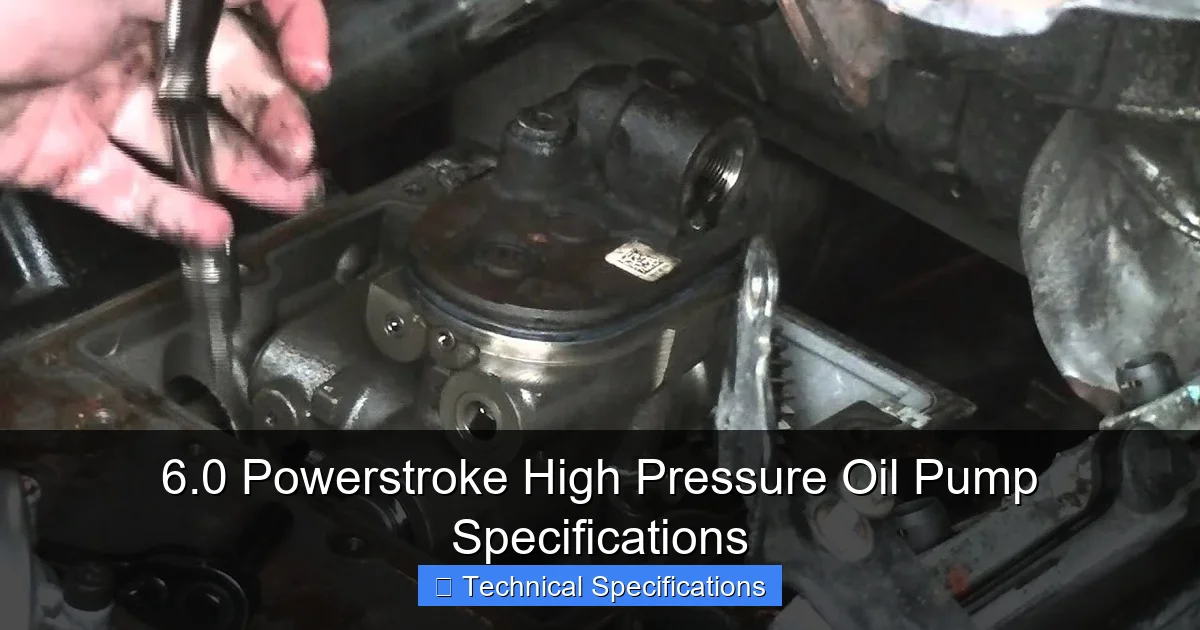
Learn more about 6.0 Powerstroke high pressure oil pump specs – 6.0 Powerstroke High Pressure Oil Pump Specifications
Image source: i.ytimg.com
The HEUI System and the HPOP’s Role
The HEUI system is a marvel of engineering, allowing for highly efficient and controlled fuel delivery. Here’s how it generally works: the HPOP draws low-pressure engine oil from the crankcase (after it passes through the oil cooler and filters) and pressurizes it to incredibly high levels, often exceeding 3,000 PSI, and sometimes reaching up to 4,000 PSI under demanding conditions. This high-pressure oil is then directed through a network of passages, including the notorious oil rails, standpipes, and dummy plugs, eventually reaching the top of each fuel injector.
| Specification | Early HPOP (2003-2004.5) | Late HPOP (2004.5-2007) | Remarks |
|---|---|---|---|
| Pump Design | Gerotor, Fixed Displacement | Gerotor, Fixed Displacement (Revised Internal Components) | Gear-driven directly off camshaft |
| Maximum Operating Pressure | ~3,200 – 3,600 PSI | ~3,600 – 4,000 PSI | ECM commanded, varies with engine load/RPM |
| Typical Idle Pressure (Min) | ~500 – 750 PSI | ~500 – 750 PSI | Ensures injectors are ready for fuel delivery |
| Displacement per Revolution | ~0.136 in³/rev | ~0.150 in³/rev | Increased output for improved high RPM/load performance |
| Common Primary Failure Point | STC Fitting Leaks, Internal Wear | STC Fitting Leaks, Internal Wear (Revised STC fitting in late ’05) | Can result in long-crank/no-start conditions |
Inside each injector, this high-pressure oil acts upon an intensifier piston, which in turn amplifies the pressure on the fuel, forcing it out through the injector nozzle into the cylinder. The timing and duration of this oil delivery are precisely controlled by the Injector Pressure Regulator (IPR) valve, which is commanded by the Engine Control Module (ECM) based on various sensor inputs, including the Injector Control Pressure (ICP) sensor. Without sufficient and consistent high-pressure oil from the HPOP, the injectors simply cannot fire, leading to a host of performance issues, including no-start conditions.
Key Components of the HPOP System
The HPOP doesn’t work in isolation; it’s part of a sophisticated network. Here are some of its critical companions:
- HPOP Reservoir: This small reservoir, often integrated into the engine front cover, ensures a constant supply of oil directly to the HPOP. It acts as a buffer and helps prevent oil starvation during sudden changes in engine speed or oil levels.
- High-Pressure Oil Standpipes and Dummy Plugs: These components seal the high-pressure oil rails in the cylinder heads, directing oil to the injectors. Early models of the 6.0 Powerstroke were prone to failures in these parts, specifically the standpipes and dummy plugs, which could lead to significant oil leaks and low ICP, mimicking HPOP failure.
- Branch Tube and STC Fitting: The “Snap-To-Connect” (STC) fitting connects the HPOP outlet to the branch tube, which then feeds the oil rails. This fitting was a well-known weak point, especially in 2003-2004 models, prone to premature failure and high-pressure oil leaks. Later models received an updated, more robust two-piece fitting.
- IPR (Injector Pressure Regulator) Valve: Located at the rear of the HPOP, the IPR valve is an electrically actuated valve that controls the amount of oil bypassed from the high-pressure side back to the low-pressure side. By regulating this bypass, the IPR precisely controls the actual ICP, which is crucial for engine operation.
- ICP (Injector Control Pressure) Sensor: This sensor, typically located on the passenger side valve cover (on earlier models) or in the front of the HPOP cover (on later models), measures the actual pressure in the high-pressure oil system. The ECM uses this feedback to command the IPR valve, ensuring the desired pressure is maintained.
Understanding the interplay of these components is vital, as a failure in any one of them can manifest as symptoms that initially point to a faulty HPOP, making accurate diagnosis incredibly important.
Unpacking the Core: 6.0 Powerstroke High Pressure Oil Pump Specifications
When it comes to the 6.0 Powerstroke high pressure oil pump specs, we’re primarily talking about its capacity to generate and sustain the immense oil pressure required for the HEUI system. This is a precision-engineered component, and its factory specifications are carefully chosen to match the demanding requirements of the engine’s injection system.
Pressure Output and Operating Range
The most critical specification of the HPOP is its ability to generate high oil pressure. Here’s a general breakdown of typical operating pressures:
- Minimum Cranking Pressure: For the 6.0 Powerstroke to start, a minimum Injector Control Pressure (ICP) of approximately 500 PSI (pounds per square inch) is typically required. Below this threshold, the ECM will inhibit fuel injection, resulting in a no-start condition.
- Idle Pressure: At a warm idle, a healthy HPOP system will typically maintain an ICP between 500-750 PSI. This pressure is sufficient to keep the injectors firing smoothly and efficiently.
- Operating Load Pressure: Under moderate to heavy load, such as towing or acceleration, the HPOP is designed to produce significantly higher pressures. This can range from 2,000 PSI to over 3,600 PSI, with peak pressures sometimes touching 4,000 PSI depending on engine load, RPM, and programming. The ECM dynamically commands the IPR valve to achieve these pressures as needed.
The HPOP itself is a piston-style pump driven directly by the engine’s gear train. It has a fixed displacement, meaning it pumps a set volume of oil per revolution. The actual pressure generated is a function of engine RPM and the restriction created by the IPR valve. The internal components, such as the plungers and barrels, are designed to withstand these immense pressures and temperatures, but wear over time is inevitable, especially with inadequate oil maintenance.
Flow Rate and Volume
While pressure is crucial, the volume, or flow rate, of high-pressure oil is equally important. A pump might be able to *build* pressure, but if it can’t *maintain* sufficient volume under sustained demand (e.g., during hard acceleration with all eight injectors firing at once), the pressure will drop, leading to performance issues. The factory HPOP is designed to provide sufficient flow for the stock injectors under all operating conditions. Its internal design, often featuring a cam-actuated piston or a gerotor pump for the initial lift, ensures that there’s always an ample supply of oil ready to be pressurized.
- Fixed Displacement: The HPOP has a specific internal displacement, meaning it moves a set volume of oil per engine revolution. This volume is precisely calculated by Ford engineers to meet the demands of the HEUI system.
- Oil Reservoir Integration: The HPOP reservoir, as mentioned, is critical for ensuring consistent oil availability. While not a “spec” of the pump itself, its capacity and design are integral to the HPOP’s reliable flow and pressure output.
For engines with modified injectors (e.g., larger-than-stock), the stock HPOP might struggle to maintain adequate pressure and flow rate, leading to what’s known as “ICP drop” under heavy load. This is a common reason why some enthusiasts opt for upgraded, higher-volume HPOPs.
Material Construction and Durability
The longevity of the HPOP largely depends on its material construction and the quality of internal components. Typically, HPOPs feature:
- Cast Iron/Aluminum Housing: Providing a robust and stable enclosure for the internal components.
- Hardened Steel Internals: Components like the plungers, barrels, and cam lobes are made from specially hardened steel to resist wear and extreme pressure.
- Precision Machining: Tight tolerances and precision machining are critical for efficient operation and to minimize internal leakage, which can lead to pressure loss.
Despite robust construction, factors like dirty oil, extended oil change intervals, and internal friction eventually lead to wear. This wear compromises the pump’s efficiency, reducing its ability to generate and hold the specified pressures and flow rates, ultimately leading to failure.
Lubrication and Cooling
It’s important to remember that the engine oil that the HPOP pressurizes also serves as its lubricant and coolant. The same oil that lubricates the crankshaft and camshaft also flows through the HPOP. This dual role underscores the importance of using the correct viscosity and quality of engine oil (e.g., Ford-recommended CJ-4 or CK-4 rated oil) and adhering to strict oil change intervals. Poor quality or contaminated oil can accelerate wear within the pump, directly impacting its ability to meet the factory 6.0 Powerstroke high pressure oil pump specs and leading to premature failure.
Common 6.0 Powerstroke HPOP Issues and Their Impact on Performance
Despite its robust design, the HPOP and its associated components in the 6.0 Powerstroke are known for certain vulnerabilities. Understanding these issues is key to effective diagnosis and preventative maintenance, saving you from headaches and potentially thousands of dollars in repairs.
Symptoms of a Failing HPOP
A failing HPOP doesn’t always fail catastrophically and instantly. Often, it’s a gradual decline marked by specific symptoms:
- Hard Start/No Start Condition (Especially When Hot): This is perhaps the most common symptom. When the engine is hot, oil viscosity is lower, making it harder for a worn HPOP to build the minimum 500 PSI required to start. When cold, the thicker oil might provide enough seal for a start.
- Rough Idle: Inconsistent high-pressure oil delivery can cause the injectors to misfire or fire unevenly, leading to a rough or erratic idle.
- Loss of Power/Hesitation: Under load, if the HPOP can’t maintain the commanded ICP, the engine will experience a noticeable loss of power, hesitation during acceleration, or even defueling.
- Stalling: In severe cases, particularly if the HPOP completely fails to produce pressure, the engine will stall and be unable to restart.
- Diagnostic Trouble Codes (DTCs): The ECM monitors ICP, IPR, and other related parameters. Common codes associated with HPOP issues include P2287 (ICP Sensor No Signal), P0611 (FICM Performance), P1378 (FICM Voltage Low), and various other codes indicating low ICP or IPR control issues. Note that some of these codes can point to other issues like the IPR valve or ICP sensor, which need careful diagnosis.
Common Failure Points
While the HPOP itself is generally robust, specific components within the high-pressure oil system are more prone to failure, often leading to symptoms identical to a faulty HPOP:
- STC (Snap-To-Connect) Fitting (2003-2004 Models): This notorious fitting, located at the output of the HPOP, was a significant design flaw. Over time, the internal o-rings and clips would degrade, leading to external or internal high-pressure oil leaks. This caused ICP to drop rapidly, resulting in hard starts or no-starts. Ford later updated this to a much more reliable two-piece fitting in late 2004/2005 models.
- HPOP Internal Wear: Over the life of the engine, the internal components of the HPOP – particularly the plungers, barrels, and drive gears – can wear out. This internal leakage reduces the pump’s efficiency, making it difficult to achieve and maintain the target 6.0 Powerstroke high pressure oil pump specs. This wear is often exacerbated by poor oil maintenance.
- IPR Valve Issues: The Injector Pressure Regulator (IPR) valve, which controls ICP, can become clogged with debris or suffer electrical failure. A stuck-open IPR valve will prevent the HPOP from building pressure, while a stuck-closed valve can lead to excessively high pressure. Its screen can also become clogged, restricting oil flow.
- ICP Sensor Failure: While not a HPOP failure, a faulty ICP sensor can send incorrect readings to the ECM, causing it to mismanage the HPOP output. This can lead to similar symptoms and codes as an actual HPOP issue.
- Standpipes and Dummy Plugs: These internal seals in the cylinder heads can develop leaks, allowing high-pressure oil to escape back to the crankcase, causing low ICP. This is a very common cause of hot-start issues.
- Oil Cooler Clogging: A clogged oil cooler can lead to excessively high oil temperatures, which lowers oil viscosity, making it harder for the HPOP to build pressure. It also starves the HPOP of properly cooled oil, contributing to its premature wear.
Diagnosing HPOP Problems
Accurate diagnosis is crucial. Don’t jump to conclusions and replace the HPOP immediately. Here’s how to approach it:
- Diagnostic Scanner: A quality scanner (like FORScan, AutoEnginuity, or IDS) is indispensable. Monitor live data for ICP actual, ICP desired, IPR duty cycle, and FICM sync. During cranking, observe if ICP reaches the 500 PSI threshold. An IPR duty cycle consistently above 75-80% during cranking (without achieving 500 PSI) is a strong indicator of a high-pressure oil leak or a severely worn HPOP.
- Air Test for Leaks: This is a definitive test. Remove the IPR valve, install an air fitting, and inject shop air (approx. 100-120 PSI) into the high-pressure oil system. Listen for air leaks under the valve covers (indicating standpipe/dummy plug or injector issues) or at the back of the HPOP (indicating an STC fitting leak).
- Visual Inspection: Inspect the HPOP area for any signs of external oil leaks, especially around the STC fitting and the HPOP cover.
- Oil Quality Check: Dark, sludgy oil or oil with fuel dilution can indicate other problems contributing to HPOP stress.
Remember, a low ICP reading doesn’t always mean the HPOP itself is bad; it could be the IPR, ICP sensor, STC fitting, standpipes, dummy plugs, or even an internal injector o-ring leak. A thorough diagnostic process is essential before replacing the HPOP.
HPOP Replacement and Upgrade Options: Enhancing Your 6.0 Powerstroke
When faced with an HPOP failure, you’re presented with a critical choice: simply replace the faulty component with an OEM-spec unit, or consider an upgrade. This decision often depends on your engine’s current condition, future power goals, and, of course, your budget. Understanding the implications of each choice in terms of 6.0 Powerstroke high pressure oil pump specs is vital.
OEM vs. Aftermarket HPOP
There are several avenues for HPOP replacement:
- New OEM Ford HPOP: This is generally considered the safest bet for maintaining original equipment quality and specifications. A new OEM unit ensures you’re getting a pump built to Ford’s exacting standards, providing the correct pressure and flow rate for a stock or mildly modified 6.0 Powerstroke. They often come with a warranty.
- Remanufactured HPOP: Many reputable aftermarket companies offer remanufactured HPOPs. These units are typically disassembled, inspected, worn components replaced, and then reassembled to meet or exceed OEM specifications. Quality can vary significantly between remanufacturers, so choosing a trusted brand with a good warranty is paramount. Look for those that specifically address known failure points and incorporate updates. A good remanufactured unit should meet all the original 6.0 Powerstroke high pressure oil pump specs.
- New Aftermarket HPOP: Some aftermarket manufacturers produce entirely new HPOPs. Again, quality is key. While some may offer enhanced designs, others might not meet the same quality control standards as OEM. Research and reviews are essential.
Considerations:
- Cost: New OEM parts are often the most expensive. Remanufactured units typically offer a more budget-friendly option.
- Warranty: Always check the warranty offered, as this can be a strong indicator of a manufacturer’s confidence in their product.
- Known Updates: Ensure that any replacement, especially remanufactured ones, incorporates critical updates (like the improved STC fitting design for older models) to prevent repeat failures.
Performance HPOP Upgrades
For owners looking to extract more power from their 6.0 Powerstroke, particularly those running larger, aftermarket fuel injectors, a performance HPOP upgrade becomes a serious consideration. Larger injectors demand a greater volume of high-pressure oil to maintain optimal ICP at higher RPMs and loads. A stock HPOP might struggle to keep up, leading to ICP drop and a reduction in power.
- Higher Volume/Pressure Pumps: These upgraded pumps are designed with internal modifications (e.g., larger displacement, stronger internals) to increase the overall flow rate and/or their ability to sustain higher pressures. They ensure that even with increased fuel demands from larger injectors, the engine receives the necessary high-pressure oil to fire them efficiently.
- Popular Upgrade Brands: Several reputable companies specialize in performance HPOP upgrades for the 6.0 Powerstroke, offering enhanced reliability and performance for modified engines.
- When is an Upgrade Necessary? If you’re planning to install, or already have, larger fuel injectors (e.g., 175/75, 190/75, 205/75, or bigger), a performance HPOP is often recommended or required to maximize the benefits of those injectors and prevent ICP issues. For a stock engine, an OEM-spec replacement is generally sufficient.
Upgrading your HPOP should be part of a holistic approach to engine modification. Ensure your engine’s supporting systems (fuel system, oil cooler, tuning) are also capable of handling the increased demands.
Essential Supporting Components to Check
Regardless of whether you choose an OEM replacement or an upgraded HPOP, it’s crucial to address other related components at the time of repair. Neglecting these could lead to premature failure of your new HPOP or continued performance issues. This is an excellent time to perform preventative maintenance:
- STC Fitting: If your truck is an early 6.0 (2003-early 2004), the updated two-piece STC fitting is a mandatory upgrade during any HPOP service.
- Standpipes and Dummy Plugs: These are notorious leak points. It’s highly recommended to replace these with updated versions whenever the high-pressure oil system is opened up.
- IPR Valve: Consider replacing the IPR valve, especially if it’s original. Its screen can clog, and its internal components can wear, affecting pressure control.
- ICP Sensor: While not always necessary, if your ICP sensor is original or showing signs of erratic readings, it’s a good time to replace it.
- HPOP Gaskets and O-rings: Always use new, quality gaskets and O-rings for all sealing surfaces to prevent leaks.
- Oil Cooler: Ensure your oil cooler is clean and flowing properly. A restricted oil cooler can starve the HPOP of essential flow and contribute to oil degradation.
A comprehensive approach ensures that once you’ve addressed the 6.0 Powerstroke high pressure oil pump specs with a new or upgraded unit, the rest of the system is robust enough to support its optimal function and longevity.
Maintenance Tips to Maximize Your 6.0 Powerstroke HPOP Lifespan
The 6.0 Powerstroke HPOP is a workhorse, but like any precision component, its lifespan is heavily influenced by proper maintenance. Adhering to a strict maintenance regimen, particularly concerning your engine oil, is the single most effective way to extend the life of your HPOP and prevent premature failure, ensuring it continues to meet its crucial 6.0 Powerstroke high pressure oil pump specs.
The Critical Role of Engine Oil
For the 6.0 Powerstroke, engine oil is more than just a lubricant; it’s a hydraulic fluid for the injection system and a coolant for critical components, including the HPOP and injectors. This dual role makes oil quality and maintenance paramount.
- Frequent Oil Changes: This is arguably the most important maintenance item for your 6.0 Powerstroke. Ford recommends oil changes every 5,000 miles or 200 operating hours, whichever comes first. Sticking to this schedule, or even shortening it for severe duty, is crucial. Dirty, degraded oil loses its lubricating properties and can become abrasive, accelerating wear on the HPOP’s internal components.
- Use the Correct Oil Specification: Always use engine oil that meets Ford’s specified API rating, typically CJ-4 or the newer CK-4. These oils are formulated to handle the unique stresses of a diesel engine, including soot control, oxidation resistance, and shear stability, all of which are vital for the HPOP. Using incorrect oil can lead to premature wear and failure.
- Quality Oil Filters: Don’t skimp on oil filters. Use OEM Ford filters or high-quality aftermarket equivalents that meet OEM filtration standards. A cheap, poorly filtering oil filter allows contaminants to circulate, increasing wear on the HPOP and injectors.
- Monitor Oil Level: Consistently low oil levels can starve the HPOP, leading to air entrainment in the high-pressure system and potential damage. Check your oil regularly and keep it topped off.
Fuel System Health
While the HPOP uses oil, the health of your fuel system indirectly impacts its longevity. Fuel dilution of engine oil (fuel mixing with engine oil due to leaky injectors) can significantly reduce oil viscosity and lubrication properties, putting extra stress on the HPOP and accelerating wear.
- Regular Fuel Filter Replacement: Change both your primary and secondary fuel filters at recommended intervals (typically every 15,000 miles or 300 operating hours). Clean fuel protects your injectors, which in turn helps prevent fuel dilution of the oil.
- Address Injector Issues Promptly: If you suspect injector issues (e.g., hazing, misfires), have them diagnosed and repaired immediately to prevent oil contamination.
Monitoring Key Parameters
Staying informed about your engine’s vital signs can help you catch potential HPOP issues early, before they escalate into major failures.
- Utilize a Diagnostic Scanner: Invest in a basic diagnostic tool (like FORScan or a reputable OBD-II scanner with live data capabilities). Regularly monitor your ICP (Injector Control Pressure) actual vs. ICP desired, IPR (Injector Pressure Regulator) duty cycle, and FICM (Fuel Injection Control Module) main power voltage. Deviations from normal readings can be early warning signs of HPOP or related component issues.
- Listen to Your Engine: Pay attention to any changes in engine noise, starting characteristics, or performance.
Addressing Common Weak Points Proactively
Taking proactive steps to address known weaknesses in the 6.0 Powerstroke design can significantly improve the longevity and reliability of your high-pressure oil system.
- STC Fitting Update: If your truck is a 2003-2004 model and still has the original STC fitting, consider upgrading to the updated two-piece fitting even if you’re not experiencing issues. This is a common failure point that can leave you stranded.
- Blue Spring Fuel Pressure Regulator Upgrade: While not directly related to the HPOP, maintaining proper fuel pressure (60-70 PSI) is crucial for injector longevity, which indirectly impacts oil health by preventing injector leaks and fuel dilution. The “Blue Spring” upgrade for the fuel pressure regulator is an inexpensive and highly recommended modification.
- Oil Cooler Maintenance: Ensure your oil cooler is functioning efficiently. Over time, the oil cooler can clog, leading to higher oil temperatures and degraded oil, which directly impacts the HPOP. Consider periodic flushing or replacement if delta T (oil temp vs. coolant temp) is high.
By integrating these maintenance tips into your regular service schedule, you’ll be well on your way to maximizing the lifespan of your 6.0 Powerstroke HPOP, ensuring your truck continues to perform reliably for years to come.
Typical 6.0 Powerstroke HPOP System Readings
Understanding the actual 6.0 Powerstroke high pressure oil pump specs means knowing what ideal values look like during operation. The following table provides typical readings for key parameters in a healthy 6.0 Powerstroke high-pressure oil system. These values can be monitored using a diagnostic scanner and are invaluable for identifying issues before they become critical failures.
| Parameter | Condition | Typical Range (Healthy System) | Notes |
|---|---|---|---|
| ICP (Injector Control Pressure) | Minimum Cranking (for Start) | ~500 PSI | Engine requires at least 500 PSI to enable fuel injection. |
| ICP (Injector Control Pressure) | Warm Idle (no load) | 500 – 750 PSI | Can vary slightly based on engine temp and accessories. |
| ICP (Injector Control Pressure) | Wide Open Throttle (WOT) | 3,000 – 4,000 PSI | Maximum pressure achieved under heavy load. |
| IPR (Injector Pressure Regulator) Duty Cycle | Warm Idle (no load) | 20 – 25% | Percentage of time the IPR valve is open to regulate pressure. |
| IPR (Injector Pressure Regulator) Duty Cycle | Wide Open Throttle (WOT) | 60 – 85% | Higher duty cycle indicates more demand for pressure. Consistently >85% at WOT might suggest a pump struggling or a leak. |
| IPR (Injector Pressure Regulator) Duty Cycle | Cranking (no start, below 500 PSI ICP) | 75 – 85%+ | If ICP doesn’t reach 500 PSI but IPR is high, it indicates a high-pressure oil leak or worn HPOP. |
| FICM V-Power (Main) | Engine On (Running) | 48 – 49 Volts | Not directly HPOP, but critical for injector operation; impacts perceived HPOP issues if low. |
| Engine Oil Temperature (EOT) vs. Engine Coolant Temperature (ECT) | Warm, Steady Cruise | Delta T of <15°F | A higher delta T (>15°F) indicates a restricted oil cooler, affecting oil quality and HPOP. |
Note: These values are typical ranges. Actual readings may vary slightly based on specific year, mileage, modifications, and ambient conditions. Always consult a qualified technician or your Ford service manual for precise diagnostic procedures and specifications.
Conclusion
The 6.0 Powerstroke high pressure oil pump is undeniably a cornerstone of your engine’s performance, driving the entire HEUI injection system with precision and immense hydraulic force. Understanding the intricate 6.0 Powerstroke high pressure oil pump specs, its operational ranges, and its vulnerabilities is not just technical knowledge; it’s a vital part of responsible ownership. From the specific pressure outputs required for starting and running to the critical role of clean engine oil, every detail contributes to its reliability and lifespan.
We’ve explored how the HPOP functions within the complex HEUI system, dissected its core specifications, delved into the common failure points like the notorious STC fitting and internal wear, and provided essential diagnostic tips. Furthermore, we’ve outlined various replacement and upgrade options, guiding you through the choices between OEM quality and performance-enhancing aftermarket solutions. Most importantly, we’ve emphasized the absolute necessity of diligent maintenance – particularly timely oil changes with the correct specifications – as your primary defense against costly HPOP-related issues.
By applying the actionable insights and following the maintenance guidelines provided in this comprehensive guide, you’re not just preventing potential breakdowns; you’re actively ensuring your 6.0 Powerstroke operates at its peak efficiency and reliability. Armed with this knowledge, you can confidently maintain, troubleshoot, and even upgrade your HPOP system, keeping the heart of your diesel beating strong for many miles and heavy loads to come. Don’t wait for a problem to arise; proactively caring for your HPOP is the smartest investment you can make in your Powerstroke’s future.
🎥 Related Video: High Pressure Rail Sealing – 6.0L Powerstroke
📺 Standard Brand
This video goes over how to replace the ball tube and seal on a 6.0L Powerstroke engine. Level of difficulty: Intermediate …
Frequently Asked Questions
What are the key specifications for a 6.0 Powerstroke High Pressure Oil Pump (HPOP)?
The 6.0 Powerstroke HPOP is a critical component for engine operation, generating the high oil pressure required to actuate the fuel injectors. Key specifications primarily revolve around its ability to produce and maintain sufficient pressure, typically operating in the range of 500-4000 PSI, depending on engine demand and injection control pressure (ICP) requirements.
What is the normal operating pressure range for the 6.0 Powerstroke HPOP?
The normal operating pressure range for the 6.0 Powerstroke High Pressure Oil Pump varies significantly based on engine load, RPM, and temperature. You can expect to see pressures between approximately 500 PSI at idle and up to 4,000 PSI under heavy acceleration or load, all of which are monitored by the Injection Control Pressure (ICP) sensor.
How does the 6.0 Powerstroke high pressure oil pump contribute to engine performance?
The 6.0 Powerstroke high pressure oil pump is essential for actuating the fuel injectors, as the injectors are “oil-fired” and require high pressure oil to operate. It pressurizes engine oil to precise levels, which then pushes the fuel into the combustion chambers, ensuring optimal fuel atomization and engine power.
Are there different specifications for early and late 6.0 Powerstroke HPOPs?
Yes, there are notable differences in the 6.0 Powerstroke HPOP specifications and designs between early and late model years. Early 2003-2004 models typically used a “waved” gear HPOP, while later 2004.5-2007 models featured a “straight” gear design, often referred to as the STC (Snap-To-Connect) fitting pump, which addressed common failure points of the earlier design.
What are common symptoms of a failing 6.0 Powerstroke High Pressure Oil Pump?
Symptoms of a failing 6.0 Powerstroke High Pressure Oil Pump often include extended cranking, no-start conditions (especially when hot), rough idling, or a significant loss of power. These issues typically arise because the pump can no longer generate or maintain the necessary oil pressure required to fire the injectors, which will usually result in low Injection Control Pressure (ICP) readings.
How can I test the specifications and performance of my 6.0 Powerstroke HPOP?
To test the performance of your 6.0 Powerstroke High Pressure Oil Pump, you typically use a diagnostic scanner to monitor live data, specifically the Injection Control Pressure (ICP) and Injection Pressure Regulator (IPR) duty cycle. You would look for ICP readings that fall below the desired range during cranking or under load, while also observing the IPR duty cycle for signs of the pump struggling to build pressure against the commanded value.