
5 Best Camshaft Position Sensor Bank 1 Replacements: A Complete Guide
Is your car acting a little… off? Maybe the Check Engine light is glaring at you, or perhaps you’re experiencing rough idling, stalling, or even trouble starting. These could all be red flags pointing to an issue with your camshaft position sensor. Specifically, if your vehicle has a V-type engine, you might be dealing with your camshaft position sensor bank 1 replacement. Don’t fret! This guide will walk you through what this crucial component does and help you pick the best replacement part to get your ride running smoothly again.
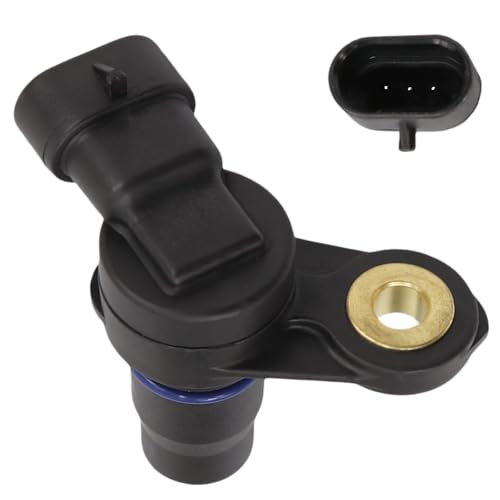
The camshaft position sensor is a vital piece of your engine’s puzzle. It tells your car’s engine control unit (ECU) exactly where the camshaft is rotating, which is critical for precise fuel injection and ignition timing. When this sensor goes bad, your engine loses its ability to run efficiently, impacting everything from fuel economy to overall performance. Replacing it promptly is key to avoiding further issues.
Let’s dive into some of the top picks for your camshaft position sensor bank 1 replacement, ensuring you get a reliable part that fits your needs.
Understanding Bank 1
Before we get to the reviews, a quick note on “Bank 1.” In engines with two cylinder banks (like V6s or V8s), Bank 1 refers to the side of the engine that contains cylinder #1. It’s often the passenger side on most vehicles, but always double-check your vehicle’s service manual or do a quick online search for your specific make and model to be sure!
Our Top 5 Picks for Camshaft Position Sensor Bank 1 Replacement
1. A-Premium Camshaft Position Sensor Left & Right

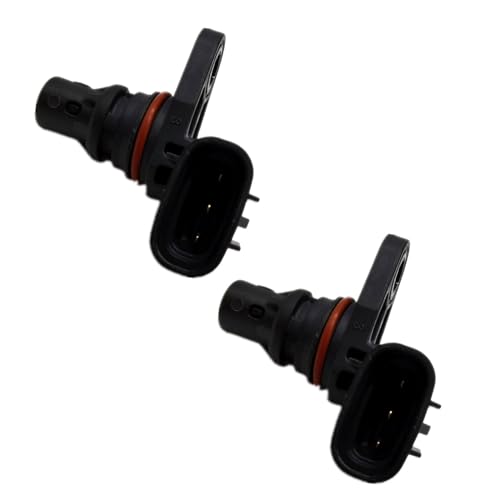
When you’re looking for a reliable and comprehensive solution for your Nissan or Infiniti, this A-Premium set often hits the mark. What makes it stand out is that it includes two camshaft position sensors, covering both Bank 1 and Bank 2 (or left and right) applications. This is incredibly handy, especially if you suspect both might be nearing their end, or if you simply want to replace both for peace of mind, ensuring optimal engine timing across your V6 or V8 powerhouse. Its broad compatibility with a range of popular V6 Nissan/Infiniti models makes it a go-to choice for many DIYers and mechanics alike.
Key Features:
– Compatible with various Infiniti (FX35, G35, I35, M35) and Nissan (350Z, Altima, Maxima, Murano, Quest, Frontier, NV series, Pathfinder, Xterra) V6 and V8 engines.
– Includes reference numbers for Bank 1 (907-716, 237315M010, etc.) and Bank 2 (917-704, 237317Y000, etc.) sensors.
– Features a 3-pin blade terminal design for precise fitment.
– Package contains two camshaft position sensors.
– Backed by a one-year unlimited-mileage guarantee.
Pros:
– Comes with both Bank 1 and Bank 2 sensors, offering a complete solution.
– Wide range of vehicle compatibility for Nissan/Infiniti V6/V8 models.
– Meticulously crafted with a decent warranty for peace of mind.
Cons:
– If you only need one sensor, you’ll have an extra, which might be unnecessary for some.
User Impressions:
Many users appreciate the convenience of getting both sensors in one package, reporting that they fit perfectly and resolve their engine issues. The broad compatibility is a big plus for owners of the listed Nissan and Infiniti vehicles.
2. Dorman 917-745 Engine Camshaft Position Sensor Compatible

Dorman is a name synonymous with reliable aftermarket automotive parts, and their 917-745 Engine Camshaft Position Sensor is no exception. This sensor is engineered as a direct replacement, meaning it’s designed to match the fit and function of your vehicle’s original sensor. What truly sets Dorman apart is their dedication to quality and their long-standing reputation. You’re not just buying a sensor; you’re investing in a part backed by over a century of automotive experience and a team of product experts right here in the United States. This commitment to ‘trustworthy quality’ ensures you’re getting a durable solution built to withstand the rigors of your engine bay.
Key Features:
– Direct replacement design for seamless installation and original fit.
– Engineered to ensure the engine control unit (ECU) receives proper inputs.
– Durable construction manufactured to strict specifications for reliable performance.
– Backed by a team of product experts in the United States.
– Utilizes a garage tool to ensure exact vehicle fit.
Pros:
– Reputable brand known for quality aftermarket parts.
– Designed to directly match OEM fit and function.
– Built for durability, offering long-lasting performance.
Cons:
– Compatibility needs to be checked carefully using their fitment tool.
– Only one sensor included, so if you need Bank 2, it’s a separate purchase.
User Impressions:
Customers frequently praise Dorman for producing parts that fit “like a glove” and effectively solve their vehicle’s symptoms. Many find it a reliable and cost-effective alternative to OEM sensors, appreciating the brand’s solid reputation.
3. Set of 2 Camshaft Position Sensor Compatible with Ford

Ford, Lincoln, and Mercury owners, listen up! This set of two camshaft position sensors is tailor-made for a wide array of popular models from these brands, including many F-series trucks, Expeditions, Explorers, and even the Mustang. Like the A-Premium option, getting two sensors means you’re covered for both sides of your engine, making it a convenient buy. What makes this particular offering stand out is its explicit focus on Ford vehicles and its comprehensive list of OEM part numbers, making cross-referencing a breeze. Plus, explaining the function of the sensor and the symptoms of failure directly in the description adds a helpful layer of user understanding.
Key Features:
– Broad compatibility with 1997-2010 Ford F150, F250, F350, F450, E150, E250, E350, Expedition, Explorer, Excursion, Mustang, Lincoln Mark LT, Navigator, and Mercury Grand Marquis.
– Cross-references with numerous OEM part numbers (e.g., PC643, 1W7Z6B288A).
– Clearly explains the sensor’s function and common failure symptoms.
– Designed as a direct, plug-in replacement for easy installation.
– Includes 2 camshaft position sensors and an 18-month warranty.
Pros:
– Excellent compatibility for a wide range of Ford, Lincoln, and Mercury vehicles.
– Comes as a set of two, ideal for dual sensor systems.
– Helpful information provided on sensor function and symptoms.
– Strong 18-month worry-free warranty.
Cons:
– Exclusively for Ford, Lincoln, and Mercury models, limiting general use.
User Impressions:
Ford owners frequently report perfect fitment and effective resolution of issues like hard starts and misfires. The inclusion of two sensors is highly valued, and the clear explanation of symptoms helps users diagnose problems accurately.
4. uxcell 2pcs Car Cam Camshaft Position Sensor Replacement

If you’re driving a Chevrolet or Pontiac and are looking for an affordable yet effective solution, the uxcell 2pcs Car Cam Camshaft Position Sensor Replacement might be your ideal pick. This set focuses on specific, common models like the Chevy Aveo, Cruze, and Sonic, as well as the Pontiac G3. It’s a no-frills, direct replacement designed for straightforward installation. Its key appeal lies in offering a cost-effective way to get your car back on track, particularly if you’re comfortable with a DIY approach and your vehicle matches the listed fitment. It’s about getting the job done without breaking the bank.
Key Features:
– Specific fitment for Chevrolet Aveo/Aveo5 (2009-2011), Cruze (2011-2015), Cruze Limited (2016), Sonic (2012-2018), and Pontiac G3 (2009-2010).
– Cross-references with OE Number: 55565708/55565709.
– Monitors crankshaft rotational speed to control fuel injection.
– Direct replacement for the original part, ensuring stable performance.
– Package includes 2 camshaft position sensors.
Pros:
– Very cost-effective solution for specified Chevy/Pontiac models.
– Simple, direct replacement design makes installation easy.
– Includes two sensors for complete coverage.
Cons:
– Very limited vehicle compatibility compared to other options.
– Less known brand compared to Dorman or A-Premium.
User Impressions:
Users generally find these sensors to be a good value, performing as expected for the listed vehicles. They appreciate the ease of installation and the fact that two sensors are included for the price.
5. dawfall Car Camshaft Position Sensor for EPC Fault Light

The dawfall Car Camshaft Position Sensor stands out for its specific focus on resolving common error codes like the EPC fault light, alongside issues like cold starting difficulties and weak starts. This sensor is engineered with high-quality, durable materials designed to withstand extreme temperatures, ensuring long-term reliability. What makes it particularly interesting is its comprehensive list of OE numbers it cross-references, hinting at a broader range of potential compatibility beyond the explicitly stated “Chery Ford” – though users should verify fitment very carefully. If you’re tackling persistent fault lights and need a robust camshaft position sensor bank 1 replacement, this one aims to be a perfect, problem-solving accessory.
Key Features:
– Collects dynamic angle signals for precise ignition and fuel injection control.
– Made from high-quality, stable, and temperature-resistant materials for durability.
– Manufactured to OEM specifications to effectively solve EPC fault light, cold starting, and weak starting issues.
– Compatible with “Chery Ford vehicles” (with a strong emphasis on manual OE number and model verification).
– Features an extensive list of cross-referenced OE numbers (e.g., 0232103046, F01R00B003).
Pros:
– Designed to specifically address and clear common engine fault lights (EPC).
– Constructed with high-quality, durable materials for longevity.
– Broad OE number cross-reference suggests potential for wide compatibility (with verification).
Cons:
– “Chery Ford” compatibility is vague and requires rigorous manual cross-checking.
– The extensive list of OE numbers can be overwhelming for some users.
– May only include one sensor (not explicitly stated as two).
User Impressions:
Customers who found the correct fit praise its effectiveness in clearing pesky fault codes and improving engine start-up. The durable build is often highlighted, but the critical point of user feedback revolves around the absolute necessity to verify OE numbers and specific vehicle models carefully.
Frequently Asked Questions (FAQs)
Q1: What are the common symptoms of a faulty camshaft position sensor?
A: Common symptoms include the illumination of your Check Engine light, difficulty starting your car (especially when warm), rough idling, engine stalling, reduced fuel efficiency, and occasional engine misfires or hesitation during acceleration.
Q2: Where is the camshaft position sensor Bank 1 typically located?
A: For most V-type engines (V6, V8, etc.), Bank 1 refers to the side of the engine that contains cylinder #1. The camshaft position sensor for Bank 1 is usually located on or near the cylinder head on that side. The exact location can vary greatly by vehicle make and model, so always consult your car’s service manual or an online diagram for your specific vehicle.
Q3: Can I replace a camshaft position sensor myself, or do I need a mechanic?
A: Replacing a camshaft position sensor can often be a DIY task for those with basic mechanical skills and tools. It usually involves unplugging the old sensor and bolting in the new one. However, the difficulty depends on the sensor’s accessibility in your specific vehicle. If you’re unsure or uncomfortable, it’s always best to consult a professional mechanic.
Q4: What’s the difference between a camshaft position sensor and a crankshaft position sensor?
A: Both sensors are crucial for engine timing. The camshaft position sensor monitors the position of the camshaft, which controls valve opening and closing. The crankshaft position sensor monitors the rotational speed and position of the crankshaft, which controls piston movement. Together, they provide the ECU with precise data for optimal fuel injection and ignition timing.
Q5: How much does a camshaft position sensor replacement cost?
A: The cost of the sensor itself can range from $20 to $100+ depending on the brand (OEM vs. aftermarket) and vehicle. If you hire a mechanic, labor costs can add another $50 to $200, making the total cost typically between $70 and $300.
Q6: Is it better to use an OEM (Original Equipment Manufacturer) or an aftermarket camshaft position sensor?
A: OEM sensors are identical to the part your car came with, ensuring perfect fitment and performance, but they are often more expensive. Aftermarket sensors, like the ones reviewed here, can be a cost-effective alternative. Many aftermarket brands offer excellent quality and performance, but it’s important to choose reputable brands to ensure reliability and compatibility.
Q7: Will a bad camshaft position sensor prevent my car from starting?
A: Yes, a failing or completely failed camshaft position sensor can absolutely prevent your car from starting. Without accurate data from this sensor, the engine’s computer won’t know when to fire the spark plugs or inject fuel, leading to a no-start condition.
Conclusion
A properly functioning camshaft position sensor is absolutely vital for your car’s engine performance and overall reliability. Whether you’re dealing with that annoying Check Engine light or more serious drivability issues, choosing the right camshaft position sensor bank 1 replacement can make all the difference. We hope this guide has shed some light on your options, from comprehensive kits like the A-Premium to brand-specific solutions from Dorman and the Ford-focused set. Remember to always double-check compatibility with your specific vehicle’s year, make, and model before making a purchase. Happy driving!