Performance Modification Options for 7.3 Powerstroke: Boost Power and Efficiency

Featured image for this comprehensive guide about Performance modification options for 7.3 Powerstroke
Image source: get.pxhere.com
The 7.3 Powerstroke. For many, it’s more than just an engine; it’s a legend. Revered for its robust build, incredible reliability, and a distinctive rumble that announces its presence, this iconic diesel powerplant has cemented its place in automotive history. Produced by Ford from 1994.5 to 2003, the 7.3L Navistar T444E V8 was the backbone of countless F-Series trucks, E-Series vans, and Excursions, hauling heavy loads and conquering challenging terrain with unwavering resolve.
While the stock 7.3 Powerstroke delivered respectable power for its time – typically ranging from 210 HP and 425 lb-ft of torque in early models to 275 HP and 525 lb-ft in later High Output versions – modern demands often leave owners craving more. Whether you’re towing heavier trailers, looking for quicker acceleration, or simply want to improve your fuel efficiency, the good news is that the 7.3 Powerstroke is a highly modifiable platform. Its inherent strength makes it an ideal candidate for a wide array of performance modification options for 7.3 Powerstroke, allowing enthusiasts to unlock significant power and torque gains, often accompanied by improved driveability and even better MPG.
If you’re ready to transform your trusty workhorse into a true beast, you’ve come to the right place. This comprehensive guide will explore the most popular and effective 7.3 Powerstroke performance modifications, offering actionable insights and tips to help you make informed decisions. From electronic tuning to extensive turbo upgrades, we’ll cover everything you need to know to boost your 7.3’s power and efficiency, ensuring it continues to dominate the road for years to come.
Quick Answers to Common Questions
What’s the best first step for performance modification options for 7.3 Powerstroke?
A custom tuning chip or programmer is often the most impactful initial upgrade, as it instantly optimizes fuel delivery and timing for significant power gains. It really wakes up your truck’s potential right away!
How much extra power can I really expect from these performance modification options for 7.3 Powerstroke?
With common upgrades like tuning, an improved air intake, and exhaust, you can often see gains of 50-100 horsepower and even more torque. More aggressive setups can push those numbers significantly higher!
Will performance modification options for 7.3 Powerstroke also improve my fuel economy?
Absolutely! Many performance modifications, especially custom tuning, can optimize engine efficiency, leading to a noticeable improvement in your truck’s miles per gallon, especially during daily driving.
What are the main components I should look at when considering performance modification options for 7.3 Powerstroke?
Focus on optimizing your engine’s “breathing” and “feeding”: upgrading the air intake, exhaust system, and fuel delivery components like injectors or a larger fuel pump. Don’t forget a quality tuner to tie it all together effectively!
Are there any downsides or reliability concerns with performance modification options for 7.3 Powerstroke?
When done correctly with quality parts and proper tuning, modifications can be very reliable. However, pushing extreme power without addressing supporting components (like transmission or head studs) can introduce risks, so plan your upgrades wisely.
📋 Table of Contents
- The Foundation: Understanding Your 7.3 Powerstroke’s Potential
- Unlocking Power: Electronic Tuning and Fuel Delivery Upgrades
- Breathing Easy: Air Intake and Exhaust System Enhancements
- Forced Induction: Turbocharger Upgrades for Serious Gains
- Putting Power to the Ground: Transmission and Drivetrain Fortification
- Beyond Power: Supporting Mods and Maintenance for Longevity
- Conclusion: Unleash Your 7.3 Powerstroke’s Full Potential
The Foundation: Understanding Your 7.3 Powerstroke’s Potential
Before diving into specific performance modification options for 7.3 Powerstroke, it’s crucial to appreciate the engine’s core strengths and how they contribute to its modding potential. The 7.3L Powerstroke is an indirect injection, hydraulically actuated, electronically controlled unit injector (HEUI) system. Its cast-iron block and cylinder heads are renowned for their durability, capable of handling significant increases in power with the right supporting modifications.

Learn more about Performance modification options for 7.3 Powerstroke – Performance Modification Options for 7.3 Powerstroke: Boost Power and Efficiency
Image source: ruralindiaonline.org
Understanding the HEUI system is key. Unlike common rail systems, the 7.3 uses high-pressure engine oil to actuate its fuel injectors. This unique design, while robust, also presents specific considerations when upgrading. For example, ensuring adequate oil supply and pressure to the injectors becomes paramount as you increase fuel delivery. The factory limits, while conservative, provide a substantial safety margin, which is why these engines respond so well to upgrades.
| Modification | Key Benefit | Est. HP/TQ Gain (vs. Stock) | Typical Cost Range |
|---|---|---|---|
| Custom Tuning / Chip | Optimizes fuel, timing, and boost for power and efficiency. | +50-100 HP / +100-200 lb-ft TQ | $300 – $800 |
| Larger Injectors | Delivers more fuel to cylinders, essential for significant power gains (requires tuning). | +80-200 HP / +150-350 lb-ft TQ | $1,000 – $2,500 |
| Upgraded Turbocharger | Increases airflow efficiency, lowers EGTs, supports larger fuel demands. | +70-150 HP / +150-300 lb-ft TQ | $1,200 – $2,800 |
| High-Flow Cold Air Intake (CAI) | Improves airflow to the turbo, marginal power gains. | +5-15 HP / +10-25 lb-ft TQ | $200 – $400 |
| 4-inch Turboback Exhaust | Reduces exhaust backpressure, improves turbo spool and lowers EGTs. | +10-25 HP / +20-40 lb-ft TQ | $300 – $700 |
When planning your 7.3 Powerstroke upgrades, consider your primary goals: Are you chasing maximum horsepower for drag racing? Do you need more torque for heavy towing? Or is your priority simply better daily driving manners and improved fuel economy? Your objectives will dictate the most appropriate modification path. Regardless of your aim, remember that a holistic approach – ensuring all components work in harmony – will yield the best and most reliable results.
Unlocking Power: Electronic Tuning and Fuel Delivery Upgrades
The quickest and often most cost-effective way to improve your 7.3 Powerstroke performance is through electronic tuning. This involves optimizing the engine’s computer (PCM) to deliver more fuel, adjust timing, and modify turbo boost parameters. Beyond tuning, enhancing the fuel delivery system is critical for supporting higher power levels.

Learn more about Performance modification options for 7.3 Powerstroke – Performance Modification Options for 7.3 Powerstroke: Boost Power and Efficiency
Image source: get.pxhere.com
Chips, Tuners, and Programmers
Electronic tuning recalibrates your engine’s control module, allowing it to produce more power and torque. For the 7.3 Powerstroke, this typically comes in a few forms:
- Chips (Performance Modules): These physically plug into the PCM and alter the signals, providing varying levels of power increases. Many offer multiple tunes (e.g., tow, economy, race) that can be switched on the fly.
- Programmers (Flash Tuners): These devices connect to your OBD-II port and rewrite the PCM’s software. They often offer more comprehensive control and better integration than chips, providing custom tunes specific to your modifications.
- Custom Tuning: For heavily modified 7.3 Powerstroke engines, custom tuning performed on a dynamometer (dyno) is highly recommended. A skilled tuner can optimize your engine’s performance for your specific setup, maximizing power and ensuring reliability.
Expected Gains: A quality tune can add anywhere from 50 to 100+ horsepower and significantly more torque, with potential fuel economy improvements of 1-3 MPG when driven conservatively.
Actionable Tip: Always invest in a reputable tuner or custom tune. Cheap, generic tunes can lead to excessive exhaust gas temperatures (EGTs) and potential engine damage.
Injector Upgrades
To support higher power levels, especially with aggressive tuning, the factory injectors often become a limiting factor. Upgrading your fuel injectors allows your engine to flow more fuel into the combustion chambers, directly contributing to more power. There are various stages of injector upgrades:
- Stage 1 (160/80, 180/80): These are common for mild to moderate power gains (350-400 HP). They are a good match for mild tuning and minor turbo upgrades.
- Stage 2 (205/30, 238/80): For more substantial power (400-500 HP), these injectors require additional supporting modifications like a larger turbo and a high-volume oil pump.
- Stage 3+ (250/200, 300/200): These are for extreme power builds (500+ HP) and require extensive supporting mods, including dual HPOP setups, larger turbos, and reinforced transmissions.
The numbers (e.g., 160/80) represent the nozzle flow rate (160cc) and the intensifier piston area (80% over stock, implying more fuel output per injection event). Matching the right injector size to your other 7.3 Powerstroke performance modifications is crucial for efficiency and longevity.
Actionable Tip: When upgrading injectors, also consider a high-pressure oil pump (HPOP) upgrade or a dual HPOP setup if going beyond Stage 1, as the stock HPOP may struggle to provide adequate oil volume and pressure.
Fuel System Enhancements
The factory fuel pump and lines on a 7.3 Powerstroke are adequate for stock power but can become restrictive with significant power increases. An upgraded fuel system ensures consistent fuel pressure and volume, preventing fuel starvation issues that can lead to injector damage or reduced performance.
- Electric Fuel Pump: Replacing the stock mechanical pump with a high-flow electric pump ensures a steady supply of fuel.
- Bigger Fuel Lines: Larger diameter fuel lines reduce restriction and improve flow.
- Fuel Pressure Regulator (FPR): An adjustable FPR allows you to fine-tune fuel pressure for optimal performance.
Expected Gains: While not directly adding horsepower, a robust fuel system supports and sustains power gains from injectors and tuning, preventing power loss under load and ensuring engine health.
Breathing Easy: Air Intake and Exhaust System Enhancements
Just as a human athlete needs to breathe efficiently, your 7.3 Powerstroke engine requires optimal airflow to produce maximum power. Restrictive factory air intake and exhaust systems can choke your engine, limiting its potential. Upgrading these components allows your engine to inhale more cool, dense air and exhale spent gases more effectively.
Cold Air Intake (CAI) Systems
A cold air intake for 7.3 Powerstroke replaces the restrictive factory airbox and filter with a larger, less restrictive filter and tubing designed to draw in cooler, denser air. Cooler air contains more oxygen molecules, leading to more efficient combustion and increased power.
- Benefits: Improved throttle response, increased horsepower (typically 5-20 HP), potentially better fuel economy, and a more aggressive engine sound.
- Considerations: Choose a reputable brand known for proper filtration to protect your engine.
Actionable Tip: Pair your CAI with a clean air filter for maximum benefit. Regularly inspect and clean or replace your filter.
Larger Intercoolers
The intercooler’s job is to cool the compressed air coming from the turbocharger before it enters the engine. Cooler intake air is denser, leading to more power and reduced EGTs. While a common upgrade for later Powerstrokes, the 7.3 Powerstroke came with an intercooler from the factory in its later years (Super Duty era). However, an upgraded, larger intercooler can significantly improve charge air cooling, especially in high-boost or heavy-towing applications.
- Benefits: Lower EGTs, increased power potential, improved engine longevity, especially during sustained high-load operation.
- Considerations: Ensure proper fitment and consider the additional air volume for tuning adjustments.
Expected Gains: Not a direct horsepower adder, but a larger intercooler can support an additional 20-40 HP by reducing heat, making it a crucial supporting mod for bigger turbos and injectors.
Performance Exhaust Systems
A free-flowing exhaust system allows spent gases to exit the engine more quickly, reducing backpressure and improving turbo spool-up. The factory exhaust system, particularly the downpipe and muffler, can be highly restrictive.
- Downpipe Upgrade: Replacing the restrictive 2.5-inch factory downpipe with a 3-inch or even 4-inch downpipe is one of the most impactful exhaust modifications for 7.3 Powerstroke.
- Full Turbo-Back Exhaust: Upgrading the entire exhaust system from the turbo back to a larger diameter (typically 4-inch or 5-inch) with a less restrictive muffler or a “straight pipe” design.
- Benefits: Reduced EGTs, improved turbo spool, increased horsepower (10-30 HP), and a more aggressive exhaust note.
- Considerations: Check local emissions regulations regarding catalyst removal (if applicable to your model year).
Actionable Tip: Start with the downpipe. It’s often the most restrictive component in the factory exhaust system and offers the best bang for your buck.
Forced Induction: Turbocharger Upgrades for Serious Gains
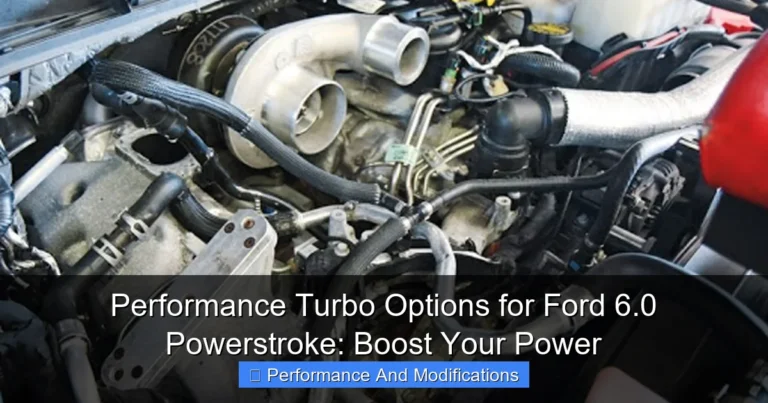
For those chasing significant horsepower gains, upgrading the turbocharger is almost inevitable. The factory Garrett GTP38 turbocharger is robust but has its limits. A larger, more efficient turbo can dramatically increase airflow into the engine, supporting higher fueling levels and producing substantial power increases.
Turbocharger Upgrades
When selecting a 7.3 Powerstroke turbo upgrade, you’ll encounter various options:
- Compressor Wheel Upgrades (Wicked Wheel 2): A simple, cost-effective upgrade that replaces the stock compressor wheel with an aftermarket one designed for improved airflow and reduced turbo lag. This is often a good first step for milder builds.
- Hybrid Turbos: These combine elements of different turbos, such as a larger compressor housing and wheel from a more powerful turbo with the factory turbine side. They offer a good balance of streetability and increased power.
- Larger Aftermarket Turbos (e.g., Garrett PowerMax, BorgWarner S300/S400 series): These are complete turbo replacements designed for much higher airflow and power. They require proper sizing for your fueling setup to avoid excessive lag or over-boosting.
- Compounds (Twin Turbos): For extreme power, a compound turbo setup uses two turbos in series – a smaller one for quick spool and a larger one for maximum flow at higher RPMs. This is a complex and expensive modification, typically reserved for dedicated racing builds.
Expected Gains: From 30-50 HP with a compressor wheel to 100-200+ HP with a full turbo replacement, depending on the turbo size and supporting modifications.
Actionable Tip: Properly match your turbo upgrade to your injector size and tuning. An oversized turbo with small injectors will result in excessive turbo lag, while an undersized turbo with large injectors will generate dangerous EGTs and not fully utilize your fuel.
High-Flow Exhaust Housings and Wastegates
To complement a turbo upgrade, consider these additional components:
- Exhaust Housing (Turbine Housing): An upgraded, larger exhaust housing can reduce backpressure on the turbine, allowing it to spin more freely and reduce EGTs.
- External Wastegate: For high-boost applications, an external wastegate provides more precise boost control than the factory internal wastegate. This prevents boost creep and allows the turbo to operate more efficiently.
These supporting 7.3 Powerstroke modifications contribute to a more efficient and reliable turbo system.
Putting Power to the Ground: Transmission and Drivetrain Fortification
All the horsepower and torque in the world are useless if your transmission can’t handle it. The factory 4R100 automatic transmission (or manual ZF5/ZF6) in the 7.3 Powerstroke has its limits. Exceeding these limits without reinforcement will lead to premature wear and failure. This is often one of the most critical, yet overlooked, performance modification options for 7.3 Powerstroke.
Transmission Upgrades (Automatic 4R100)
The 4R100 transmission is robust, but once you start exceeding 350-400 HP, it begins to show its weaknesses. Common upgrades include:
- Heavy-Duty Rebuild: This is the most common and effective upgrade. It involves replacing friction plates with high-performance units, upgrading clutch packs, installing stronger shafts, and improving valve body modifications for firmer shifts and increased line pressure.
- Torque Converter Upgrade: A multi-disc, billet torque converter is essential for transmitting increased torque from the engine to the transmission without slipping. This is a high-priority upgrade for anyone towing heavily or significantly increasing power.
- Deep Transmission Pan: A deeper pan increases fluid capacity, which helps with cooling and extends fluid life.
- Auxiliary Transmission Cooler: Especially important for towing or aggressive driving, an external cooler helps keep transmission fluid temperatures in check, preventing overheating and premature wear.
Expected Benefits: Improved shift quality, increased power handling capacity, reduced transmission temperatures, and significantly extended transmission life.
Actionable Tip: If you’re planning significant engine modifications, budget for a transmission upgrade. It’s not a matter of “if” your stock transmission will fail, but “when.”
Drivetrain Considerations
While the differentials and driveshafts of the 7.3 Powerstroke are generally stout, extreme power levels (500+ HP) can expose weaknesses. Keep an eye on:
- U-Joints: Ensure they are in good condition and consider heavy-duty replacements.
- Driveshaft Balance: With increased power, vibrations can become more pronounced.
- Differential: For dedicated drag racing, upgrading differential components like stronger axles or limited-slip differentials might be considered, but for most street and towing applications, the factory setup holds up well.
Beyond Power: Supporting Mods and Maintenance for Longevity
Achieving significant power gains is exciting, but it’s equally important to ensure your 7.3 Powerstroke can handle that power reliably and safely. Ignoring supporting modifications and proper maintenance can quickly lead to costly failures. Think of these as the essential “behind-the-scenes” performance modification options for 7.3 Powerstroke that ensure your investment lasts.
Monitoring Gauges
This is arguably the most crucial “modification” for any modified diesel. Gauges provide vital information about your engine’s health and operating parameters, allowing you to react before damage occurs.
- Pyrometer (EGT Gauge): Absolutely essential. Monitors exhaust gas temperatures. High EGTs are a primary killer of diesel engines and turbos.
- Boost Gauge: Monitors turbocharger boost pressure, helping you ensure your turbo is operating correctly and not over-boosting.
- Transmission Temperature Gauge: Crucial for automatics, especially when towing or driving aggressively. Excessive transmission temps will quickly degrade fluid and components.
- Fuel Pressure Gauge: Ensures your fuel system is maintaining adequate pressure under load, preventing injector damage.
Actionable Tip: Install these gauges *before* you start turning up the power. They are your engine’s warning system.
Cooling System Upgrades
More power generates more heat. Keeping your engine cool is vital for longevity.
- Upgraded Radiator: A larger, more efficient radiator can significantly improve engine cooling, especially in hot climates or during heavy towing.
- Water Pump: Ensure your water pump is in good working order. Some aftermarket high-flow pumps exist.
- Coolant Filter: Helps to remove contaminants from the coolant system, preventing deposits and extending component life.
Expected Benefits: Reduced engine operating temperatures, increased reliability, and extended engine life.
Oil System Enhancements
Given the HEUI system’s reliance on engine oil, ensuring optimal oil quality and pressure is paramount.
- Oil Cooler: A clean and efficient oil cooler is crucial. Consider flushing or upgrading if yours is old or clogged.
- High-Volume Oil Pump (HPOP): As mentioned with injectors, an upgraded HPOP (or dual HPOPs for extreme builds) is necessary to maintain adequate oil pressure and volume for larger injectors.
- External Oil Filter: Some owners add an external oil filter for enhanced filtration and easier servicing.
Preventative Maintenance
Regardless of your performance modifications for 7.3 Powerstroke, diligent maintenance is the bedrock of reliability.
- Oil and Filter Changes: Use quality diesel-specific engine oil and filters at recommended intervals.
- Fuel Filter Changes: Keep your fuel system clean by regularly replacing fuel filters.
- Air Filter Changes: A clean air filter is crucial for optimal performance and engine protection.
- Coolant Flushes: Maintain your cooling system with regular flushes and proper coolant mixtures.
- Transmission Fluid and Filter: Especially important for modified automatics.
Actionable Tip: Don’t cut corners on maintenance. It’s the cheapest insurance against expensive repairs, especially on a modified engine.
Conclusion: Unleash Your 7.3 Powerstroke’s Full Potential
The 7.3 Powerstroke remains one of the most beloved and capable diesel engines ever produced, and its legendary status is only enhanced by its remarkable potential for performance modification options. Whether you’re aiming for a modest bump in power and efficiency for daily driving or a full-blown build to conquer the toughest challenges, the aftermarket offers a wealth of solutions to transform your truck.
From the foundational power gains offered by electronic tuning and injector upgrades to the exhilarating boost of a larger turbo and the critical reinforcement of a built transmission, each modification plays a vital role in creating a cohesive, powerful, and reliable package. Remember that a balanced approach, considering how each upgrade impacts other components, is key to success.
Always prioritize monitoring your engine’s health with essential gauges, and never neglect preventative maintenance. With the right 7.3 Powerstroke upgrades and a commitment to careful operation, your 7.3 Powerstroke won’t just keep up with modern diesels; it’ll often surpass them in character, durability, and raw, old-school power. So, go forth, choose your modifications wisely, and unleash the true potential of your legendary 7.3 Powerstroke!
🎥 Related Video: How to Build a 325WHP Ford 7.3 PowerStroke!
📺 8020 Automotive
For all the products listed in this video, visit: https://boostedperformance.com/73-powerstroke Use code “DieselIQ” for 10% OFF …
Frequently Asked Questions
What are the best first performance modification options for a 7.3 Powerstroke to boost power?
Starting with an improved air intake system, a larger diameter exhaust, and a performance chip or custom tune are highly recommended. These fundamental upgrades significantly enhance airflow and fuel delivery, providing noticeable gains in horsepower and torque without requiring major engine work.
How do upgraded injectors and turbochargers impact 7.3 Powerstroke performance?
Upgraded injectors deliver more fuel into the combustion chambers, allowing for higher horsepower potential when paired with a custom tune. A larger or more efficient turbocharger increases boost pressure and airflow, further enhancing power delivery, improving throttle response, and providing substantial power gains for your 7.3 Powerstroke.
Is custom tuning necessary for 7.3 Powerstroke performance modifications?
Absolutely. Custom tuning is crucial to optimize your engine’s fuel delivery, timing, and boost pressure for any performance modifications. Without proper tuning, upgrades like larger injectors or turbos can be ineffective, cause engine damage, or even lead to a loss of overall efficiency.
Can performance modification options for the 7.3 Powerstroke also improve fuel efficiency?
Yes, many performance modification options, particularly those focused on optimizing combustion and reducing engine strain, can lead to better fuel economy. A well-designed intake, exhaust, and an efficiency-focused custom tune can help your 7.3 Powerstroke achieve more miles per gallon while also boosting power.
Do performance modifications affect the reliability or lifespan of my 7.3 Powerstroke?
While pushing your engine harder can theoretically reduce its lifespan, careful and sensible modifications with proper tuning generally maintain excellent reliability. Excessive power without supporting upgrades (like transmission reinforcement) or poor tuning can put undue stress on components, but responsible modifications are typically safe.
What’s the typical cost range for popular 7.3 Powerstroke performance modifications?
The cost varies widely depending on the extent of the modifications. Basic upgrades like an intake and exhaust might run $500-$1500, while more extensive work involving injectors, a new turbo, and custom tuning can easily range from $3,000 to $8,000 or more. Consider your budget and power goals when planning your 7.3 Powerstroke performance modifications.