How to Modify 6.0 Powerstroke Fuel System for Better Performance: Upgrade for Power
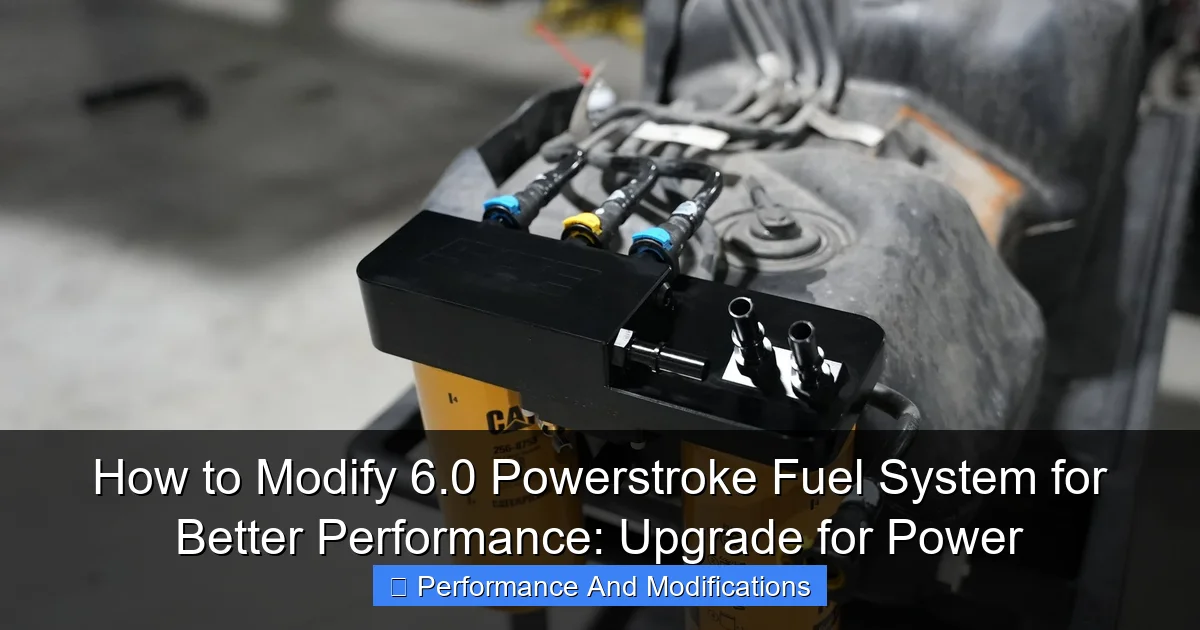
Featured image for this comprehensive guide about How to modify 6.0 Powerstroke fuel system for better performance
Image source: mdm-performance.com
How to Modify 6.0 Powerstroke Fuel System for Better Performance: Upgrade for Power
The 6.0 Powerstroke engine, a powerhouse known for its raw torque and legendary durability (when properly maintained), has a reputation that precedes it. While often maligned for its factory shortcomings, savvy owners know that with a few key modifications, this diesel beast can be transformed into an absolute monster – reliable, powerful, and incredibly fun to drive. One of the most critical areas to address for unlocking true potential and ensuring long-term health is the 6.0 Powerstroke fuel system.
If you're looking to push your truck beyond stock limits, whether for towing heavier loads, hitting the drag strip, or simply enjoying more horsepower and torque on demand, upgrading your fuel system is non-negotiable. The stock setup, while adequate for factory power levels, quickly becomes a bottleneck when you start adding performance tunes, larger turbos, or bigger injectors. It struggles to deliver the consistent, clean fuel pressure and volume needed, leading to performance issues, reduced reliability, and even expensive damage. This comprehensive guide will walk you through everything you need to know to modify your 6.0 Powerstroke fuel system for better performance, transforming your truck into the powerhouse it was always meant to be.
We'll delve into the essential components, from filtration and lift pumps to injectors and fuel lines, providing actionable tips and insights to help you make informed decisions. Get ready to give your 6.0 Powerstroke the fuel it truly deserves!
Quick Answers to Common Questions
Why should I consider modifying my 6.0 Powerstroke fuel system?
Upgrading your 6.0 Powerstroke fuel system is crucial for maintaining consistent fuel pressure and flow, especially when you've added other performance modifications. It ensures your injectors get the fuel they need, preventing damage and unlocking your engine's true potential.
What's the best first step to upgrading the 6.0 Powerstroke fuel system for better performance?
A fantastic first step to improve your 6.0 Powerstroke fuel system is installing an aftermarket lift pump and regulated return system. This setup delivers steady, higher fuel pressure to all injectors, which is vital for both reliability and performance.
Are there common weak points in the stock 6.0 Powerstroke fuel system?
Absolutely! The factory 6.0 Powerstroke fuel system often struggles to maintain consistent fuel pressure, particularly under heavy load, which can starve injectors. Its stock filtration and fuel lines are also frequently upgraded for better flow and cleaner fuel delivery.
Will modifying my 6.0 Powerstroke fuel system void my warranty?
Generally, extensive modifications to your 6.0 Powerstroke fuel system can potentially impact your powertrain warranty, as these changes are often linked to engine performance. It's always wise to check with your dealer or consider making such upgrades on vehicles outside of their warranty period.
What kind of performance improvements can I expect from upgrading my 6.0 Powerstroke fuel system?
While a fuel system upgrade doesn't directly add horsepower on its own, it's a foundational modification that allows for significant gains when combined with other power-adders. You'll experience improved throttle response, greater engine longevity, and the ability to safely support higher horsepower levels from your 6.0 Powerstroke.
📋 Table of Contents
- Why Upgrade Your 6.0 Powerstroke Fuel System? Unlocking Hidden Potential
- Essential First Steps: Fuel Filtration & Contamination Prevention
- Upgrading Your Fuel Pump: The Heart of the System
- Injector Upgrades: Fueling the Beast
- Fuel Line & Sump Modifications: Ensuring Optimal Flow
- Tuning for Success: Maximizing Your Fuel System Upgrades
- Comparative Overview: 6.0 Powerstroke Fuel System Upgrades
- Conclusion: Power, Reliability, and Longevity for Your 6.0 Powerstroke
Why Upgrade Your 6.0 Powerstroke Fuel System? Unlocking Hidden Potential
Before diving into specific upgrades, let's understand why the stock 6.0 Powerstroke fuel system needs attention. The 6.0L engine's notorious "stiction" issues, injector failures, and overall reliability concerns often trace back to inadequate fuel delivery and filtration. The factory system, designed to meet specific emissions and cost targets, simply isn't robust enough for sustained high performance or longevity in all conditions.
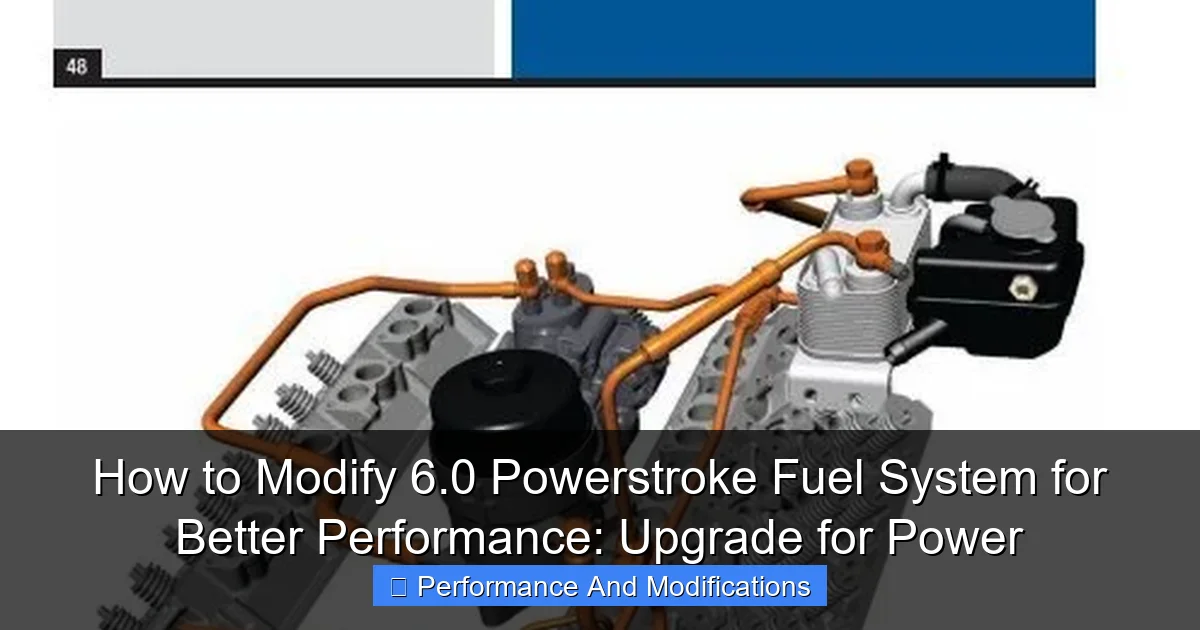
Learn more about How to modify 6.0 Powerstroke fuel system for better performance - How to Modify 6.0 Powerstroke Fuel System for Better Performance: Upgrade for Power
Image source: img.yumpu.com
Here are the primary reasons why a fuel system upgrade is crucial for any modified 6.0 Powerstroke:
| Modification | Primary Benefit | Estimated Performance Impact / Metric | Key Consideration |
|---|---|---|---|
| "Blue Spring" Fuel Pressure Regulator (FPR) Upgrade | Increases & stabilizes fuel pressure to injectors. | OEM pressure: ~45-50 PSI. Modded: ~60-65 PSI. Prevents injector cavitation/damage. | Essential first modification for injector longevity; inexpensive. |
| Aftermarket Lift Pump (e.g., FASS, AirDog) | Ensures consistent fuel flow, improved filtration, and air separation. | OEM flow: ~100 GPH. Aftermarket: ~165-220 GPH. Up to 10-20 HP gain (due to better pressure/air removal). | Highly recommended for reliability and supports higher HP goals. |
| Larger Injectors (e.g., 155/30, 175/75) | Increases fuel delivery capacity for higher horsepower output. | Stock: 135/145cc. 155/30cc (+50-75 HP). 175/75cc (+100-150 HP). | Requires custom tuning, turbo upgrade, and capable lift pump for optimal performance. |
| Fuel Sump Installation | Ensures the lift pump always has a consistent, air-free fuel supply. | Eliminates fuel starvation issues below 1/4 tank, maintains consistent 60+ PSI at high demand. | Beneficial for trucks with aftermarket lift pumps, especially during heavy use. |
- Inconsistent Fuel Pressure: The factory fuel pump often struggles to maintain consistent fuel pressure, especially under load or with increased demand from performance tuning. This can lead to injector "stiction" (when an injector spool valve sticks due to lack of lubrication from insufficient fuel pressure), poor atomization, and reduced power.
- Insufficient Fuel Volume: When you increase horsepower, you need more fuel. Stock pumps and lines can't always deliver the necessary volume, causing fuel starvation, particularly at higher RPMs, which limits your engine's true potential.
- Poor Fuel Filtration: The OEM fuel filtration system, while passable, is not ideal for the longevity of your injectors. Diesel fuel quality varies, and fine contaminants can quickly wear out precise injector components, leading to expensive repairs.
- Air in Fuel: The factory system can allow air to be introduced into the fuel, which can cause injector issues, rough idling, and reduced performance. Aftermarket systems often include air/vapor separation.
- Increased Reliability & Longevity: A properly upgraded 6.0 Powerstroke fuel system provides cleaner fuel, consistent pressure, and adequate volume, all of which extend the life of your costly injectors and improve overall engine reliability.
- Unlocking Power Gains: Without adequate fuel, any other performance modifications (like larger turbos or aggressive tunes) will be bottlenecked. A robust fuel system ensures your engine gets every drop it needs to produce maximum power efficiently.
Essential First Steps: Fuel Filtration & Contamination Prevention
Before you even think about more power, you must prioritize fuel cleanliness. For the 6.0 Powerstroke, superior fuel filtration is arguably the most critical and often overlooked first step in any performance modification. The 6.0's HEUI (Hydraulically Electronic Unit Injector) system relies heavily on clean engine oil and incredibly clean fuel. Any microscopic debris can quickly ruin expensive injectors.
Learn more about How to modify 6.0 Powerstroke fuel system for better performance - How to Modify 6.0 Powerstroke Fuel System for Better Performance: Upgrade for Power
Image source: dieselbombers.com
OEM Filtration Shortcomings
The factory 6.0 Powerstroke fuel system uses two filters: a primary frame-mounted filter and a secondary engine-mounted filter. While they do a job, they don't offer the same level of filtration as many aftermarket systems. The primary filter often allows particles larger than desirable to pass through, putting strain on the secondary filter and potentially allowing contaminants to reach your injectors.
Aftermarket Filtration Solutions
Upgrading your filtration system should be your absolute priority. These systems often combine better micron ratings with improved fuel flow and air separation.
- Dedicated Filtration Systems (FASS, AirDog): These are comprehensive systems that replace the factory frame-mounted filter and often the factory lift pump. They typically feature:
- Improved Micron Ratings: Offering significantly finer filtration (e.g., 2-3 microns) compared to stock.
- Water Separation: Excellent at removing water from diesel fuel, which is corrosive and damaging to injectors.
- Air/Vapor Separation (Fuel Air Separation System): Crucially, these systems actively remove entrained air and vapor from the fuel before it reaches the injectors. Air in the fuel can cause injector damage, cavitation, and inconsistent performance.
- Built-in Lift Pump: Most come with a robust electric lift pump, ensuring consistent pressure and volume.
- Dual Fuel Filter Kits: Some setups add a third, even finer filter in line (e.g., a CAT filter adapter) to catch more contaminants before the fuel reaches the engine.
Actionable Tip: Even if you do nothing else, install a high-quality aftermarket fuel filtration system like a FASS or AirDog. This single upgrade will dramatically improve injector life and provide cleaner fuel for better combustion and reliability. It’s an investment that pays for itself by preventing costly injector repairs.
Upgrading Your Fuel Pump: The Heart of the System
Once your fuel is clean, it needs to be delivered consistently and at the right pressure. The factory fuel pump is a common weak point for the 6.0 Powerstroke, especially when seeking increased performance.
OEM Pump Limitations
The stock electric fuel pump is located on the frame rail and delivers fuel to the engine. Its main limitation is its inability to maintain consistent pressure (around 45-55 PSI) under heavy load or when the injectors demand more fuel. Dropping fuel pressure leads to reduced injector output, increased stiction, and accelerated wear. Anything below 45 PSI at the Secondary Fuel Filter Housing can lead to critical injector damage.
Aftermarket Lift Pump Systems (FASS, AirDog, and more)
Upgrading your lift pump is critical for maintaining stable fuel pressure and delivering adequate volume for higher horsepower applications. Many of the best options integrate advanced filtration and air separation.
- FASS (Fuel Air Separation System): These systems are highly popular and for good reason. They combine a powerful lift pump, superior filtration, and active air/vapor separation. They come in various flow rates (e.g., 95 GPH, 150 GPH) to match your power goals. A FASS system ensures your injectors are receiving clean, air-free fuel at a consistent pressure.
- AirDog (Demand Flow System): Similar to FASS, AirDog systems offer excellent filtration, water separation, and air removal. They are known for their reliability and ability to deliver consistent fuel pressure, even under demanding conditions. Like FASS, AirDog offers different flow rates.
- Electric In-Tank or Frame-Mounted Pumps (e.g., Walbro, Aeromotive): For those looking for a pump-only upgrade, high-volume electric pumps can be used. These typically require adding separate filtration and potentially a fuel pressure regulator if not integrated. They are often used in very high-horsepower builds where maximum flow is paramount.
Data Point: A stock 6.0 Powerstroke fuel pump can typically flow around 70-80 GPH (gallons per hour). For mild to moderate performance tunes, upgrading to a 95-120 GPH aftermarket pump is recommended. For aggressive tunes and larger injectors, 150-165 GPH pumps are common.
Actionable Tip: When choosing an aftermarket lift pump, consider your current and future power goals. It’s often best to slightly over-spec your pump to ensure it can handle future modifications without becoming a bottleneck. Always aim for consistent fuel pressure between 55-70 PSI at the secondary filter housing.
Injector Upgrades: Fueling the Beast
Once you've ensured clean, consistent fuel delivery, the next logical step to significantly increase horsepower is to upgrade your fuel injectors. The 6.0 Powerstroke's fuel injectors are a marvel of engineering, but like any component, they have their limits.
Understanding 6.0 Injectors
The 6.0L Powerstroke uses HEUI (Hydraulically Electronic Unit Injectors), meaning they are actuated by high-pressure engine oil. The amount of fuel delivered depends on the injector's nozzle size and the internal spool valve's efficiency. Stock injectors flow a specific amount of fuel, but for substantial power gains, you'll need more.
Choosing the Right Injector Size
Injector upgrades come in various "stages" or "sizes," typically rated by how much more fuel they flow compared to stock. It's crucial to match your injectors to your other modifications, especially your turbocharger and custom tuning.
- Stock Injectors (OEM): Good for stock or very mild tunes. If yours are failing, replacing them with quality OEM-spec or remanufactured injectors is a good start before considering performance.
- Stage 1 Injectors (e.g., 155cc / 30% nozzle): These are a popular choice for mild to moderate performance gains. They offer improved atomization and a slight increase in fuel delivery, often pairing well with performance tunes and a stock or slightly upgraded turbo. Expect around 50-75 additional horsepower with proper tuning.
- Stage 2 Injectors (e.g., 175cc-190cc / 75-100% nozzle): These are for more serious power enthusiasts. They require aggressive custom tuning and typically a larger aftermarket turbocharger to properly spool and prevent excessive exhaust gas temperatures (EGTs). Gains can be substantial, often in the 100-150+ horsepower range.
- Stage 3+ Injectors (e.g., 205cc+ / 100%+ nozzle): These are for extreme performance builds, often requiring a highly modified engine, multiple turbo setups, and specialized tuning. They are not recommended for street use without a fully built engine.
Important Considerations:
- Tuning is MANDATORY: You absolutely cannot install larger injectors without custom tuning designed specifically for them. Failure to do so will result in poor performance, excessive smoke, and potential engine damage.
- Turbocharger Match: Larger injectors demand more air. Ensure your turbocharger can supply the necessary airflow to burn the additional fuel efficiently. An upgraded turbo (e.g., a VGT or fixed-geometry turbo designed for more flow) is often paired with Stage 2 and higher injectors.
- High-Pressure Oil Pump (HPOP): For very large injectors (Stage 2 and above), your HPOP might struggle to supply enough oil pressure to actuate them effectively at high RPMs. An upgraded HPOP (e.g., an Adrenaline HPOP) might be necessary.
- Quality Matters: Injectors are expensive. Invest in high-quality new or professionally remanufactured injectors from reputable brands (e.g., KC Turbos, Warren Diesel, Full Force Diesel).
Actionable Tip: Start with injectors appropriate for your overall build. Don't go straight for the biggest injectors if you're not planning a matching turbo and engine build. Consult with your tuner to determine the best injector size for your goals.
Fuel Line & Sump Modifications: Ensuring Optimal Flow
Even with a high-performance lift pump and large injectors, a restricted path can choke your 6.0 Powerstroke fuel system. Stock fuel lines and the factory fuel pickup can become bottlenecks when pushing serious power.
Optimizing Fuel Delivery Lines (Big Line Kits)
The factory fuel lines on the 6.0 Powerstroke are adequate for stock power but can restrict flow to aftermarket pumps and injectors. A "big line kit" replaces the smaller diameter factory fuel lines with larger diameter lines (typically 1/2" or -8 AN). This reduces restriction, allowing the fuel pump to work more efficiently and deliver a greater volume of fuel to the engine.
- Benefits: Increased fuel flow, reduced strain on the fuel pump, more consistent fuel pressure at the engine.
- Installation: These kits usually replace the lines from the tank to the lift pump and from the lift pump to the engine.
The Role of a Fuel Sump
The factory fuel tank pickup for the 6.0 Powerstroke can sometimes struggle to pull enough fuel, especially when the tank is low or under hard acceleration. A fuel sump is a modification to the bottom of your fuel tank that creates a low point for fuel pickup, ensuring your lift pump always has an ample supply of fuel, even when sloshing occurs or the tank is near empty.
- Benefits: Eliminates quarter-tank issues, ensures consistent fuel delivery, prevents fuel starvation during aggressive driving or towing.
- Considerations: Requires drilling into your fuel tank for installation. Ensure proper sealing to prevent leaks.
Fuel Pressure Regulation
While aftermarket lift pumps often include an integrated regulator, ensuring proper fuel pressure at the engine is vital. Some builders opt for an external, adjustable fuel pressure regulator (FPR) to fine-tune fuel pressure to their specific setup. The "blue spring kit" is a common OEM upgrade for the 6.0, replacing the stock fuel pressure regulator spring with a stiffer one to raise the base fuel pressure from around 50-55 PSI to 60-65 PSI, which is beneficial even for stock trucks and a must for mild tunes.
Actionable Tip: For any significant 6.0 Powerstroke fuel system upgrade, a big line kit is highly recommended. A fuel sump is a great addition, especially if you regularly run your tank low or demand peak performance frequently.
Tuning for Success: Maximizing Your Fuel System Upgrades
Installing all these high-performance components – the robust lift pump, the larger injectors, the improved lines – is only half the battle. To truly unleash their potential and ensure your engine runs optimally, custom tuning is absolutely essential. This is where your investment in a modified 6.0 Powerstroke fuel system truly pays off.
The Synergy of Tuning
Custom tuning (often referred to as "custom tunes" or "performance tunes") involves reprogramming your truck's Engine Control Module (ECM) to adjust various parameters, including:
- Fueling Strategy: The ECM learns how to properly command your new, larger injectors to deliver the correct amount of fuel for different engine loads and RPMs. Without this, your engine will run rich, smoke excessively, or even suffer damage.
- Injection Timing: Optimizing when the fuel is injected into the cylinders for maximum power and efficiency, and to control EGTs.
- Turbocharger Control: Adjusting the variable geometry turbo (VGT) to spool faster and provide the right amount of boost to match the increased fuel.
- Transmission Shifting: For automatic transmissions, tuning can optimize shift points and clutch pressures to handle the increased power and torque, making the truck feel much more responsive.
- Fuel Pressure Targets: The tune can instruct the fuel system to maintain higher, more consistent fuel pressure from your aftermarket lift pump.
Why Custom Tuning Over "Off-the-Shelf" Tunes?
While some tuners offer generic "canned" tunes, investing in custom tunes specifically written for your exact modifications (injectors, turbo, fuel system, etc.) and your driving style is paramount. A good custom tuner will work with you to dial in your truck for optimal performance, reliability, and drivability.
Expected Power Gains: With a properly matched tune, performance injectors can add anywhere from 50 to 200+ horsepower over stock, depending on the injector size and supporting modifications. For instance, Stage 1 injectors with a good tune can yield an additional 70-100 HP and significantly more torque.
Monitoring Your New Fuel System
After upgrading your 6.0 Powerstroke fuel system and getting a custom tune, monitoring key parameters is crucial for both performance and longevity. A good monitoring device (like an Edge Insight, SCT Livewire, or comparable unit) allows you to keep an eye on:
- Fuel Pressure: Ensure your lift pump is maintaining consistent pressure (55-70 PSI) at the secondary fuel filter housing.
- Exhaust Gas Temperatures (EGTs): Important for preventing engine damage, especially with larger injectors and aggressive tunes.
- Oil Temperature & Pressure: Critical for the HEUI system.
- Boost Pressure: To ensure your turbo is providing adequate airflow for your fueling.
Actionable Tip: Never run larger injectors or a significantly upgraded 6.0 Powerstroke fuel system without proper custom tuning. Find a reputable tuner who specializes in 6.0 Powerstrokes and understands your specific modifications.
Comparative Overview: 6.0 Powerstroke Fuel System Upgrades
To help visualize the impact and typical cost of various 6.0 Powerstroke fuel system upgrades, here's a comparative table. Keep in mind that prices are estimates and can vary significantly based on brand, labor costs, and market fluctuations. Horsepower gains are also estimates, assuming proper tuning and supporting modifications.
| Upgrade Component | Purpose / Benefit | Estimated Cost Range (Parts Only) | Estimated HP Gain (with tuning) | Recommended Stage |
|---|---|---|---|---|
| Blue Spring Upgrade | Increases base fuel pressure (OEM+ upgrade) | $30 - $80 | 0-5 HP (reliability focus) | Mild (essential for all) |
| Aftermarket Fuel Filtration (e.g., CAT filter adapter) | Superior fuel cleanliness, extended injector life | $150 - $400 | 0 HP (reliability focus) | Mild (highly recommended) |
| FASS/AirDog Lift Pump & Filtration | Consistent pressure, volume, air/water separation, superior filtration | $600 - $1,200 | 5-15 HP (basis for future power) | Moderate to Aggressive |
| Big Line Kit | Reduced fuel line restriction, improved flow | $100 - $300 | Minimal direct HP (optimizes other mods) | Moderate to Aggressive |
| Fuel Sump | Ensures consistent fuel pickup, eliminates 1/4 tank issues | $100 - $250 | Minimal direct HP (reliability focus) | Moderate to Aggressive |
| Stage 1 Injectors (e.g., 155cc / 30% nozzle) | Increased fuel delivery, improved atomization | $1,600 - $2,800 (set of 8) | +50 to +75 HP | Moderate (requires tuning) |
| Stage 2 Injectors (e.g., 175cc+ / 75-100% nozzle) | Significant fuel increase for high HP builds | $2,000 - $3,500+ (set of 8) | +100 to +150+ HP | Aggressive (requires turbo/HPOP/tuning) |
| Custom Tuning (for specific mods) | Optimizes all components for performance and reliability | $400 - $1,000 (device + tunes) | Varies (unlocks potential of other mods) | All stages (mandatory) |
Conclusion: Power, Reliability, and Longevity for Your 6.0 Powerstroke
Modifying the 6.0 Powerstroke fuel system for better performance is not just about chasing big horsepower numbers; it's about building a more reliable, efficient, and ultimately more enjoyable truck. By addressing the weaknesses of the factory setup – from inadequate filtration and inconsistent fuel pressure to limited fuel volume – you empower your engine to perform at its best, significantly extending the life of critical components like your injectors.
Whether you're aiming for a mild boost in power for towing or an aggressive setup for drag racing, a robust fuel system upgrade lays the foundation. Prioritizing high-quality aftermarket filtration, a reliable lift pump (like FASS or AirDog), and then strategically choosing performance injectors, matched with a big line kit and fuel sump, will transform your 6.0 Powerstroke. Remember, every modification must be supported by proper custom tuning to ensure optimal performance and prevent costly damage.
Invest wisely, do your research, and consider professional installation if you're not comfortable tackling these complex modifications yourself. The rewards – a more powerful, reliable, and responsive 6.0 Powerstroke – are well worth the effort. Get ready to experience the true potential of your diesel workhorse!
🎥 Related Video: blue wire mod gives amazing results while towing! stop putting old 7.3 fans in 6.0's lol
📺 Tony Lemmon
Frequently Asked Questions
What are the key benefits of upgrading my 6.0 Powerstroke fuel system?
Upgrading your 6.0 Powerstroke fuel system primarily leads to improved fuel delivery, which is crucial for higher horsepower applications. This results in better throttle response, increased power output, and often more consistent engine performance under load. It ensures your injectors receive the adequate fuel volume and pressure they need.
What specific components of the 6.0 Powerstroke fuel system should I focus on for performance gains?
Key components to target for performance upgrades include the fuel pump (e.g., FASS or AirDog lift pumps), fuel lines, and fuel filters for improved flow and filtration. Many enthusiasts also consider injector upgrades, which complement the improved fuel delivery from a modified 6.0 Powerstroke fuel system for maximum power.
Is modifying the fuel system for my 6.0 Powerstroke expensive?
The cost of modifying your 6.0 Powerstroke fuel system can vary significantly depending on the extent of the upgrades. Basic lift pump kits might range from $500-$1000, while comprehensive systems with upgraded lines and injectors can easily reach several thousand dollars. It’s an investment that pays off in performance and reliability.
Are there any risks or downsides to upgrading my 6.0 Powerstroke’s fuel system?
While largely beneficial, improperly installed or poorly chosen upgrades for your 6.0 Powerstroke fuel system can lead to issues like inconsistent fuel pressure, potential leaks, or even injector damage. It’s crucial to use quality components and ensure proper installation to mitigate these risks. Over-fueling without adequate air can also create excessive smoke.
Do I need other engine modifications to truly benefit from a fuel system upgrade?
Yes, to fully realize the potential of an upgraded 6.0 Powerstroke fuel system, other modifications are often highly recommended. Tuning (custom programming), a high-flow air intake, and exhaust upgrades are crucial to allow the engine to process the increased fuel efficiently and maximize performance gains. Turbocharger upgrades are also common for extreme power levels.
How much horsepower can I realistically gain by modifying the 6.0 Powerstroke fuel system?
The horsepower gains from modifying your 6.0 Powerstroke fuel system vary based on the specific upgrades and how they integrate with your overall engine setup. A basic lift pump might not directly add much horsepower but supports existing power, while combining it with upgraded injectors and custom tuning can yield significant gains, often ranging from 50 to over 200 additional horsepower depending on the extent of the modifications.