7.3 Powerstroke High Fuel Pressure Troubleshooting: Identifying and Fixing Issues
Featured image for this comprehensive guide about 7.3 Powerstroke high fuel pressure troubleshooting
Image source: png.pngtree.com
The legendary 7.3L Powerstroke diesel engine holds a revered status among truck enthusiasts and working professionals alike. Known for its robust reliability, impressive torque, and remarkable longevity, the 7.3L has powered countless Ford Super Duty trucks through millions of miles. However, even the most bulletproof engines require proper maintenance and occasional troubleshooting to keep them running at their peak. While many owners are familiar with the common struggles of low fuel pressure, a less talked about, yet equally problematic, issue can arise: high fuel pressure on a 7.3 Powerstroke.
You might be thinking, “More fuel pressure sounds good, right?” Not always. Just as insufficient fuel pressure can starve your injectors and lead to a host of performance problems, excessively high pressure can put undue stress on your fuel system components, lead to inefficient combustion, and potentially cause damage. Identifying and correcting 7.3 Powerstroke high fuel pressure is crucial for maintaining the health and performance of your beloved truck.
This comprehensive guide will dive deep into the world of 7.3 Powerstroke high fuel pressure troubleshooting. We’ll explore the symptoms, diagnostic steps, primary causes, and provide actionable solutions to get your diesel back to its optimal operating state. Whether you’re a seasoned DIY mechanic or just starting to understand your Powerstroke’s intricacies, prepare to arm yourself with the knowledge needed to tackle this specific fuel system challenge.
Quick Answers to Common Questions
My 7.3 Powerstroke is acting up – how do I know if I have high fuel pressure?
If you’re experiencing symptoms like rough running, excessive black smoke, poor fuel economy, or even difficulty starting, these can all be signs pointing to 7.3 Powerstroke high fuel pressure. Your engine might also just feel sluggish or unresponsive.
What are the usual suspects behind 7.3 Powerstroke high fuel pressure?
The most common culprits are a faulty fuel pressure regulator (FPR) or a restricted fuel return line, which prevents excess fuel from getting back to the tank. Sometimes, an incorrect or overperforming aftermarket fuel pump can also cause 7.3 Powerstroke high fuel pressure.
Is 7.3 Powerstroke high fuel pressure something I need to fix quickly?
Absolutely, yes! Ignoring 7.3 Powerstroke high fuel pressure can lead to serious issues like premature injector wear, cylinder wash-down from too much fuel, and even damage to your engine over time. It’s definitely an issue you’ll want to address promptly.
What’s the best way to accurately check for 7.3 Powerstroke high fuel pressure?
The most reliable method is to use a mechanical fuel pressure gauge, connecting it directly to the fuel bowl or the test port on your fuel filter housing. This will give you a precise, real-time reading for your 7.3 Powerstroke’s fuel pressure.
What’s the immediate first step for 7.3 Powerstroke high fuel pressure troubleshooting?
Start by visually inspecting your fuel return line for any kinks, pinches, or obstructions. After that, testing or considering replacement of the fuel pressure regulator (FPR) is often the next logical step in 7.3 Powerstroke high fuel pressure troubleshooting.
📋 Table of Contents
- Understanding Your 7.3 Powerstroke Fuel System and Normal Operating Pressure
- Common Symptoms of High Fuel Pressure in a 7.3 Powerstroke
- Diagnosing High Fuel Pressure on Your 7.3 Powerstroke: The Essential Steps
- Primary Causes of 7.3 Powerstroke High Fuel Pressure and Their Solutions
- Step-by-Step Fixes: How to Address High Fuel Pressure
- Conclusion
Understanding Your 7.3 Powerstroke Fuel System and Normal Operating Pressure
Before we can troubleshoot a problem, it’s essential to understand how the system is designed to work correctly. The 7.3 Powerstroke fuel system is a relatively straightforward, low-pressure system compared to modern common rail diesels. It relies on a mechanical or electric lift pump to draw fuel from the tank, push it through the fuel filter, and then into the fuel galley in the cylinder heads where the injectors are located. Crucially, a fuel pressure regulator (FPR), often integrated into the fuel bowl, is responsible for maintaining consistent fuel pressure and returning excess fuel to the tank via the return line.
Learn more about 7.3 Powerstroke high fuel pressure troubleshooting – 7.3 Powerstroke High Fuel Pressure Troubleshooting: Identifying and Fixing Issues
Image source: cdn.pixabay.com
So, what exactly is normal fuel pressure for a 7.3 Powerstroke? Generally, you want to see a consistent pressure reading of approximately 60-70 PSI (pounds per square inch) at idle, after the key is turned on (Key On, Engine Off – KOEO), and while driving. Some slight fluctuation is normal, especially under heavy load, where a drop to around 50-55 PSI might be observed but should recover quickly. Anything consistently above 75-80 PSI typically indicates a problem with high fuel pressure 7.3 Powerstroke.
| Symptom / Observation | Probable Cause | Diagnostic Action / Expected Result |
|---|---|---|
| Fuel pressure consistently >75 PSI at idle/WOT (Normal: 45-70 PSI) | Faulty or sticking Fuel Pressure Regulator (FPR) | Check FPR for debris, spring tension, or diaphragm integrity. Test its response to vacuum (if applicable) or replace if unresponsive/stuck. |
| Engine runs rough, black smoke from exhaust, strong fuel odor, poor fuel economy | Excessive fuel pressure causing over-fueling of injectors | Confirm actual fuel pressure with a known accurate, calibrated mechanical gauge. Do not rely solely on dashboard or scan tool readings. |
| Fuel pressure fluctuates wildly, sudden spikes, or erratic readings | Intermittent FPR malfunction or partial restriction in the fuel return line | Inspect FPR for binding or wear. Thoroughly check the entire fuel return line for kinks, clogs, or collapsed sections. |
| High fuel pressure observed shortly after aftermarket fuel pump replacement | Incorrectly specified or non-compatible aftermarket fuel pump | Verify the replacement pump’s output PSI and GPH specifications against OEM requirements for the 7.3L Powerstroke. Often, performance pumps have higher static pressure. |
| Fuel pressure remains high even when FPR is bypassed or manipulated | Significant restriction in the fuel return system (downstream of the FPR) | Disconnect the return line at the FPR and check for free flow back to the fuel tank. Inspect fuel tank vent for blockages and ensure the return line is clear of debris or kinks all the way to the tank. |
Why is excessive fuel pressure a concern? While the 7.3L injectors are robust, they are designed to operate within specific parameters. High pressure can:
- Over-stress injector pintles and internal seals, potentially leading to premature wear or failure.
- Cause fuel to “pop” or atomize incorrectly, leading to poor combustion, reduced fuel economy, and increased emissions.
- Lead to a “rich” condition, where too much fuel is being delivered for the air available, resulting in black smoke and carbon buildup.
- Put additional strain on the entire fuel system, from lines to the regulator itself.
Common Symptoms of High Fuel Pressure in a 7.3 Powerstroke
Your 7.3L Powerstroke is usually pretty good at telling you when something isn’t right. While the most definitive way to confirm high fuel pressure on a 7.3 Powerstroke is with a dedicated fuel pressure gauge, several symptoms can indicate a potential issue. Recognizing these signs early can save you from further complications and more extensive repairs down the line.
Learn more about 7.3 Powerstroke high fuel pressure troubleshooting – 7.3 Powerstroke High Fuel Pressure Troubleshooting: Identifying and Fixing Issues
Image source: themotorguy.com
Keep an eye out for the following warning signs:
- Hard Starting (Especially Hot): While typically associated with low fuel pressure or weak ICP, excessively high fuel pressure can also make it difficult for the injectors to open and deliver the correct amount of fuel during startup, particularly when the engine is warm.
- Rough Idle / Poor Idle Quality: An engine that shakes, shudders, or simply doesn’t run smoothly at idle could be struggling with improper fuel delivery due to elevated pressure. The injectors might be over-fueling or not closing properly.
- Excessive Exhaust Smoke:
- Black Smoke: Often a sign of incomplete combustion or a rich fuel mixture, which can be caused by too much fuel entering the cylinders due to high fuel pressure.
- White/Blue Smoke (less common but possible): While more indicative of unburnt fuel or oil, consistently high pressure affecting injector atomization could contribute to these types of smoke under certain conditions.
- Poor Fuel Economy: If your truck is suddenly chugging more diesel than usual, it could be due to inefficient combustion caused by over-fueling from high fuel pressure.
- Loss of Power / Sluggish Acceleration: An engine that feels “bogged down” or lacks its usual punch might be struggling with an overly rich fuel mixture, directly impacted by the elevated pressure.
- Unusual Engine Noises: While not a direct symptom, changes in engine acoustics, such as a different “knock” or a louder engine, can sometimes be a secondary effect of improper combustion related to fuel pressure issues.
- Check Engine Light (CEL): While less direct than in common rail systems, persistent fuel delivery problems can sometimes trigger generic engine codes or codes related to fuel trim, even if a direct fuel pressure sensor code isn’t common for high pressure on a 7.3L.
If you’re experiencing any combination of these symptoms, it’s time to investigate your 7.3 Powerstroke fuel system.
Diagnosing High Fuel Pressure on Your 7.3 Powerstroke: The Essential Steps
Diagnosing high fuel pressure in a 7.3 Powerstroke requires a methodical approach, and the most critical tool in your arsenal will be a reliable fuel pressure gauge. Guessing can lead to unnecessary parts replacement and frustration.
The Importance of a Fuel Pressure Gauge
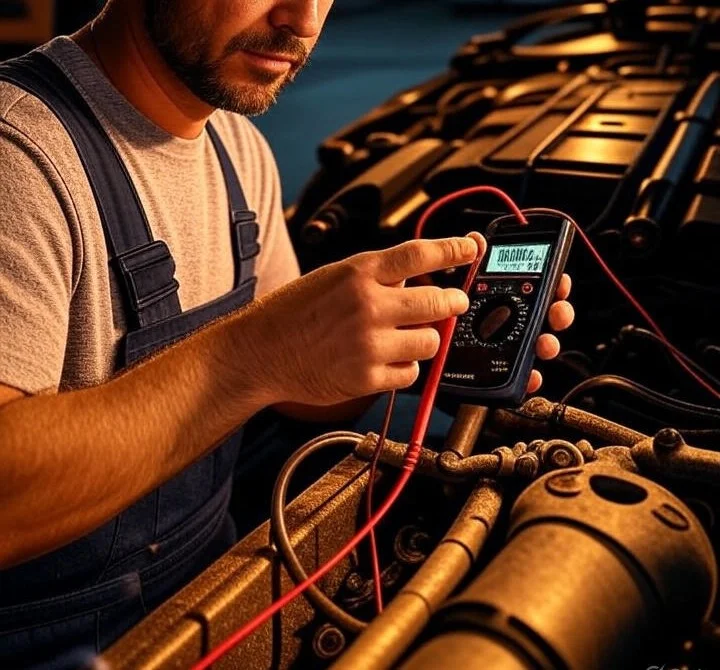
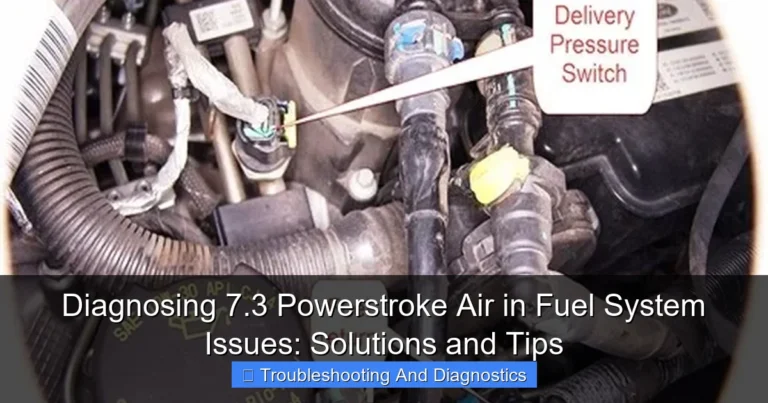
A mechanical fuel pressure gauge is non-negotiable for accurate diagnosis. Electronic sensors can sometimes be inaccurate or slow to react. For a 7.3L, you’ll typically want a gauge that reads up to 100 PSI or more. Most enthusiasts tap into the fuel system at the fuel bowl, where there’s usually a Schrader valve (similar to a tire valve stem) designed for this purpose. If your fuel bowl doesn’t have one, an adapter can be installed in the fuel line leading into or out of the bowl.
- Installation: Securely attach your fuel pressure gauge to the Schrader valve on your fuel bowl. Ensure all connections are tight to prevent leaks.
- Safety First: Fuel is flammable. Ensure you’re working in a well-ventilated area, away from open flames, and have a fire extinguisher handy. Wear appropriate personal protective equipment (PPE).
Performing a Static and Dynamic Fuel Pressure Test
Once your gauge is installed, you’ll want to perform several tests to get a complete picture of your 7.3 Powerstroke fuel pressure:
- Key On, Engine Off (KOEO): Turn the key to the “on” position without starting the engine. The lift pump should cycle for a few seconds. Note the pressure. It should typically rise to 60-70 PSI and hold fairly steady. If it immediately spikes much higher, it’s a strong indicator of a problem.
- Engine Idle Pressure: Start the engine and let it warm up to operating temperature. Observe the fuel pressure at idle. It should remain within the 60-70 PSI range. If it’s consistently above 75-80 PSI, you have high fuel pressure 7.3 Powerstroke.
- Under Load Pressure (Dynamic Test): This is crucial. Drive the truck and observe the gauge during various driving conditions, including light acceleration, cruising, and wide-open throttle (WOT). A slight drop in pressure (e.g., to 50-55 PSI) at WOT is normal, but it should not fluctuate wildly or remain excessively high.
- Snap Throttle Test: With the engine at idle, quickly “snap” the throttle to wide open and then release. Observe the pressure gauge. It should respond smoothly. Excessive spikes during this test can also point to issues.
Checking for Diagnostic Trouble Codes (DTCs)
While less common for direct high fuel pressure alerts on a 7.3L, using an OBD-II scanner to check for any stored or pending Diagnostic Trouble Codes (DTCs) is always a good practice. Codes related to engine performance, fuel trim (though less specific on 7.3L), or misfires could indirectly point to a fuel delivery issue. For instance, P0230 (Fuel Pump Primary Circuit Malfunction) might indicate an issue with pump control, which in rare cases, could affect pressure regulation. Always document any codes found before clearing them.
Primary Causes of 7.3 Powerstroke High Fuel Pressure and Their Solutions
Once you’ve confirmed that your 7.3 Powerstroke is indeed experiencing high fuel pressure, the next step is to pinpoint the root cause. Here are the most common culprits:
Faulty Fuel Pressure Regulator (FPR)
The fuel pressure regulator (FPR) 7.3 Powerstroke is the most common reason for high fuel pressure. Located within or near the fuel filter bowl, its job is to divert excess fuel back to the fuel tank, thereby maintaining consistent pressure. If the FPR becomes stuck in a partially or fully closed position, it can’t relieve the excess pressure, leading to a buildup in the system.
- Causes of Failure: Debris in the fuel system can clog the regulator’s internal passages, the spring inside can weaken or seize, or the diaphragm can rupture.
- Troubleshooting: Visually inspect the FPR if possible (some are sealed). Often, the only way to confirm a faulty FPR is to replace it, especially if other causes have been ruled out.
- Solution: The definitive fix is to replace 7.3 Powerstroke fuel pressure regulator. This is a common maintenance item and readily available. Ensure you get a quality OEM or reputable aftermarket replacement.
Obstructed Fuel Return Line
The fuel return line is equally critical for pressure regulation. After the FPR dumps excess fuel, it travels through this line back to the fuel tank. If this line becomes restricted or completely blocked, the excess fuel has nowhere to go, causing pressure to build up throughout the system.
- Causes of Obstruction: Kinks in the fuel line (especially after repairs or modifications), debris entering the line (rare but possible), or a collapsed internal lining of the hose (common in older rubber lines).
- Troubleshooting: Visually inspect the entire length of the fuel return line for any obvious kinks or damage. Disconnect the return line at the FPR and at the tank, then try blowing compressed air through it (away from the tank!) to check for blockages.
- Solution: Clear or replace 7.3 Powerstroke fuel return line. If you find a kink, attempt to straighten it carefully. If the line is damaged or severely blocked, replacing the affected section or the entire line is the best course of action.
Aftermarket Performance Modifications
While many aftermarket upgrades significantly improve the 7.3L’s performance, some can inadvertently lead to high fuel pressure if not properly matched or installed. This is particularly true for fuel system modifications.
- Oversized Lift Pumps: Installing a high-volume, high-pressure lift pump designed for extreme performance without also upgrading or adjusting the fuel pressure regulation can easily lead to excessive pressure.
- Incorrectly Installed Fuel System Upgrades: Sometimes, new fuel lines, filters, or bowls might be installed incorrectly, creating unintended restrictions or bypassing the regulator.
- Troubleshooting: Review any recent modifications to your fuel system. Check the specifications of your aftermarket lift pump.
- Solution: If an aftermarket pump is the culprit, consider adding an adjustable fuel pressure regulator 7.3 Powerstroke if your existing one cannot handle the increased flow/pressure. Alternatively, ensure the correct pump for your needs is installed, or consider returning to a stock-equivalent pump if you don’t require the extra flow. Always ensure all modifications are correctly installed according to manufacturer specifications.
Incorrect Fuel Pump (Lift Pump)
Although less common than an FPR issue, installing the wrong 7.3 Powerstroke lift pump can sometimes contribute to high pressure. Some aftermarket pumps, while advertised as “for 7.3L,” might be designed to produce higher pressures than the stock system can effectively regulate, particularly if the regulator is already somewhat compromised.
- Troubleshooting: Verify the part number of your installed lift pump against OEM specifications or trusted aftermarket replacements designed for stock pressure.
- Solution: Replace with the correct 7.3 Powerstroke lift pump that meets the original equipment manufacturer’s specifications for pressure and flow, or couple an oversized pump with an appropriate adjustable fuel pressure regulator.
Step-by-Step Fixes: How to Address High Fuel Pressure
Once you’ve identified the likely cause of your 7.3 Powerstroke high fuel pressure, it’s time to get your hands dirty and implement the fix. Always prioritize safety when working with fuel.
Replacing the Fuel Pressure Regulator
This is often the first and most effective solution for high fuel pressure 7.3 Powerstroke.
- Depressurize the System: Disconnect the battery. Place rags around the fuel bowl to catch any spills. Slowly loosen the cap on the Schrader valve (if present) to release pressure.
- Drain the Fuel Bowl: Open the drain valve on the bottom of the fuel bowl and drain the fuel into an approved container.
- Remove the Fuel Bowl (if necessary): Depending on your specific regulator location (some are internal to the bowl, some are external), you may need to remove the entire fuel bowl. Disconnect all electrical connectors and fuel lines.
- Remove the Old FPR: If external, it will be bolted or threaded on. If internal, you might need special tools or simply remove the cap/cover to access it. Refer to a shop manual for your specific model year.
- Install the New FPR: Ensure new O-rings or gaskets are used. Lubricate them with diesel fuel or clean engine oil. Install the new regulator, tightening to manufacturer specifications.
- Reassemble and Bleed: Reinstall the fuel bowl (if removed), reconnect lines and electrical connectors. Prime the system by cycling the key several times (KOEO) to allow the lift pump to run and refill the bowl. Check for leaks.
- Test: Reconnect the battery. Start the engine and immediately re-check your fuel pressure with the gauge.
Clearing/Replacing the Fuel Return Line
If your diagnosis points to a restricted return line, here’s how to address it:
- Locate and Inspect: Trace the return line from the fuel bowl/FPR back to the fuel tank. Look for any visible kinks, bends, or damage.
- Disconnect: Disconnect the return line at both ends. Be prepared for some fuel to drain.
- Clear the Line:
- For minor kinks, you might be able to gently straighten the line.
- For internal blockages, try blowing compressed air (low pressure, 20-30 PSI) through the line. If it’s blocked, you’ll feel resistance.
- DO NOT use extremely high pressure as it can damage the line.
- Replace if Necessary: If the line cannot be cleared, is severely damaged, or the internal lining has collapsed, it must be replaced. Use high-quality fuel-rated hose of the correct diameter.
- Reassemble and Test: Reconnect the return line securely. Cycle the key to prime the system, check for leaks, and then start the engine to verify proper fuel pressure.
Verifying Fuel Pump Correctness
If you suspect an incorrect lift pump, the solution is straightforward:
- Identify Current Pump: Note the make, model, and part number of your existing 7.3 Powerstroke lift pump.
- Research OEM Specs: Consult your Ford service manual or reliable parts supplier to confirm the correct stock fuel pump specifications (pressure and flow).
- Consider Adjustable FPR: If you intentionally have an oversized pump for performance and want to keep it, consider installing an adjustable fuel pressure regulator 7.3 Powerstroke to fine-tune your pressure to the optimal 60-70 PSI.
- Replace Pump (if needed): If the installed pump is simply the wrong type or faulty, replace it with the correct, high-quality replacement.
Post-Repair Testing and Verification
After any repair, it’s absolutely crucial to re-test your fuel pressure. Connect your gauge and repeat the KOEO, idle, and dynamic (driving) tests. Confirm that your fuel pressure now consistently sits within the 60-70 PSI range. Also, pay attention to engine performance. Has the hard starting improved? Is the idle smooth? Is the smoke gone? These real-world observations confirm the success of your repair.
Here’s a quick reference table for 7.3 Powerstroke fuel pressure specifications:
| Condition | Typical Pressure (PSI) | Potential Implications |
|---|---|---|
| Key On Engine Off (KOEO) | 60-70 | System primed, no leaks, pump working |
| Idle | 60-70 | Normal operation, FPR functioning |
| WOT (Wide Open Throttle) | 50-60 (slight drop is normal) | Adequate fuel delivery under load |
| High Pressure (KOEO/Idle/WOT) | > 75-80 | Indicates a problem (FPR, return line) |
| Low Pressure (KOEO/Idle/WOT) | < 50 | Indicates a problem (e.g., weak pump, clogged filter, leaks) |
Conclusion
While often overshadowed by its low-pressure counterpart, 7.3 Powerstroke high fuel pressure is a real concern that demands attention. Ignoring elevated fuel pressure can lead to a cascade of issues, from poor fuel economy and reduced power to potential long-term damage to your injectors and other vital fuel system components. By understanding the symptoms, meticulously diagnosing the problem with a fuel pressure gauge, and addressing the root cause – typically a faulty fuel pressure regulator 7.3 Powerstroke or an obstructed return line – you can restore your legendary Powerstroke to its full, reliable potential.
Remember, regular maintenance, using quality fuel filters, and being vigilant about your truck’s performance are the best ways to keep your 7.3 Powerstroke fuel system healthy. If you’ve followed these 7.3 Powerstroke high fuel pressure troubleshooting steps and are still facing issues, don’t hesitate to consult a qualified diesel mechanic. They have specialized tools and experience to tackle more complex fuel system diagnostics. With the right approach, your 7.3L Powerstroke will continue to serve you faithfully for hundreds of thousands of miles to come.
🎥 Related Video: 7.3 POWERSTROKE WITH A CODE P1211 ICP ABOVE/ BELOW DESIRED HERE IS A TECH TIP
📺 Nuts & Bolts with Tone
autotechnician #fyp #mechanic #mechaniclife #diesel #dieselmechanic #fypシ #powerstroke #p1211 #icp.
Frequently Asked Questions
What are the common symptoms of high fuel pressure in a 7.3 Powerstroke?
You might notice a rough idle, reduced fuel economy, excessive black smoke from the exhaust, or even hard starting issues. The engine may also run richer than intended, leading to a noticeable fuel smell or spark plug fouling.
What typically causes 7.3 Powerstroke high fuel pressure?
The most common culprit is a faulty Fuel Pressure Regulator (FPR) that isn’t relieving excess pressure correctly. Other causes can include a restricted fuel return line, a clogged fuel tank vent, or issues within the fuel filter housing itself.
How can I accurately diagnose high fuel pressure on my 7.3 Powerstroke?
The most reliable method is to install a dedicated fuel pressure gauge at the filter housing and monitor the readings both at idle and under load. Comparing these readings to the factory specifications will quickly indicate if your 7.3 Powerstroke high fuel pressure is out of range.
Is high fuel pressure harmful to my 7.3 Powerstroke engine?
Yes, sustained high fuel pressure can lead to several problems, including premature wear on fuel injectors due to constant over-pressurization and potential fuel wash down of cylinder walls. It can also cause poor combustion, reduced engine efficiency, and increased exhaust emissions over time.
What are the common fixes or parts to check when troubleshooting 7.3 Powerstroke high fuel pressure?
Begin by inspecting or replacing the Fuel Pressure Regulator (FPR) as it’s the primary component controlling pressure. Also, thoroughly check the fuel return lines for any kinks, blockages, or damage, as these can impede fuel flow back to the tank.
What is the normal operating fuel pressure range for a 7.3 Powerstroke?
A healthy 7.3 Powerstroke should ideally maintain fuel pressure between 40-70 PSI at idle, varying slightly under load. Anything consistently above this range, particularly above 80 PSI, indicates an issue that needs to be addressed.