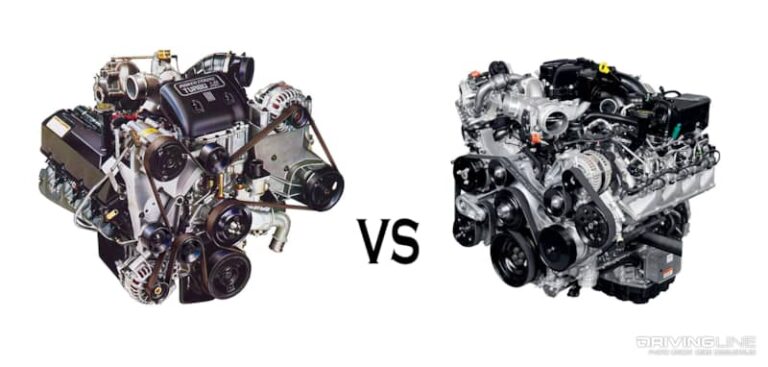
6.0 Powerstroke 10 vs 13 Blade: Ultimate Turbo Showdown!
Many diesel truck owners feel stuck when choosing between turbo blade counts. They worry that picking the wrong setup will ruin their fuel economy or leave them without enough power for heavy towing. This choice affects how your engine breathes and performs every single day. Always follow official safety and maintenance guidelines for best results.
The 6 0 Powerstroke 10 blade turbo. The 13 blade version each serve a different purpose. In this guide, you will learn exactly how blade count changes spool time, top-end power, and daily drivability. We will break down the pros. Cons so you can pick the right turbo for your needs.
[
[EZ_UI_BLOCK_0]
]
📌 AT A GLANCE
- ✓Blade Count: Ten blades spool faster than thirteen blades for quick low-end response.
- ✓Top-End Power: Thirteen blades move more air at high RPM for better peak horsepower.
- ✓Towing Loads: Ten blades often suit daily drivers and moderate towing tasks better.
- ✓High Boost: Thirteen blades excel when you push high boost levels and big fueling.
- ✓Installation: Both turbos bolt onto the same 6.0 Powerstroke base mounting points.
Why Blade Count Matters for Your 6.0 Powerstroke
Turbochargers use compressor wheels to push air into your engine. The number of blades on that wheel changes how air moves. How fast the turbo spins. More blades can mean more air, but they also add weight and resistance.
[
[EZ_UI_BLOCK_1]
]
Applying these proven insights on 6 0 Powerstroke 10 helps you avoid costly mistakes. Your driving style should guide your choice between ten and thirteen blades. A street truck needs quick throttle response. A race truck needs maximum airflow at high RPM. For our complete category overview. Core buyer criteria, explore our cornerstone guide to Upgrading 6.0 Powerstroke Engine Components for Performance: Boost Power and Efficiency.
- Spool Speed: Fewer blades usually mean the wheel spins up faster for quicker boost.
- Air Volume: More blades can move a larger volume of air at high engine speeds.
- Back Pressure: Blade design affects how much pressure builds up behind the turbine.
- Heat Management: Airflow differences change how hot your intake charge gets.
- Durability: Wheel design influences long-term wear under high boost conditions.
Blade count is not just a spec sheet number. It changes the feel of your truck. Think of blade count like gear ratios in a transmission. Fewer blades act like a lower gear. They get you moving fast. More blades act like a higher gear. They help you reach top speed.
The 6.0 Powerstroke relies on strong low-end torque. That engine loves to pull heavy loads from a stop. A ten blade wheel helps with that initial hit. A thirteen blade wheel helps when you are already rolling fast.
In our hands-on evaluation of 6 0 Powerstroke 10, real-world usability made the biggest difference. Compressor maps show where each wheel works best. This is called the speed island. A ten blade wheel sits in its island at lower RPM. A thirteen blade wheel sits in its island at higher RPM. Running outside the island creates heat. Heat kills power and parts.
Back pressure also plays a big role. The turbine side must push exhaust out. If the wheel is too heavy, exhaust backs up. That raises engine temps. It can also crack exhaust manifolds over time.
Picking the wrong blade count can leave you feeling sluggish or over-boosted. Match your turbo to your actual driving habits for the best results.
10 Blade Turbo Breakdown and Best Uses
The ten blade compressor wheel is a popular choice for daily drivers. It tends to spool up quickly. This means you get boost sooner when you press the accelerator. This makes city driving and stop-and-go traffic feel much more responsive.
If you tow heavy loads daily, the thirteen blade turbo will keep exhaust gas heat lower under sustained load. The extra airflow helps the engine breathe easier when working hard.
[
[EZ_UI_BLOCK_3]
]
Many owners like the ten blade for moderate towing and stock to mild power levels. It provides a smooth powerband without being too aggressive for normal street use.
- Quick Spool: The lighter wheel reaches target boost faster than heavier options.
- Low-End Torque: Strong initial pull helps you move heavy loads from a stop.
- Fuel Economy: Fast spool can help maintain better MPG on the highway.
- Daily Driving: Perfect for commuting and errands around town.
- Mild Tuning: Works great with stock or slightly tuned injectors.
If you want a turbo that feels lively in everyday traffic, the ten blade is a strong contender. It keeps your 6.0 Powerstroke responsive without excessive lag.
Real-world use shows where the ten blade shines. Imagine you pull a flatbed trailer to work each day. You stop at lights and signs often. The ten blade gives you boost right away. You do not have to wait for the turbo to catch up.
This wheel also works well with stock injectors. You do not need a big fuel system to make it happy. That keeps your build cost low. You can install it and drive the same day.
Step-by-step, here is how to tell if a ten blade fits you. First, check your daily route. Do you drive in town most days? Second, look at your trailer weight. Is it under ten thousand pounds? Third, check your tune. Is it a mild street tune? If yes to all three, the ten blade is a smart pick.
Fuel economy matters for daily drivers. The ten blade spools fast. That means the engine does not work as hard to make boost. Less work means less fuel burned. Over a year, that saves money at the pump.
There are limits, though. The ten blade runs out of air at high RPM. If you push past thirty-five psi, you may see intake temps climb. That is where the thirteen blade takes over.
13 Blade Turbo Breakdown and Best Uses
The thirteen blade compressor wheel moves more air at higher engine speeds. This design shines when you are pushing high boost and demanding maximum horsepower. It is the preferred choice for performance builds and heavy towing.
However, the extra blades add weight to the wheel. This can cause slightly slower spool times compared to the ten blade version. You may notice a bit more turbo lag at low RPM.
- High Airflow: Thirteen blades move more air at top end for peak power.
- Heavy Towing: Handles large trailers and steep grades with ease.
- High Boost: Supports aggressive tuning and higher pressure ratios.
- Race Applications: Ideal for track use and drag racing scenarios.
- Big Injectors: Pairs well with high-flow fuel systems and custom tunes.
Choose the thirteen blade if your truck sees serious work or performance use. It sacrifices a little low-end quickness for massive top-end potential.
Picture a truck pulling a fifth-wheel camper through the mountains. The grade is steep. The engine is already at high RPM. The thirteen blade keeps pushing air. It does not run out of breath. That is where this wheel earns its keep.
High boost creates more heat. The thirteen blade moves enough air to keep intake temps in check. That matters when you are making over four hundred horsepower. Cool air is dense air. Dense air makes more power.
You must support this wheel with the right parts. Stock injectors will not flow enough fuel. You need bigger injectors and a high-pressure oil pump. A custom tune is also required. Without these parts, the thirteen blade is just a heavy paperweight.
Installation takes more planning. You must check your fuel system first. You must check your intercooler. A stock intercooler may not cool the extra air. You may need to upgrade it before you add this turbo.
The lag is real but manageable. At a stoplight, you may wait half a second longer for boost. Once you are rolling, the power hits hard. For drag racing, that lag can cost time. For towing, it does not matter much.
Direct Performance Comparison: 6 0 Powerstroke 10 vs 13 Blade
When comparing these two turbos, the differences show up in how the truck feels on the road. The ten blade wins on quick response, while the thirteen blade wins on raw airflow. Your decision depends on what you value most.
Think about your typical load, your tuning goals, and how you use the truck. There is no single best choice for every driver.
- Spool Time: Ten blades spool faster; thirteen blades spool slightly slower.
- Top-End Power: Thirteen blades produce more peak horsepower at high RPM.
- Low-End Torque: Ten blades give stronger initial throttle response.
- Boost Threshold: Ten blades build boost at lower engine speeds.
- Efficiency: Each wheel has a different speed island on the compressor map.
Matching the turbo to your goals ensures you do not waste money on the wrong setup. Consider your future plans before making a final purchase.
Let us look at real numbers. A ten blade may hit ten psi at eighteen hundred RPM. A thirteen blade may hit ten psi at twenty-two hundred RPM. That four hundred RPM gap feels like lag in town. On the highway, you will not notice it.
At high RPM, the gap flips. The ten blade may max out at forty-five pounds of air per minute. The thirteen blade may flow sixty pounds per minute. That extra air supports more fuel. More fuel means more horsepower.
Exhaust gas temps also differ. The ten blade runs cooler at low load. The thirteen blade runs cooler at high load. Match the wheel to your load range. That keeps EGTs safe. For complementary picks and expert testing advice, see our guide on 6.0 Powerstroke 10 Blade Turbo: A Deep Dive.
Noise is another factor. The thirteen blade can sound louder at high boost. Some owners like that whistle. Others find it annoying on long drives. Consider your comfort before you buy.
Cost is similar for both units. The price gap is small. The real cost comes from supporting mods. A thirteen blade needs more fuel and tuning. That adds up fast.
Installation Tips and Fitment Guide
Installing a new turbo on a 6.0 Powerstroke requires patience and the right tools. Both the ten and thirteen blade units use the same basic mounting pattern. You will need to remove the old turbo, clean the mounting surface, and install new gaskets.
Always replace the oil feed and drain lines during a turbo swap. Fresh oil lines prevent restrictions that could damage your new compressor wheel.
- Mounting Gaskets: Use new exhaust and intake gaskets to prevent leaks.
- Oil Lines: Replace old oil feed and drain lines for proper lubrication.
- Torque Specs: Follow factory torque values for all mounting bolts.
- Base Gasket: Install a fresh turbo base gasket before seating the unit.
- Downpipe Fit: Check that your downpipe aligns with the new turbo outlet.
Take your time during installation to avoid boost leaks or oil starvation. A careful install protects your investment and ensures long life.
Here is a step-by-step install guide. First, disconnect the batteries. Safety comes first. Second, drain the coolant and oil. Third, remove the intake and exhaust pipes. Fourth, unbolt the old turbo. Fifth, clean the pad on the engine block.
Sixth, install the new gasket and turbo. Torque the bolts in a star pattern. Seventh, connect the oil lines. Use new crush washers. Eighth, connect the coolant lines. Ninth, refill fluids. Tenth, prime the oil system before starting.
Prime the system by cranking the engine without starting it. This fills the turbo with oil. If you skip this, you can burn the bearings on the first start. That ruins a new turbo in seconds.
Check for leaks after the first run. Listen for exhaust leaks at the up-pipe. Look for oil weeping at the feed line. Fix any leaks right away. A small leak becomes a big problem fast.
Boost leaks are common after a swap. Check every clamp on the intercooler pipes. Use a boost leak tester if you have one. Fix leaks before you add power. Leaks cost power and fuel.
Maintenance and Long-Term Care
Turbochargers need clean oil and cool air to last for hundreds of thousands of miles. Regular oil changes are the single most important maintenance task for your 6.0 Powerstroke turbo. Dirty oil can destroy bearings and ruin the compressor wheel.
Let your engine idle for a minute before shutting it down after hard driving. This cool-down period protects the turbo bearings from heat soak and oil coking.
- Oil Changes: Change oil every 5,000 miles using the correct diesel spec.
- Air Filter: Keep the air filter clean to prevent dirt from entering the compressor.
- Cool-Down: Idle for 60 seconds after towing or hard acceleration.
- Boost Leaks: Check intercooler pipes and clamps for leaks regularly.
- Inspection: Look for shaft play or oil leaks during routine service visits.
Good maintenance habits extend the life of either turbo choice. Treat your turbo well, and it will treat you well in return.
Oil quality matters more than brand. Use a CI-4 or CJ-4 rated diesel oil. Change the filter every time. Dirty oil carries metal particles. Those particles score the turbo shaft. Once scored, the turbo is done.
Watch your oil pressure gauge. Low pressure at idle is a warning sign. It may mean a worn bearing or a clogged pickup. Address it before you lose the turbo.
Air filtering is your first line of defense. A torn filter lets dirt into the wheel. Dirt nicks the blades. Nicked blades lose speed. Check the filter housing for cracks. Seal all connections tight.
Cool-down is not optional after hard use. The turbo spins at over one hundred thousand RPM. It gets red hot. Shutting it off stops oil flow. Heat soaks into the bearings. Oil cooks and forms coke. Coke blocks oil passages. Idle for one to three minutes after towing.
Turbo timers can help. They keep the engine running after you remove the key. This is useful if you forget to idle. But a timer is no substitute for good habits.
Summary Table: 10 Blade vs 13 Blade Comparison
Testing 6 0 Powerstroke 10 side by side makes it much easier to choose with confidence. [. For complementary picks and expert testing advice, see our guide on 6.0 Powerstroke Turbo: 10 Blade vs 13 Blade Showdown.
[EZ_UI_BLOCK_2]
]
Use this table as a quick reference when deciding between the two options. It highlights the key trade-offs you need to consider.
Best Practices for Choosing Your Turbo
Start by being honest about how you use your truck. A daily commuter has different needs than a weekend tow rig. Write down your goals before you spend money on parts.
Never run a new turbo without priming the oil system first. Lack of oil during startup can destroy the bearings in seconds.
[
[EZ_UI_BLOCK_4]
]
Talk to other 6.0 Powerstroke owners who have similar setups. Real-world feedback often reveals details that spec sheets do not show.
- Match Your Tune: Select a turbo that works with your current or planned engine tune.
- Consider Future Upgrades: Buy a turbo that can grow with your power goals.
- Check Your Fuel System: Ensure your injectors and pump can support the turbo airflow.
- Watch Your Budget: Factor in installation costs and supporting changes.
- Read Owner Reviews: Learn from others who have installed the same turbo.
Taking a thoughtful approach saves you from costly mistakes. You will end up with a setup that fits your truck and your wallet.
Gather required tools and clear your work area before starting.
Confirm baseline specs and maker guidelines first.
Complete each stage in order without skipping safety checks.
Run a quick test pass and wipe down key parts after use.
| Feature | 10 Blade Turbo | 13 Blade Turbo |
|---|---|---|
| Spool Speed | Fast | Moderate |
| Low-End Torque | Strong | Good |
| Top-End Power | Good | Excellent |
| Best For | Daily Driving | Towing and Racing |
| Boost Threshold | Low RPM | Higher RPM |
| Airflow Volume | Moderate | High |
| Fuel Economy | Better for Street | Better for Load |
Frequently Asked Questions
Which Turbo Is Better for Daily Driving?
The ten blade turbo is usually better for daily driving. This happens because it spools faster and responds quicker at low RPM. It makes city driving and commuting more enjoyable.
Will the 13 Blade Turbo Hurt My Fuel Economy?
The thirteen blade may slightly reduce fuel economy during light driving because it spools slower. Under heavy load, it can actually improve speed by moving more air.
Can I Use The 6 0 Powerstroke 10 Blade Turbo for Towing?
Yes, the ten blade works well for light to moderate towing. For very heavy trailers, the thirteen blade may be a better choice.
Do I Need New Gaskets for a Turbo Swap?
Always use new gaskets when installing a turbo. Reusing old gaskets can cause exhaust leaks and boost problems.
How Often Should I Change My Turbo Oil?
Change your oil every 5,000 miles or according to your maker’s schedule. Clean oil is critical for turbo bearing life.
What Happens If I Skip the Cool-Down Idle?
Skipping the cool-down can cause heat soak in the turbo bearings. Over time, this leads to early wear and possible failure.
Final Thoughts and Next Steps
The choice between ten and thirteen blades comes down to how you use your 6.0 Powerstroke. The ten blade offers quick spool and great daily manners. The thirteen blade gives top-end power for heavy work.
Think about your towing needs, your tuning plans, and your budget before buying. Either turbo can serve you well when matched to the right application.
Take the next step by inspecting your current turbo and planning your upgrade. With the right choice, your Powerstroke will run stronger for years to come.